NASA’s Chandra stitches decades of data on supernova remnant into its longest video yet
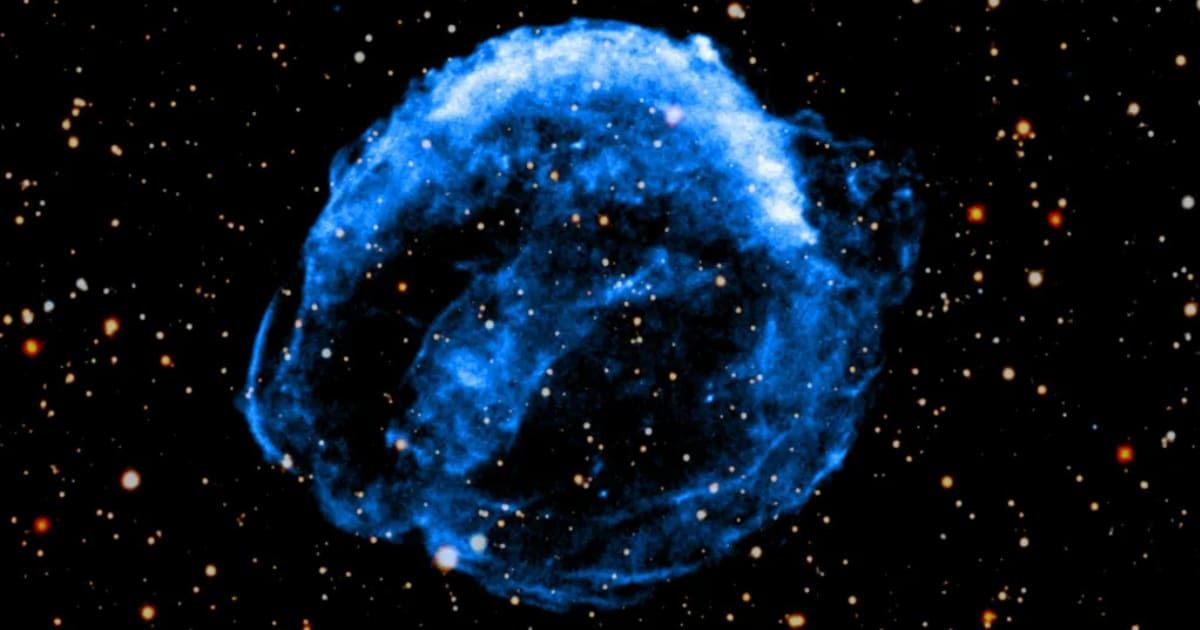
A newly released video from NASA's Chandra X-ray Observatory has allowed viewers to watch the aftermath of a stellar explosion unfold across time. Built from observations spanning more than 20 years, the video captures the slow but dramatic evolution of Kepler's Supernova Remnant, offering the longest-spanning video ever released by Chandra. The video combines X-ray data collected by Chandra in 2000, 2004, 2006, 2014, and 2025. When stitched together, these images reveal the remnant steadily growing and reshaping itself as it slams into surrounding material. Owing to Chandra's long operational life, astronomers can now see how the debris from a single explosion behaves over decades rather than moments.
According to NASA, Kepler's Supernova Remnant lies within our own Milky Way galaxy, about 17,000 light-years from Earth. It is the remains of a star that appeared suddenly in the night sky in 1604 and was observed by Johannes Kepler, after whom it is named. Astronomers believe the original star was a white dwarf. The explosion occurred when the white dwarf gained too much mass, either by pulling material from a nearby companion star or by merging with another white dwarf.
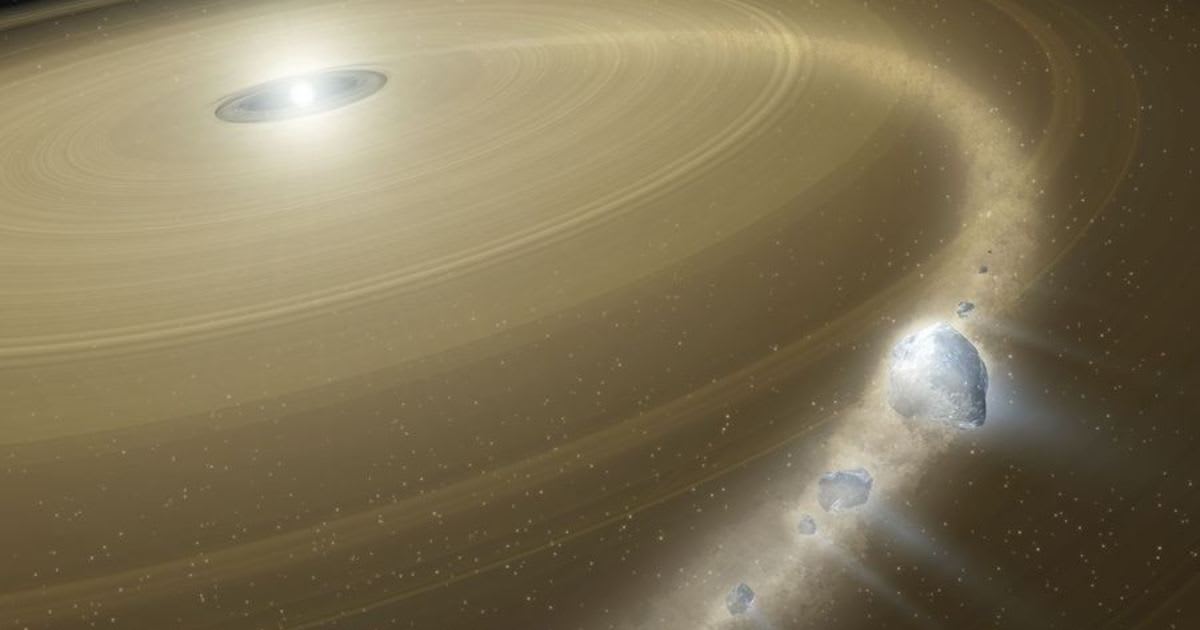
Once it crossed a critical limit, the star detonated in what scientists call a Type Ia supernova. These explosions are important because they serve as reliable tools for measuring the expansion of the universe. The remnant glows brightly in X-ray light because the expanding debris has been heated to millions of degrees by the force of the blast. Chandra’s sharp vision allows researchers to track the fine details in this hot gas and measure how fast different regions are moving. The new video shows that the remnant is not expanding evenly in all directions.

“The plot of Kepler’s story is just now beginning to unfold,” said Jessye Gassel, a graduate student at George Mason University in Virginia, who led the work. “It’s remarkable that we can watch as these remains from this shattered star crash into material already thrown out into space.” Gassel presented the results and the new video at the 247th meeting of the American Astronomical Society in Phoenix. By studying the video frame by frame, the research team found that the fastest-moving material is racing toward the bottom of the image at about 13.8 million miles per hour, roughly 2 percent of the speed of light
In contrast, the slowest material, moving toward the top of the image, is traveling at about 4 million miles per hour, or 0.5 percent of the speed of light. The difference is attributed to the remnant plowing into denser gas in some directions than in others, offering clues about the environment around the original star. “Supernova explosions and the elements they hurl into space are the lifeblood of new stars and planets,” said Brian Williams of NASA’s Goddard Space Flight Center in Greenbelt, Maryland, and principal investigator of the new Chandra observations of Kepler. “Understanding exactly how they behave is crucial to knowing our cosmic history.”
The team also examined the thin outer rim of the expanding blast wave, which marks the leading edge of the explosion. By measuring how wide this rim is and how quickly it moves, astronomers can learn more about both the power of the original blast and the material it is encountering as it spreads outward.
More on Starlust
Did a giant impact help spark life on Earth? New study backs the 'RNA world' hypothesis
JAXA-NASA XRISM mission captures the clearest view of the vicinity of a rapidly-spinning black hole