NASA's James Webb Telescope witnesses stellar explosion from just 730 million years after the Big Bang
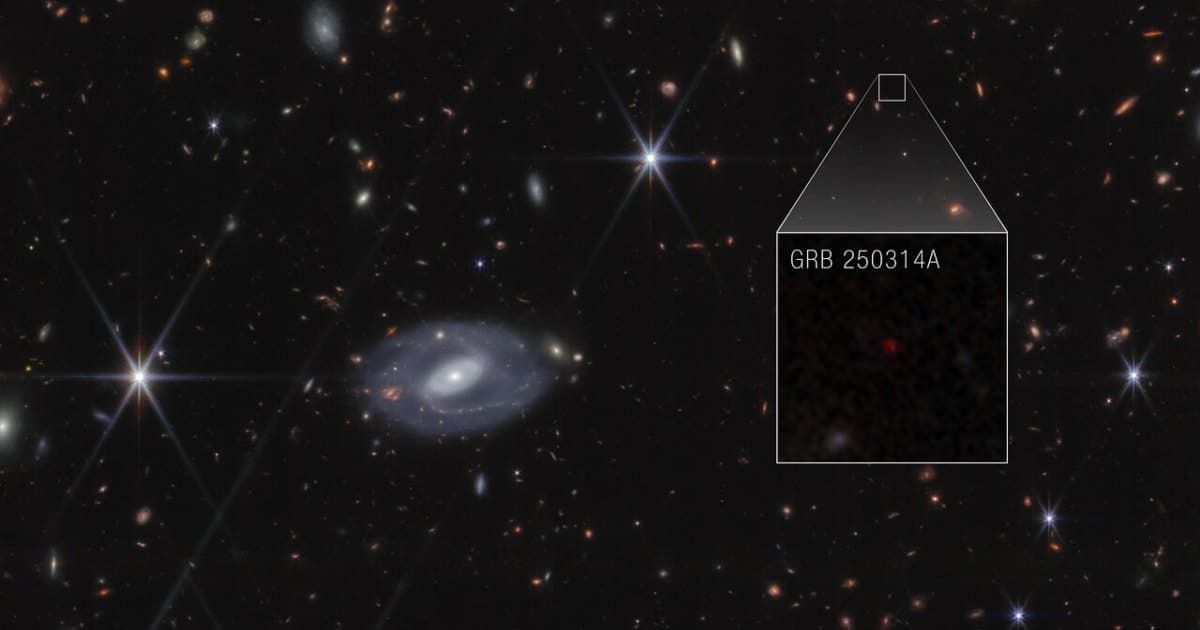
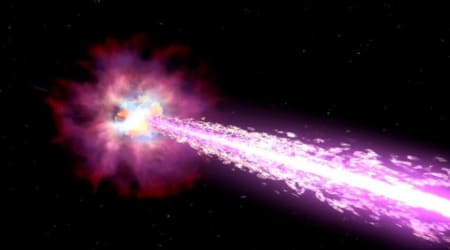
The James Webb Space Telescope has just made a landmark observation of the death of a massive star that exploded when the universe was still in its early stages, just 730 million years after the Big Bang, according to the European Space Agency. The investigation began when a brilliant burst of energy called a gamma-ray burst, or GRB, was spotted by telescopes worldwide in mid-March.
🆕 Webb has spotted the earliest supernova yet! 💥
— ESA Webb Telescope (@ESA_Webb) December 9, 2025
After a bright flash of light (a gamma-ray burst) was detected by the SVOM mission in March, Webb was brought onto the case to investigate. It quickly confirmed that it came from the explosive death of a massive star ⭐☠️ This… pic.twitter.com/uu1Z3UXKhT
Following the detection, JWST rapidly observed the source and definitively confirmed that the light emanated from a supernova, establishing a new record for the most distant stellar explosion ever seen. Confirmation of the burst's long distance came from instruments such as NASA's Neil Gehrels Swift Observatory, the Nordic Optical Telescope, and the European Southern Observatory's Very Large Telescope. Dubbed GRB 250314A, the supernova was seen to have a redshift of 7.3, according to Science Alert.
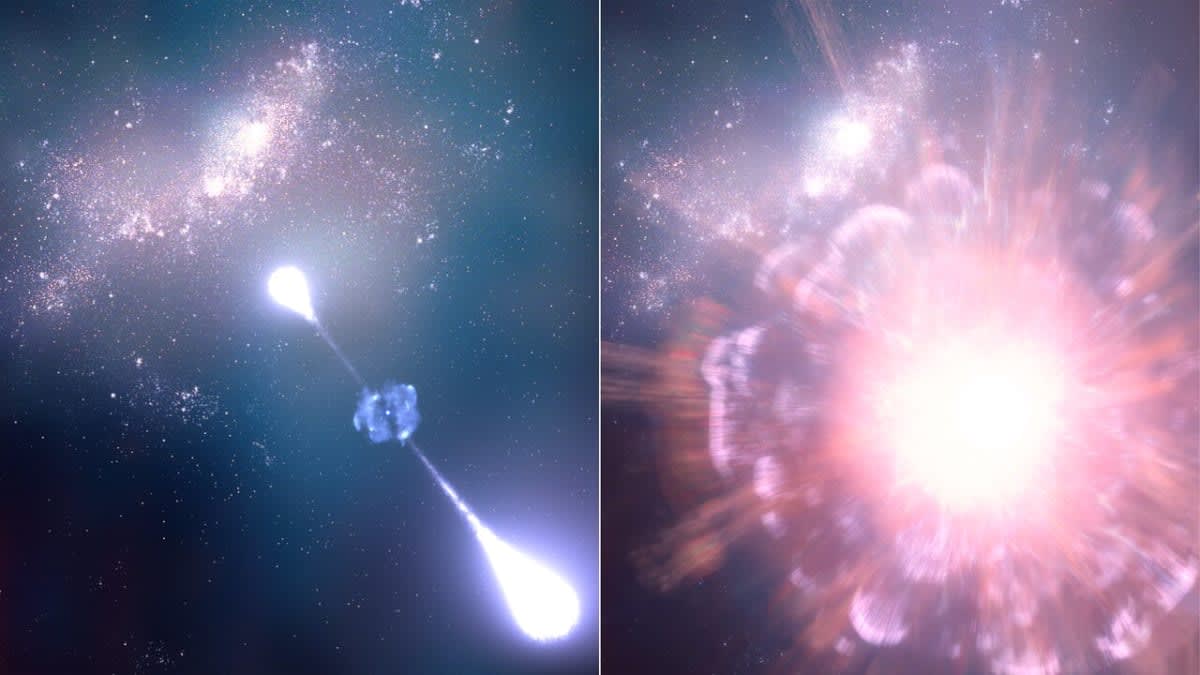
Until now, the previous record holder was a supernova from a time when the universe was 1.8 billion years old. The new observation breaks that record, with proof that JWST could study individual stars from a time when the universe had reached only 5% of its current age. “Only Webb could directly show that this light is from a supernova—a collapsing massive star,” said Andrew Levan, a lead scientist on the research that was published in Astronomy & Astrophyiscs, according to the European Space Agency.
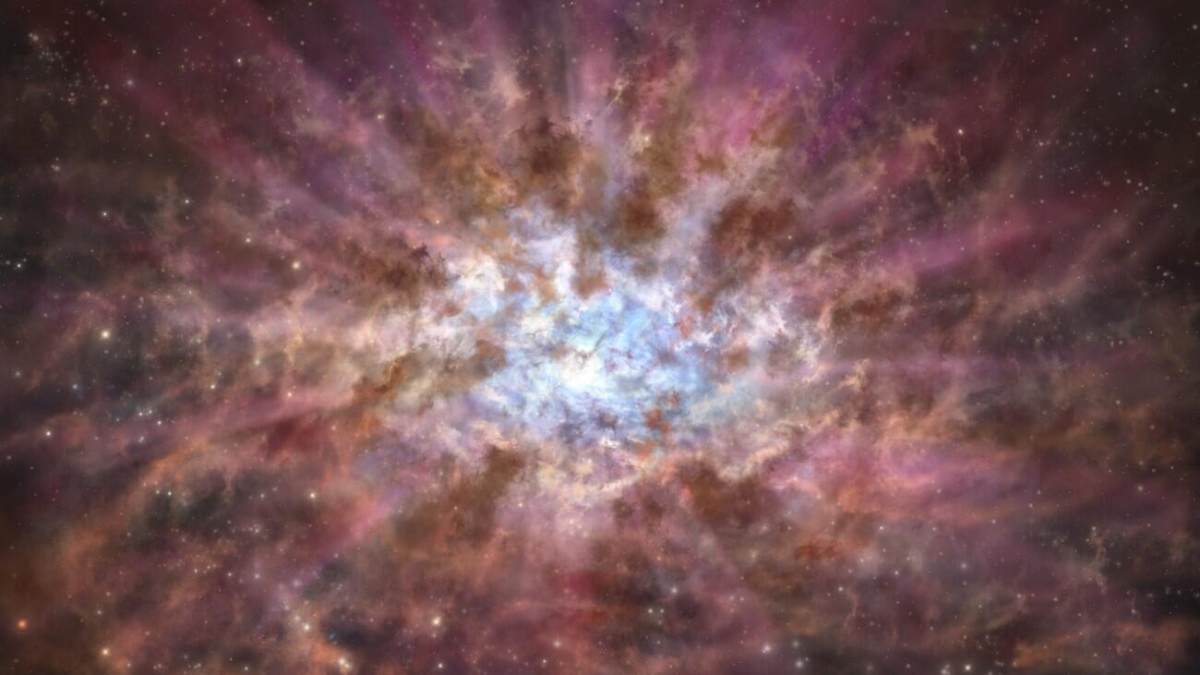
While most supernovae brighten and fade quickly, this ancient explosion took months to reach its peak brightness. The researchers intentionally scheduled JWST's high-sensitivity observations three and a half months after the initial burst, predicting the supernova would be at its brightest due to the time dilation effects of the universe's expansion over billions of years.
The long-duration GRB, which lasted about 10 seconds, is characteristic of the final, violent collapse of a massive star. However, astoundingly, the discovery showed that this most distant, earliest-seen supernova closely resembles modern-day explosions. It was expected that early stars would be distinctively different—much more massive, short-lived, and containing fewer heavy elements. “We went in with open minds,” said co-author Nial Tanvir of the University of Leicester in the UK. "And lo and behold, Webb showed that this supernova looks exactly like modern supernovae." Of course, more data is required for researchers to figure out why such a distant supernova is so similar to those closer to us.
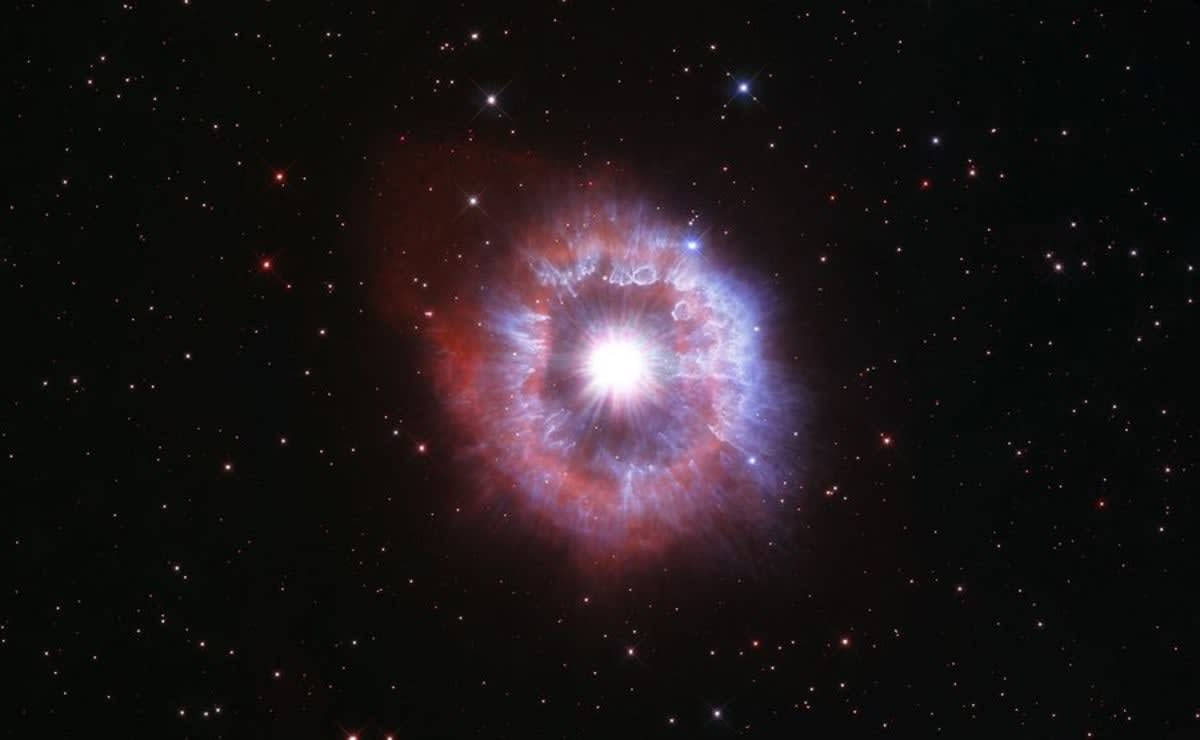
As the light of the host galaxy has been compressed into a few pixels, it appears only as a smudge and so will offer limited data. However, seeing it at all is an achievement in itself. And while details about the galaxy remain scant, researchers will continue to take advantage of the lingering afterglows of future gamma-ray bursts as cosmic "fingerprints" to help Webb study even more galaxies from the distant universe. The results have great implications for scientists' understanding of the formative years of the universe.
More on Starlust
JWST observes distant galaxy revealing evidence of first stars forged after the Big Bang
What came before the Big Bang? New simulations offer a glimpse into the origins of the universe