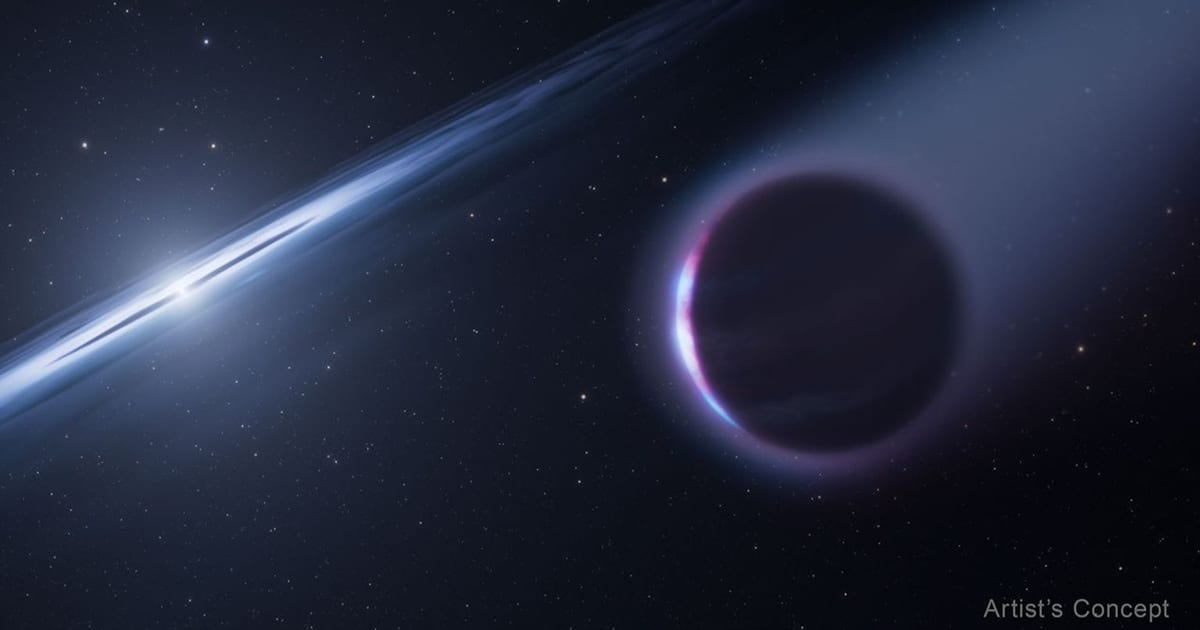
Failing to go supernova, an Andromeda supergiant star quietly collapsed into a black hole
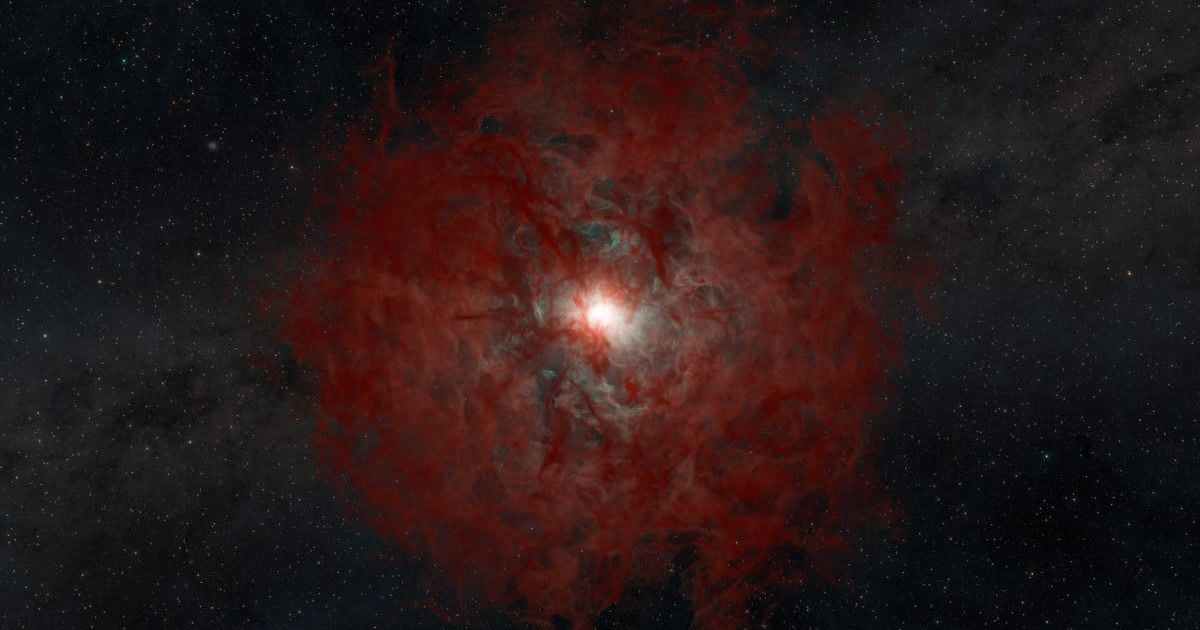
A supergiant star, lying 2.5 million light-years away in the Andromeda galaxy, ended its life without a bang and then turned itself quietly into a black hole. Unlike massive stars that explode as supernovas, the star, named M31-2014-DS1, died silently, leaving a shroud of hot gas and dust. A team of scientists analyzed the dying star based on the measurements provided by NASA’s Near-Earth Object Wide-field Infrared Survey Explorer mission and other space- and ground-based observatories from 2005 to 2023. The findings were recently published on Science.org.

"This is just the beginning of the story," said Kishalay De, an associate research scientist at the Simons Foundation's Flatiron Institute and the study's lead author, per a report by Phys.org. Light from dusty debris surrounding the newborn black hole, he says, "is going to be visible for decades at the sensitivity level of telescopes like the James Webb Space Telescope, because it's going to continue to fade very slowly. And this may end up being a benchmark for understanding how stellar black holes form in the universe." In 2014, the star brightened in mid-infrared light. But then, from 2017 to 2022, it faded drastically in optical light, becoming practically undetectable.
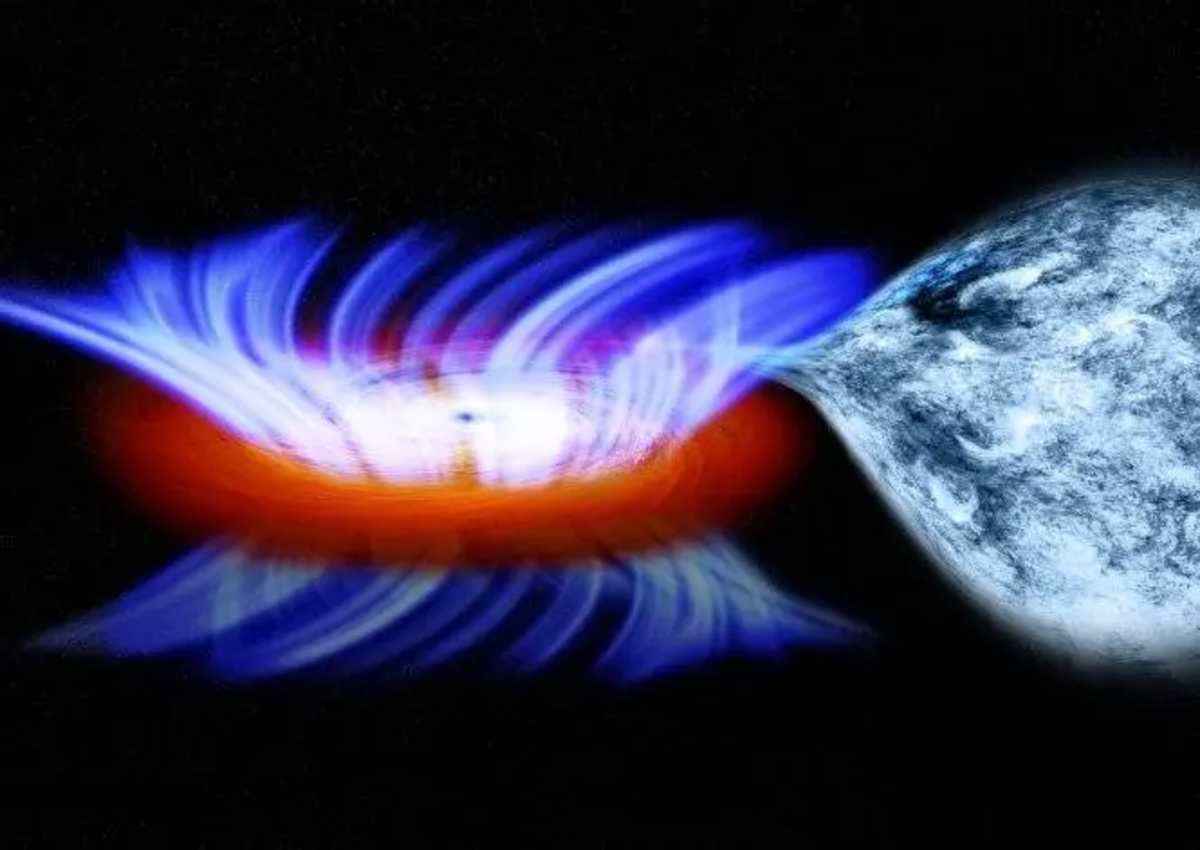
The researchers attribute this to a halt in nuclear fusion and the collapse of the stellar core, adding that there is no evidence of a supernova, which would have been rather easily detectable. They therefore interpret M31-2014-DS1 as a failed SN (supernova) in which most of the outer core fell back to form a BH (black hole). Normally, a star 10 times heavier than the Sun exhausts its nuclear fuel, letting its core collapse under gravity. This collapse releases a flood of neutrinos that can trigger a shock wave, blasting the stellar envelope into space. The result is a core-collapse supernova. Theoretical models predict that in other massive stars, the neutrino shock fails to eject the envelope, causing most of the stellar material to fall back onto the collapsing core, forming a stellar-mass black hole.
![This illustration depicts a red giant star. [Representative Image Source: NASA’s Goddard Space Flight Center/Chris Smith (KBRwyle); Image Edited by Starlust Staff]](https://de40cj7fpezr7.cloudfront.net/143de00c-6674-4d82-a974-6b0d9e79c439.png)
Previously classified as a candidate RSG (red supergiant), the star’s temperature resembles that of a yellow supergiant. By modelling the star’s collapse, De and his colleagues found that the star has shed only a small fraction of its outer layer, producing a transient luminous outburst which is too brief to be captured even by sophisticated telescopes. The rest of the mass, roughly five times that of the Sun, likely fell inward, forming a black hole. The model suggests that after the collapse, most of the material continued falling into the newly formed black hole.
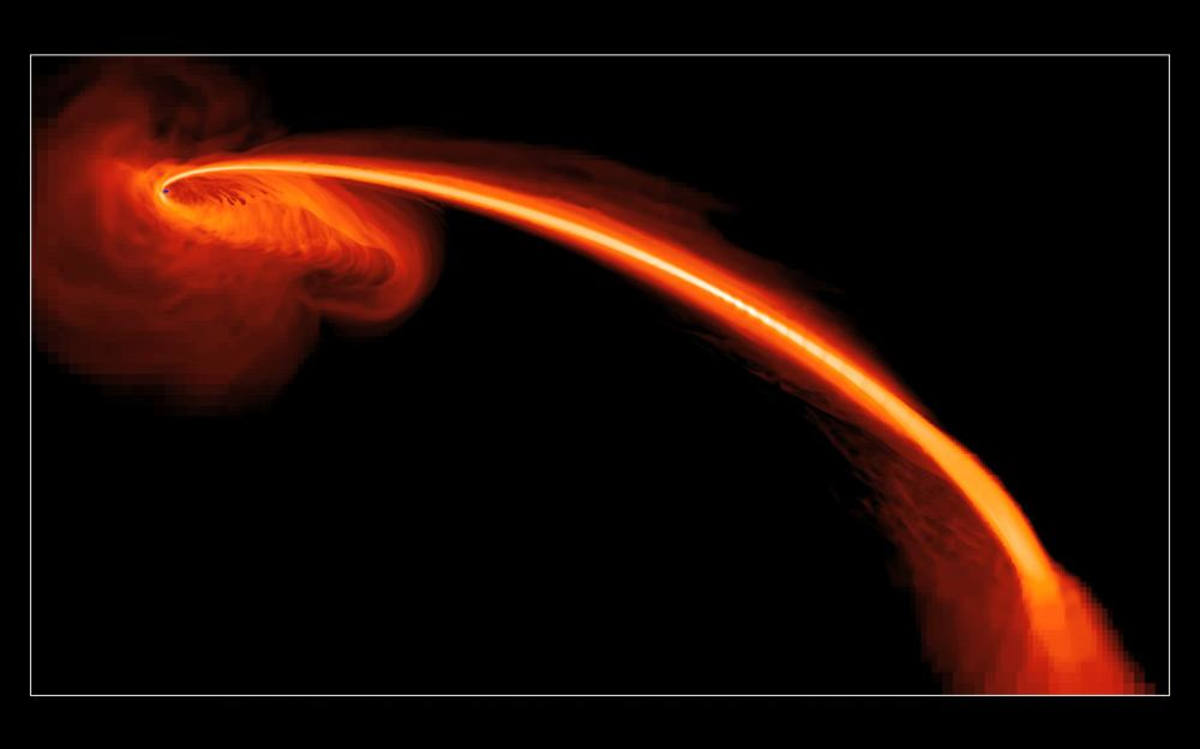
When materials spiral into a black hole, they emit X-rays. But thick surrounding gas and dust can easily absorb X-rays. This isn’t the first candidate of a failed supernova. A similar star, known as NGC 6946-BH1 in the galaxy NGC 6946, was sighted several years ago. That star also brightened, formed dust, and then faded dramatically without exploding as a supernova. "This star used to be one of the most luminous stars in the Andromeda galaxy, and now it was nowhere to be seen. Imagine if the star Betelgeuse suddenly disappeared. Everybody would lose their minds! The same kind of thing [was] happening with this star in the Andromeda galaxy," De added.
More on Starlust
Dark matter powers the Milky Way’s heart instead of a black hole, new study claims