Astronomers just solved mystery behind bright blue flashes and traced it back to black holes
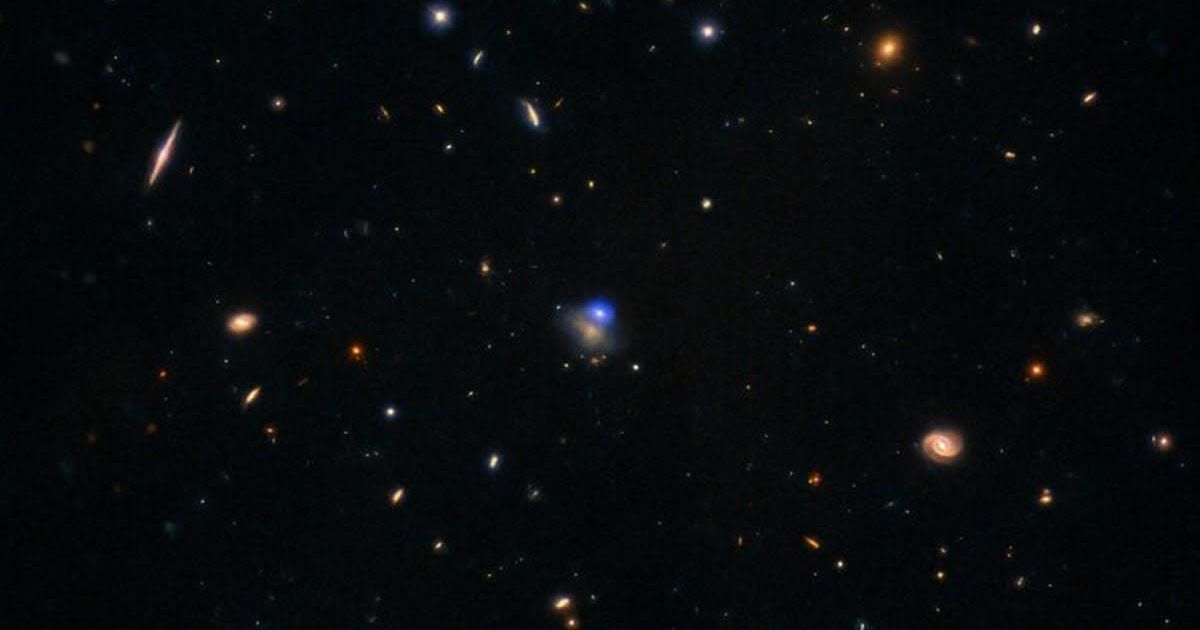
Astronomers may have finally solved the mystery of how luminous fast blue optical transients (LFBOTs) are formed, according to NOIRLab. These extremely bright and brief flashes of blue and ultraviolet light that leave behind X-ray and radio emissions as they fade away were earlier thought to be produced by either an unusual kind of supernova or by interstellar gas falling into a black hole.
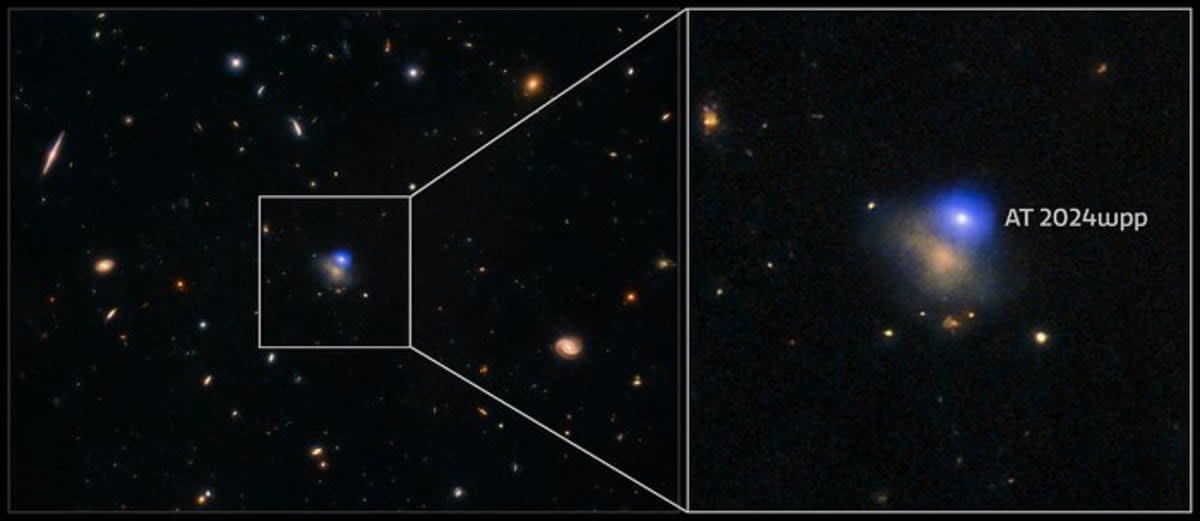
However, an analysis of AT2024wpp, the brightest known LFBOT, has dismantled either theory. A team led by researchers from UC Berkeley has now announced that these explosions are triggered by a powerful tidal disruption—the annihilation of a massive companion star by a black hole of mass up to 100 times that of our Sun. As far as AT2024wpp is concerned, the companion star had a mass of more than 10 times that of the Sun. Speculation is that it may have been a Wolf-Rayet star, which a very hot and evolved star that has already used up a lot of its hydrogen. The analysis, which is based on the data collected by a number of different telescopes, including the Flamingos-2 instrument on the Gemini South telescope in Chile, has been presented in two papers accepted by The Astrophysical Journal Letters. The telescopes were responsible for measuring various wavelengths of light emitted by the LFBOT.
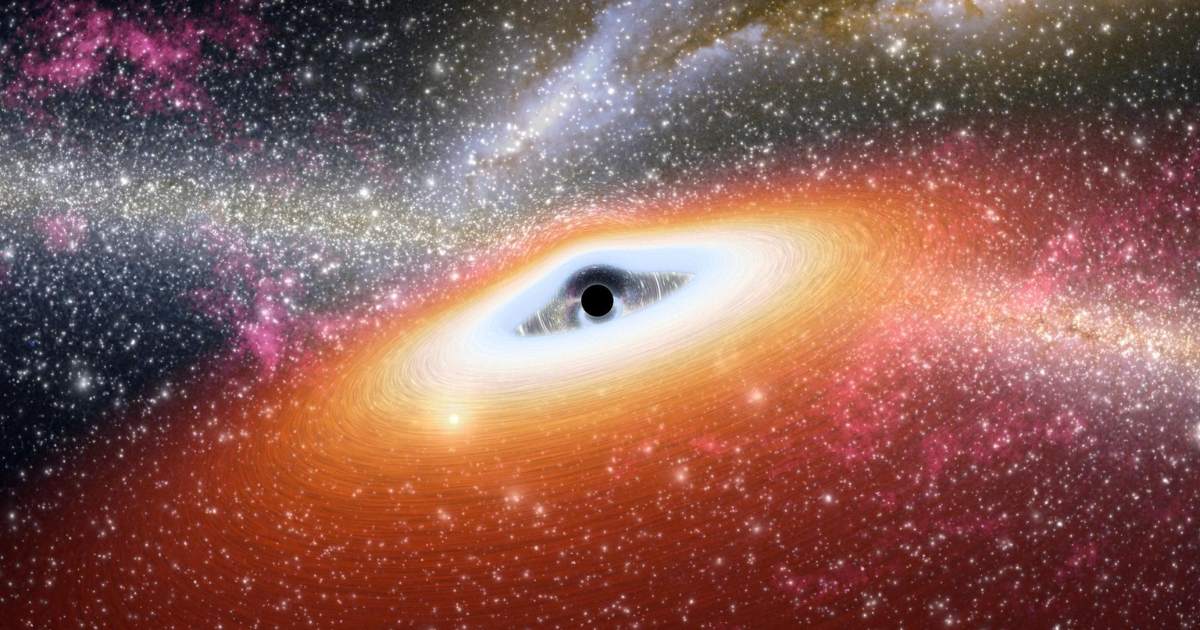
The researchers suggest that the black hole in this system had been feeding on its neighbor for a prolonged period, resulting in it being surrounded by a thick gas cloud. When the star eventually wandered too close and was torn apart, the new material then collided with the gas cloud at very high speeds.
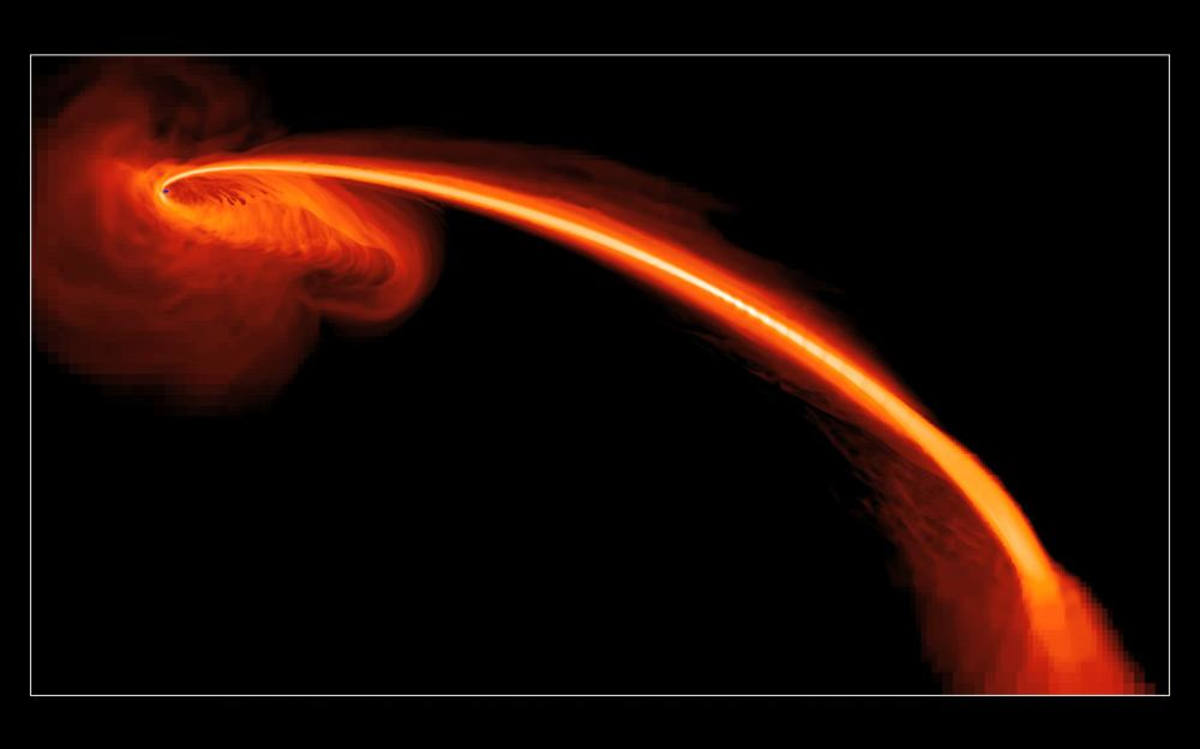
The collision produced an enormous amount of energy and generated X-rays, ultraviolet light, and blue light. The turbulent collision also resulted in the expulsion of the debris from the black hole's poles in the form of powerful jets moving at approximately 40% of the speed of light, and generating radio waves when they collided with surrounding gas.

By assessing the energy of AT 2024wpp, the team came to the conclusion that they were witnessing an event that was much more powerful than a dying star. The energy released was even 100 times more than that of a regular supernova. "The sheer amount of radiated energy from these bursts is so large that you can't power them with a core collapse stellar explosion — or any other type of normal stellar explosion,” said Natalie LeBaron, a UC Berkeley graduate student and leading author of the paper that presented the Gemini data. “The main message from AT 2024wpp is that the model that we started off with is wrong. It’s definitely not just an exploding star.”
LFBOTs are so infrequent that only around twelve have been discovered since the first one in 2014 was found. Usually, they are assigned strange names per the standard naming convention, for example, "The Cow," (AT 2018cow) "The Koala," (ZTF19abvkwla), and "The Tasmanian Devil" (AT 2022tsd). As for AT 2024wpp, it will be named "The Wasp."
In 2024, astronomers spotted the brightest Luminous Fast Blue Optical Transient ever seen. These brief blue flashes fade fast but new analysis, including @GeminiObs data, is challenging everything we thought we knew about these rare cosmic explosions.
— NOIRLab (@NOIRLabAstro) December 16, 2025
🔗 https://t.co/3zYD5Gwpgx pic.twitter.com/uS4bEDjSsQ