NASA’s Fermi Telescope detects gamma rays from a rare, unusually luminous supernova
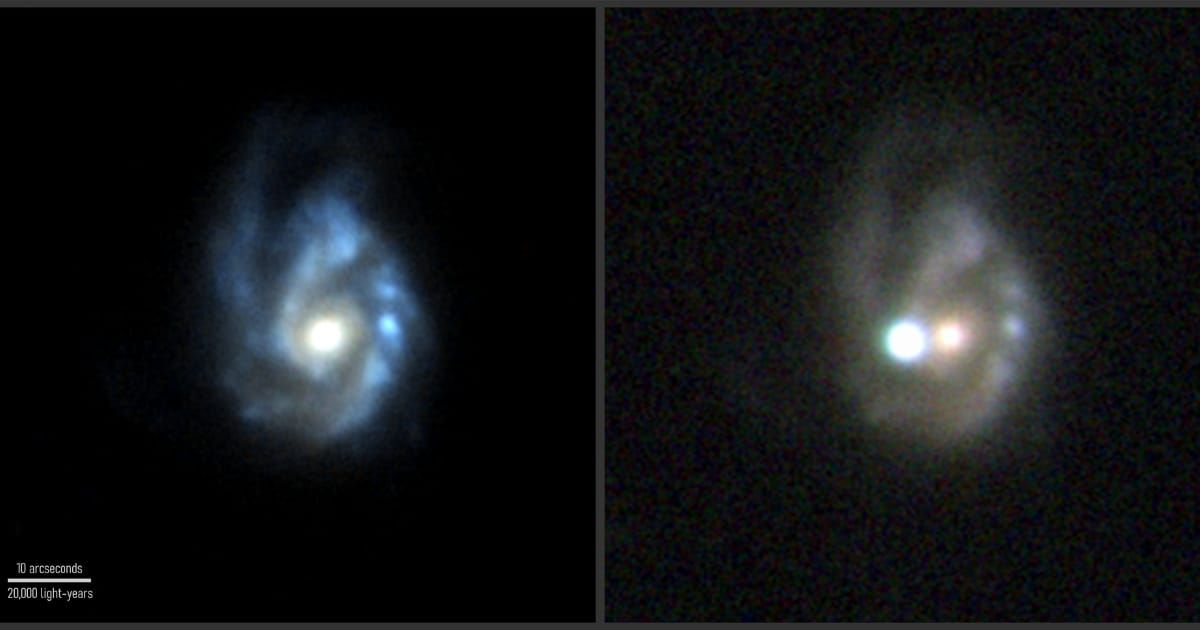
A rare class of highly luminous stellar explosions has become the subject of a new study by researchers sifting through archival data from NASA's Fermi Gamma-ray Space Telescope. The particular superluminous supernova studied by the team is called SN 2017egm, and is suspected to have received its energy from a super-magnetized neutron star. This marks the first time that gamma rays—the most energetic form of light in the universe—have been conclusively linked to a supernova of this kind, chosen from a sample of six such events surveyed by Fermi in its first 16 years since launching in June 2008.
“Only SN 2017egm shows evidence for gamma rays, confirming earlier hints that some supernovae can be as luminous in gamma rays as they are in visible light. This opens up a new window for studying these fascinating events,” said Guillem Martí-Devesa, a fellow at the Institute of Space Sciences in Barcelona, Spain. This extremely bright supernova was first found in the galaxy NGC 3191, which is located about 440 million light-years away in the constellation Ursa Major. Even across this vast cosmic distance, according to NASA, it is one of the closest occurrences of an event of this type.
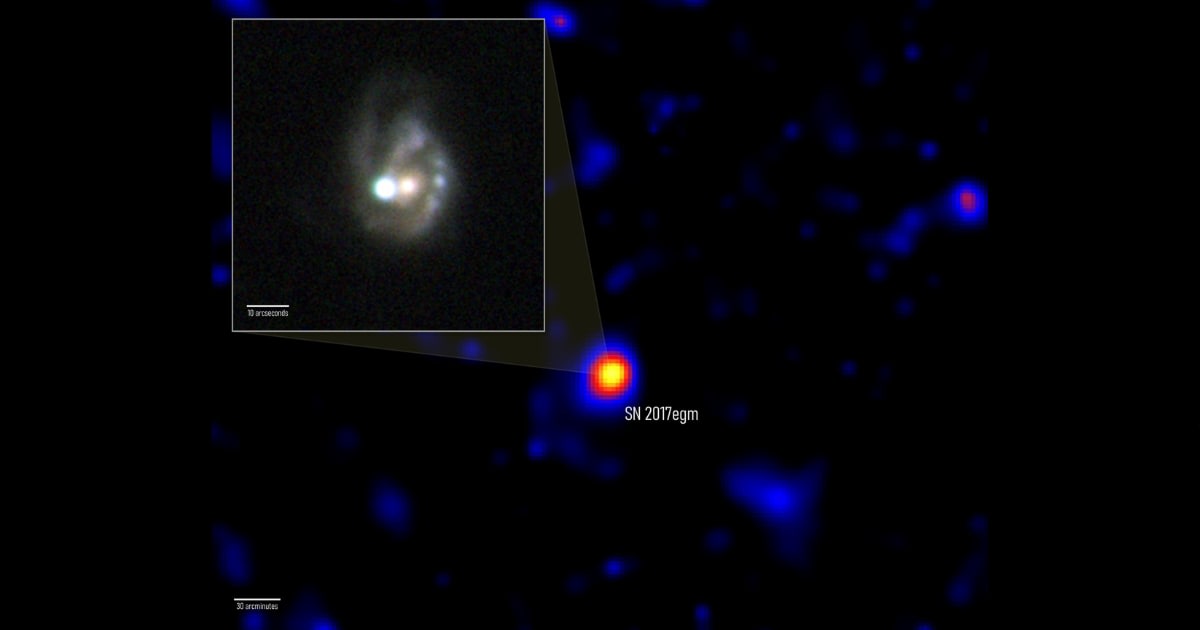
SN 2017egm is one of nearly 400 superluminous core-collapsing supernovae that have been identified over the last couple of decades by optical sky surveys. These cataclysmic events occur when the core of a star many times the mass of our Sun collapses under its own weight, triggering a massive explosion. “For nearly 20 years, astronomers have searched Fermi data for gamma-ray signals from thousands of supernovae, and while a few intriguing hints have been reported, none were definitive until now,” said lead researcher Fabio Acero at the French National Centre for Scientific Research (CNRS) and the University of Paris-Saclay, referring to the breakthrough of tying the gamma-ray emission directly to the supernova's hidden central engine: a supermagnetized neutron star, or magnetar.
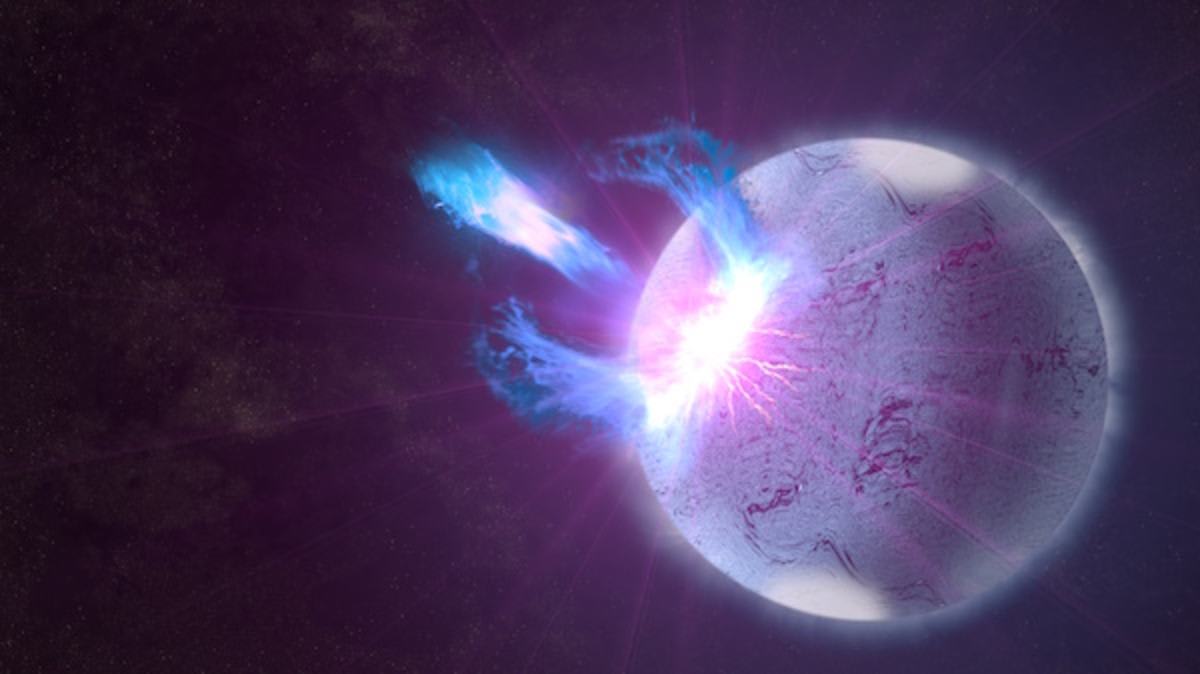
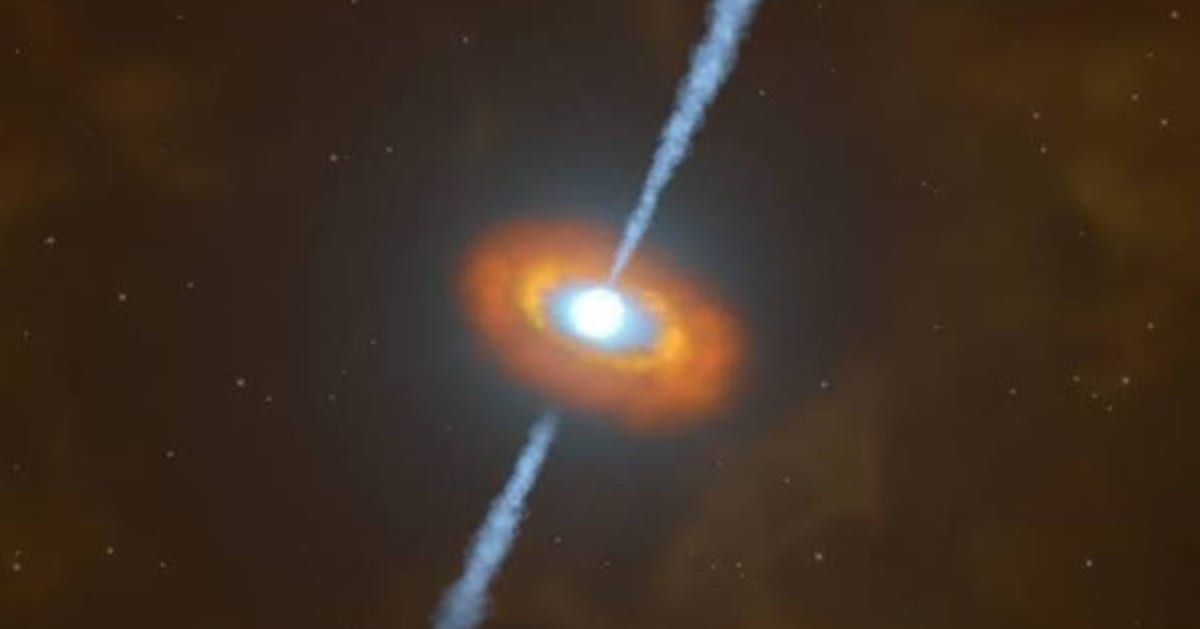
Superluminous supernovae (SLSNe) are a relatively new class of phenomenon that are also referred to as transients, and those studied in this sample have all registered a peak brightness of at least 10 to 100 times normal values. The name "transient" comes from the fact that their immense luminosity is highly dynamic, rapidly peaking and fading over observable human timescales. At the center of supernovae like SN 2017egm are rapidly spinning neutron stars, which spin hundreds of times per second. This extreme rotation causes them to emanate a blistering wind of electrons and antimatter positrons, inflating a vast cloud of energetic particles around them called a magnetar wind nebula. According to a model created by Indrek Vurm at the University of Tartu in Estonia and Brian Metzger at Columbia University in New York City, the high-energy gamma rays produced in this nebula are initially trapped. The incredibly dense, expanding shell of supernova debris acts as a thick fog, absorbing these gamma rays and efficiently reprocessing their energy into visible light that we can observe from afar.
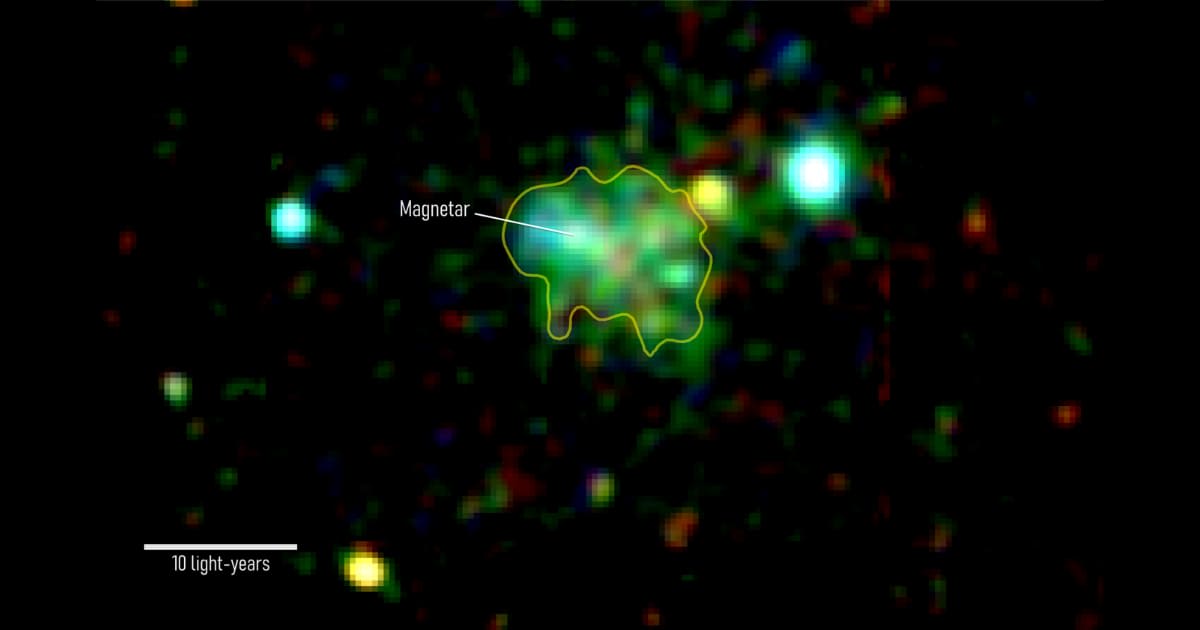
However, as the supernova debris continues to expand over the following months, this dense material thins out, and the optical depth drops. The fog lifts, and a window opens for the highest-energy gamma rays to finally leak out into space, allowing telescopes like Fermi to observe them. While a prior study led by Li Shang at Anhui University in Hefei, China, had already hinted at the possibility of having observed gamma rays from this exact same SLSN back in 2024, this latest comprehensive analysis solidifies the detection. It stands as a profound vindication of decades of theoretical work on magnetars as a driving force behind superluminous supernovae. “Observing gamma rays from supernovae will give us a new way to explore their inner workings,” said Judy Racusin, deputy project scientist for the Fermi mission at NASA Goddard Space Flight Center in Maryland.
More on Starlust
A gamma-ray burst raged on for seven hours. A researcher, who was behind its discovery, explains how
'At long last': XRISM solves 50-year-old mystery surrounding bright star gamma-Cas