Next five total solar eclipses after August 2026: Dates, city-wise times and how to watch

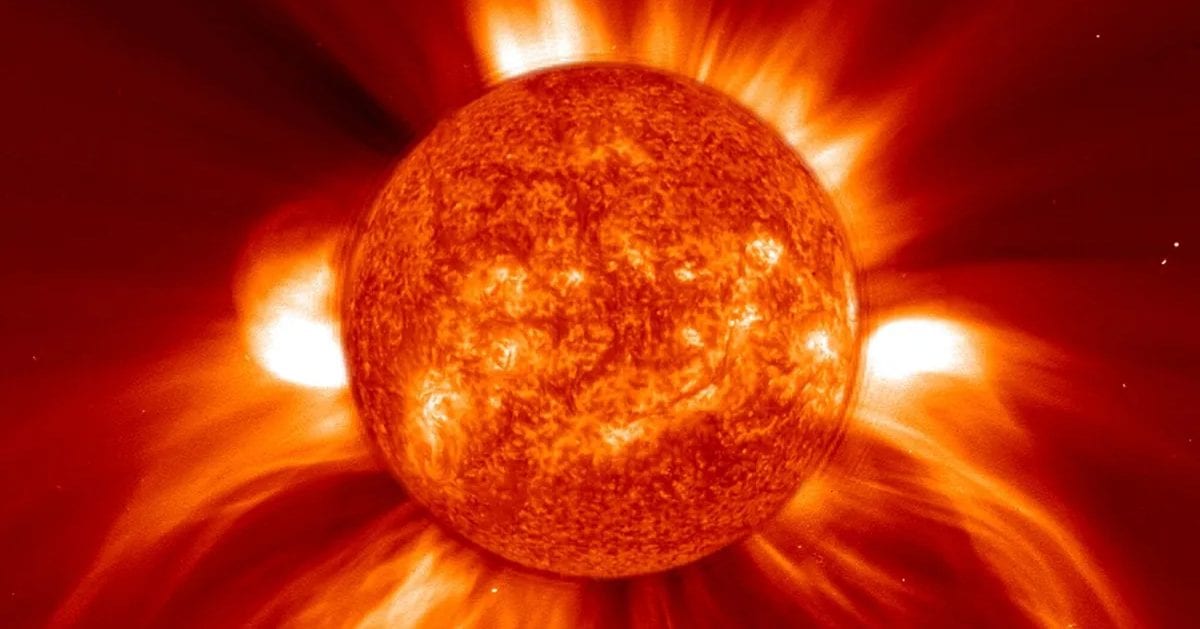
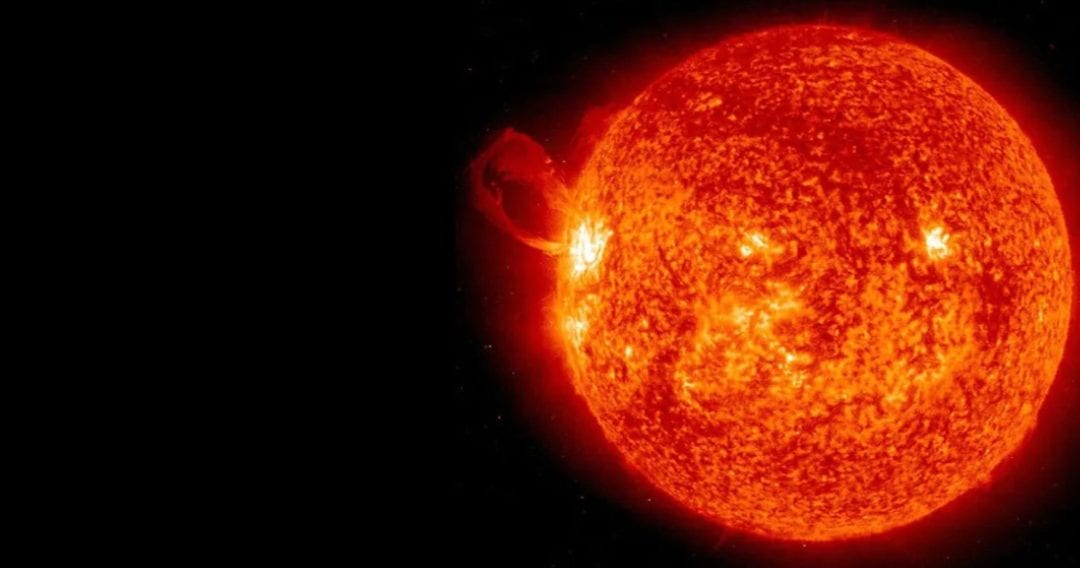
A solar eclipse is one of the most breathtaking celestial spectacles we get to watch from Earth. But what exactly is it? A solar eclipse occurs when the Moon is positioned between the Sun and Earth, thus blocking the Sun's light either completely or partly. The shadow it casts on Earth during this time varies, depending on the type of eclipse we are observing; it can be total, partial, or annular, based on the alignment of the three bodies in the sky.

Mark your calendar for the next five total solar eclipses
A year usually has two to four solar eclipses, but they aren't always total solar eclipses. The most recent total solar eclipse observed from Earth was on August 12, 2026, when northern Spain, northern Russia, Greenland, the Arctic and Iceland experienced totality, while much of Europe, North America and North Africa saw a partial eclipse.
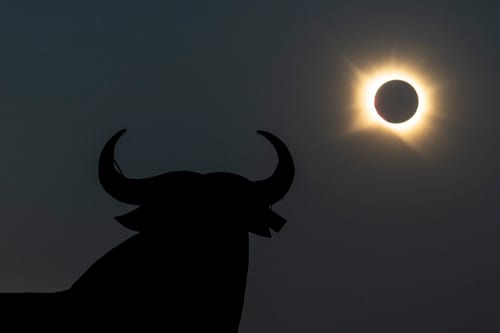
In case you missed the August 2026 eclipse, don't worry; we have curated a list of upcoming total solar eclipses that will give you several more opportunities to witness the totality in the coming years. You can check the dates and timings here and plan ahead.
1. August 2, 2027 — Total Solar Eclipse
The first total solar eclipse on the list will take place on August 2, 2027, with the path of totality crossing parts of southern Europe, North Africa and the Middle East. It will pass through Spain, Morocco, Algeria, Tunisia, Libya, Egypt, Saudi Arabia, Yemen and Somalia, while parts of Gibraltar and the British Indian Ocean Territory will also see totality. Some parts of southern and western Asia, along with a large portion of Africa and the Middle East, will experience a partial solar eclipse.
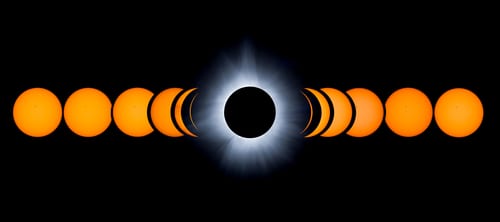
Eclipse visibility
The path of totality will stretch from southern Europe across North Africa and into the Middle East. Totality will be visible from parts of Spain, Morocco, Algeria, Tunisia, Libya, Egypt, Saudi Arabia, Yemen and Somalia. The exact view will depend on the location, with the duration of totality changing as the Moon’s shadow moves along its path. NASA puts the maximum totality at 6 minutes 23 seconds.
City-wise timings
For anyone planning to watch the eclipse, the local time is just as important as the date. The table below gives the main stages for selected cities where totality is visible. The local timings have been shared by Timeanddate.
| City | Eclipse begins | Maximum eclipse | Eclipse ends | Totality |
| Cádiz, Spain | 9:40 a.m. CEST | 10:46 a.m. | 11:59 a.m. | 2m 56s |
| Tangier, Morocco | 7:40 a.m. GMT | 8:47 a.m. | 10:00 a.m. | 4m 51s |
| Oran, Algeria | 8:44 a.m. CET | 9:53 a.m. | 11:09 a.m. | 5m 09s |
| Kairouan, Tunisia | 8:55 a.m. CET | 10:10 a.m. | 11:29 a.m. | 2m 47s |
| Benghazi, Libya | 10:10 a.m. EET | 11:30 a.m. | 12:53 p.m. | 6m 11s |
| Luxor, Egypt | 11:40 a.m. EEST | 1:05 p.m. | 2:26 p.m. | 6m 22s |
| Jeddah, Saudi Arabia | 12:00 p.m. AST | 1:25 p.m. | 2:43 p.m. | 5m 55s |
| Sana'a, Yemen | 12:21 p.m. AST | 1:45 p.m. | 3:00 p.m. | 2m 28s |
2. July 22, 2028 — Total Solar Eclipse
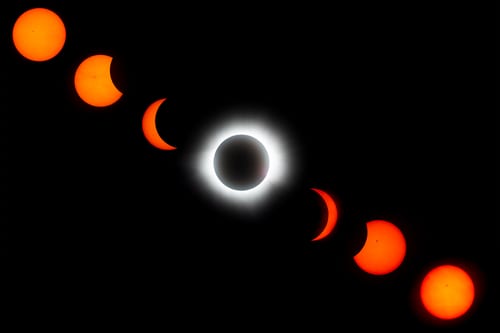
The next total solar eclipse will take place on July 22, 2028, with the path of totality crossing parts of Australia, New Zealand, Christmas Island and the Cocos (Keeling) Islands. Cities and locations including Tennant Creek, Bourke, Dubbo, Orange, Mudgee, Bathurst, Katoomba, Penrith, Dunedin, Queenstown and Ranfurly fall within the path of totality, while people in Southeast Asia, Oceania, Australia and the South Pacific will experience a partial eclipse.
City-wise timings
| City | Eclipse begins | Maximum eclipse | Eclipse ends | Totality |
| Blacktown, Australia | 12:40 p.m. AEST | 2:01 p.m. | 3:14 pm. | 3m 49s |
| Canterbury, Australia | 12:40 p.m. AEST | 2:01 p.m. | 3:14 p.m. | 3m 49s |
| Sydney, Australia | 12:40 p.m. AEST | 2:01 p.m. | 3:14 p.m. | 3m 49s |
| Dunedin, New Zealand | 3:09 p.m. NZST | 4:17 p.m. | 5:20 p.m. | 2m 50s |
| Queenstown, New Zealand | 3:07 p.m. NZST | 4:16 p.m. | 5:20 p.m. | 2m 54s |
3. November 25, 2030 — Total Solar Eclipse
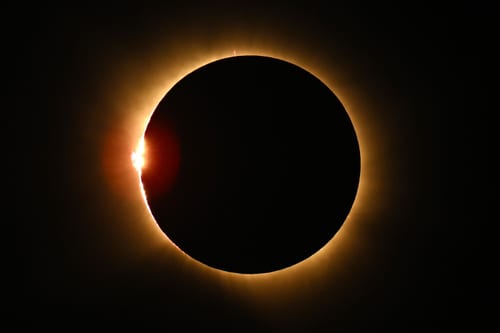
The third total solar eclipse after 2026 will take place on November 25, 2030, with the path of totality crossing parts of southern Africa and Australia. A much wider region, including parts of Australia, Indonesia, as well as Central and Southern Africa, will see a partial eclipse. NASA puts the maximum totality duration at 3 minutes 44 seconds. The eclipse will be visible from several locations in southern Africa, including Windhoek, Tsabong, Schweizer-Reneke, Phuthaditjhaba, Pietermaritzburg and Durban.
City-wise timings
The timing changes from city to city. Here are the local timings for the main locations along the path of totality:
| City | Eclipse begins | Maximum eclipse | Eclipse ends | Totality |
| Windhoek, Namibia | 6:24 a.m. CAT | 7:19 a.m. | 8:21 a.m. | 1m 52s |
| Tsabong, Botswana | 6:24 a.m. CAT | 7:25 a.m. | 8:30 a.m. | 1m 04s |
| Schweizer-Reneke, South Africa | 6:28 a.m. SAST | 7:28 a.m. | 8:34 a.m. | 2m 01s |
| Phuthaditjhaba, South Africa | 6:30 a.m. SAST | 7:31 a.m. | 8:40 a.m. | 2m 30s |
| Pietermaritzburg, South Africa | 6:32 a.m. SAST | 7:34 a.m. | 8:43 a.m. | 2m 21s |
| Durban, South Africa | 6:32 a.m. SAST | 7:34 a.m. | 8:44 a.m. | 2m 26s |
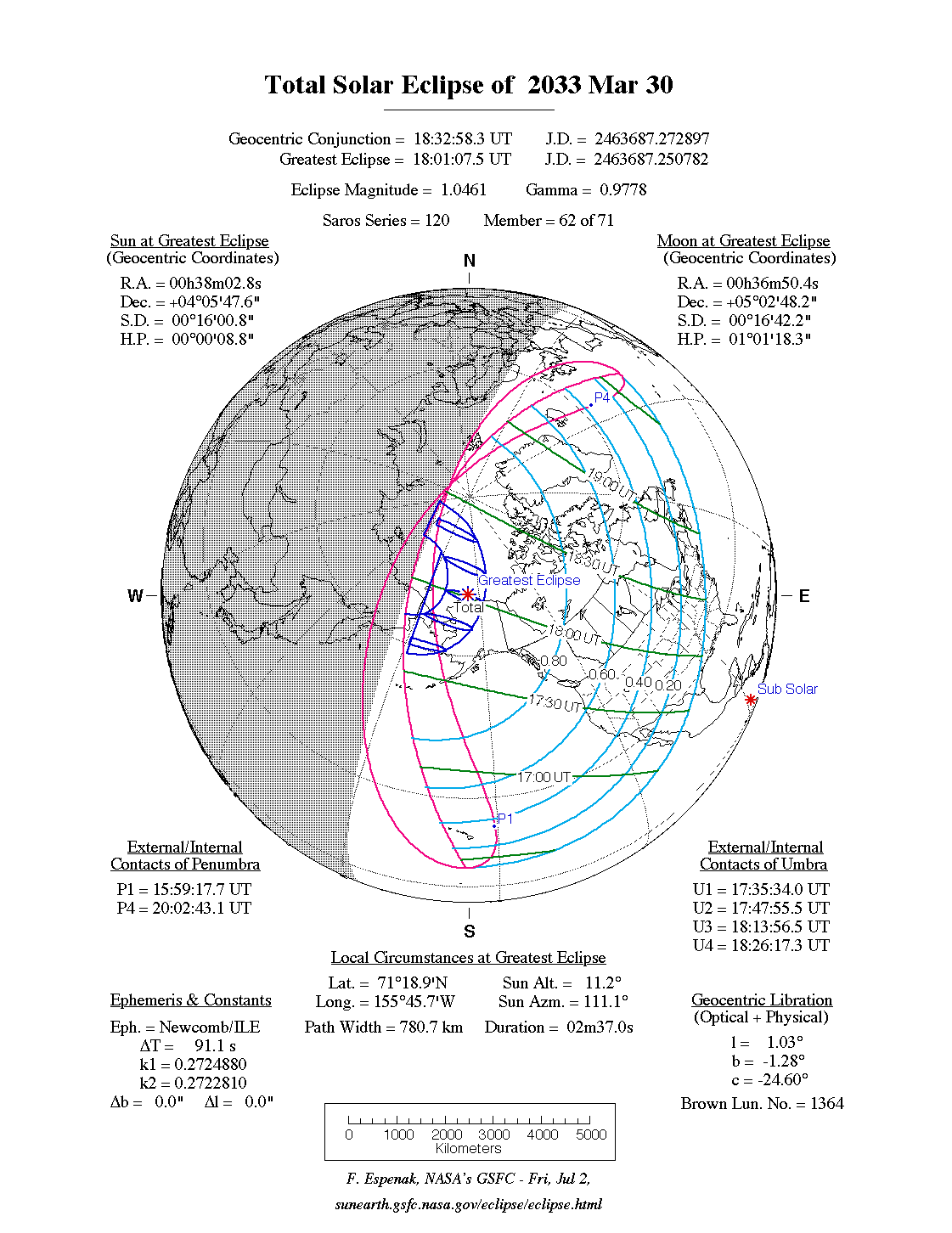
4. March 30, 2033 — Total Solar Eclipse
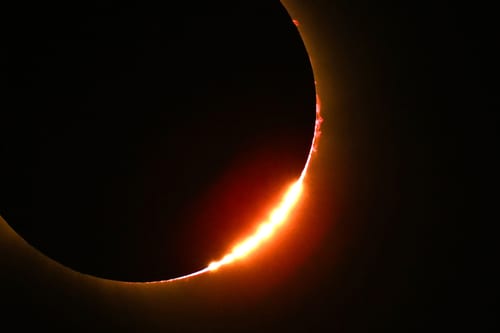
The fourth total solar eclipse on the list will be observed on March 30, 2033. The path of totality includes Alaska and the Russian Far East, while a much wider region across North America, northern Asia and parts of Europe will experience a partial eclipse. NASA's calculations put the maximum duration of totality at 2 minutes 37 seconds.
City-wise timings
Here are the local timings listed by Timeanddate for the selected locations:
| City | Eclipse begins | Maximum eclipse | Eclipse ends | Totality |
| Anadyr, Chukotka | 4:54 a.m ANAT | 5:47 a.m. | 6:42 a.m. | 51s |
| Nome, Alaska | 8:51 a.m. AKDT | 9:47 a.m. | 10:45 a.m. | 2m 30s |
| Kotzebue, Alaska | 8:56 a.m. AKDT | 9:52 a.m. | 10:50 a.m. | 2m 31s |
| Noatak, Alaska | 8:57 a.m. AKDT | 9:53 a.m. | 10:51 a.m. | 2m 27s |
| Utqiaġvik, Alaska | 9:04 a.m. AKDT | 10:01 a.m. | 10:59 a.m. | 2m 36s |
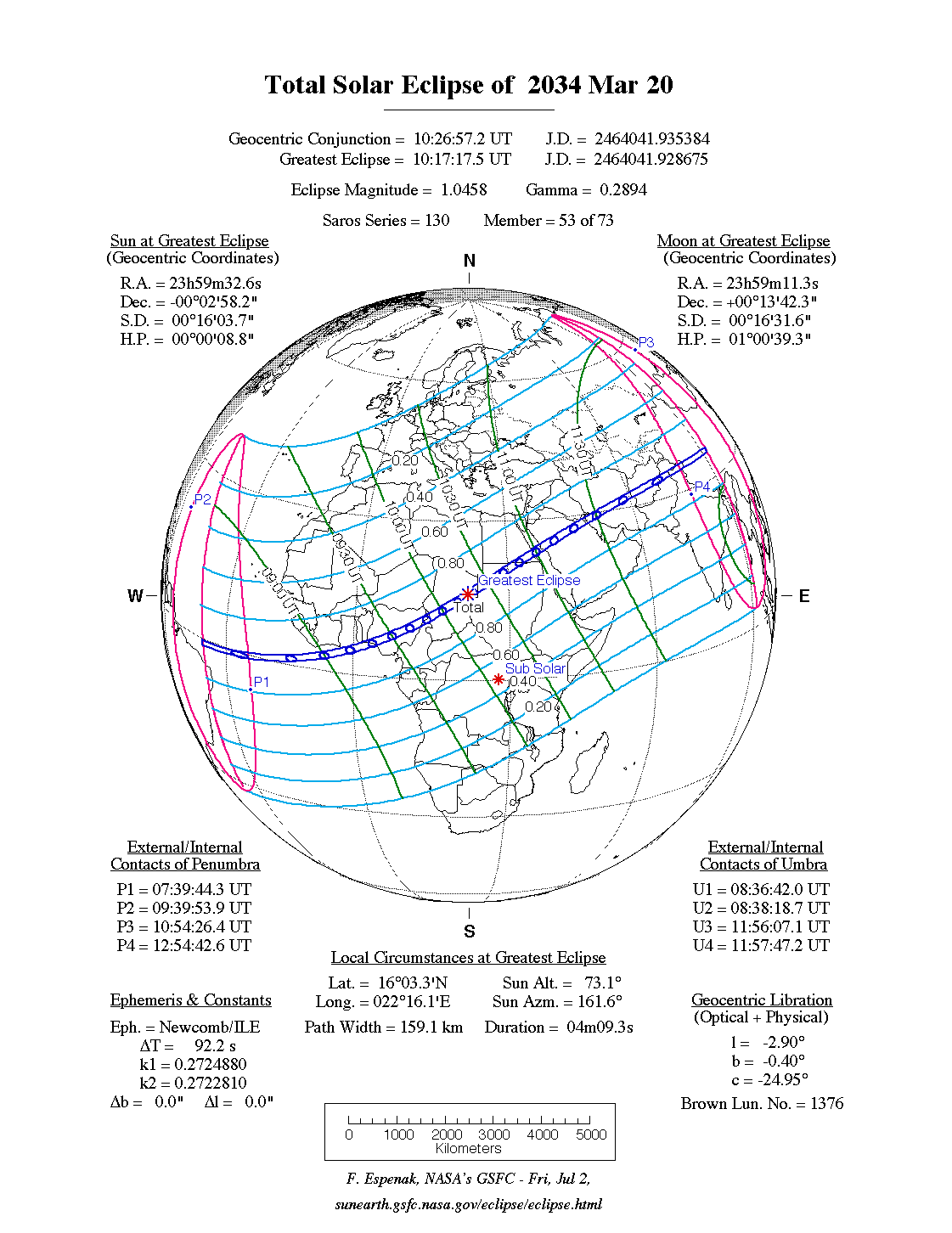
5. March 20, 2034 — Total Solar Eclipse
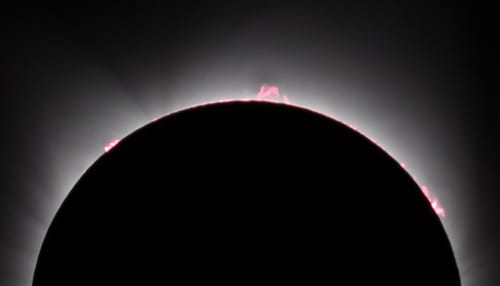
The fifth total solar eclipse on the list will take place on March 20, 2034. Parts of Africa, the Middle East, South Asia and China fall on the path of totality, while a much wider area across Europe, Asia, Africa and parts of the Americas will see a partial eclipse. Timeanddate lists cities in Nigeria, Cameroon, Saudi Arabia, Iran, Afghanistan, Pakistan and India among the locations where totality will be visible.
City-wise timings
The timing changes as the eclipse moves across the path. Here are some confirmed cities where totality is visible, with the local timings listed by Timeanddate:
| City | Eclipse begins | Maximum eclipse | Eclipse ends | Totality |
| Akure, Nigeria | 9:05 a.m. WAT | 10:24 a.m. | 11:53 a.m. | 2m 47s |
| Lagos, Nigeria | 9:02 a.m. WAT | 10:19 a.m. | 11:47 a.m. | 2m 41s |
| Hafar Al- Batin, Saudi Arabia | 12:58 p.m. AST | 2:22 p.m. | 3:38 p.m. | 1m 59s |
| Peshawar, Pakistan | 3:43 p.m. PKT | 4:51 p.m. | 5:53 p.m. | 1m 36s |
| Srinagar, India | 4:16 p.m. IST | 5:23 p.m. | 6:23 p.m. | 2m 03s |
| Khost, Afghanistan | 3:11 p.m. AFT | 4:20 p.m. | 5:23 p.m. | 2m 14s |
How to watch a solar eclipse safely
A safe way to watch an eclipse is with certified solar eclipse glasses or a solar viewer. Regular sunglasses do not provide enough protection for looking directly at the Sun. If you are using a camera, telescope, or binoculars, they need a proper solar filter fitted to the front.

If you don't have suitable eye protection, an indirect method such as a pinhole projector is a safer way to watch an eclipse without looking directly at the Sun.
More on Starlust
Total solar eclipse 2026: Tips, recommended glasses and equipment to see August 12 event safely
Why are total solar eclipses so rare, and how can you watch one safely?