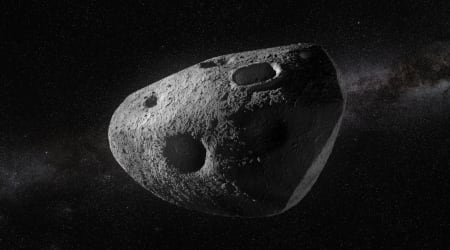
New study reveals fresh clues about the mysterious origin of comet 3I/ATLAS

Only three interstellar visitors have ever been confirmed passing through our solar system. One of them is 3I/ATLAS, which was first spotted by the ATLAS survey telescope in Chile in 2025. It travels on an unbound path, and it came from deep space. While scientists are still studying this new visitor, many things about it remain a mystery. But now, we may finally have a clue about how and where this object formed.
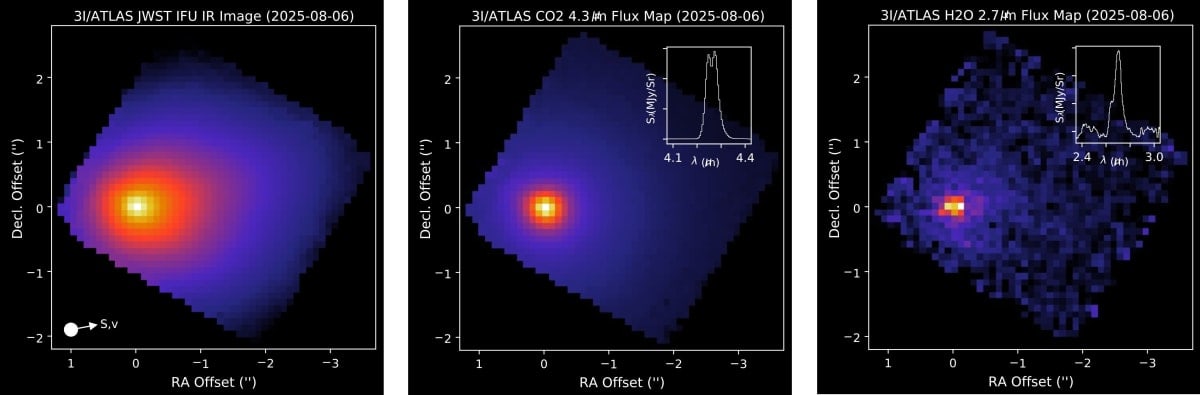
What did the researchers find about 3I/ATLAS?
In more recent research, a team of UK-based researchers has worked out that 3I/ATLAS likely formed in one of the coldest environments imaginable. This also hints that it might have been born very far away from any star's warmth. Commenting on this, Dr. Lea Ferellec, a research fellow at Northumbria University's School of Engineering, Physics and Mathematics, said, "This object gives us a rare chance to study material that formed somewhere completely different from our own solar system." She added, "Finding that it's so rich in nitrogen tells us it likely formed in extremely cold conditions, far from its home star."
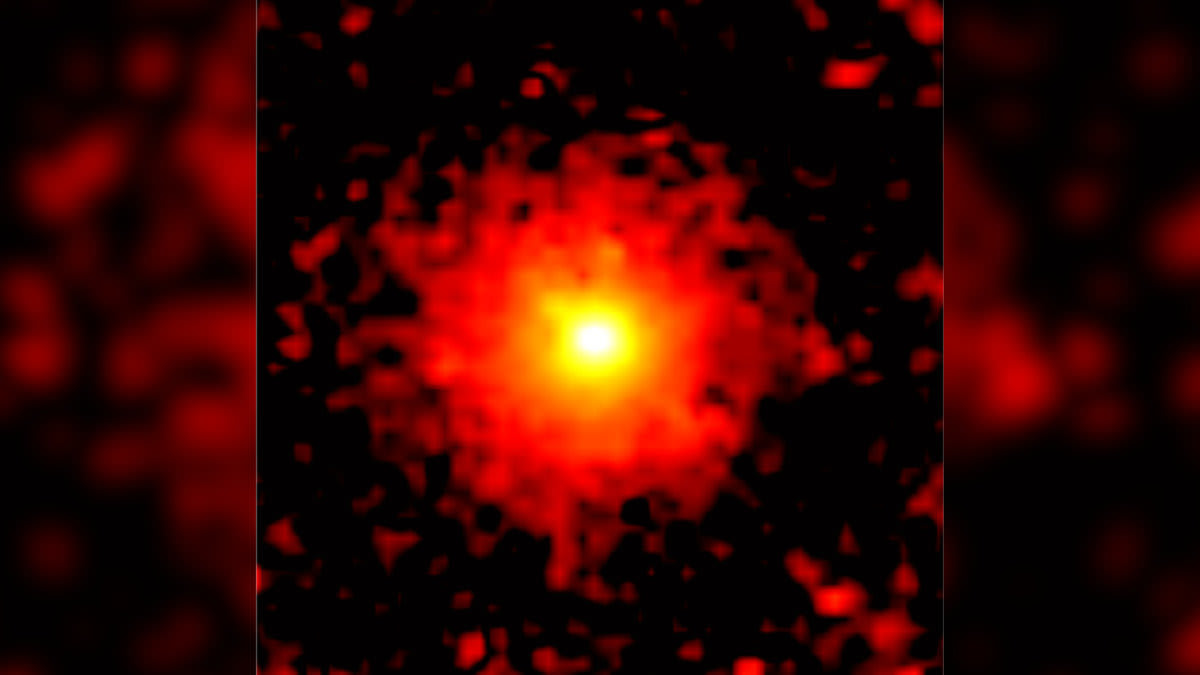
For this research, Dr. Lea Ferellec, a research fellow at Northumbria University's School of Engineering, Physics and Mathematics, who led the study, focused on the stream of ionized gas trailing behind 3I/ATLAS as it sped away from the Sun. The team used a new instrument called WEAVE, installed on the William Herschel Telescope. With it, they could identify five different types of ions streaming away at the same time. The chemical signature suggests that it likely formed somewhere incredibly cold, with temperatures below −240°C, or around −400°F. This means that the object might have originated at the very edge of whatever solar system it came from.
What else did the team find?
In addition to its origin, the researchers worked together with scientists from the University of Edinburgh to track how the ion mixture changed farther along the comet’s tail. The team found that the tail was developed when a stream of particles from the Sun sweeps the comet’s charged material outward behind it. ING Director Rubén Sánchez-Janssen credited the instrument itself, saying, "Powerful, large-format IFUs with high sensitivity in the blue optical spectrum—like WEAVE-LIFU on the WHT—are opening new frontiers for the study of comets and other solar system objects."
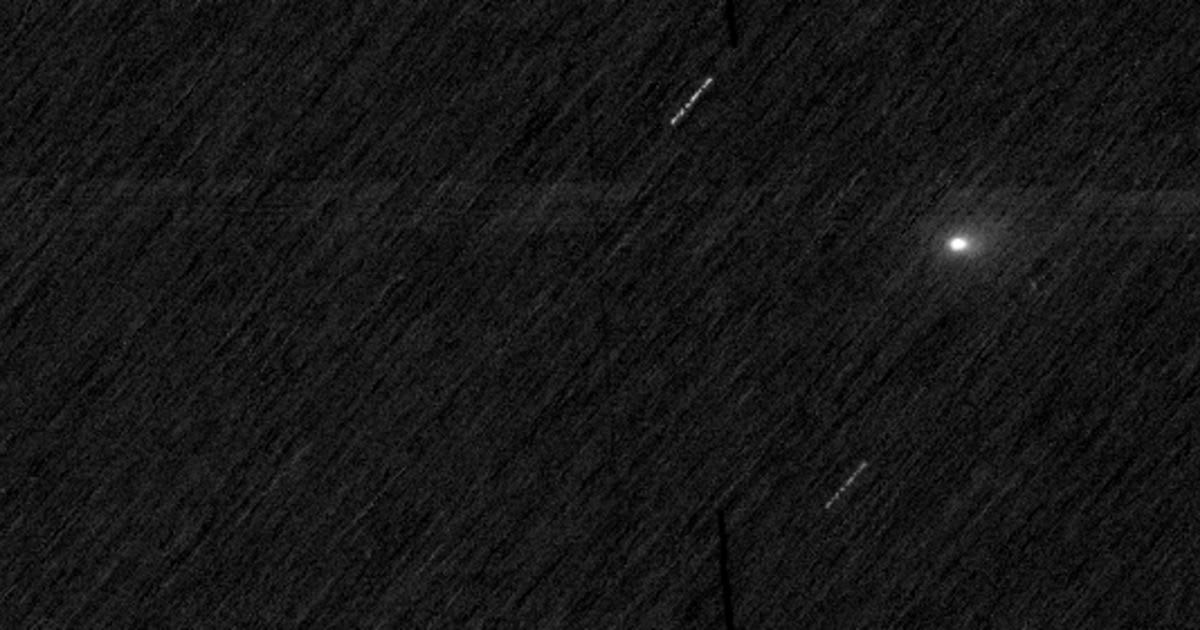
He also pointed to the observing time granted for the study, calling it "a perfect example of the value of DDT, which is specifically designed to enable observations of exceptional and urgent scientific importance." This new study has now been published in the Monthly Notices of the Royal Astronomical Society. As of now, 3I/ATLAS is already gone, back out into deep space, though the data collected will likely keep scientists busy for a while.
More on Starlust
What happens when a star dies? New research gets closer to an answer
Could future telescopes reveal oceans on distant Earth-like planets? What latest research says