Astronomers just mapped a galaxy cluster's magnetic field for the first time—here’s what they found
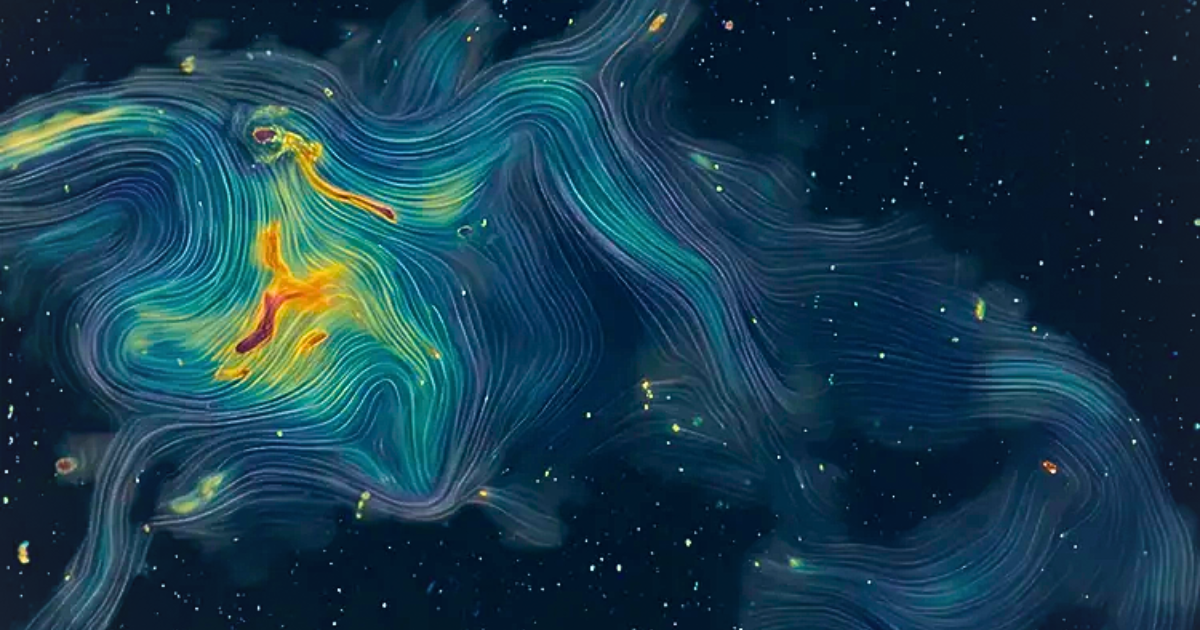
Galaxy clusters are some of the largest structures in the universe, but scientists have never been able to see what their magnetic fields look like from one end to the other. Now, that's finally changed. Thanks to a record-breaking radio survey, astronomers have mapped the complete magnetic field of a galaxy cluster for the first time and even traced it from the crowded core all the way to its faint outer edges.
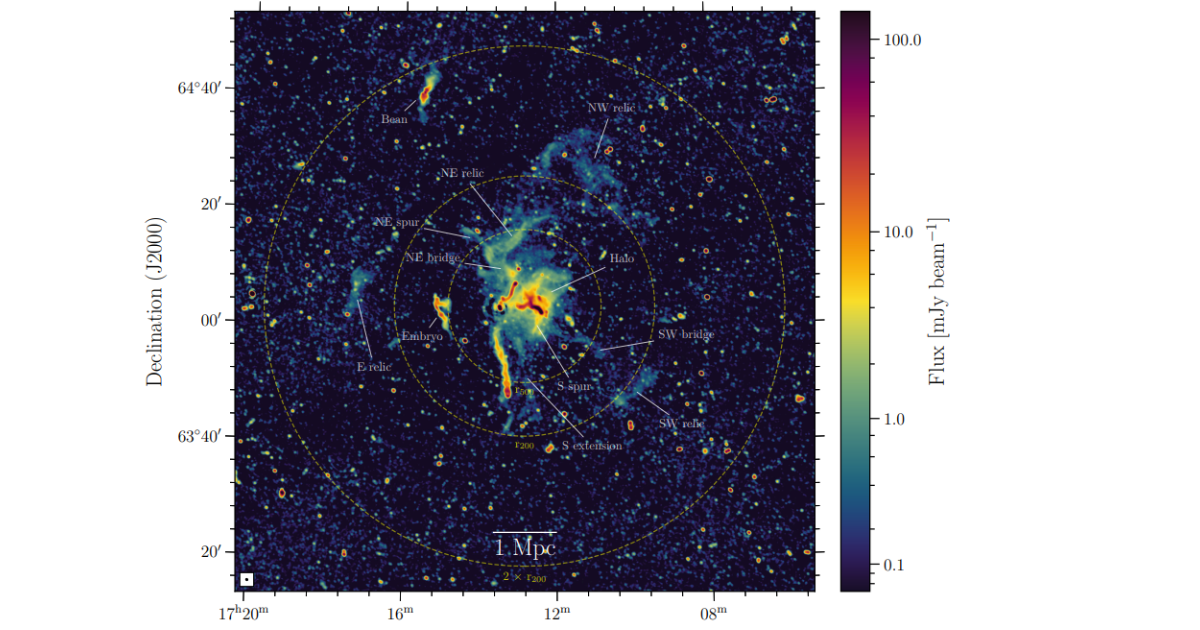
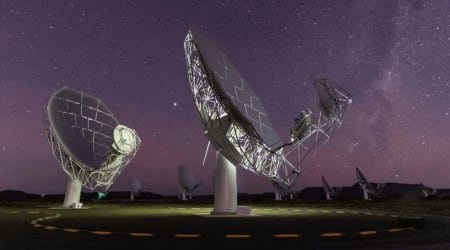
The cluster, known as Abell 2255, is about a billion light-years from Earth and has puzzled astronomers for years because of its unusual radio signals. Those signals come from electrons racing through space at nearly the speed of light and interacting with magnetic fields along the way. To map the entire cluster, the team spent 224 hours collecting radio images as part of the LOFAR Galaxy Cluster Ultra-Deep Field project using the European Low Frequency Array (LOFAR) telescope network. What they found was surprising. Instead of being scattered randomly, the magnetic fields across Abell 2255 seem to follow patterns shaped by the movement of gas as the cluster formed.
How does this change our understanding of galaxy clusters?
This is the first direct evidence that the same forces that drive the growth of galaxy clusters also shape their magnetic fields. Lead researcher Andrea Botteon of the Italian National Institute for Astrophysics explained, "The complexity of these studies is due to the elusiveness of the radio signal from electrons moving in very weak magnetic fields. We believe that the mechanism that 'turns on' these gigantic radio emissions is linked to the formation process of galaxy clusters."
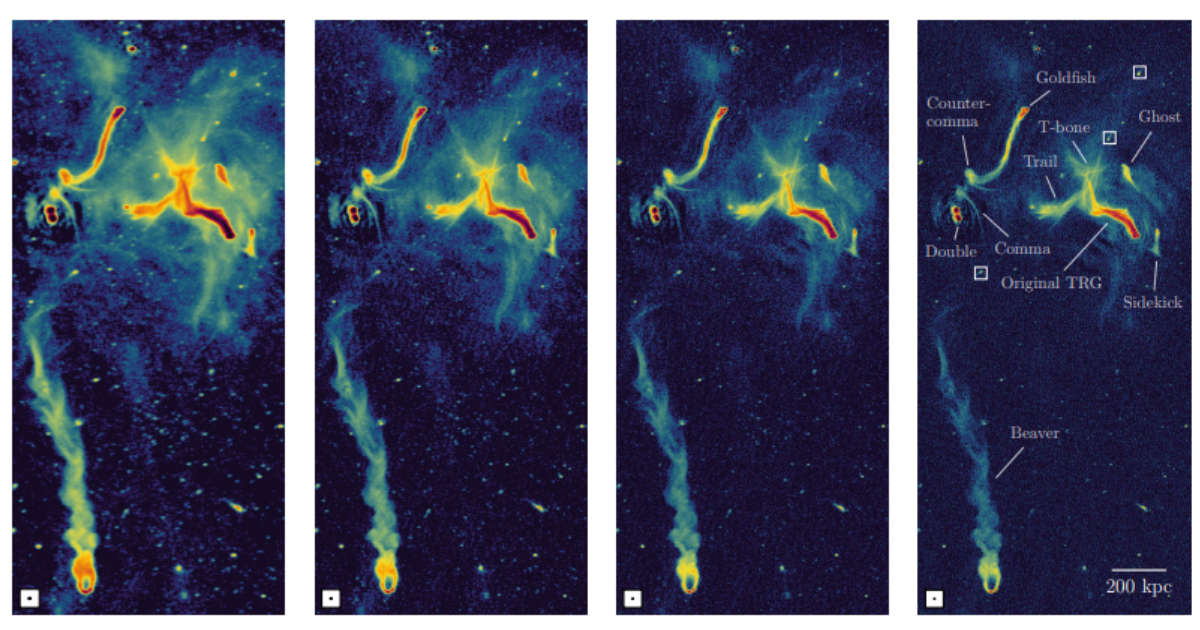
Commenting on why the images are so important, he noted, "Obtaining very sensitive images of galaxy clusters at radio wavelengths is crucial to understanding how electrons are accelerated to relativistic speeds and magnetic fields are amplified on large cosmic scales." In some regions of the cluster, the team also found magnetic field lines stretching outward in specific directions along extended radio emissions. In areas shaped by shock waves, the magnetic fields are oriented tangentially instead. Botteon connected the two, saying, "The coherence of the magnetic field lines observed in some regions of the cluster suggests that the morphology of the field is intimately linked to the dynamics of the gas in which it resides, where it can be 'stretched' or 'compressed' by the motions associated with the formation of the cluster itself."
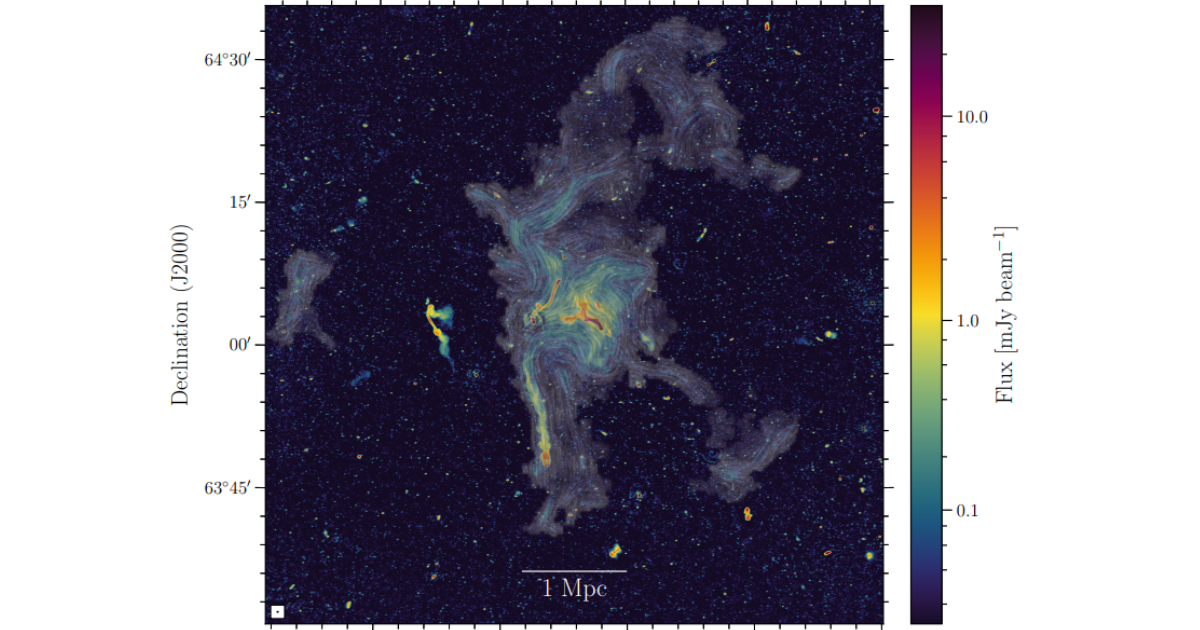
Mapping a magnetic field that stretches across millions of light-years wasn't possible with just a single observation. Instead, the team combined LOFAR's deepest-ever images of Abell 2255 with a new analysis technique designed to trace magnetic structures across such enormous distances. The study is currently available as a preprint on arXiv and has also been accepted for publication in the journal Astronomy & Astrophysics.
More on Starlust:
NASA's Hubble and Webb spot the first of a star cluster's 10,000 missing black holes
Scientists discover nearby super-Earth is leaking helium into space, revealing its atmosphere