This weird object could be the first moon detected outside our solar system—but it's not that simple
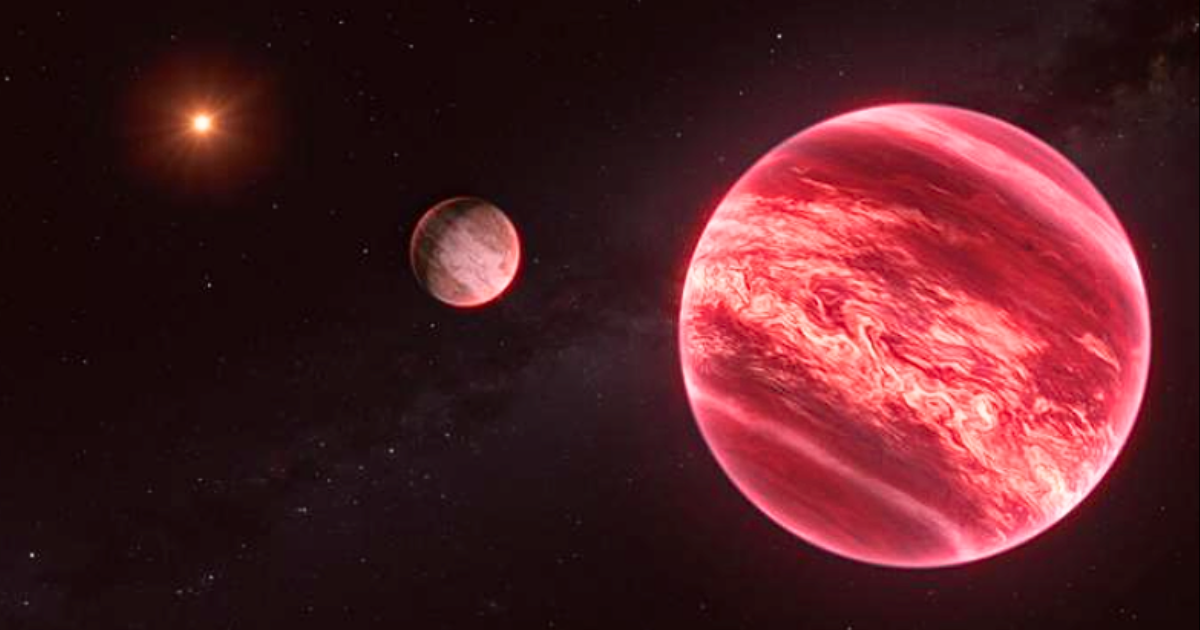
For decades, we have not been able to find a single moon beyond our solar system, even though astronomers say they're out there. But now, scientists have the first clue. While observing a distant, unusual star system called CD-35 2722 with the Very Large Telescope in Chile, a team of astronomers spotted an object that could be the first confirmed exomoon. Or, just as likely, it could be something so unfamiliar that it forces scientists to rethink what the words "moon" and "planet" even mean.
What makes this star system so hard to classify?
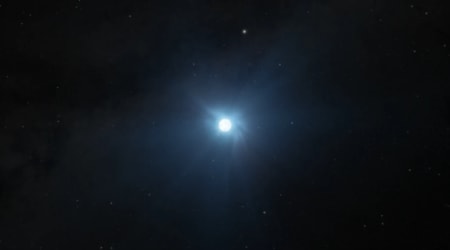
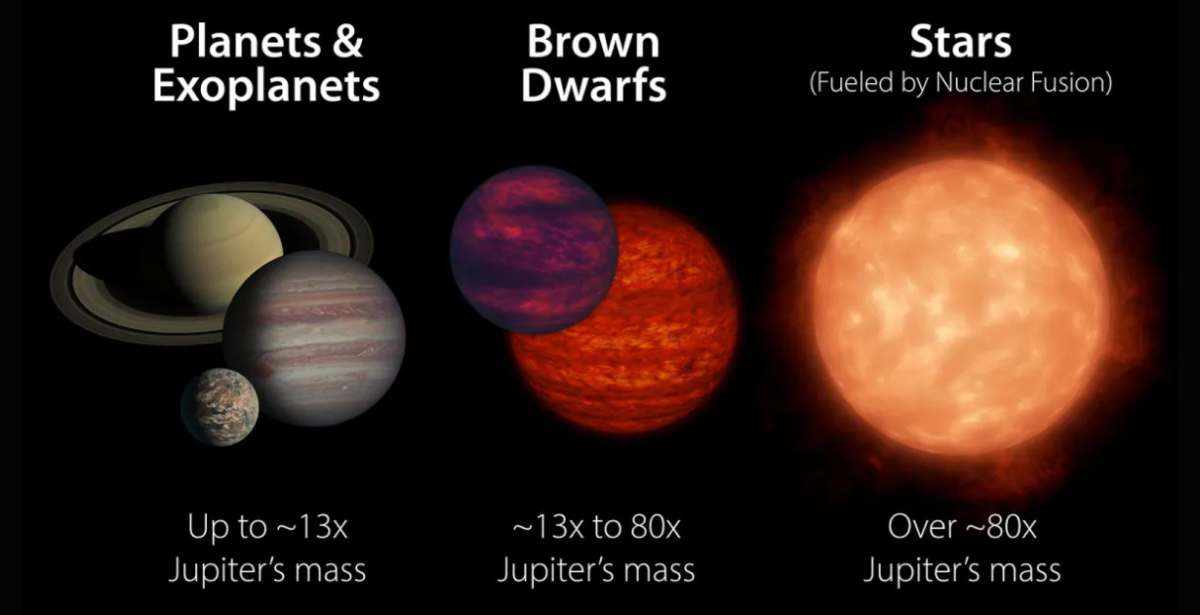
The star, titled CD-35 2722, is about 73 light-years from Earth and is built around a star with roughly half the mass of our Sun. Orbiting that star is a brown dwarf, sometimes called a "failed star" because it forms the way stars do but never gathers enough mass to ignite the fusion reaction that powers true stars. The brown dwarfs are heavier than the biggest gas giant planets yet lighter than the smallest stars. They also typically weigh in at 13 to 80 times the mass of Jupiter.
The newly spotted object doesn't orbit the star directly. Instead, it circles the brown dwarf, the same way a moon circles a planet rather than a sun. That setup is why researchers are struggling to label it. Research team leader Kevin Hoy of the Universidad Diego Portales explained, "This system is somewhat hard to define using solar-system-based words like 'planet' and 'moon.' The exosatellite is clearly massive enough to be a planet, but it does not orbit a star, though it orbits an object that orbits a star." He added, "Being the third wheel in this system makes us want to call it a moon, even if it is nothing like the small, rocky moons we have in our system." The findings of this research have now been published in the journal Nature.
So is it actually a moon?
The safest term the team can commit to right now is "exosatellite," which is a first-of-its-kind detection regardless of how it eventually gets classified. The reason is that calling it a moon would require setting a new definition of what a moon really is. Researcher Alice Zurlo of the Universidad Diego Portales pointed out why the usual rules don't apply here, saying, "The satellite we report is a giant gaseous body orbiting a highly massive companion, itself several times the mass of Jupiter. We have a clear delineation between the planets and the sun in the solar system, so defining things like moons is simple. In the CD-35 2722 system, where we are blurring the lines between stars, planets, and moons, the whole thing becomes more complicated to describe." Researchers are now hoping that the Extremely Large Telescope, which is currently under construction in Chile, will help them in the search for exomoons and other exosatellites like this one.
More on Starlust
What are gamma-ray bursts? Scientists make milestone findings on cosmos' most energetic events
Astronomers just mapped a galaxy cluster's magnetic field for the first time—here’s what they found