Scientists discover nearby super-Earth is leaking helium into space, revealing its atmosphere
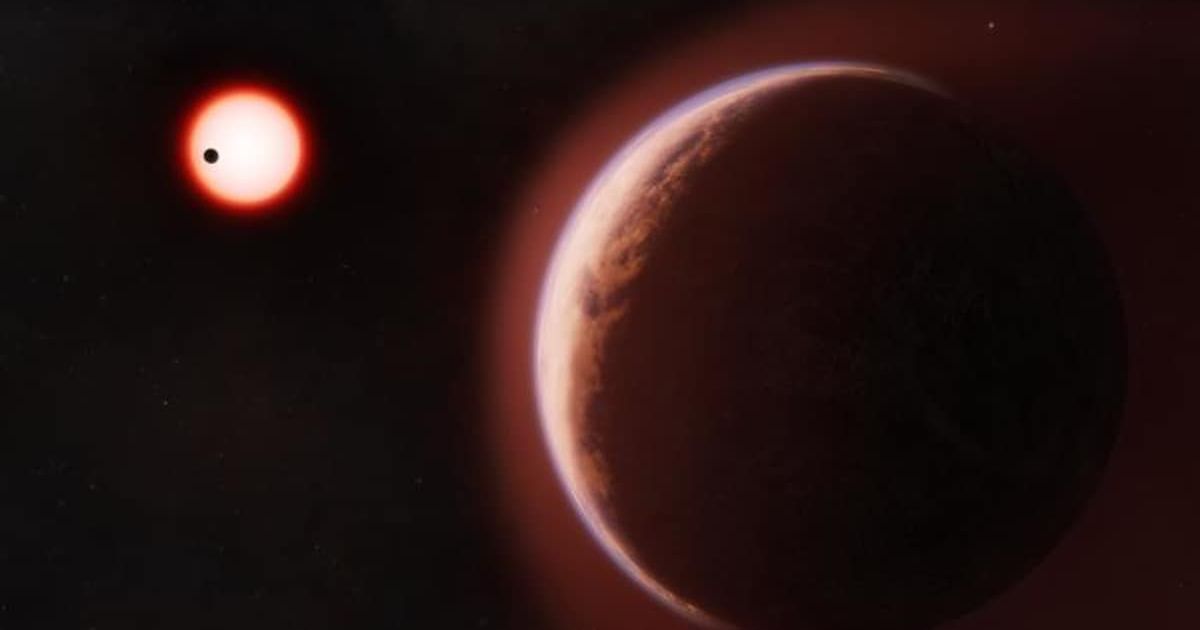
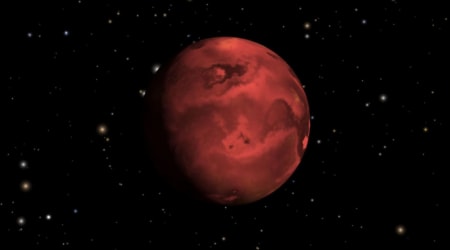
For the first time, astronomers have detected an atmosphere on a rocky, Earth-like planet lying in the liquid-water habitable zone of a nearby red dwarf star. The planet, called LHS 1140 b, drifts around the star just 48 light-years from Earth and is the strongest evidence to date that Earth-like planets with the potential to support life can exist outside our solar system. The findings of the study have been published in the journal Science.
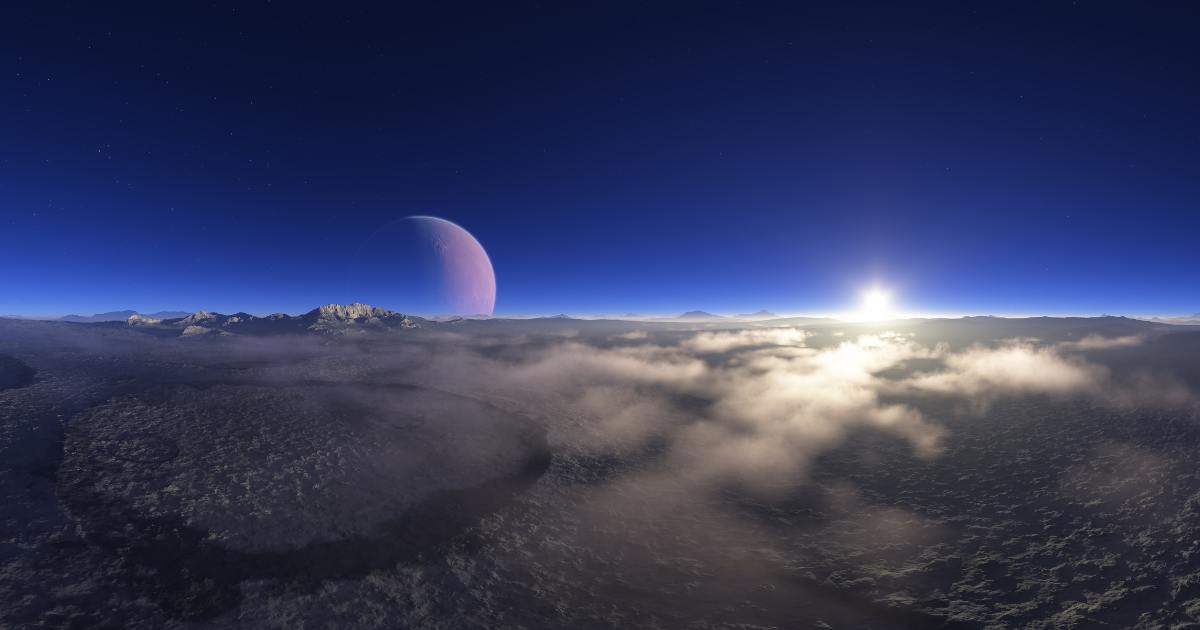
"An atmosphere is essential for a planet to support life as we know it," said lead author Collin Cherubim, who recently earned his Ph.D. in Earth and Planetary Sciences from Harvard University, in a statement. Theoretical models have long predicted that atmospheres of rocky planets can protect the surface from ionizing radiation, make the presence of liquid water possible, and regulate the climate. But while large, gas-rich exoplanets have been found to have atmospheres, cooler rocky planets have been a different story altogether.
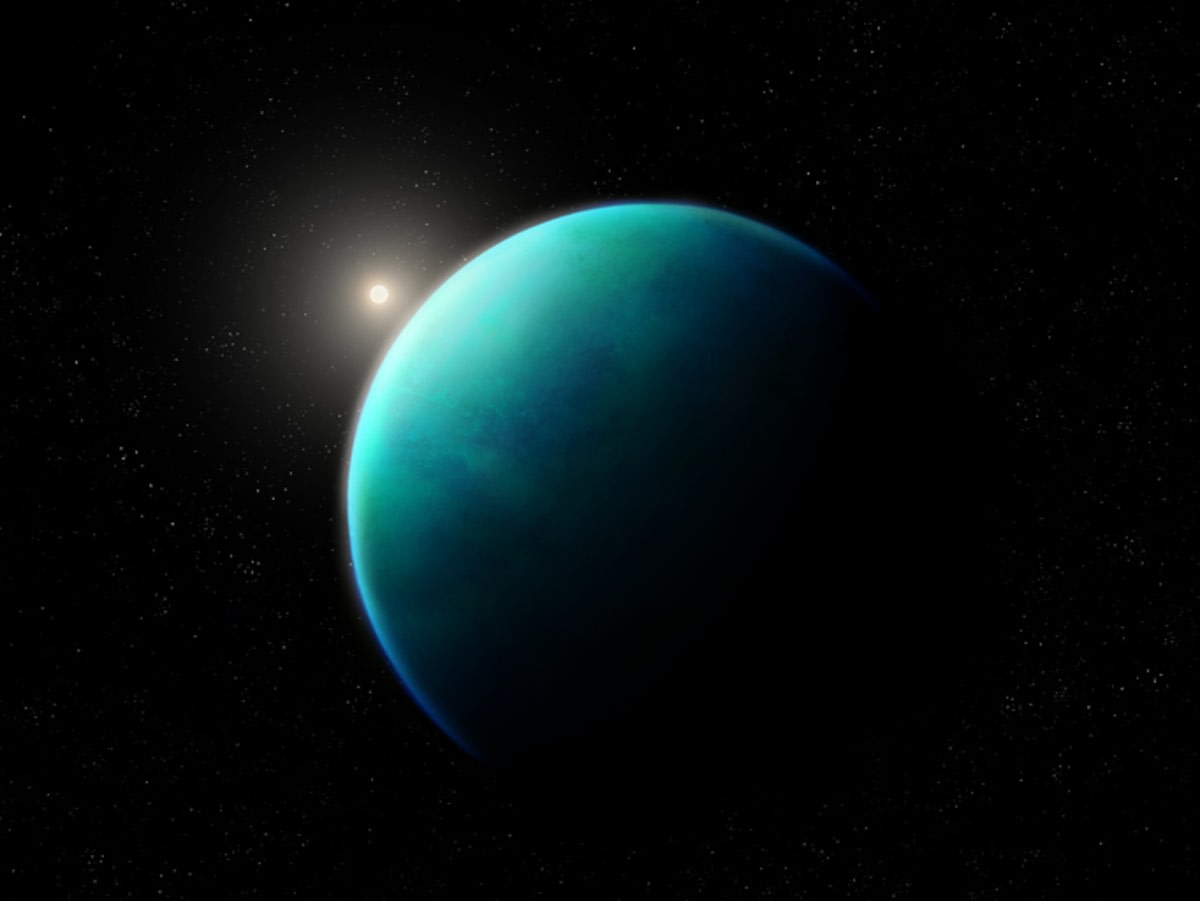
Firstly, the overwhelming size and brightness of the stars they orbit make detection difficult. One way around this problem is to study planets orbiting red dwarf stars, which are much smaller and much dimmer. However, such dim stars are more active than Sun-like stars and emit high-energy radiation that causes detectable atmospheric escape from closely orbiting planets. As a result, most small rocky planets observed have either revealed themselves to be airless or to have atmospheres too weak to be detected. As for LHS 1140 b, Cherubim and his colleagues came up with a theoretical model that predicted that the planet has a helium-rich upper atmosphere that is slowly leaking into space.
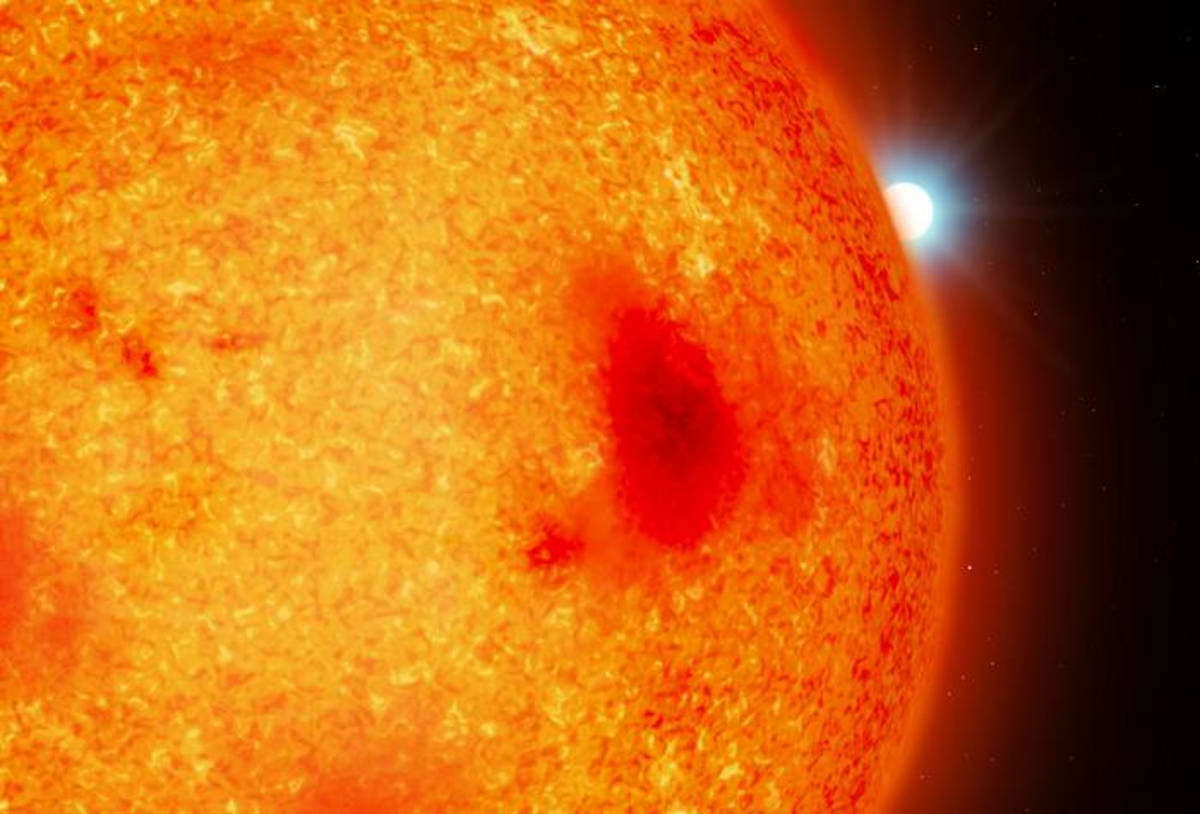
To test their prediction, the team used the Warm Infrared Echelle (WINERED) Spectrograph mounted on the Magellan Clay telescope at Las Campanas Observatory in Chile. The team observed that LHS 1140 b transited its star on the same night as another planet, which is rare. Their analysis showed no sign of atmosphere on the other planet, but LHS 1140 b revealed a clear signal of helium escaping into space—exactly what the model had predicted. "Twenty years ago we wondered whether other terrestrial-type planets even existed," said Robin Wordsworth, Gordon McKay Professor of Environmental Science and Engineering and Professor of Earth and Planetary Sciences at Harvard and one of Cherubim’s dissertation advisors. “Then we learned they're common, and found some in the habitable zone. The next question was whether any of them had managed to keep an atmosphere. Now we know at least one has."
The researchers estimate that LHS 1140 b has possibly retained its atmosphere for more than three billion years, suggesting remarkable long-term stability that makes this planet a compelling target for future investigations. Cherubim also plans to find out the full composition of the planet's atmosphere and uncover whether it has surface oceans.
More on Starlust
An exoplanet discovered by ESA's CHEOPS is turning theories of planetary formation 'inside out'
Scientists discover a rare Neptune-sized exoplanet that leaves a mark on its host star