NASA selects SpaceX to launch StarBurst gamma-ray detector to study neutron star mergers
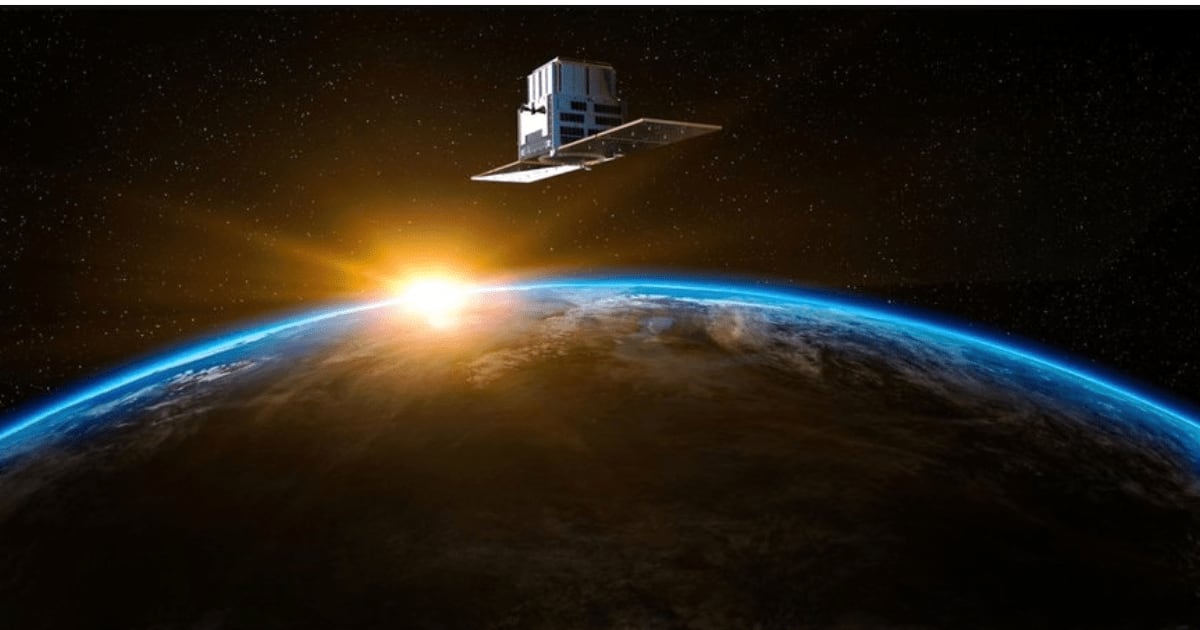
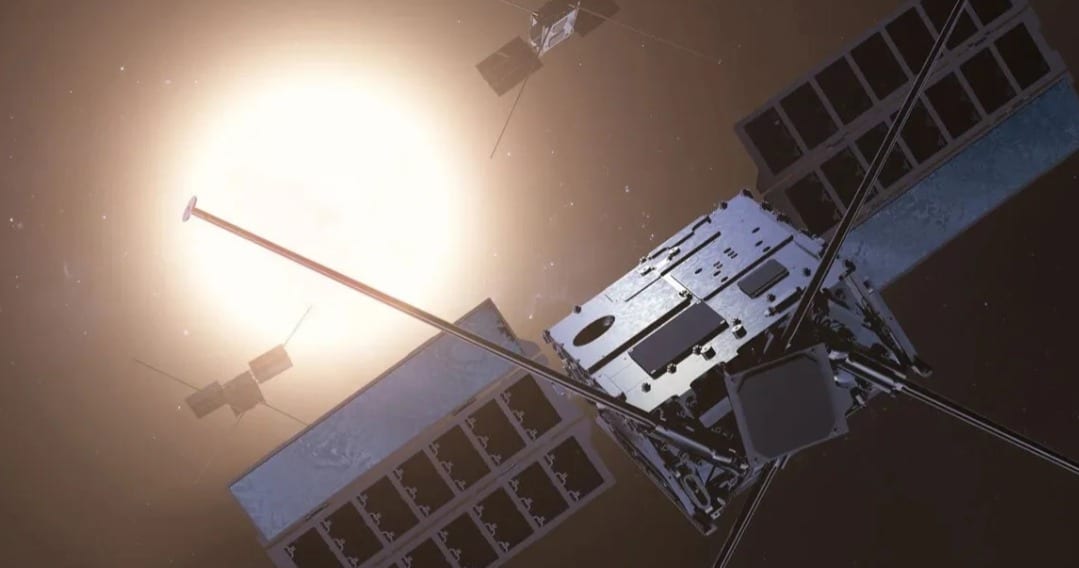
NASA has selected SpaceX to launch StarBurst, a small satellite developed to detect short gamma-ray bursts—brief, high-energy explosions emitted from merging neutron stars. The announcement, which was made yesterday, September 17, confirmed that the satellite will launch aboard a Bandwagon rideshare mission on a Falcon 9 rocket from Space Launch Complex 40 at Cape Canaveral Space Force Station in Florida in 2028.
NASA has selected @SpaceX to launch StarBurst. 🚀
— NASA's Kennedy Space Center (@NASAKennedy) September 17, 2026
The small satellite will scan the sky for short gamma-ray bursts from merging neutron stars, capturing the earliest high-energy signals. StarBurst is targeted to launch on a Falcon 9 from SLC-40 at CCSFS no earlier than 2028. pic.twitter.com/yVslJkAPKl
The award to SpaceX is a firm-fixed-price task order issued under NASA’s VADR (Venture-Class Acquisition of Dedicated and Rideshare) launch services contract. NASA says this indefinite-delivery/indefinite-quantity contract enables the agency to procure launch services for an ordering period of 10 years, with a total value of up to $1 billion across all contracts.
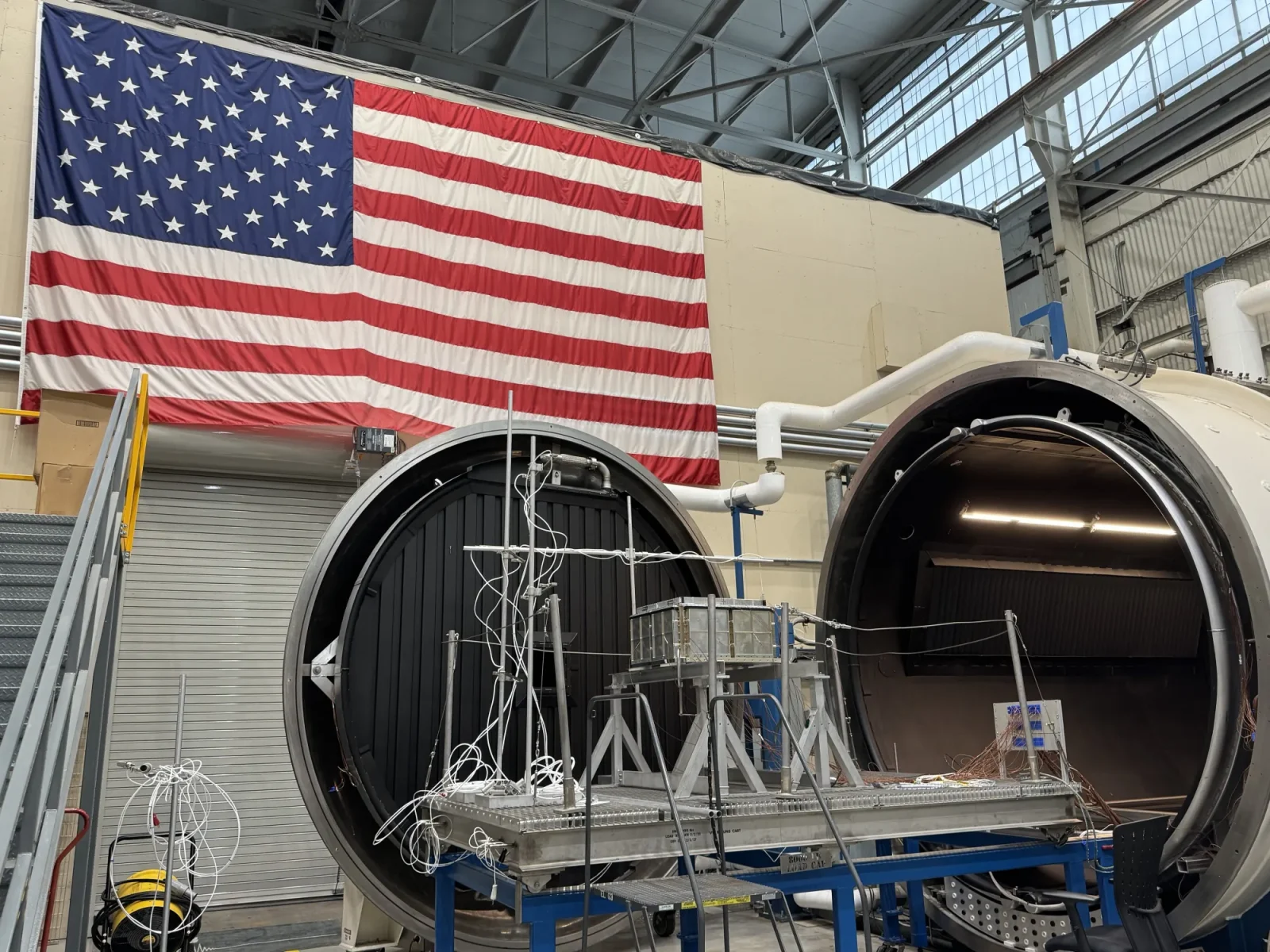
The StarBurst mission, led by Principal Investigator (PI) Dr. Daniel Kocevski at NASA’s Marshall Space Flight Center, was initially scheduled to launch in 2027. The mission forms a part of NASA's Astrophysics Pioneers Program, a broader initiative started in 2020 to support lower-cost missions using smaller hardware than those used in missions in the Explorers Program.
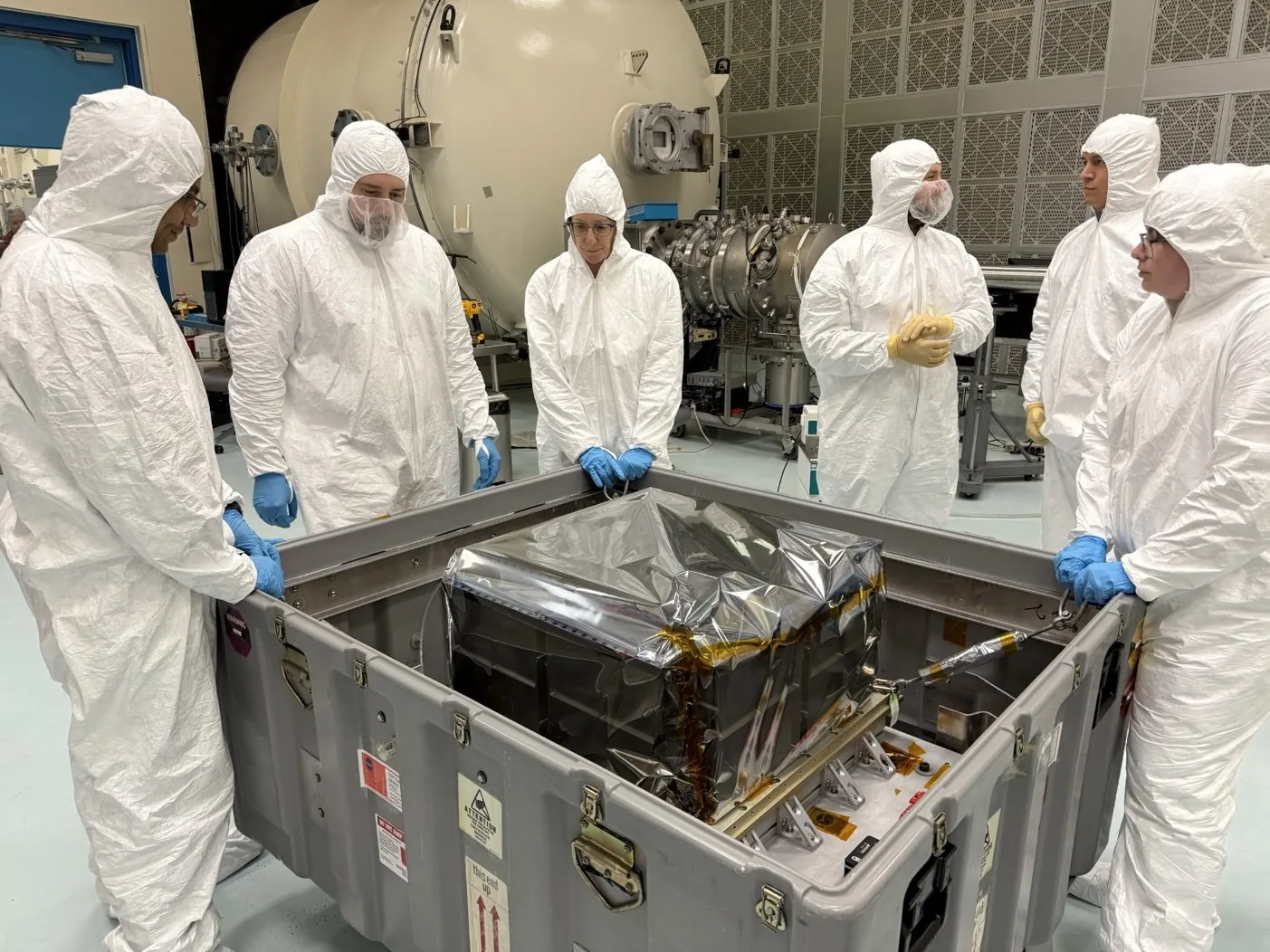
What StarBurst can do: Tracking cosmic collisions across the sky
Designed as a SmallSat, StarBurst is about the size of a washing machine, with a mass of around 300 kilograms, but it has an effective area 500% larger than that of the Fermi Gamma-ray Burst Monitor (GBM) and will give full coverage of the unobstructed sky from low-Earth orbit. The 12 CsI(Tl) scintillation detectors at the heart of the satellite will detect gamma-ray bursts in the range of 30–1,000 keV by converting their energy into visible light.
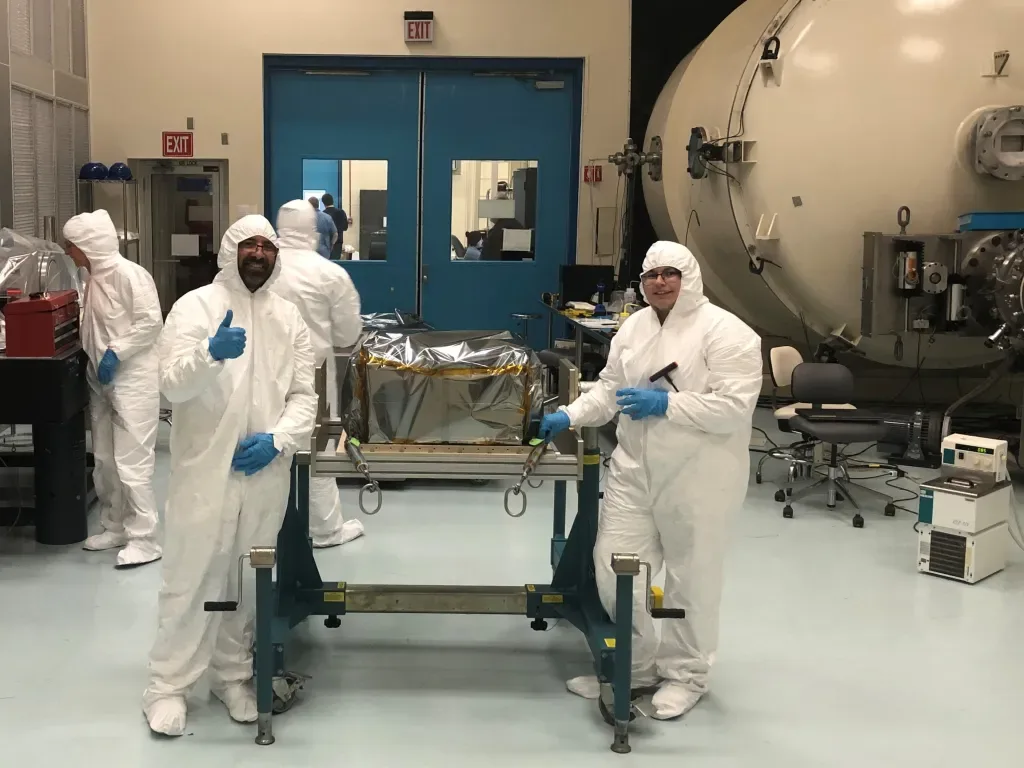
The data obtained from the satellite will be paired with gravitational-wave measurements—which also detect neutron star mergers—and follow-up data across the electromagnetic spectrum. Using these findings, scientists will study neutron star mergers through multimessenger astronomy—a technique that studies the same event using varying cosmic signals. Researchers hope to achieve four primary science objectives using these results: Constrain the sources of short gamma-ray bursts; examine the remnants of neutron star mergers; constrain the neutron star equation of state, and examine the pattern of relativistic outflows generated from the merging of neutron stars.
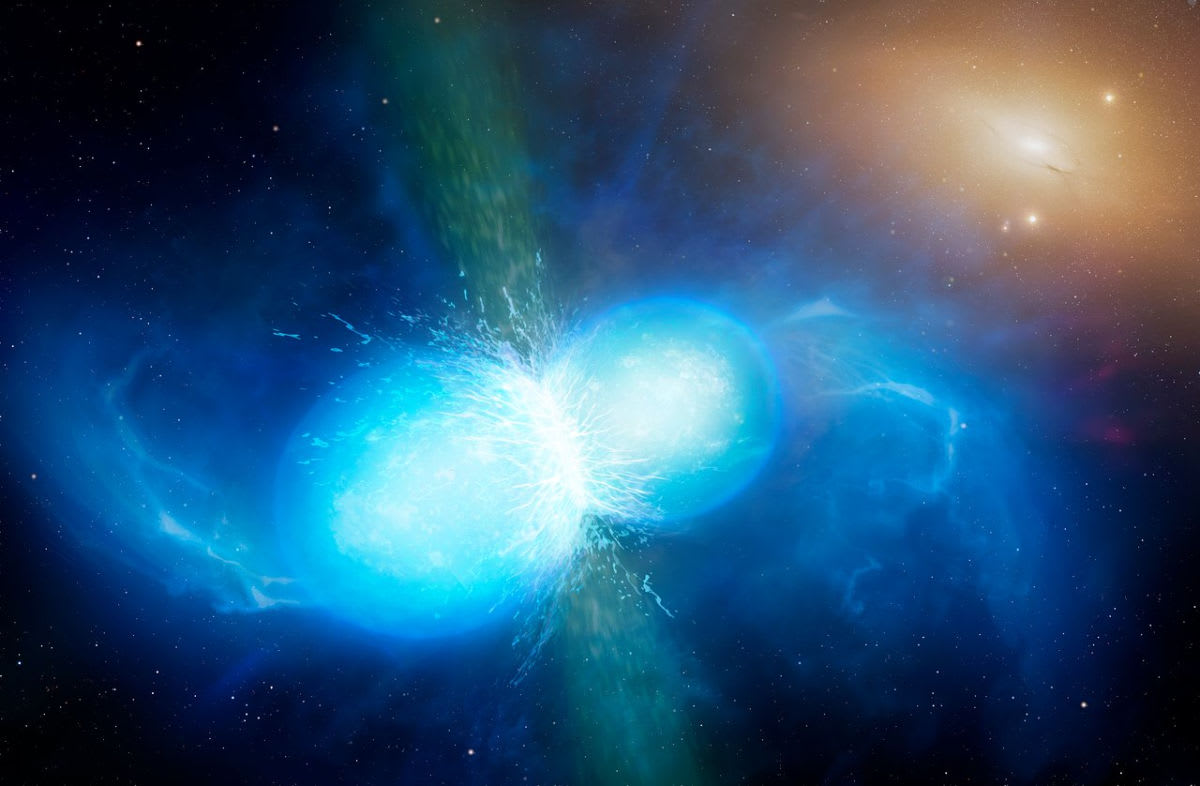
Since many of the heavy metals in the universe, like gold and platinum, are created during these neutron star mergers, these events are also relevant for understanding the origin of several heavy elements in the cosmos. “By studying these gamma-ray bursts and the neutron star mergers that produce them, we gain insights into fundamental physics, the origins of elements, and even the expansion of the universe,” Kocevski said in a statement. “Neutron star mergers and gamma-ray bursts are nature’s laboratories for testing our understanding of the cosmos.”
Up to now, only one event involving a neutron star merger has been detected by using gravitational waves and gamma rays simultaneously, and with the launch of Starburst being planned, NASA aims to detect up to 10 every year using this spacecraft.
More on Starlust
First-ever oval orbit detected in neutron star–black hole merger