Scientists detect a seven-hour gamma ray burst and trace it back to a black hole plunging into a bloated star
By compiling signals from the Einstein Probe and the Russian Konus-Wind spectrometer, scientists verified the unprecedented phenomenon.
PUBLISHED OCT 16, 2025
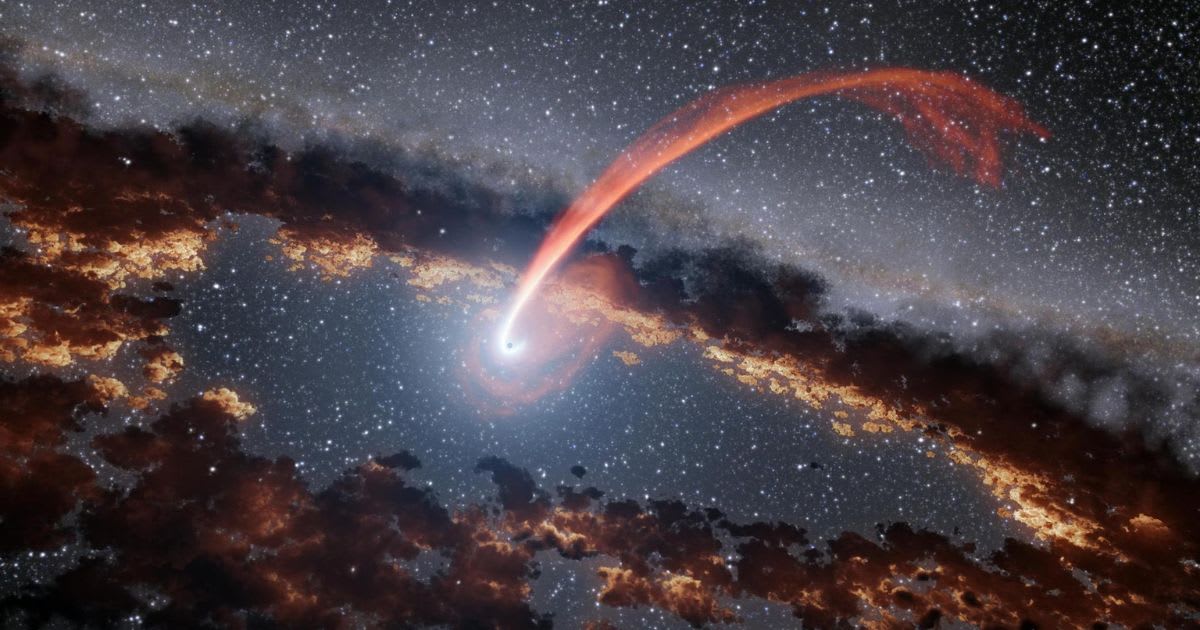
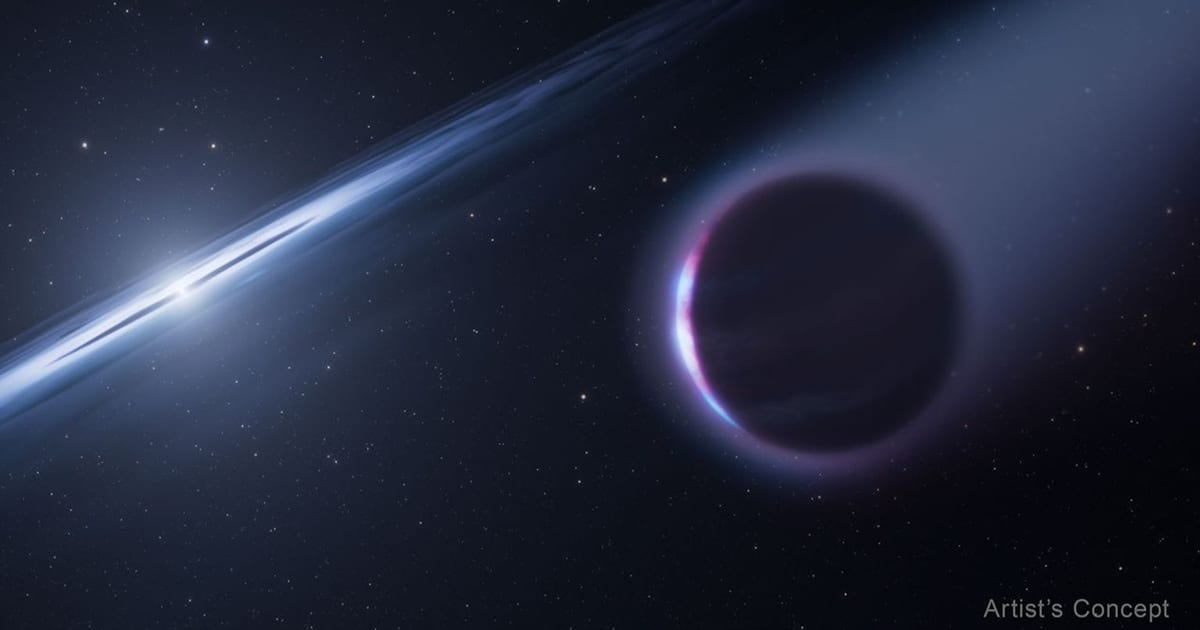
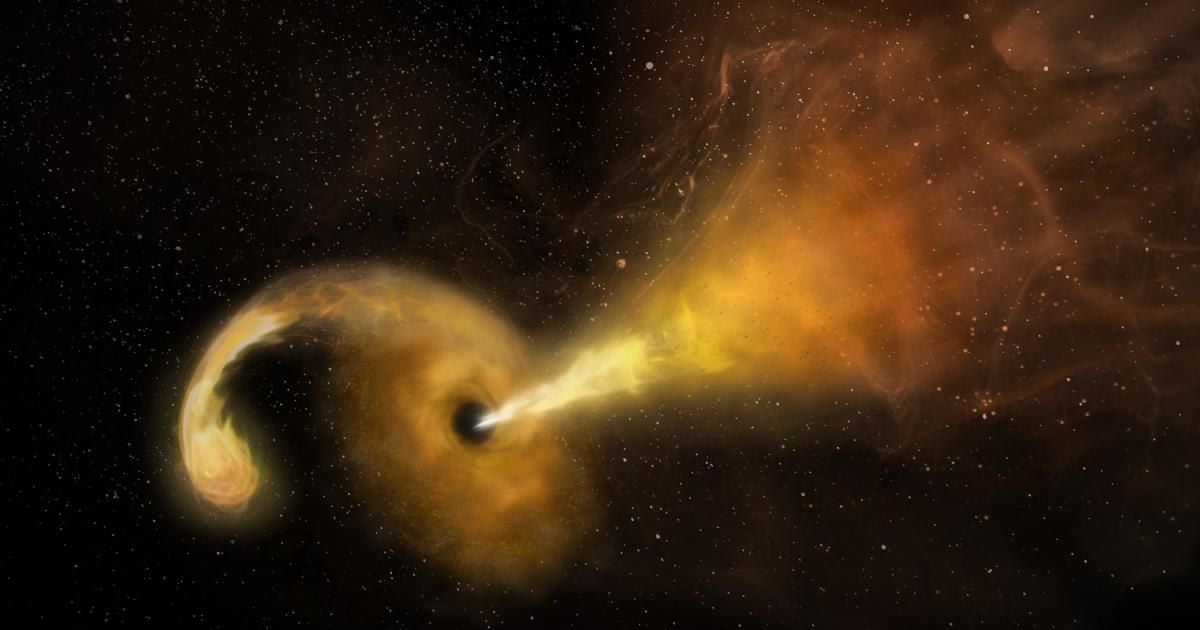
Black Hole vs. Star: A Tidal Disruption Event (Artist's Concept) (Representative Cover Image Source: NASA Jet Propulsion Laboratory)

A team of over 50 scientists is proposing a radical new explanation for the longest gamma-ray burst (GRB) ever recorded, suggesting the event was powered by a stellar-mass black hole plunging into a bloated star. The unprecedented seven-hour event, dubbed GRB 250702B, has defied all conventional theories for GRB origins, which typically attribute the powerful cosmic explosions to either the collapse of massive stars (long GRBs) or the merger of neutron stars (short GRBs), as reported on Phys.org

This illustration shows a glowing stream of material from a star as it is being devoured by a supermassive black hole (Representative Cover Image Source: NASA/JPL-Caltech)
This illustration shows a glowing stream of material from a star as it is being devoured by a supermassive black hole (Representative Image Source: NASA/JPL-Caltech)

On July 2, 2025, NASA's Fermi Gamma-ray Burst Monitor was the first of several global instruments to detect a sustained energy signal. Compiling data from the Einstein Probe and the Russian Konus-Wind spectrometer, researchers confirmed they were observing an exceptional phenomenon: a gamma-ray burst lasting approximately 25,000 seconds, or nearly seven hours. This duration decisively eclipsed the previous record-holder, GRB 111209A, by over three hours.
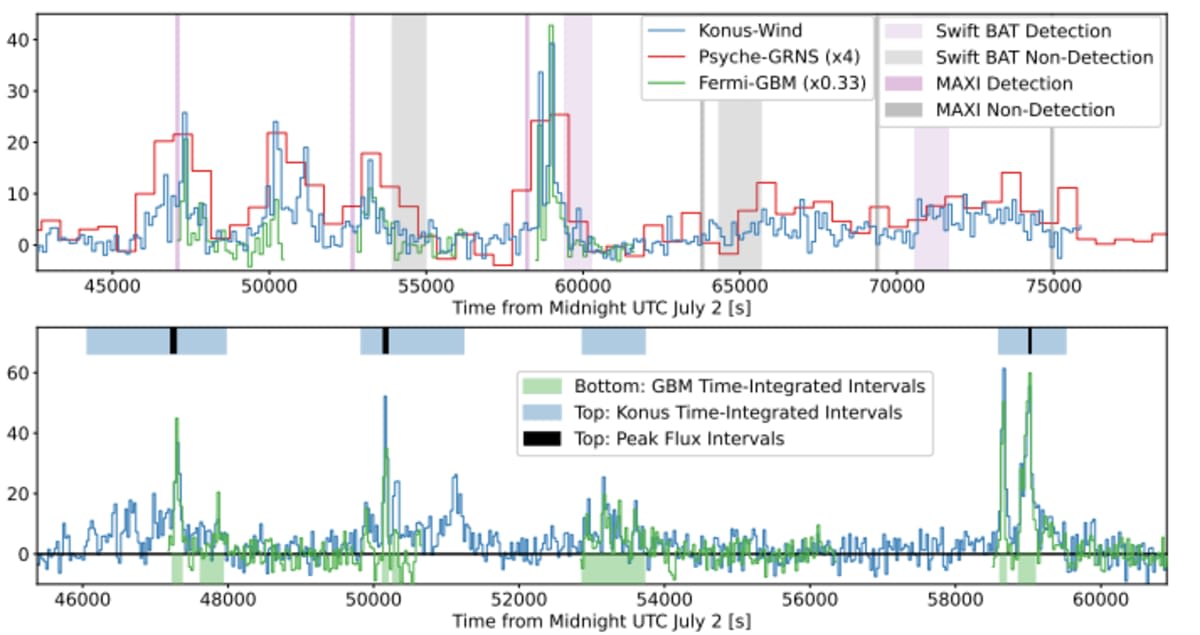
The combined, background-subtracted gamma-ray lightcurve of GRB 250702B (Image Source: arXiv | Gompertz et al. Carney et al. O’Connor
et al.)
The combined, background-subtracted gamma-ray lightcurve of GRB 250702B (Image Source: arXiv | Gompertz et al. Carney et al. O’Connor et al.)

The extraordinary duration and other measured properties of GRB 250702B, including its high peak energy and rapid, sub-second variability, ruled out virtually every established GRB progenitor scenario. "We find a hard spectrum, subsecond variability, and high total energy, which are only known to arise from ultrarelativistic jets powered by a rapidly-spinning stellar-mass central engine," the researchers wrote in a new arXiv preprint. They stressed that these combined properties and the extreme duration are "incompatible with all confirmed gamma-ray burst progenitors and nearly all models in the literature."
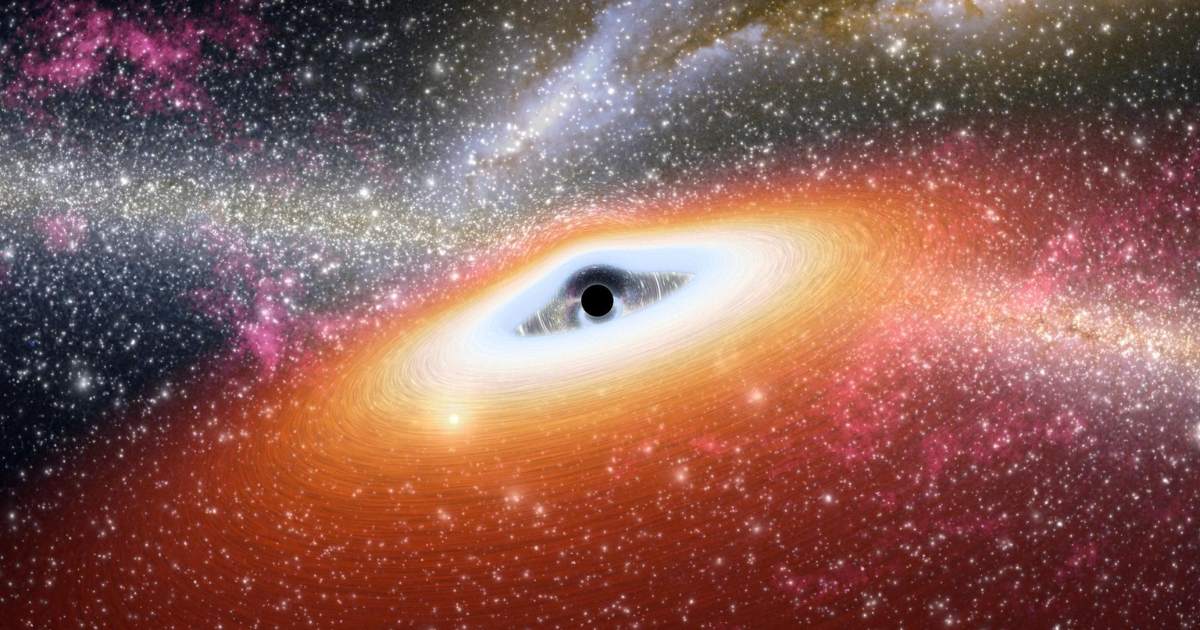
This artist conception illustrates one of the most primitive supermassive black holes known central black dot at the core of a young, star-rich galaxy (Representative Cover Image Source: NASA/JPL-Caltech)
This artist's conception illustrates one of the most primitive supermassive black holes known central black dot at the core of a young, star-rich galaxy (Representative Image Source: NASA/JPL-Caltech)

Conventional explanations, such as collapsars, neutron star mergers, and various stellar mergers, were all dismissed based on their inability to sustain the energy output for the required duration or to match the observed spectral and energy profiles. Even supermassive black holes were ruled out as the source, as the event was traced to the outskirts of a distant galaxy, not its central core.
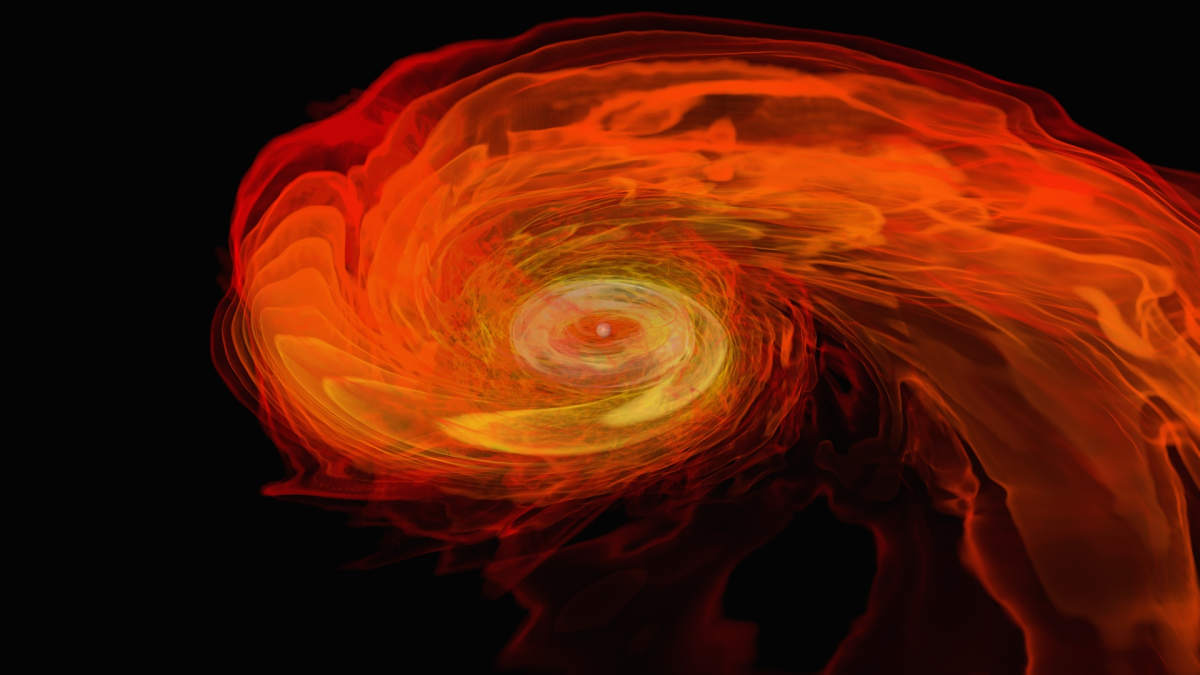
This supercomputer simulation shows one of the most violent events in the universe: a pair of neutron stars colliding, merging and forming a black hole (Image Source: NASA Image and Video Library | NASA)
This supercomputer simulation shows one of the most violent events in the universe: a pair of neutron stars colliding, merging, and forming a black hole (Representative Image Source: NASA Image and Video Library | NASA)

Ultimately, the team converged on a singular, highly energetic scenario: the "helium merger model." This model posits that a black hole in a binary system falls inward and is engulfed by its companion star as the latter begins to swell.

This process involves the black hole consuming the star's material from the inside out, leading to a prolonged release of energy. The star is described as a "stripped star" (a helium star) that has lost its outer layers of hydrogen. As the black hole spirals deeper into the star's core, the resulting friction and loss of orbital energy generate magnetic fields that drive ultrarelativistic jets, the engine of the gamma-ray burst. The process culminates in the explosion of the star, producing a supernova and accounting for the event's longevity and immense power.
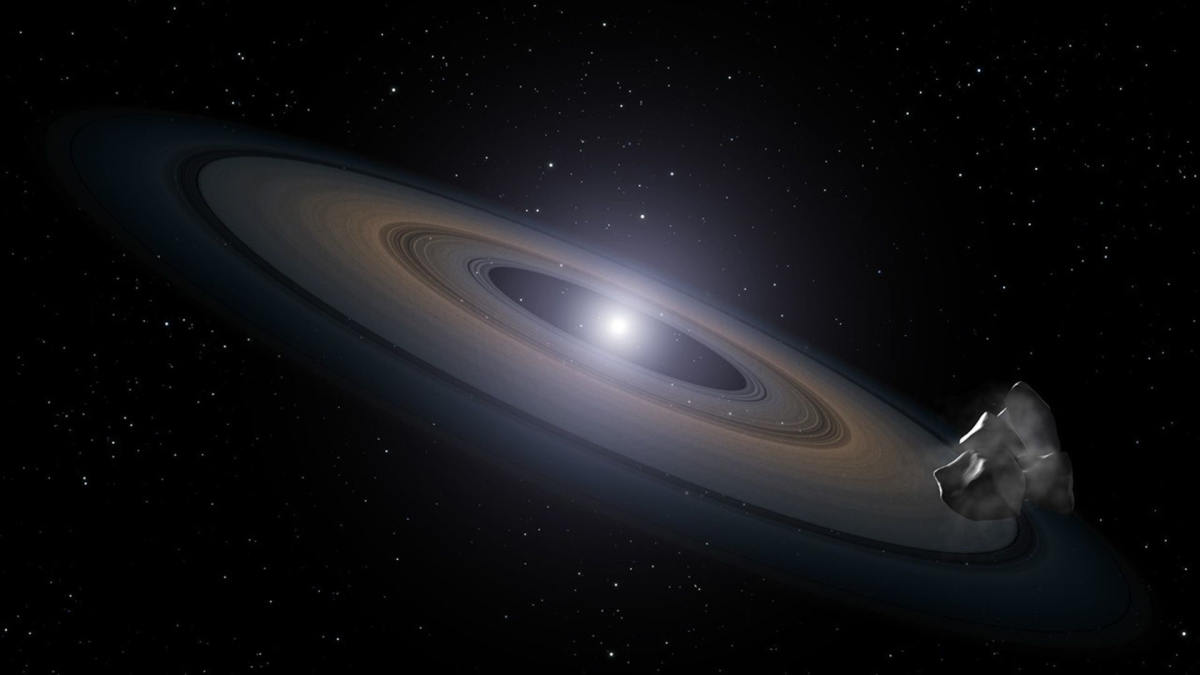
This animation shows a burned-out star, called a white dwarf, accreting rocky debris left behind by the star's surviving planetary system (Image Source: NASA, ESA | G. Bacon)
This animation shows a burned-out star, called a white dwarf, accreting rocky debris left behind by the star's surviving planetary system (Representative Image Source: NASA, ESA | G. Bacon)

The scientists are hopeful that upcoming observatories, such as the Vera Rubin Observatory's Legacy Survey of Space and Time, will detect similar events in the future, providing further evidence for this compelling new theory of cosmic explosions.  

The LSST Camera will be mounted at the center of the Simonyi Survey Telescope inside Rubin Observatory, and it will take enormous images of the southern hemisphere night sky, over and over again for 10 years (Image Source: SLAC National Accelerator Laboratory | Greg Stewart)

Gamma-ray bursts (GRBs) are the most powerful explosions in the cosmos, emitting gamma rays, the most energetic form of light, according to NASA. Though typically short-lived (milliseconds to minutes), a single GRB can shine a million trillion times brighter than the Sun, releasing more energy in seconds than the Sun will in its entire 10-billion-year life. The seven-hour persistence of GRB 250702B highlights its exceptional nature.
More on Starlust

Watch one of the universe's elusive black holes gravitationally tearing apart a star in a burst of radiation

Scientists surprised to learn ghostly particles inside collapsing star may hold the key to black hole formation

MORE STORIES

The celestial event this month is a rare one, with the Moon retreating to an apogee from Earth's center.
29 minutes ago
The three interstellar objects are unique, billion-year-old fragments and kinetic artifacts collected from countless extrasolar systems across the galaxy.
4 hours ago
English physicist and science communicator Professor Brian Cox draws parallels between the journey of 3I/ATLAS and that undertaken by humanity.
8 hours ago
Conspiracy theories can be put to rest as new evidence from the MeerKAT radio telescope has emerged.
1 day ago
Consecutive X-class solar flares have set the stage for severe space weather to strike on November 11 and 12.
1 day ago
The observation, made on November 9, unveiled a shockingly complex jet system that overshadows prior data, immediately casting doubt on the comet's origin.
2 days ago
The object, discovered by Gennady Borisov on November 2, 2025, quickly became the focus of speculation amid the curiosity surrounding 3I/ATLAS.
2 days ago
To assess Martian viability, scientists subjected yeast cells to Mach 5.6 shock waves and the corrosive perchlorate salts common on the Red Planet.
6 days ago
These impacts pack surprising power; a mere 11-pound meteoroid can blast a 30-foot (9-meter) crater, ejecting 75 metric tons of lunar soil.
6 days ago
Sunspot AR3474 detonated with an X1.8 solar flare on November 4, sending an ultraviolet wave silencing South America's shortwave radio communications.
7 days ago