NASA says its toaster-sized SunRISE satellites won't launch before 2027
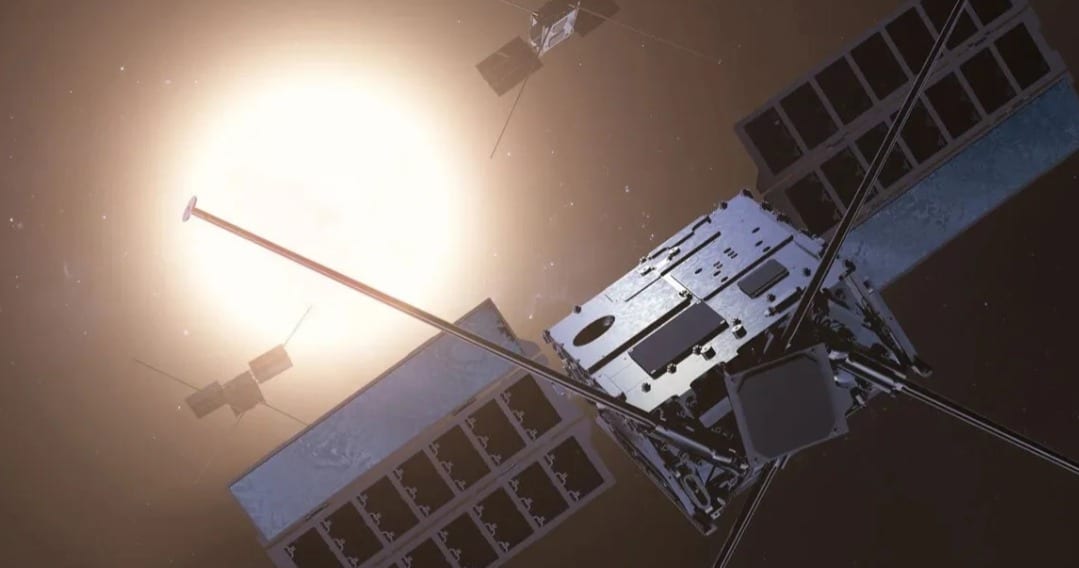
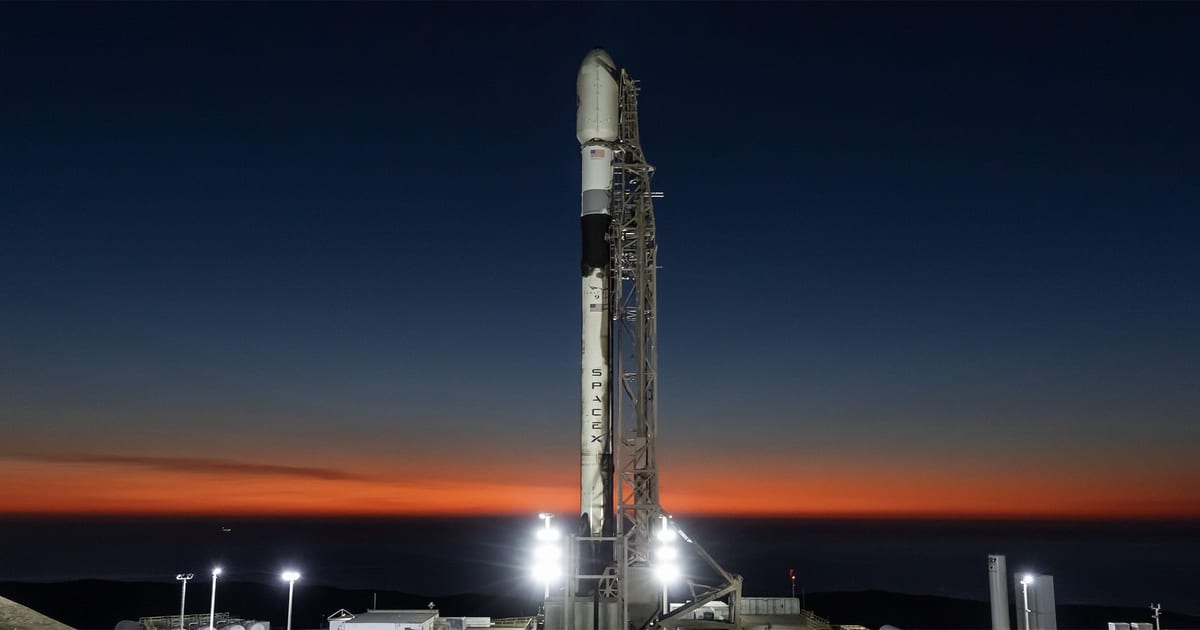
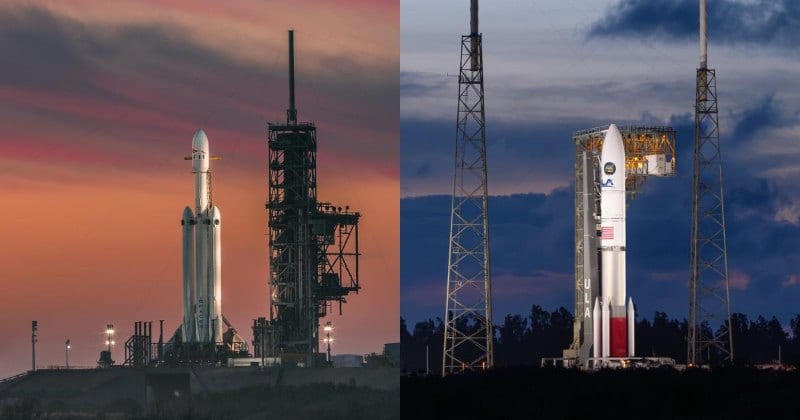
NASA's SunRISE mission, which was supposed to launch this year, will not be taking off earlier than mid-2027, the agency announced on Tuesday, October 6. The announcement comes months after NASA revealed that the mission would launch aboard a SpaceX Falcon Heavy rocket instead of United Launch Alliance's Vulcan Centaur rocket as originally planned.
While the agency did not officially mention why it changed launch vehicles, the decision perhaps had something to do with the U.S. Space Force pausing Vulcan launches in light of a "significant performance anomaly" the rocket's solid motors experienced during a mission in February. After all, SunRISE will launch as part of a rideshare mission with a payload sponsored by the USSF's Space Systems Command. The revised launch window is also likely a consequence of that arrangement.
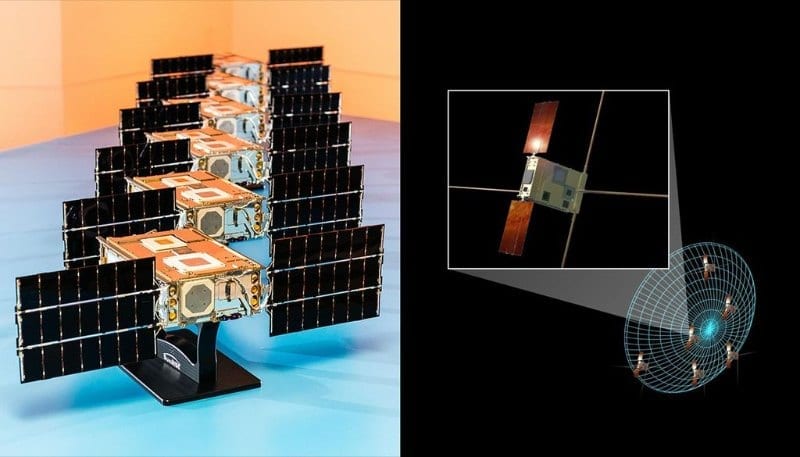
SunRISE, which stands for Sun Radio Interferometer Space Experiment, is designed as an array of six toaster-sized small satellites, or SmallSats, which will function as a single gigantic radio telescope. Once the spacecraft is launched, the satellites will be placed slightly above geosynchronous orbit, at an altitude of approximately 22,000 miles (35,000 kilometers). Each spacecraft will then unfold four 2.5-meter telescoping antenna booms, laid out in an X-shaped configuration, and will orbit within 10 miles (16 kilometers) of one another.
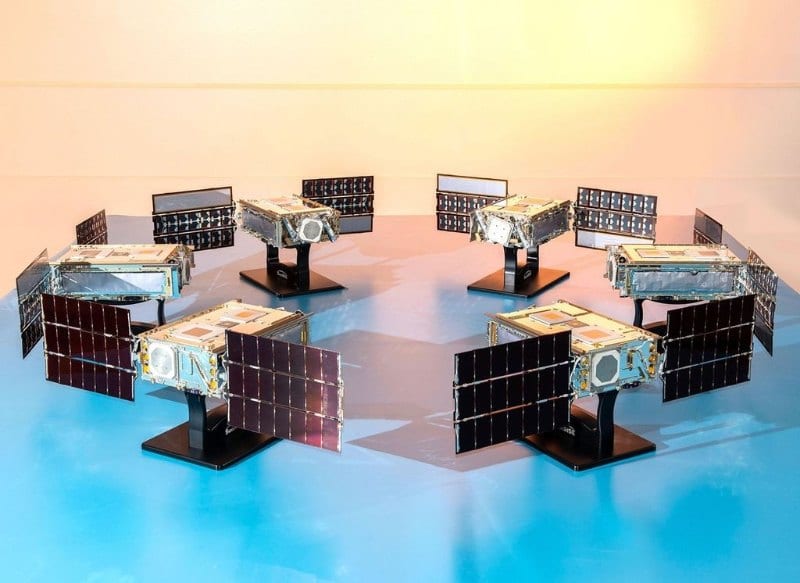
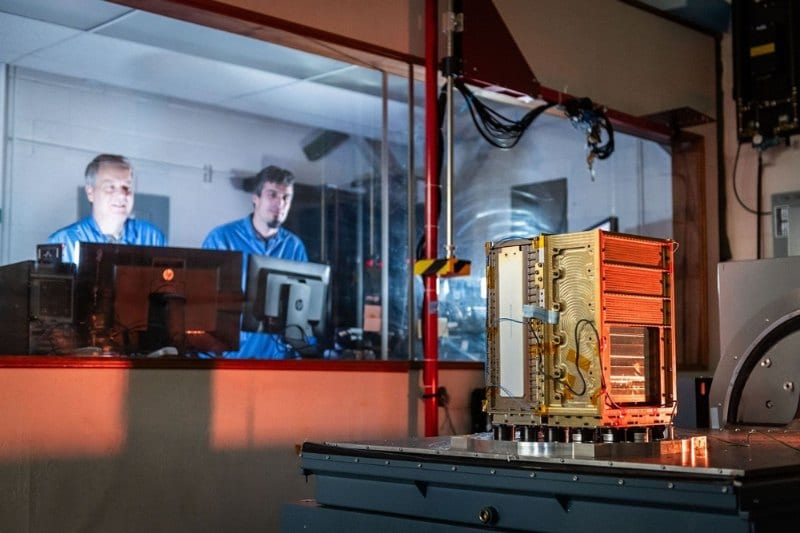
Earlier, in January 2026, as shared in an update by NASA, the SmallSats underwent a rigorous series of tests at Utah State University’s Space Dynamics Laboratory in Logan, where they were developed. The campaign included thermal vacuum testing, where the extreme environmental conditions in orbit were simulated, along with verifying electromagnetic compatibility to test whether SunRISE's electronics interfered with the instruments on board. The program wrapped up with vibration testing, where each SmallSat was exposed to a simulation of the intense vibrations experienced during the launch. The satellites will remain stored in Logan until they are shipped to Florida ahead of the launch.
What will SunRISE do?
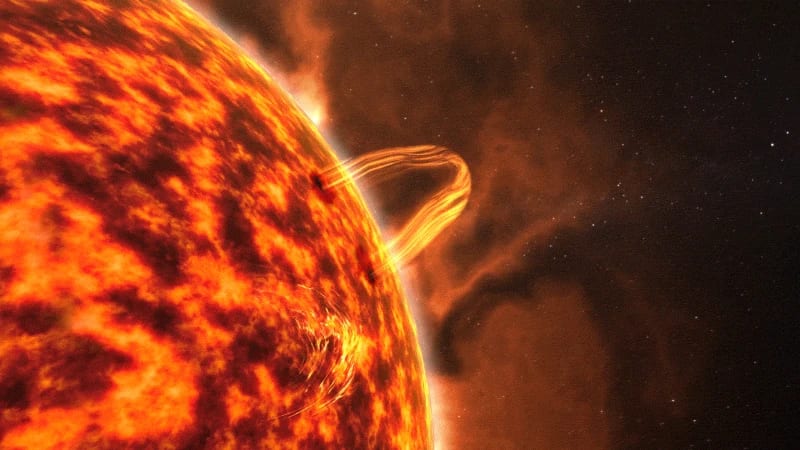
SunRISE, in the course of its planned one-year mission, will monitor solar radio bursts, which are produced when the Sun's magnetic field unleashes vast amounts of energy that accelerate solar particles to high velocities. In certain extreme cases, these particle events can disrupt satellite operations and even harm unprotected astronauts in space. "Tracking these events will not only help space agencies mitigate their damaging effects on astronauts and spacecraft but will also add new science to our growing knowledge base of how space weather is generated and propagates throughout the solar system," explains Sue Lepri, the principal investigator of the mission at the University of Michigan in Ann Arbor. The solar radio bursts can reach Earth even before the particles. SunRISE will image the approximate location of these bursts and the direction of the particles, thereby allowing space weather forecasters to predict where a radiation event may be headed.
Part of NASA's long-running Explorers Program, SunRISE will complement its other heliophysics programs, such as the Solar TErrestrial RElations Observatory, the Parker Solar Probe, and the Solar Orbiter, a joint mission with the European Space Agency, which would give a novel perspective on the Sun’s impact on our celestial neighborhood.
More on Starlust
Scientists find a new way to predict space weather based on how the Sun goes to 'sleep'