NASA's Perseverance captured a solar eclipse on Mars; see videos & images here
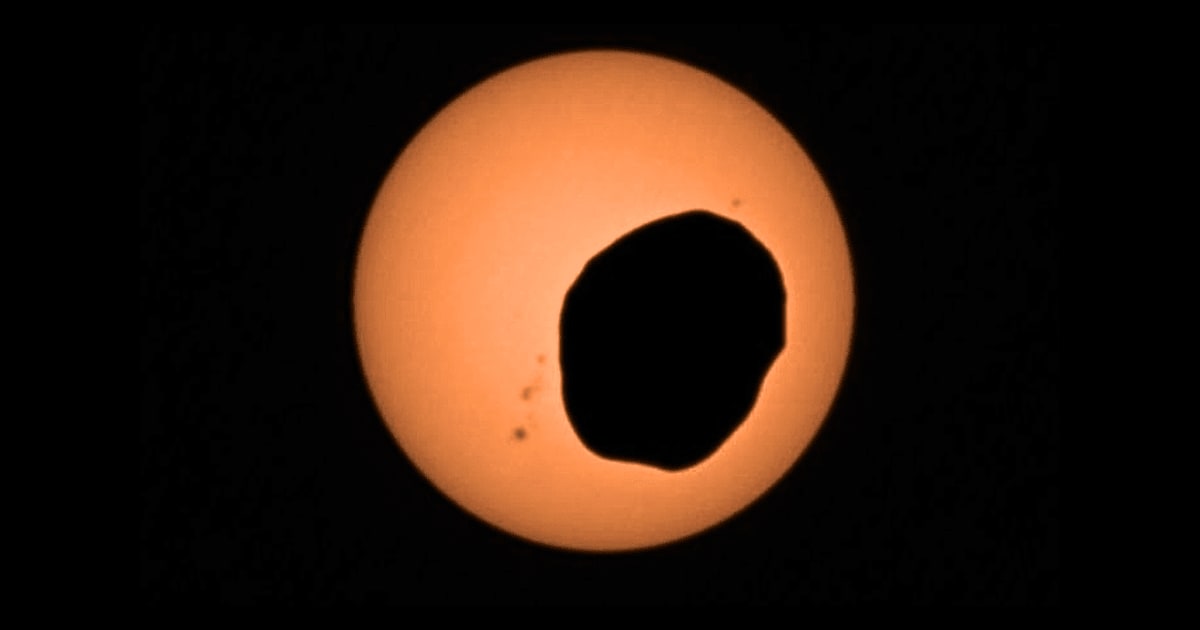
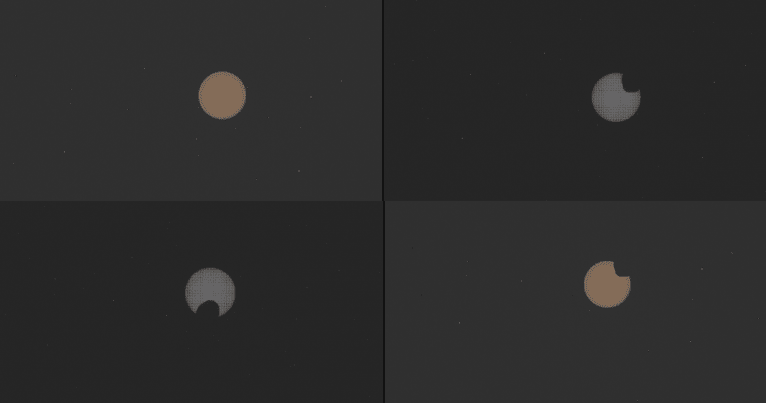
NASA's Perseverance rover took images of a solar eclipse on Mars on August 13, 2026. During this event, one of Mars’ two moons, Phobos, passed in front of the sun. The images were taken with the help of the rover's left Mastcam-Z camera at a local mean solar time of 10:13:51. NASA has shared that one of the event’s images has now been selected as the "image of the week" for Week 287 (Aug. 9 - 15, 2026) by a public vote.
NEWS 🚨: NASA's Perseverance rover caught a partial solar eclipse from the surface of Mars!
— Latest in space (@latestinspace) August 16, 2026
Mars' moon Phobos seen transiting the face of the Sun last week (Aug 13). Phobos moves fast, so the whole thing lasted about 30 seconds pic.twitter.com/cklY93i2Yv
This event was captured just days after people across the Earth witnessed a total solar eclipse on August 12, 2026. This was a long-awaited event for European skywatchers, who witnessed their first total solar eclipse in 27 years. During this event, millions of people across the world watched as the Moon covered the Sun completely and caused moments of blackness.
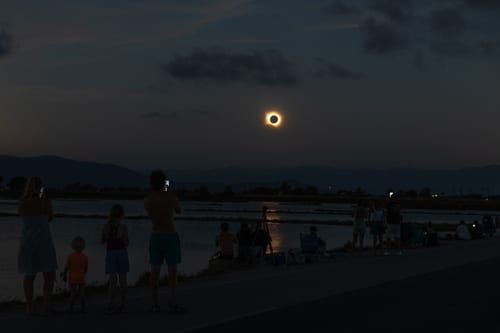
These events are so rare that one spot on Earth only gets to experience one once every 375 years. Those across northern Russia, Greenland, and Iceland before sweeping down across Spain and a small part of Portugal witnessed a total solar eclipse on August 12, 2026. While people across Western Europe, parts of Northwest Africa, most of Canada, and parts of the northern United States experienced a partial eclipse.
What makes this solar eclipse so significant?
In the images, you can see a small, dark, irregular object moving across the Sun’s disk, believed to be Phobos. Unlike an eclipse on Earth, there was no moment of total blackout on Mars. The reason Mars can't experience a total solar eclipse is because of Phobos's size and distance. From Earth, the Sun and Moon appear nearly the same size because the Sun is around 400 times wider but also about 400 times farther away. But on Mars, there is no such coincidence.
in honor of the eclipse today, here’s a comparison of eclipses on earth and mars.
— Jasmine 🌌🔭 (@astro_jaz) August 12, 2026
we are so incredibly lucky that our moon is the right distance to completely block out the sun and give us a spectacular view. pic.twitter.com/lMtyJ0zcLf
Phobos is only about 27 kilometers across at its widest point and looks roughly one-third the size of Earth's moon from the surface of Mars. Because of this, it can only ever cover a small portion of the sun. On top of that, it also completes a full orbit of Mars in under eight hours at a speed of about 2.1 kilometers per second, so the event doesn't last long.
This was not the first solar eclipse recorded on Mars
In the last two decades alone, many Mars rovers have captured images of Phobos crossing in front of the Sun, an event which is referred to as a solar eclipse on Mars. The first-ever observation was made in 2004 by Spirit and Opportunity, followed by the first-ever video recording captured by the Curiosity rover in 2019.
As per NASA, "Each time these eclipses are observed, they allow scientists to measure subtle shifts in Phobos’ orbit over time. The moon’s tidal forces pull on the deep interior crust and mantle of the Red Planet; studying how much Phobos shifts over time reveals something about how resistant the crust and mantle are, and thus what kinds of materials they’re made of."
More on Starlust
Total solar eclipse 2026 recap: Key highlights, images, videos and what comes next