JAXA's probe will land on Mars' moon Phobos and bring its samples back to Earth for the first time
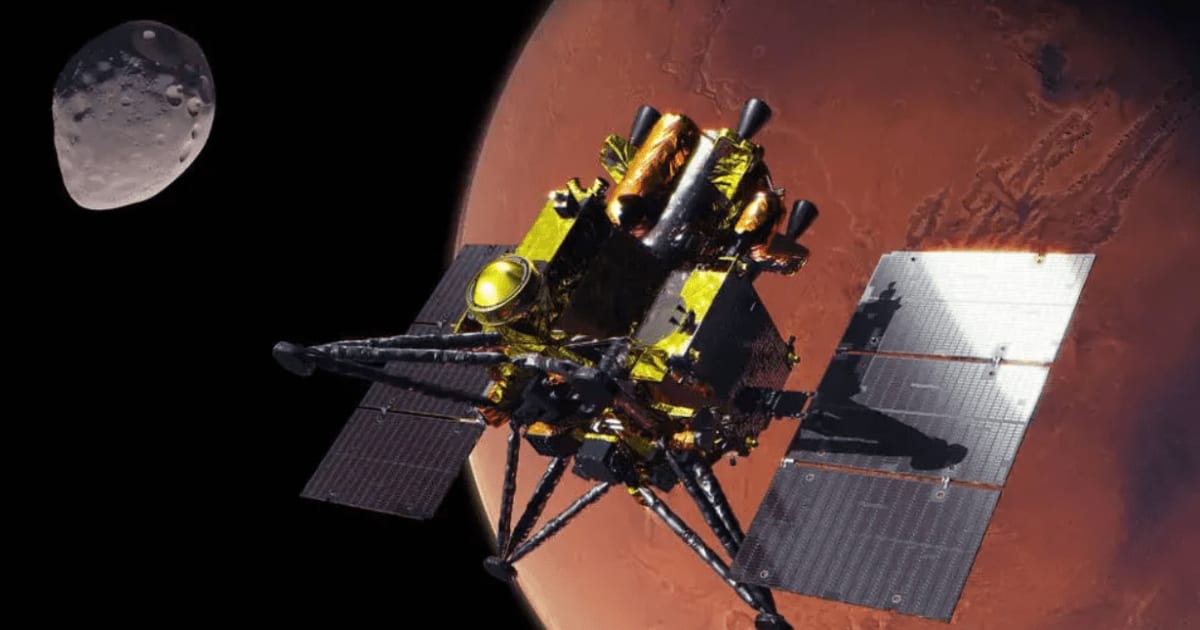
The Japan Aerospace Exploration Agency (JAXA) is set to launch a unique mission to the Martian moons, Deimos and Phobos, on October 20, 2026, with contributions from NASA and the European Space Agency (ESA). Named the Martian Moons Exploration (MMX) mission, JAXA will use its H3 rocket to launch the spacecraft, which will reach the orbit of Mars before a part of it separates and lands on Phobos. Here, samples will be collected from the larger of the two moons of Mars, which will then be returned to Earth via a capsule, making the mission the first sample return mission from the Mars region. The study of the Martian moons is targeted with the objective of confirming existing theories about how the moons formed.
The mission
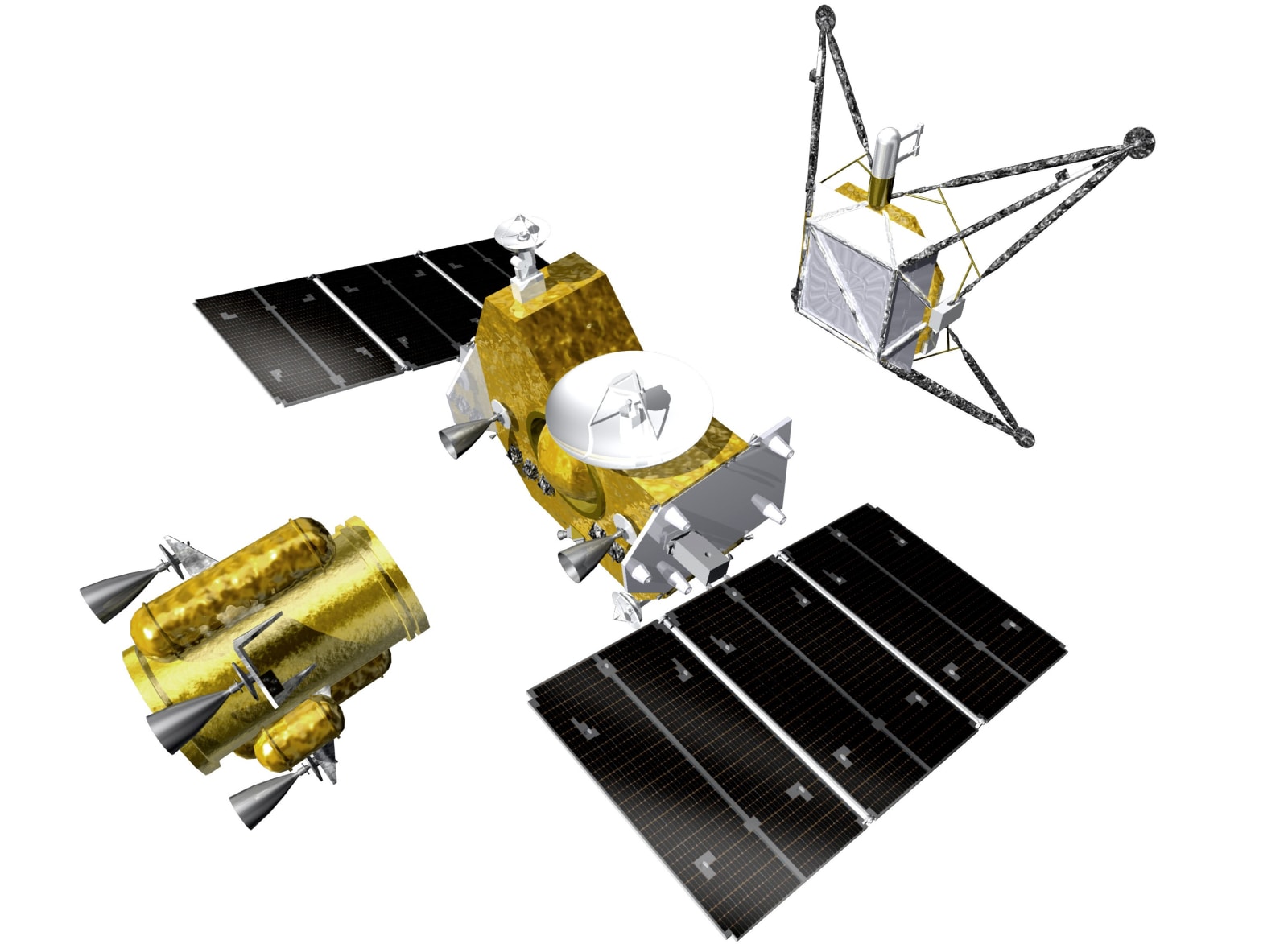
The launch of the H3 rocket has been scheduled for 4:41 am JST from the Yoshinobu Launch Complex at the Tanegashima Space Center, located off the coast of Japan's southern major island of Kyushu. Should the launch be scrubbed on the day, all dates between October 21 and November 7 have also been marked as reserve days. Once in orbit around Earth, the main spacecraft will separate from the upper stage of the H3 rocket and fire its thrusters to start its journey to Mars. After its separation from the rocket, the spacecraft will operate as a combined stack of three parts—the propulsion module, the return module, and the exploration module— during the journey to Mars.
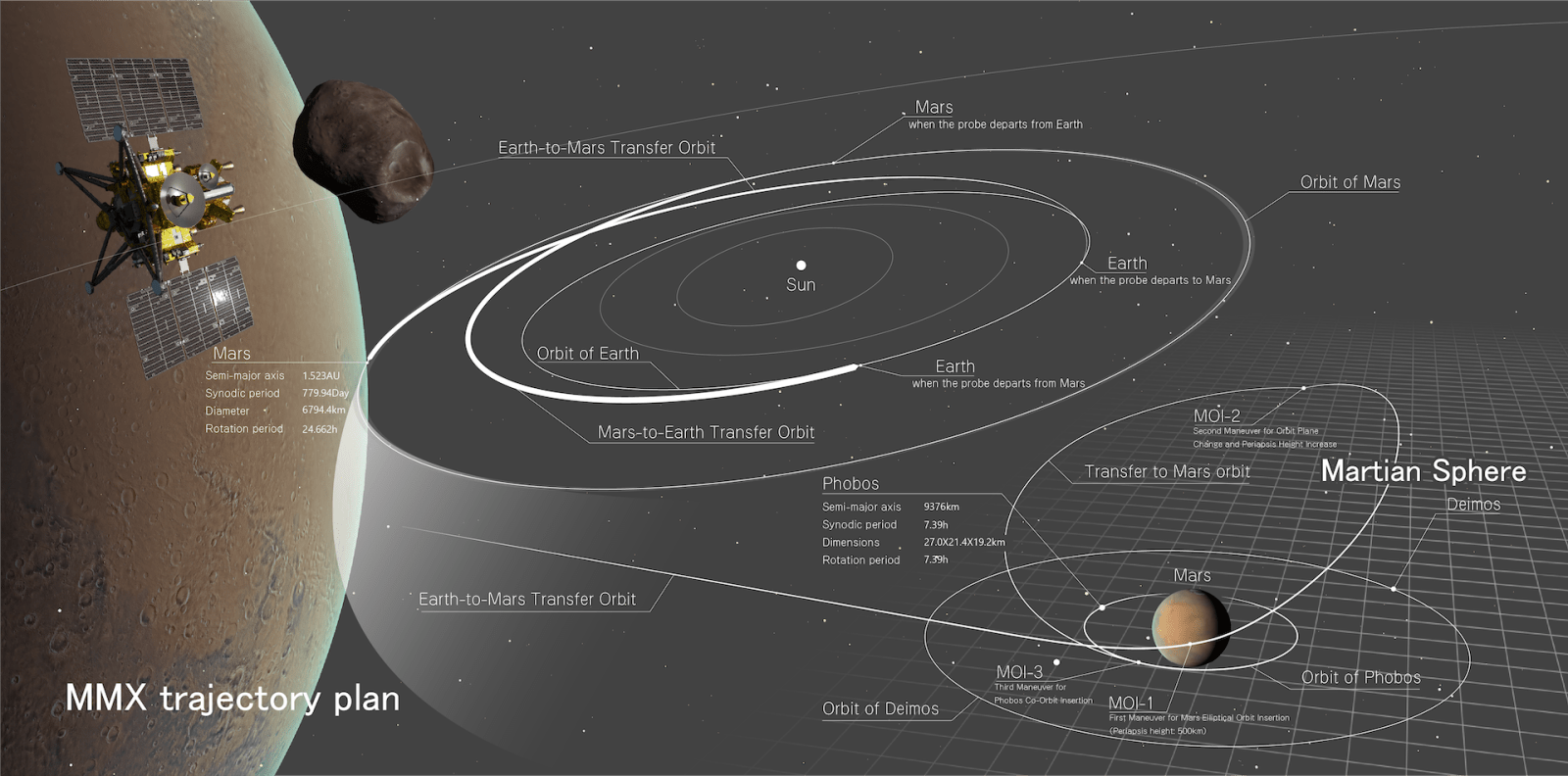
The propulsion module, as the name suggests, will manage the initial navigation and guidance of the spacecraft before being discarded. The return module, with its communication hardware supplied by ESA, will maintain communications with Earth, while the exploration module will explore the two Martian moons for three years. During this phase, the exploration module will land on Phobos and deploy a small French-German rover called Idefix, while Deimos will only be observed during this phase. Around 10 grams of samples will be collected from Phobos before they are sent back to Earth by 2031 via a small return capsule. The spacecraft will include 11 science instruments, including the Mars-moon Exploration with Gamma Ray and Neutrons (MEGANE) spectrometer by NASA, and weigh a total of just under 9,260 pounds.
Why explore Deimos and Phobos?
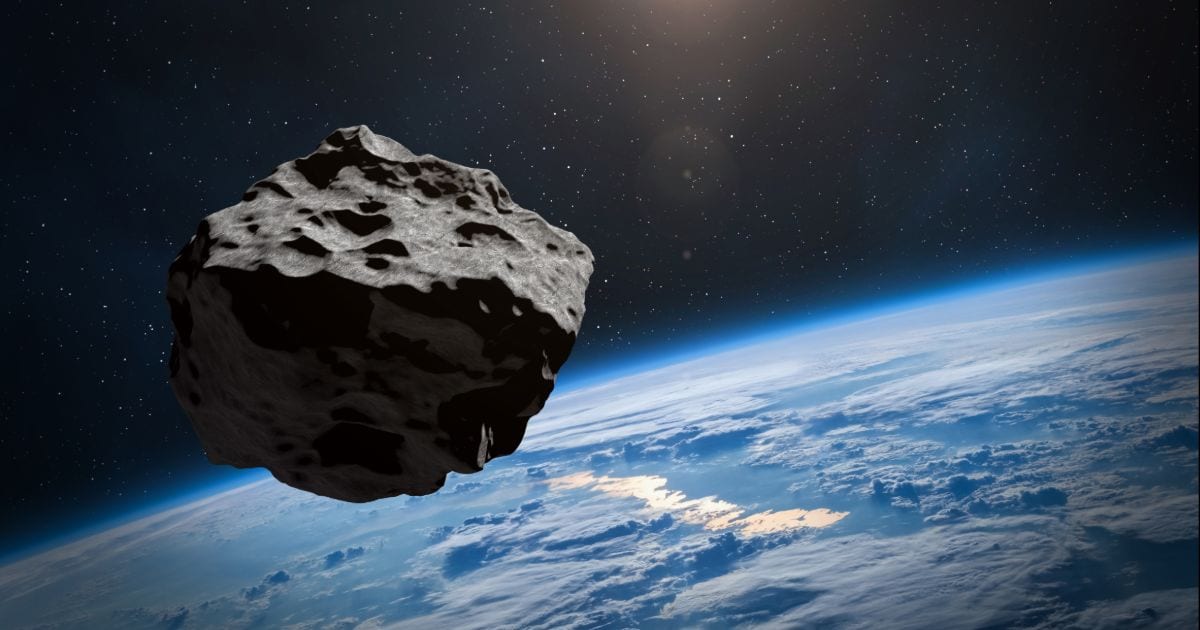
According to supercomputer simulations created to understand how the two irregularly shaped Martian moons formed, as well as research published in November 2024, it is understood that an asteroid may have been the root cause of Mars having such a unique system of moons. The simulations show that the asteroid passed close enough to the Red Planet to be ripped apart due to tidal forces. However, this alone would not have given Deimos and Phobos their almost circular orbits that lie roughly along Mars' equatorial plane. Moreover, Phobos is known to be the closest moon to its host planet, destined for a collision course with it.
These atypical characteristics of the two moons and their orbits may have been due to the fragments of the original asteroid being sent on wildly varied trajectories. Some of these paths may have converged, leading to even more fragmentation of the asteroid debris. All of these smaller chunks may have eventually settled into a ring system around Mars, whose material coalesced into the two tiny moons—measuring about 7.8 miles and 14 miles in diameter, respectively. Whether this theory is the way things really occurred could be determined by the samples returned by the Martian Moons Exploration mission.
More on Starlust:
NASA's Perseverance captured a solar eclipse on Mars; see videos & images here
NASA’s Psyche teams up with ESA's Mars Express for a coordinated photoshoot at the Red Planet