Using TESS, scientists discover extremely rare triple star system where three stars eclipse each other
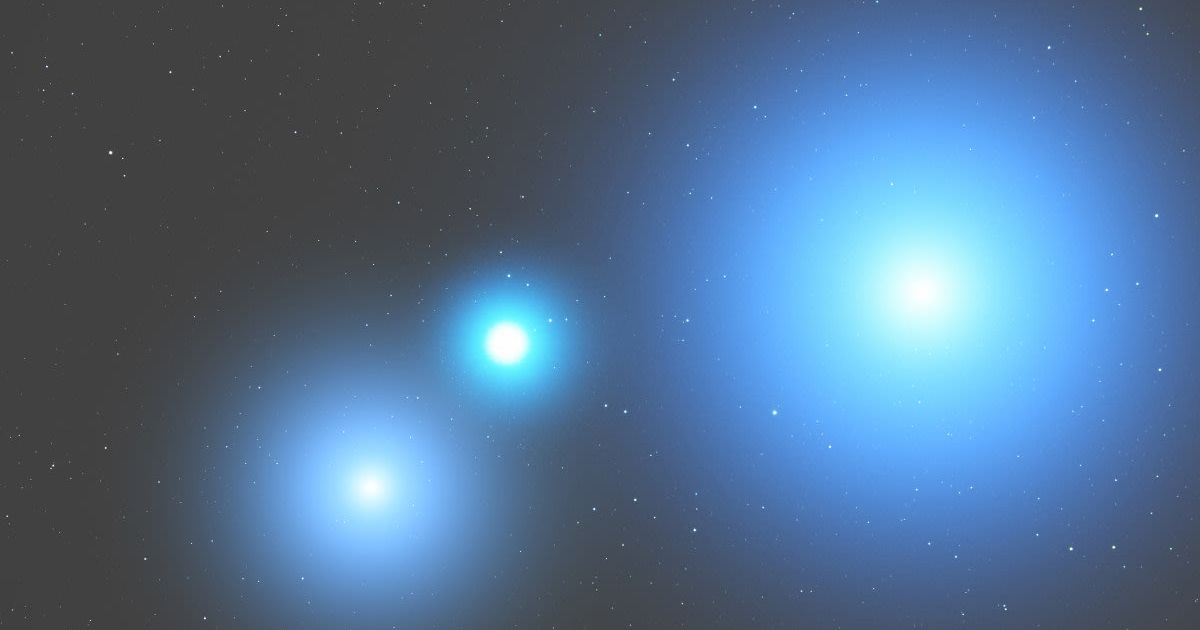
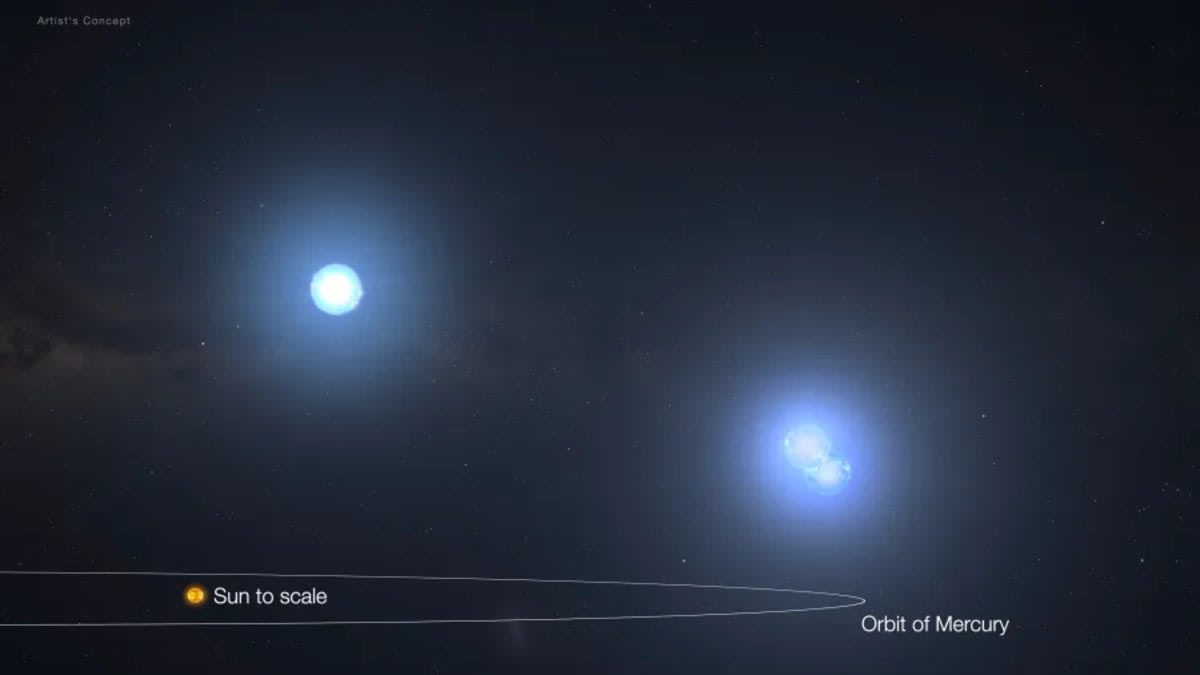
A research team, led by Brian P. Powell at the NASA Goddard Space Flight Center, has discovered a new triple-star system using the sharp vision of the Transiting Exoplanet Survey Satellite (TESS). The newly discovered system, TIC 295741342, has two Sun-like stars that form a binary which orbit each other and regularly block each other's light. In addition, a third massive, giant star, 10 times larger than the Sun, revolves around the aforementioned pair every 412.8 days. The team detailed their discovery in a paper accepted for publication by The Astrophysical Journal. The study is currently available on the arXiv preprint server.
TESS initially had a mission objective of surveying around 200,000 bright stars, and currently conducts nearly full-sky surveys using full-frame images, collecting data on tens of millions of stars. While TESS is a prolific exoplanet hunter—it has discovered 885 confirmed exoplanets, and 7,900 potential candidates till date—its cameras also excel at detecting the orbital movements of multi-star systems where the stars eclipse one another. While scanning the sky, the team stumbled upon TIC 295741342, where the three stars were found to be orbiting on nearly the exact same plane. This alignment was found to be so precise that the researchers described it as "near-perfectly coplanar".
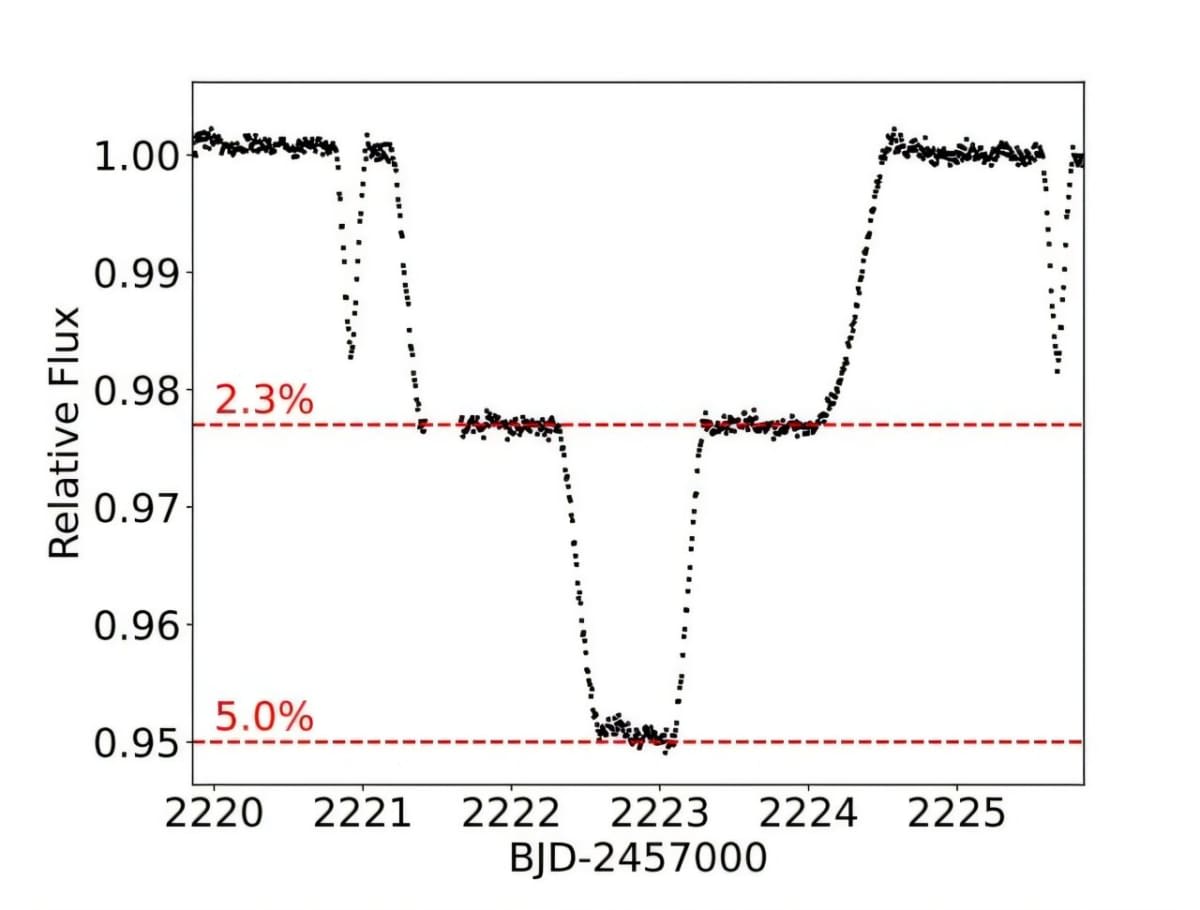
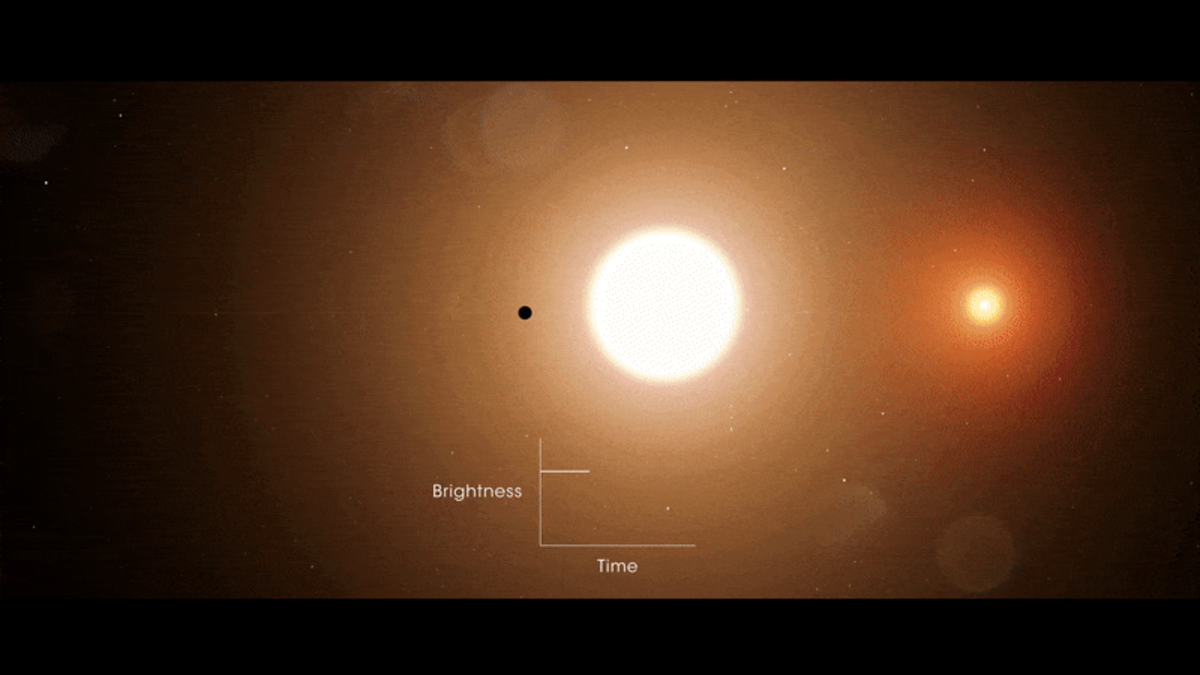
The system was discovered when scientists detected an unusual light signal: when the binary pair passed directly behind the larger and more massive tertiary star, it created a unique, changing light signal known as a "head-and-shoulders" light curve. During triply-eclipsing events, light captured from this system was found to dip in three distinct stages: first, when the first binary star disappeared, creating the first 'shoulder'; second, when both binary stars disappeared, creating the deeper 'head'; and third, when the first star re-emerged, forming the second 'shoulder'. As for the properties of the system, the team found that the two Sun-like stars orbit each other every 4.75 days, with effective temperatures of 6,460 and 6,350 Kelvin, respectively.
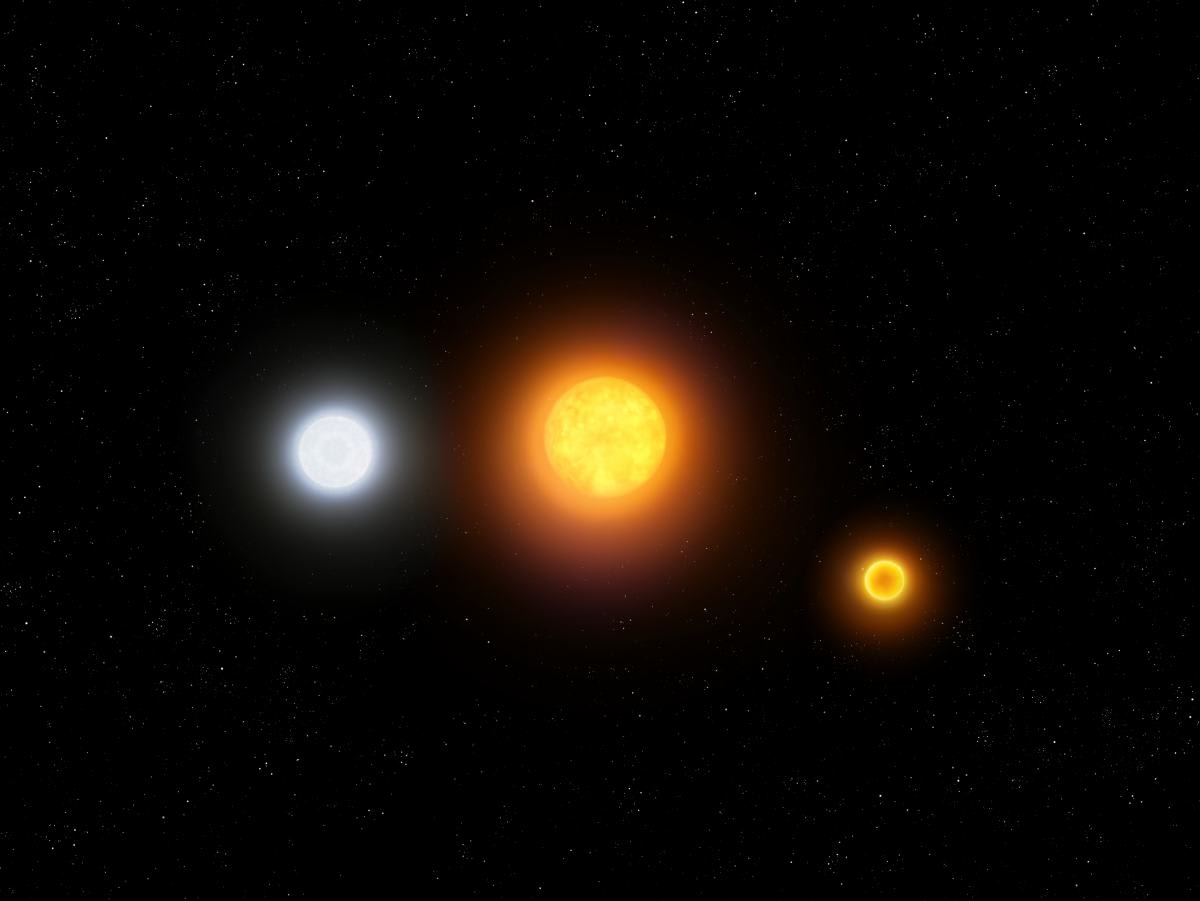
The giant, tertiary star in the system, meanwhile, burns at a relatively cooler 4,839 Kelvin, and lies at a distance of around 1.7 astronomical units (AU) from the binary. Because this giant, tertiary star produces most of the light visible from the system—drowning out the smaller pair by contributing roughly 95% of the total light—the team had to rely on TESS's eclipse timing and spectral data to glean insights about the system's properties. By calculating the metallicity of the system—that is, the abundance of elements heavier than hydrogen and helium—the researchers found that the giant star could be in one of two evolutionary phases: one where it is ascending the red giant branch, and another where it sits on the horizontal branch of the Hertzsprung-Russell (H-R) diagram. Depending on which its actual state is, the scientists estimated the system, located around 3,080 light-years away, to be between 1.24 and 1.46 billion years old.
But how did such a precisely aligned—"near-perfectly coplanar"—system arise? While there's no definitive answer, Powell and his colleagues hypothesize that TIC 295741342 was born through the fragmentation of a vast, spinning, protostellar disk. They speculate that this disk, long ago, was fractured into multiple stars, which gradually migrated inward while the surrounding gas calmed their motions into near-perfect harmony.
More on Starlust
Astronomers discover the most massive 'binary star system' ever observed in our galaxy
Subaru, James Webb study galaxy cluster from 12.6 billion years ago—here's what they found