NASA's Skyfall helicopters to travel to Mars aboard '1st nuclear-powered interplanetary spacecraft'
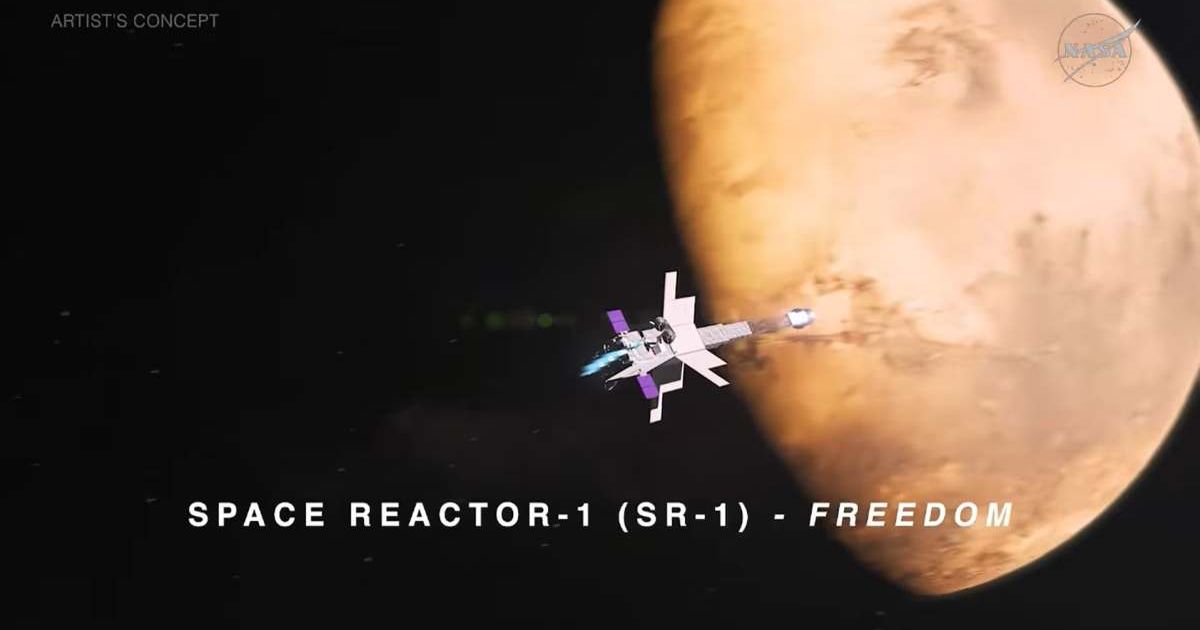
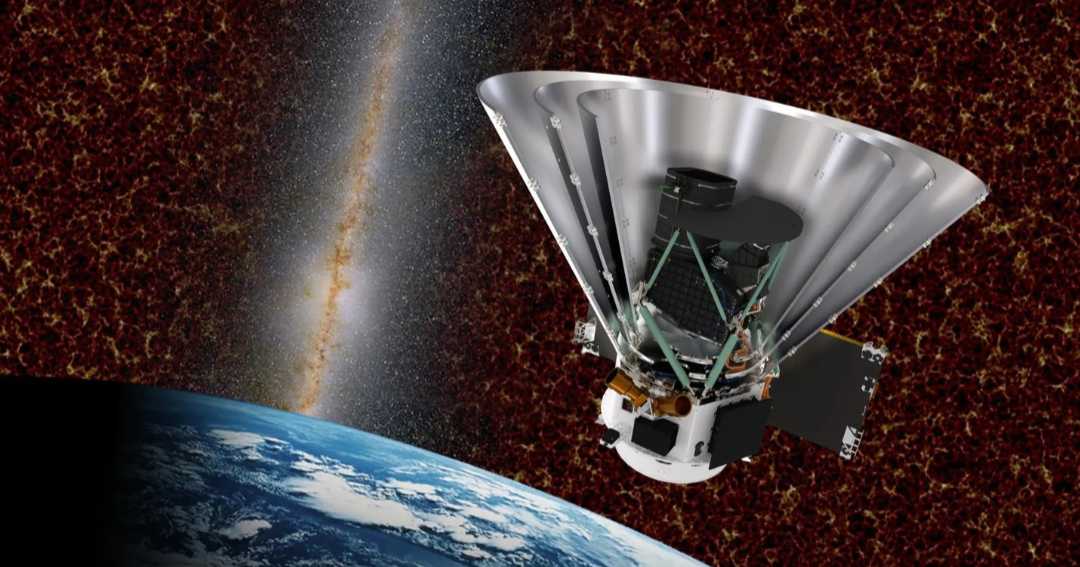
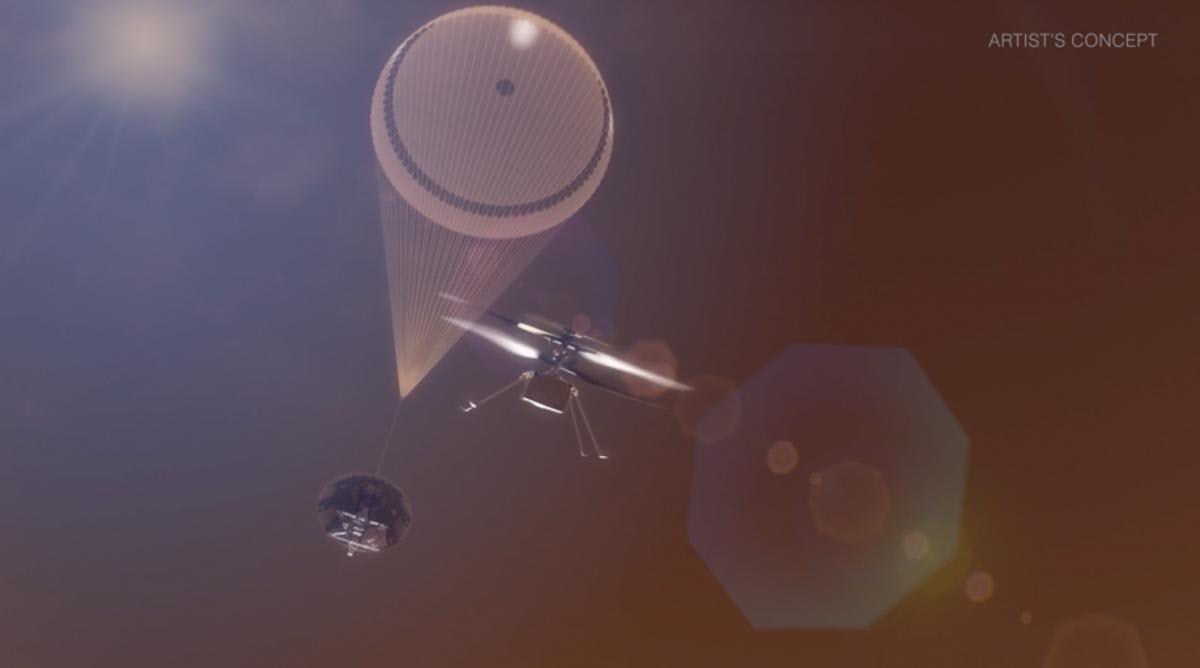
On July 24 last year, AeroVironment revealed the mission concept for 'Skyfall,' a fleet of Martian scout helicopters that it would develop in conjunction with NASA's Jet Propulsion Laboratory to help pave the way for crewed missions to the Red Planet. Cut to March 24, 2026, NASA announced during its 'Ignition' event that it is indeed going forward with the mission and will be launching it before the end of 2028, as was decided earlier. However, that was not really the most intriguing part of the announcement. What, in fact, took the cake was the fact that Skyfall will travel to Mars aboard Space Reactor-1 Freedom, the first nuclear interplanetary spacecraft.
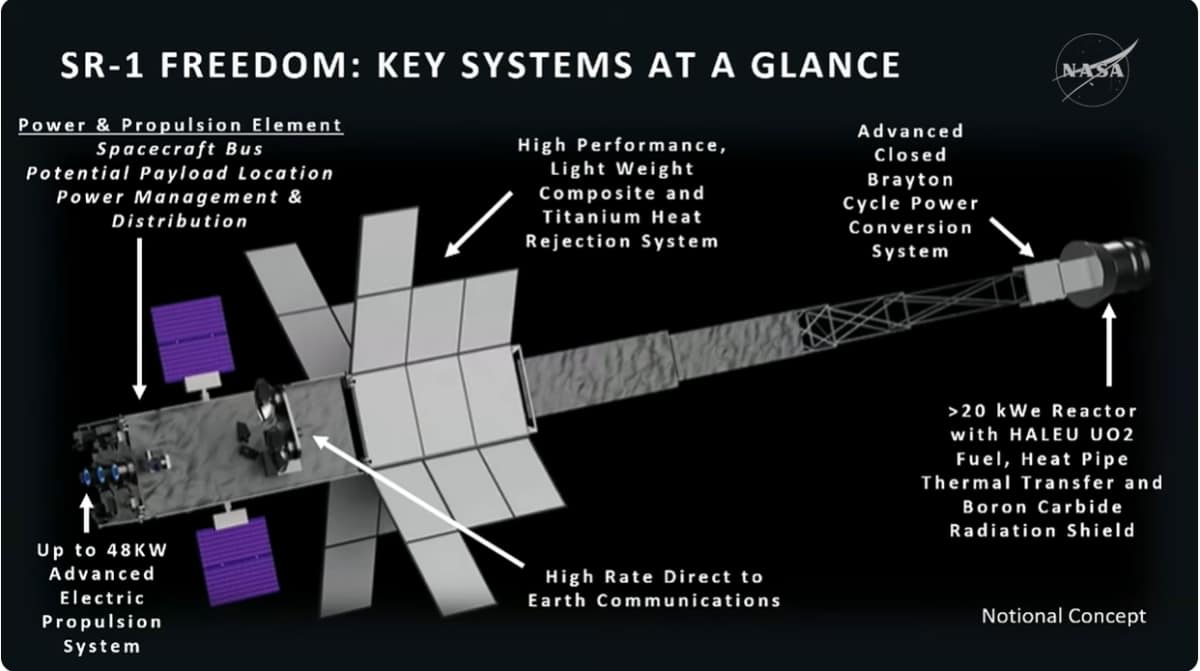
One of the many initiatives aimed at honoring President Donald Trump's National Space Policy, Space Reactor-1 will use nuclear electric propulsion (NEP) powered by an onboard fission reactor. NASA views nuclear power as key to sustainable missions on both the Moon and Mars and to the future of deep space exploration. "Nuclear power will keep lunar bases operating through the 14-day (354-hour) night," said Steve Sinacore, the NASA's Space Reactors Office Program Executive, during the Ignition event. It will power the missions on the surface of Mars, where, without it, the alternative is football fields of solar panels that will be ineffective during dust storms, and nuclear power provides the continuous, reliable, and plentiful energy that will enable surface manufacturing and the ability to make propellant on Mars that brings crews home."
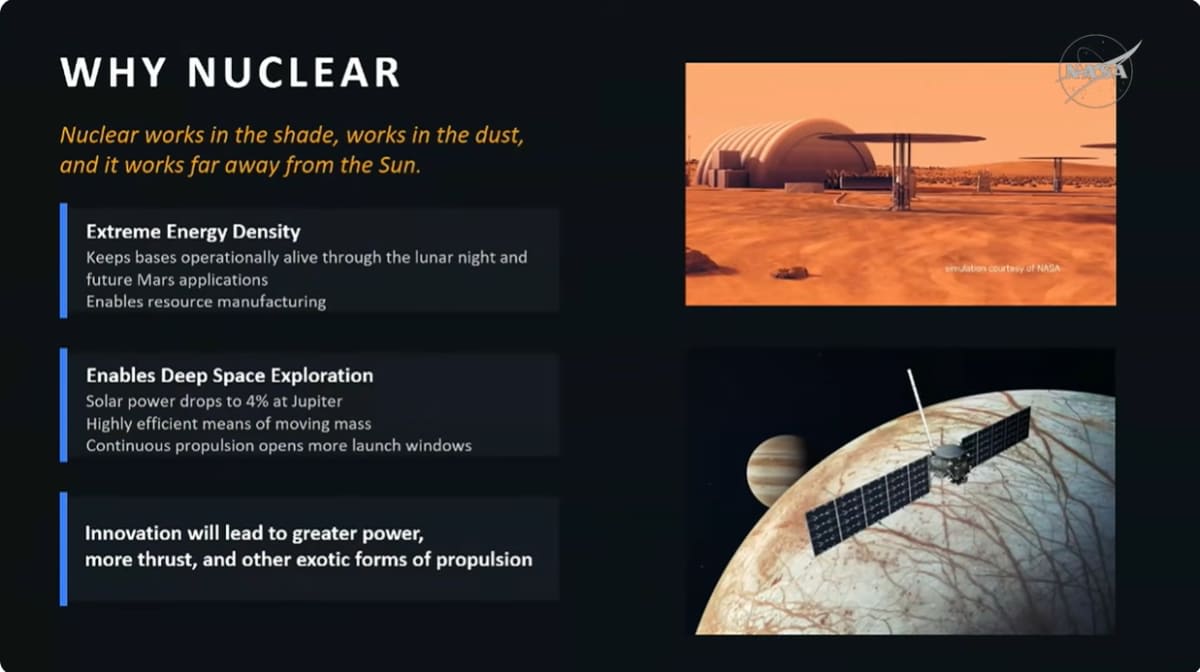
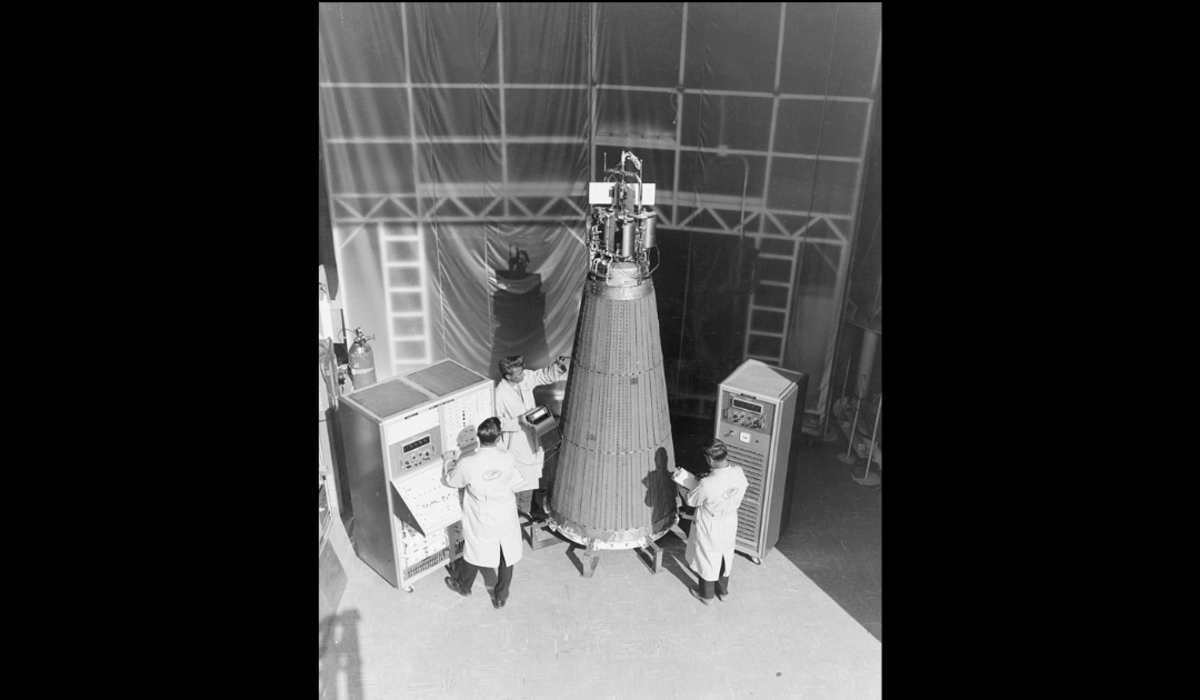
Sinacore also explained how nuclear power is the future for missions to the farther ends of our solar system, given how the efficiency of solar cells drops to about 4% at Jupiter and is practically negligible beyond it. "Nuclear-powered electric propulsion spacecraft will move cargo in space like railroads move freight on earth with incredibly high efficiency compared to chemical propulsion," he added. NASA had launched a flight reactor dubbed SNAP-10A back in 1965. And since then it has spent over $20 billion on over a dozen flight programs and has had nothing to write home about. So, what makes it so sure that they are going to get it right this time?
Among the many changes that the program will incorporate, including what Sinacore referred to as "a sustained mission pull" and one primary integrator in NASA, is an incremental approach to scope, much like the newly revised Artemis program. The SR-1 will have an approximately 20 kWe reactor, which is an existing piece of technology, instead of a megawatt-class one. "SR-1 Freedom will close a 60-year gap in American space fission flight heritage. Along with our Department of Energy and industry partners, it establishes the regulatory precedent, the nuclear-qualified workforce and the flight-proven hardware that every future space nuclear mission will inherit. It is the foundation for everything that follows," Sinacore noted.
As far as Skyfall is concerned, it will be designed to deploy a fleet of three helicopters that will explore potential landing sites selected by NASA. "The Skyfall helicopters were will carry cameras and ground penetrating radar to scout a future landing site to understand the slopes and hazards for human-scale landers," Sinacore explained. The helicopters are also meant to find and map subsurface ice on Mars and gather information about the size, depth, and other important features of the deposits.
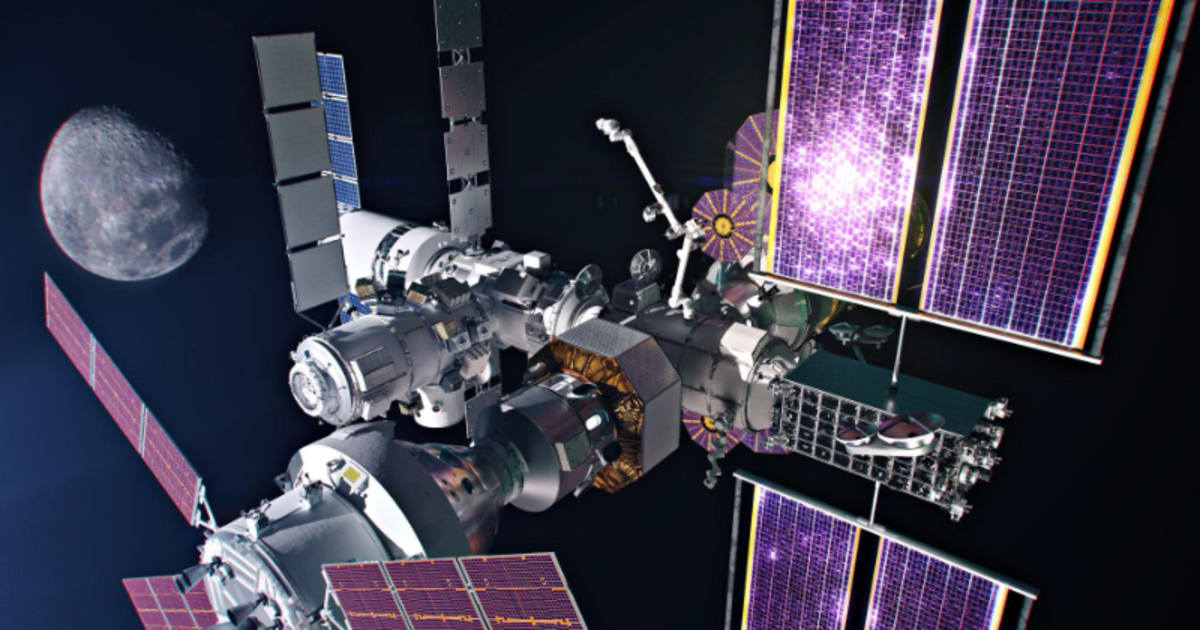
Among the many announcements that the space agency made during the briefing on Tuesday, mention must also be made of the update regarding the Gateway lunar station. "The agency intends to pause Gateway in its current form and shift focus to infrastructure that enables sustained surface operations," NASA Administrator Jared Isaacman said during the event. "Despite challenges with some existing hardware, the agency will repurpose applicable equipment and leverage international partner commitments to support these objectives." Gateway was supposed to be both a research platform and a transfer station to be used by astronauts to board lunar landers before descending on the Moon.
More on Starlust
NASA selects United Launch Alliance to provide upper stage for Artemis IV and V
What sets the Artemis II crew's bright orange spacesuit apart from past missions' gear