NASA’s MAVEN spacecraft detects lightning-generated waves in Mars’ atmosphere
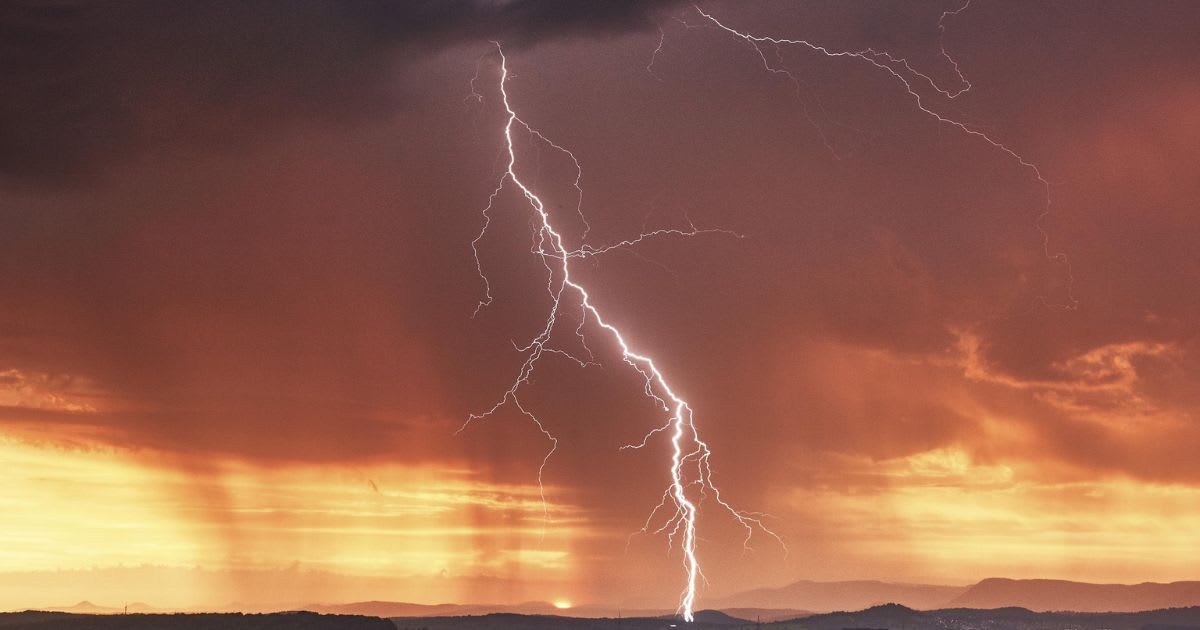
Scientists have detected the first direct evidence of electromagnetic activity similar to lightning on Mars with the help of NASA’s Mars Atmosphere and Volatile Evolution (MAVEN) spacecraft. From over a decade of data, they identified rare whistler waves, which are generated by lightning on Earth. These waves are low-frequency radio signals created by lightning discharges. They may be common occurrences on Earth, but on Mars, whistler waves are more of an anomaly. The findings were recently published in a study titled “Lightning-generated waves detected at Mars,” in the Science Advances journal. The study, however, does not imply that NASA has restored contact with the MAVEN spacecraft after a signal loss in December 2025.
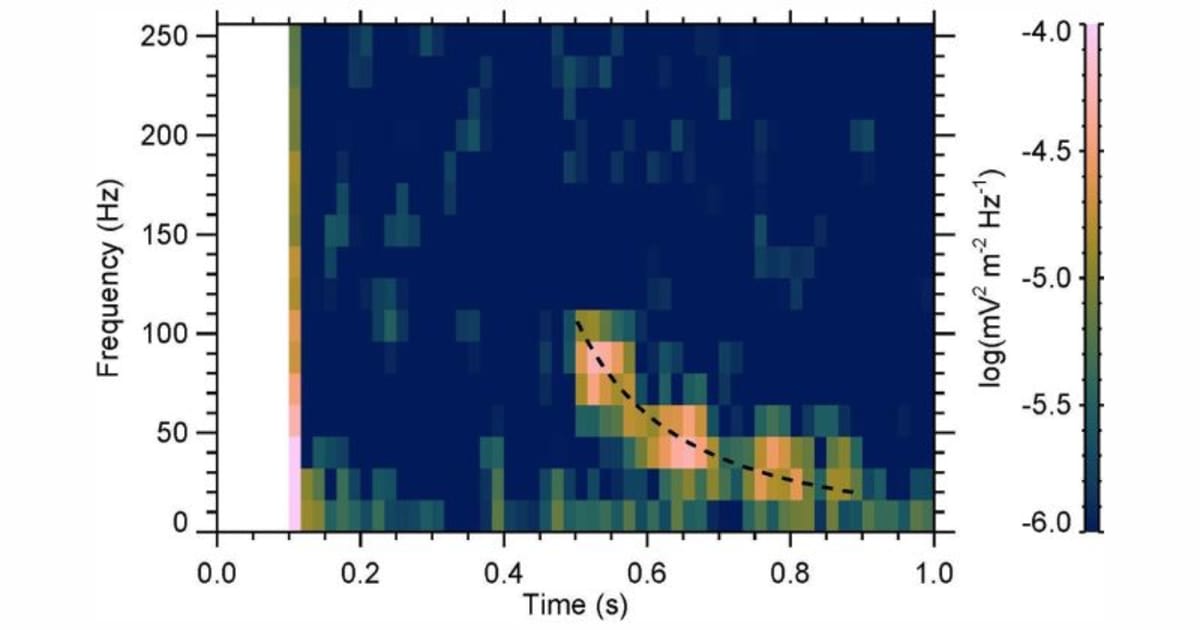
Typically, a lightning strike generates an impulse that moves along magnetic field lines. The plasma in the ionosphere and magnetosphere slows down the lower frequencies of the impulse as it travels. As a result, the signal disperses, causing a whistling pattern, where the waves get their name from. Outside of Earth, whistler waves have been observed on planets with strong magnetic fields around them, such as Jupiter, Saturn, and Neptune. But that’s not quite the case with Mars.
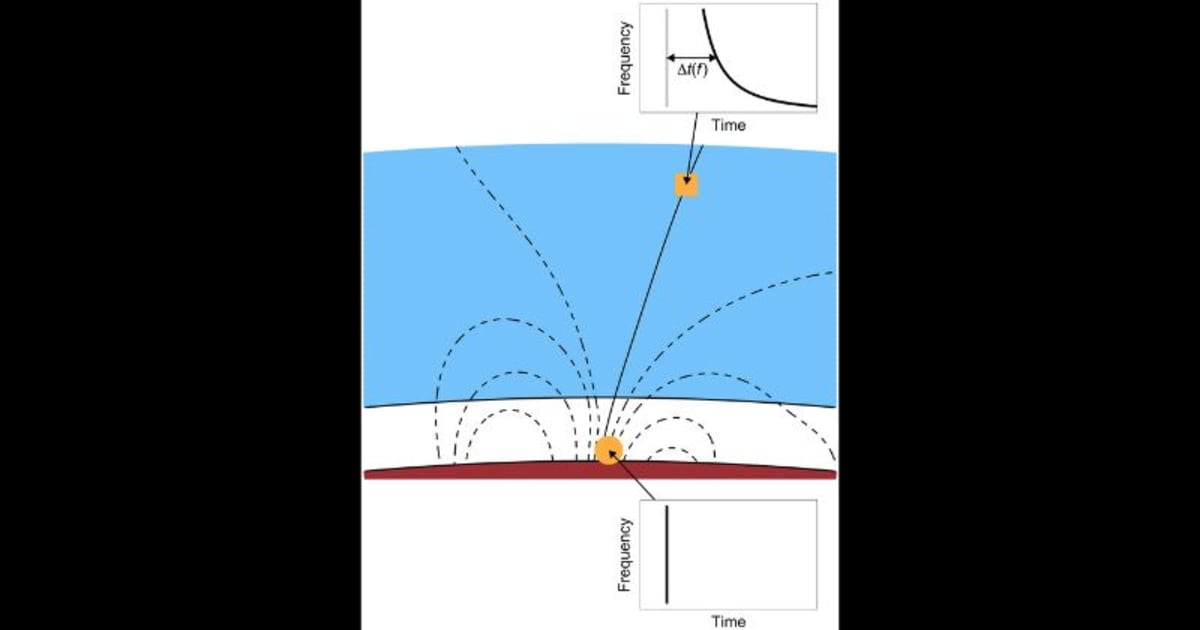
Unlike the aforementioned planets, Mars doesn't have a global magnetic field as its internal dynamo is believed to have shut down billions of years ago. This is why the whistler's propagation would be limited compared to planets with global magnetospheres, which, in turn, makes lightning detection far more challenging. Yet, even with no global magnetosphere, Mars still has some localized crustal magnetic fields, which are especially stronger in the planet’s southern hemisphere. In case of any lightning-like activity near these magnetic regions, the waves generated by the discharges could travel along those field lines. Here, factors like dust storms help, where dust grains collide and could even trigger electrical discharges under certain atmospheric conditions.
The data obtained by NASA's MAVEN spacecraft was nothing short of extensive. Scientists had to analyze over 108,000 wave measurements to find the singular frequency-dispersed whistler wave, which now serves as proof of lightning-like activity on the Red Planet. This rare signal was detected in Mars’ ionosphere, lasted 0.4 seconds and spanned frequencies up to 110 Hz. More importantly, it resembled whistlers typically generated by lightning on Earth. But to identify this singular event, a variety of rare conditions had to align.
In about one-third of the cases, nightside ionospheric conditions were present, but there were strong vertical magnetic field inclinations in less than 1% of the measurements. In fact, only 290 of them had the required solar zenith angle conditions (> 100°), according to the study. It’s safe to say the MAVEN orbiter was at the right place at the right time – to be more precise, the correct altitude, observation mode and on the nightside of Mars. The study suggests that the source crustal magnetic field needed to be strong, and the signal, too, must have escaped into the ionosphere before it got weak. In 2021 and 2024, NASA’s Perseverance rover spotted some similar signals too, but these events were even weaker and localized; the one identified by MAVEN is a much stronger and larger-scale electrical discharge.
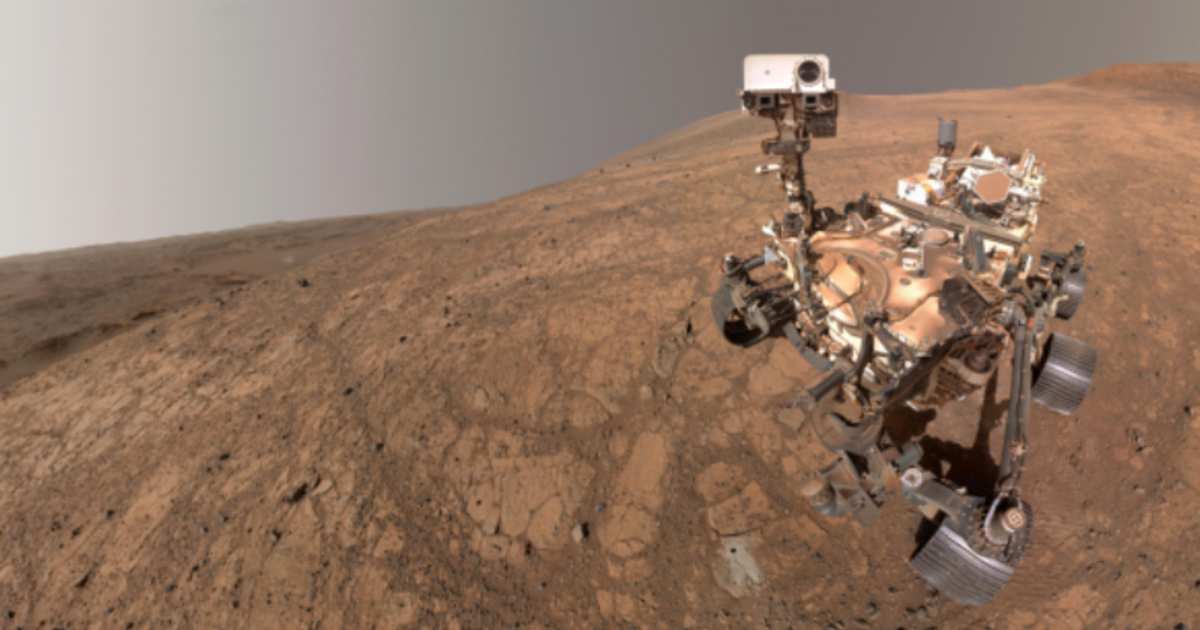
The latest findings also tread around the term ‘lightning’ cautiously, since these signals just happen to be sudden low-frequency electromagnetic waves that are somewhat similar to those on Earth. There is no confirmation of any visible flashes, but the observed signal showed frequency dispersion i.e. higher frequencies arrived first, and lower frequencies were delayed. The evidence found by NASA’s MAVEN spacecraft is a big step towards not just detecting lightning on Mars, but also studying the planet’s dust storm physics and atmospheric electricity. More programs like ESA’s proposed M-MATISSE (possible 2037 launch) could analyze them even better now. In turn, it would improve the safety of any crewed missions to the planet, especially with NASA’s Moon to Mars program in the picture now.
More on Starlust
Tiny 'water bears' are offering insights into how Mars might support plant growth