As NASA attempts to reestablish contact with MAVEN, here's a look back at the spacecraft's key achievements
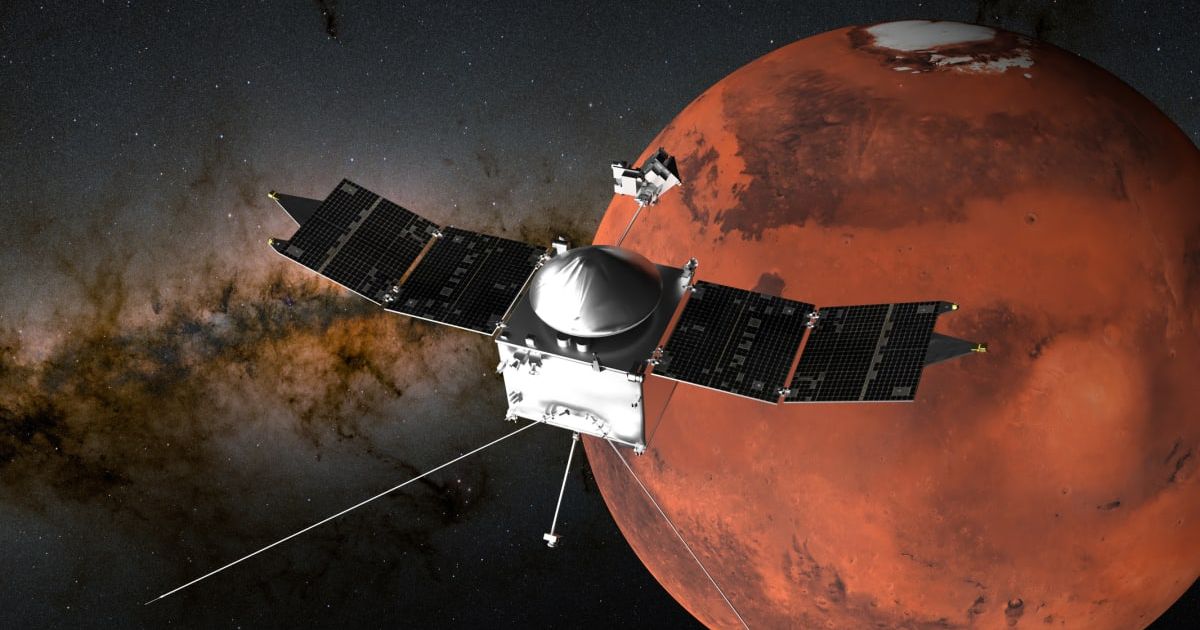
MAVEN lost contact on December 6, and NASA's latest update suggests a tough road ahead for the mission.
Mars with MAVEN probe - close-up view 3d illustration (Representative Cover Image Source: Getty | Nemes Laszlo)

One of the biggest challenges NASA is facing is the failure to communicate with its MAVEN spacecraft, which fell silent in early December. The orbiter lost its connection to the agency on December 6 when it orbited behind Mars, and the most recent comments from NASA point to a challenging recovery process. 
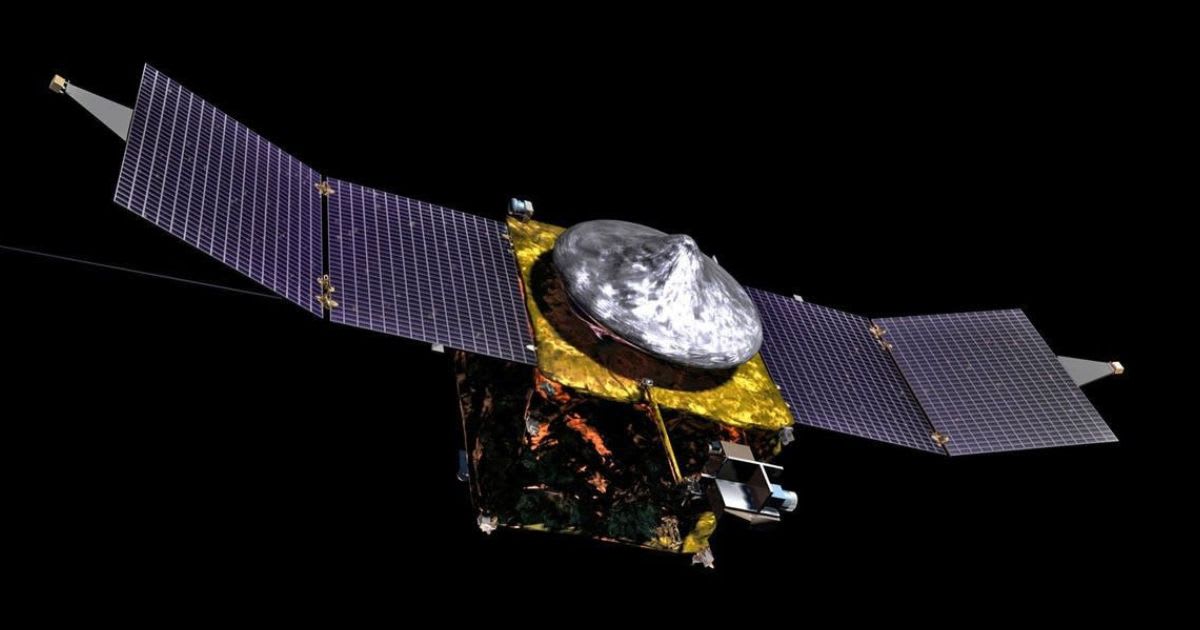
Cover Image: This is an artist's conception of NASA's Mars Atmosphere and Volatile Evolution Mission (MAVEN) Mars orbiter.
(Cover Representative Image Source: NASA/Goddard Space Flight Center)
This is an artist's conception of NASA's Mars Atmosphere and Volatile Evolution Mission (MAVEN) Mars orbiter. (Representative Image Source: NASA/Goddard Space Flight Center)

Telemetry from the spacecraft showed that every system was working fine before it reached behind Mars. However, when Maven emerged again, NASA’s system of radio antennas on and orbiting around Earth (Deep Space Network) did not find a signal, except for a brief fragment of tracking data from December 6. Initial evaluation hints at the possibility that MAVEN may have been erratically spinning when it became visible again. Also, the signal's frequency suggests that the movement of the spacecraft may have been altered. Currently, the engineers are dividing the limited tracking data into smaller parts to determine the cause of the failure and are continuing their efforts to establish a strong connection again. While teams work to save the mission, here is a look at the major scientific milestones MAVEN has achieved since its launch. 

Mars water loss decoded 

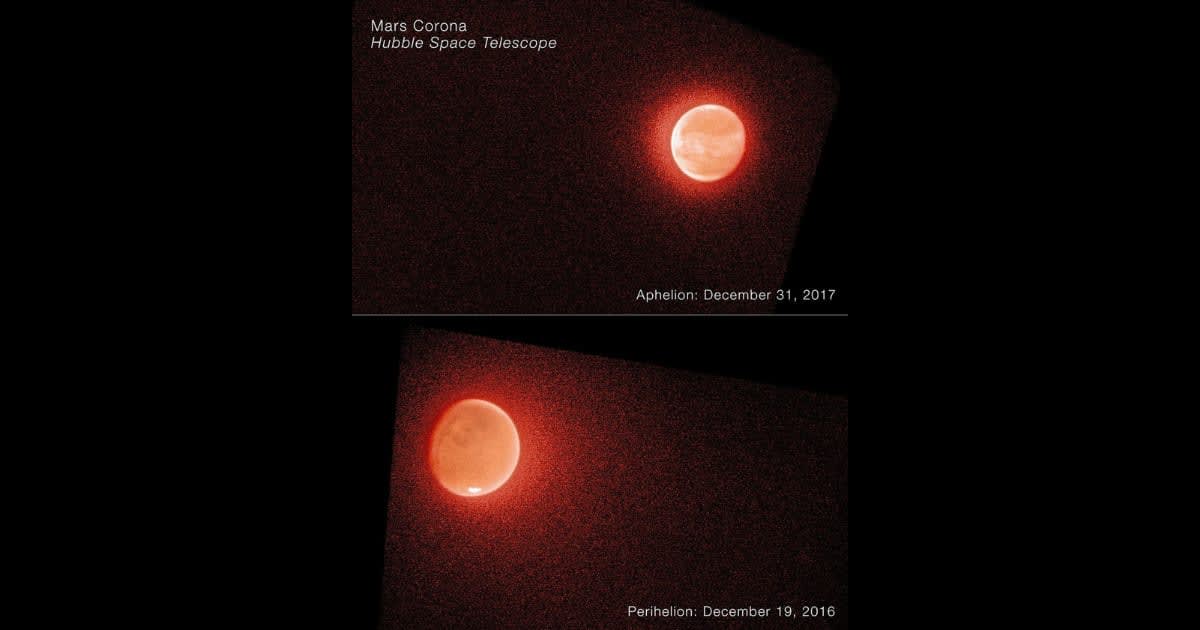
In one breakthrough, MAVEN and the Hubble Space Telescope showed how Mars was robbed of its water: sunlight breaks down water molecules in the lower atmosphere, allowing hydrogen to rise and leak into space. This proved that atmospheric loss happens much more quickly when Mars is closer to the Sun, an important reason the planet turned into a desert, per NASA

These are far-ultraviolet Hubble images of Mars near its farthest point from the Sun, called aphelion, on December 31, 2017 (top), and near its closest approach to the Sun, called perihelion, on December 19, 2016 (bottom) (Image Source: NASA, ESA, STScI, John T. Clarke)

The physics of "atmospheric sputtering"

MAVEN provided the first direct evidence for a process called "sputtering." That, according to NASA, is when high-speed ions of solar winds slam into the Martian atmosphere and physically knock atoms out into the void of space. The discovery confirmed one of the major reasons Mars lost its thick protective atmosphere billions of years ago. 

Global ultraviolet mapping 

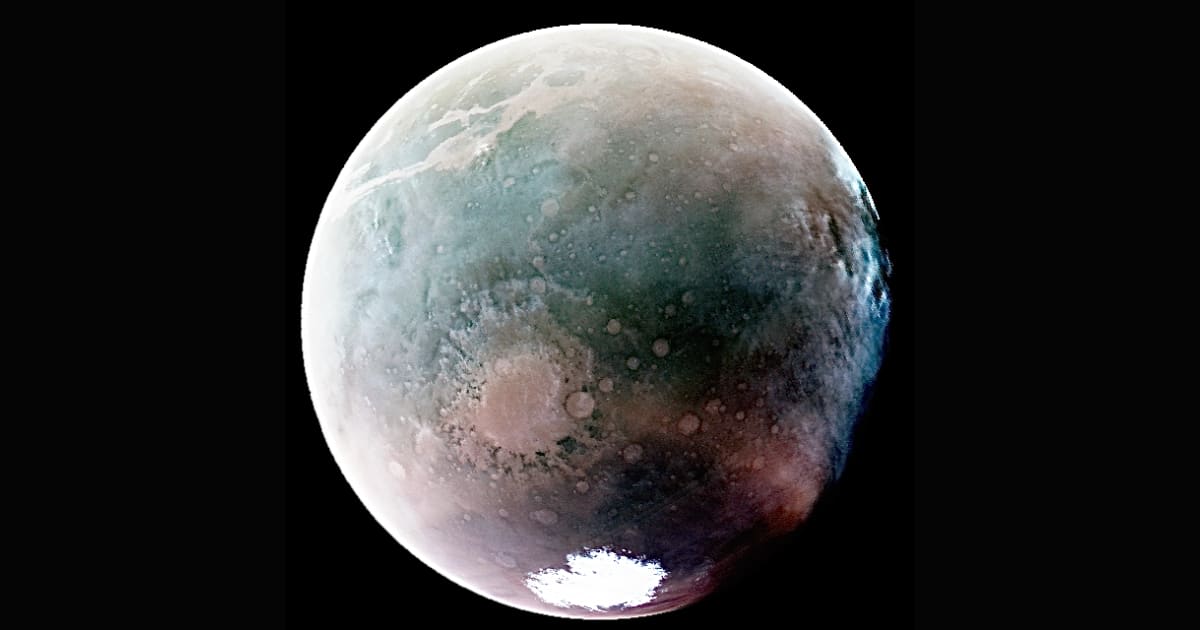
The spacecraft used its specialized ultraviolet camera to create striking, global maps of Mars over the course of the changing seasons. By viewing the planet in wavelengths that are invisible to the human eye, MAVEN followed the shifting "nightglow" gases and watched polar ice caps grow and shrink dramatically, shared NASA

NASA’s MAVEN Spacecraft Stuns with Ultraviolet Views of Red Planet (Image Source: NASA/LASP/CU Boulder)

Probing the mystery of Phobos 

During a series of high-speed flybys, MAVEN came within 300 kilometers of the Martian moon, Phobos. According to the agency, the mission’s ultraviolet scans allowed researchers to hunt for organic molecules and compare the moon’s chemistry to both Mars and nearby asteroids, helping to determine whether the moon was an asteroid "captured" by gravity or a piece of the planet itself. 
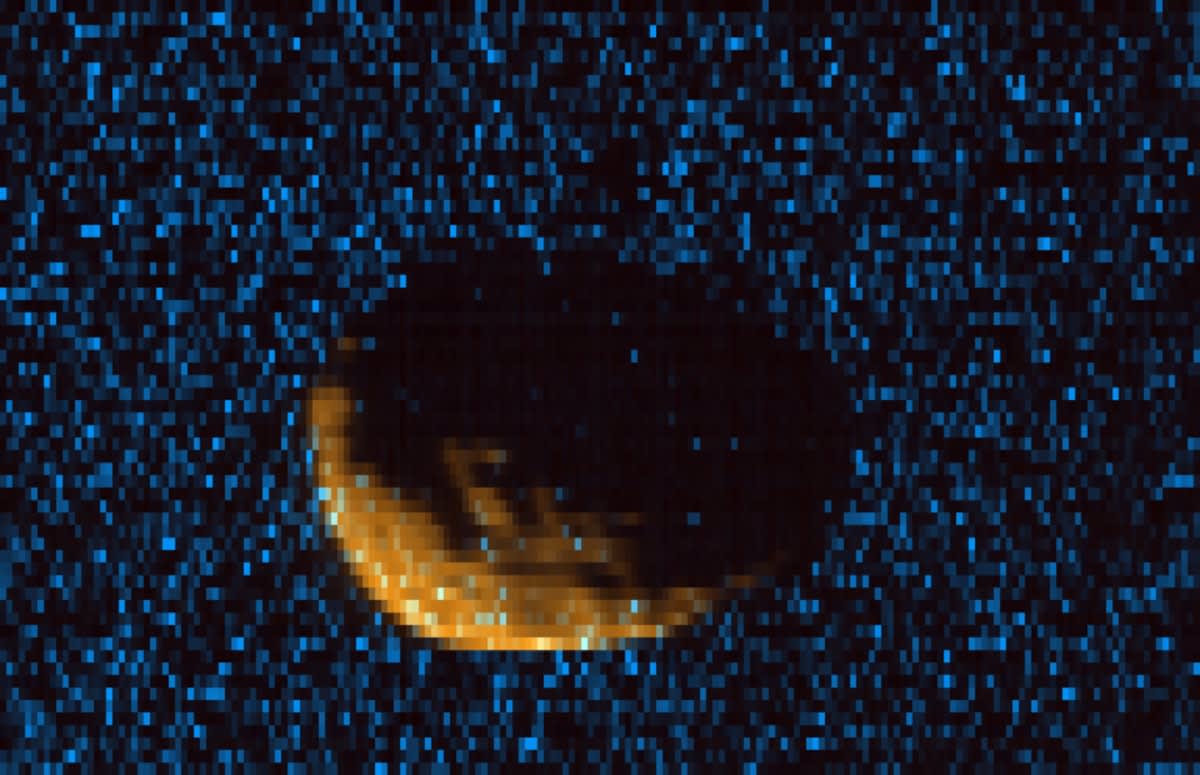
Phobos as observed by MAVEN’s Imaging Ultraviolet Spectrograph. Orange shows mid-ultraviolet (MUV) sunlight reflected from the surface of Phobos (Image Source: CU/LASP and NASA)

Interstellar visitor observations

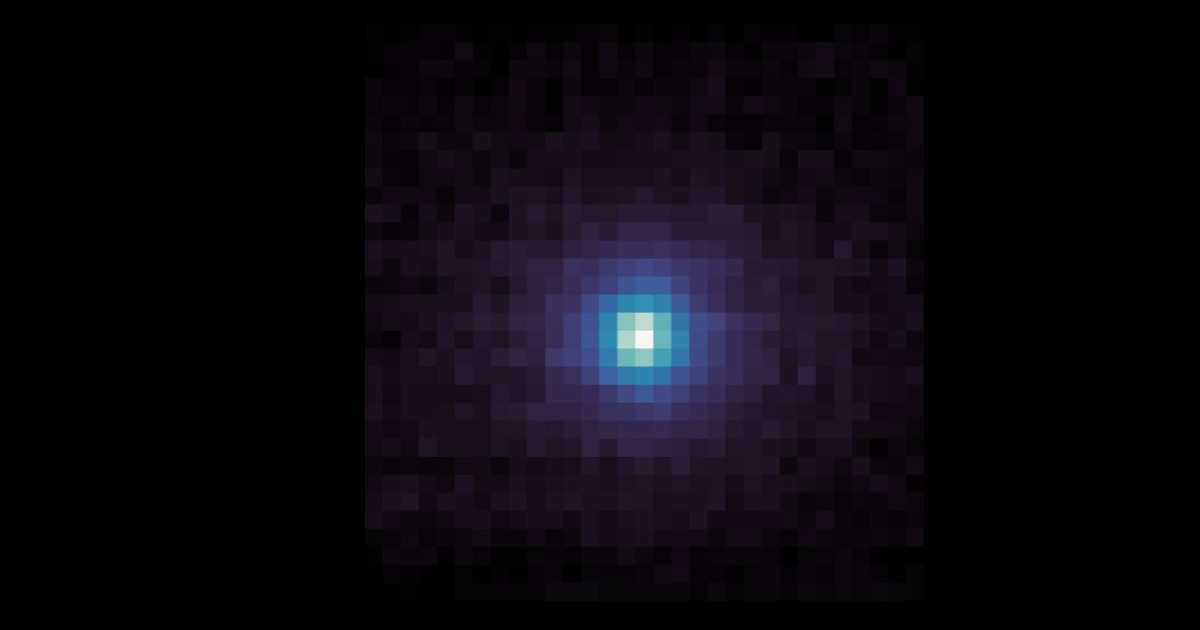
The orbiter played a crucial role in studying the extrasolar system comet 3I/ATLAS. MAVEN provided a very rare view of how different the composition of interstellar objects is from the ice and dust in our own solar system by capturing ultraviolet data as the comet sped past Mars, per NASA

This image, taken by the MAVEN spacecraft on Oct. 9, shows the halo of gas and dust, or coma, surrounding comet 3I/ATLAS. (Image Credit: NASA/Goddard/LASP/CU Boulder)

More on Starlust

NASA races to reach silent MAVEN spacecraft ahead of December 29 solar conjunction

NASA loses contact with MAVEN orbiter as it goes silent behind Mars
MORE STORIES

The rover can travel much faster and can overcome obstacles that could stop current Mars rovers.
1 day ago
For the test, the rover hunted for organic molecules in rock samples from the Murchison meteorite.
1 day ago
JWST lacks the precision to detect life on exoplanets, and this new telescope aims to change that.
2 days ago
The SOLAR-1 probe is a significant upgrade over existing research observatories and instruments that watch the Sun.
Jun 11, 2026
"It's like people in a village who see a river flooding—maybe they can predict when that will happen, but probably what's even better is if they could build a storm wall."
Jun 11, 2026
It will be able to map the abundance of five key elements across the entire lunar surface.
Jun 9, 2026
The Starlink satellite constellation has over 10,500 members in orbit as of now.
Jun 5, 2026
NASA has officially ended the MAVEN mission after failing to reestablish contact with the spacecraft.
Jun 4, 2026
The Nancy Grace Roman Space Telescope was supposed to launch in early September this year. But NASA is speeding things up.
Jun 4, 2026
The plasma device is aimed at removing harmful germs whose presence might make astronauts sick.
Jun 3, 2026