NASA astronauts share stunning video of Northern Lights dancing over Earth from the space station

A captivating video of the aurora borealis, also known as the Northern Lights, was shared by Colonel Anne McClain directly from the International Space Station (ISS). Colonel McClain, from the SpaceX Dragon spacecraft docked at the ISS, captured this stunning phenomenon from the Cupola. The Cupola is the station's distinctive dome-shaped panoramic control tower, offering unparalleled views of Earth and space, as reported by People.

McClain expressed her awe in the video's caption on X, stating, “Auroras from space always draw crewmembers to the Cupola. I love how this one illuminated our Dragon, and I also love the dance of satellites on the left in the latter part of the video.” She also found the aurora's movement fascinating, adding, “It’s interesting how the aurora creeps along the top of the atmosphere as it comes up over the horizon.” Witnessing this spectacle from space has clearly left a lasting impression, as she concluded by saying, "I have added traveling to see auroras from Earth to my bucket list!”
Auroras from space always draw crewmembers to the Cupola. I love how this one illuminated our Dragon, and I also love the dance of satellites on the left in the latter part of the video. It’s interesting how the aurora creeps along the top of the atmosphere as it comes up over… pic.twitter.com/4FGu5n0LpN
— COL Anne McClain (@AstroAnnimal) June 2, 2025
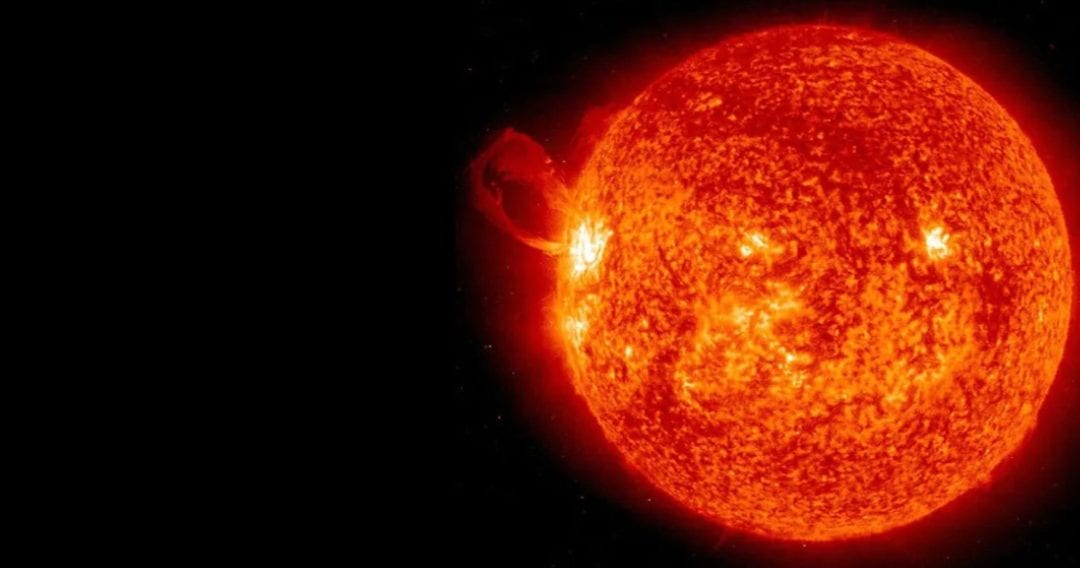
Building on this, NASA astronaut Nichole "Vapor" Ayers, also stationed on the ISS, provided further context in an X post on June 2, explaining that the "sun has been pretty active over the last week, which means some phenomenal auroras!” This heightened solar activity aligns with a forecast from the National Oceanic and Atmospheric Administration (NOAA), which indicated an increased chance of observing the Northern Lights due to geomagnetic storms. NOAA elaborates that a geomagnetic storm is essentially a disruption of Earth's magnetosphere — the protective magnetic field surrounding our planet. These disturbances arise from an efficient transfer of energy from the solar wind into the "space environment" around Earth, leading to the spectacular auroral displays witnessed by astronauts like McClain and Ayers. While these geomagnetic storms are responsible for the beautiful auroras, NOAA also highlights their potential downsides. Large-scale storms, though not the case with the recent milder events, can disrupt vital navigation systems. Furthermore, they can induce harmful currents in Earth's power grids, posing a risk to electrical infrastructure and life.
The Sun has been pretty active over the last week, which means some phenomenal auroras! The geomagnetic storm that lasted through this weekend did not disappoint. Our current orbit takes us right by the Southern Lights at night. Here are a few of my favorites! pic.twitter.com/tDiDVuCT1P
— Nichole “Vapor” Ayers (@Astro_Ayers) June 2, 2025
These celestial spectacles, known as the northern lights (aurora borealis) or southern lights (aurora australis), are vibrant, dynamic, and visually delicate displays resulting from the intricate dance of particles and magnetism between the Sun and Earth, a phenomenon often referred to as "space weather," as per NASA. The fundamental cause of auroras lies with the Sun, which continuously emits a stream of charged particles called the "solar wind." When these energetic particles from the solar wind reach Earth, they interact with our planet's magnetic shield, which can lead to the deposition and accumulation of energy within Earth's magnetosphere. When this stored energy is finally released, it rains down upon our atmosphere. As these energetic particles collide with atoms and molecules in the atmosphere, they excite them, causing them to emit light, which we perceive as the colorful glow of the auroras.
The very name "aurora" is rooted in Latin, meaning "dawn," and is also the name of the Roman goddess of the dawn. Historically, Europeans living far from the Arctic Circle would often observe auroras as a faint red glow in the northern sky — a sight that remarkably resembled the reddish glow appearing in the east at daybreak. This evocative similarity is why "aurora borealis" directly translates to "northern dawn."