James Webb detects most distant dormant black hole ever found at over 10 billion light-years away
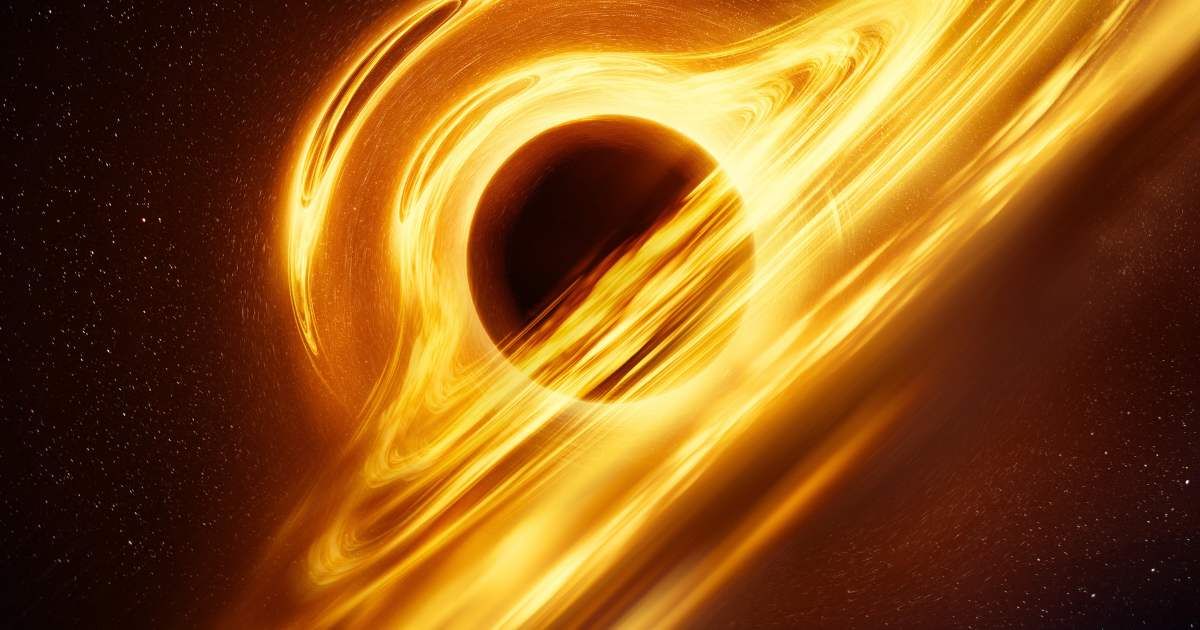
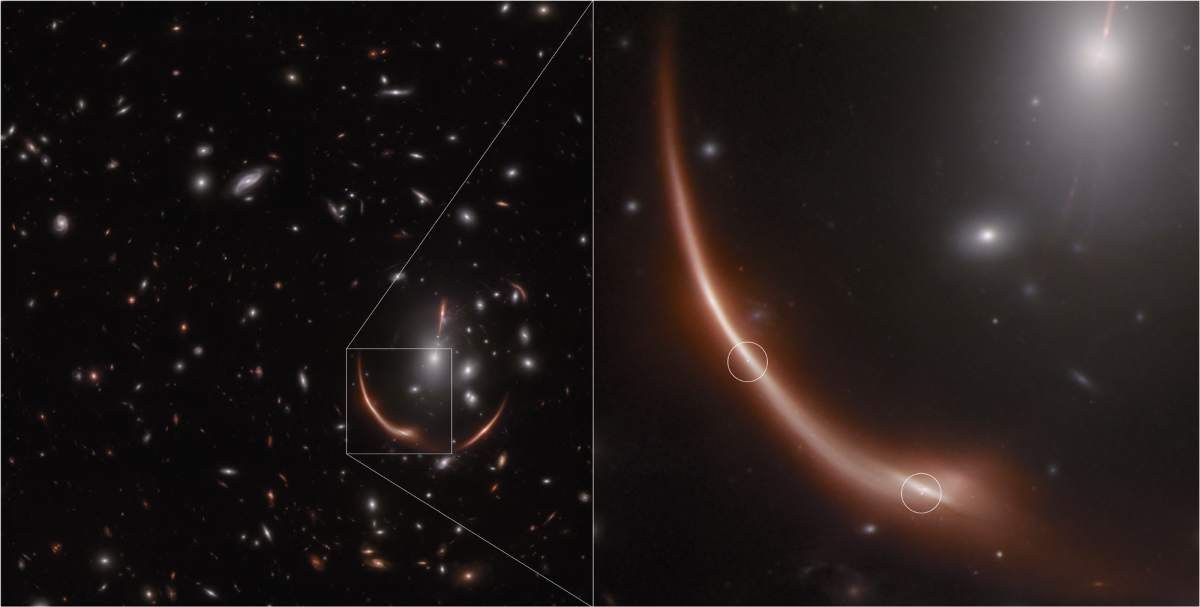
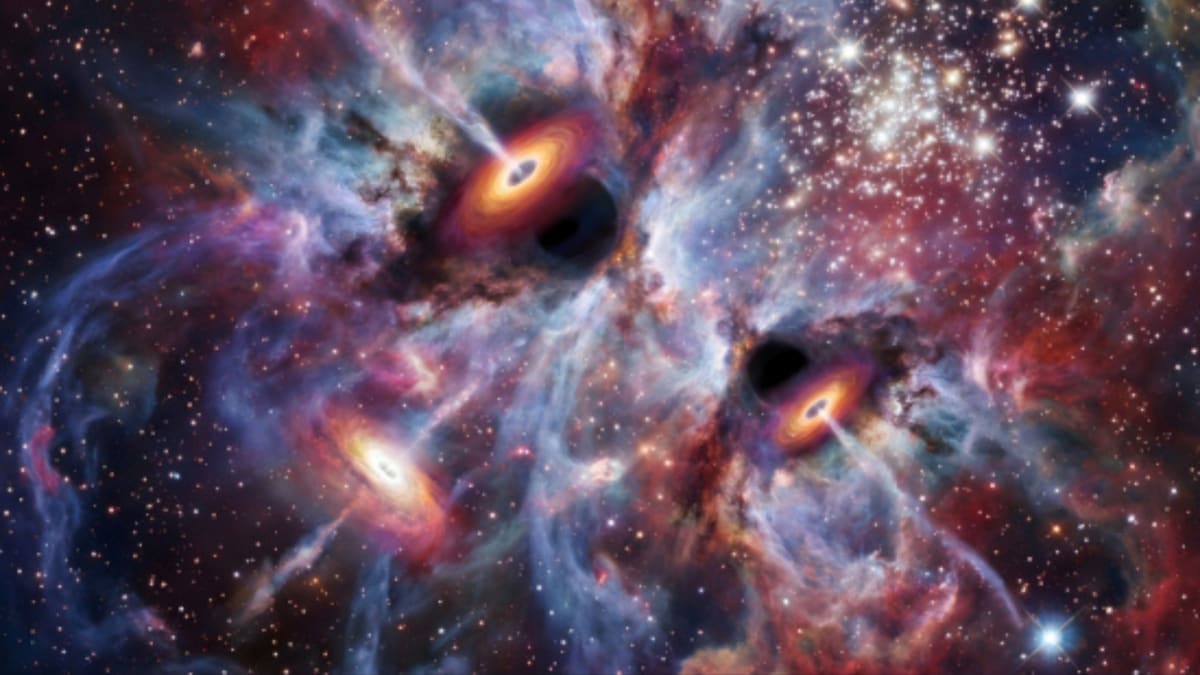
Until now, measuring the dormant black holes in the early universe was nearly impossible, as the distances were simply too vast. However, a new study conducted with NASA's James Webb Space Telescope (JWST) has now detected and measured the mass of the most distant dormant black hole ever found. The black hole weighs roughly 6 billion times the mass of the Sun. It sits at the center of a galaxy called MRG-M0138, which is more than 10 billion light-years from Earth. Because of this distance, astronomers are seeing the galaxy as it appeared when the universe was only about 3 billion years old. The study was conducted by Professor Richard Ellis of University College London and Dr. Andrew Newman of Carnegie Science, along with an international team, and was published in the journal Science.
To measure it, the research team relied on stellar dynamics, a technique that tracks the collective motion of stars near a galaxy’s center to reveal the gravitational pull of whatever lies there. A more massive black hole pulls nearby stars faster, so by measuring their speeds, scientists can calculate the black hole’s mass without ever seeing it directly. Before this, this technique had only worked for galaxies up to about 700 million light-years away. This discovery pushes that boundary to 10 billion light-years for the first time. Researchers have found a consistent relationship between the mass of nearby galaxies and the mass of the black holes at their centers. But scientists don't yet have enough data from the early universe to know whether this relationship held in the early universe, too.

“Determining how stars collectively move within the core of this distant galaxy has allowed us to measure the mass of its otherwise undetectable supermassive black hole. By demonstrating the feasibility of such a technique for galaxies in the early universe, we can now undertake a more complete census of how black holes develop over time and infer their role in shaping galaxy evolution,” said Professor Richard Ellis, senior author of the study. Both the black hole and the galaxy around MRG-M0138 are inactive. When this black hole was young and rapidly growing, the amount of energy it released likely burned off or ejected the free-floating gas in the galaxy, which is key to forming new stars. Essentially, researchers believe the black hole may have shut its own galaxy down.
Talking about the research, lead author Dr. Andrew Newman of Carnegie Science added, "By combining JWST data with gravitational lensing, we could peer inside the black hole's sphere of influence, where its gravity boosts the speeds of stars. This is one of the best techniques we have to weigh a black hole, so we were excited to extend it to a much earlier period in cosmic history." In this case, a massive galaxy cluster sitting directly between MRG-M0138 and Earth bent the light around it, refocusing the image and enlarging it 30 times. As a result, the team was able to study internal details that would otherwise be impossible to resolve.
The team expects that continued observations from JWST, along with data from other space telescopes, will uncover more dormant black holes from the early universe. Scientists also don't yet fully understand the relationship between black hole mass and galaxy mass in the early universe. More data is needed from both active and dormant supermassive black holes from that period to build a complete picture.
More on Starlust
What happened to black holes from the Big Bang? Study says they might be alive today as white holes
Astronomers spent 6 years studying a supermassive black hole’s revival. Here’s what they found