Astronomers just named the landing site for NASA’s Dragonfly spacecraft on Saturn’s moon Titan
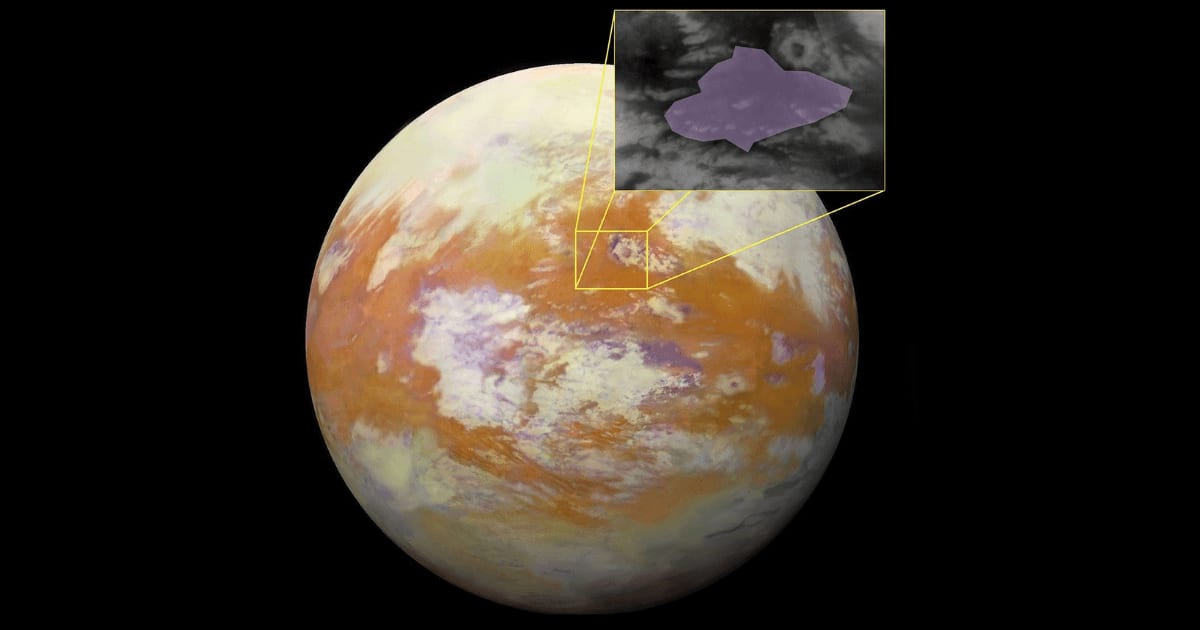
The International Astronomical Union (IAU) has just approved the naming of a region on Titan—one of Saturn's moons that holds many a planetary scientist's intrigue. Because of Titan's uniqueness, NASA is currently preparing to send an equally unique spacecraft known as Dragonfly to the hazy moon's surface. It is the targeted landing region of this spacecraft that the IAU has agreed to give the name 'Ahmakiq Undae'. This 500-mile-wide area featuring dune fields is located in the equatorial region of a moon that is often described by the agency as a 'younger version of Earth'.
Why the name Ahmakiq Undae?
The name was chosen by the Dragonfly team after a list of names was suggested by the global collective of astronomers. According to IAU naming conventions, any region with fields of dunes is named in Latin after mythological goddesses and gods of wind. The name Ahmakiq (pronounced "ah-mahk-eek") comes from Mayan traditions where people implored the spirit of the same name to stop winds that could damage their crops. Undae is the Latin term for dunes or waves. A statement from NASA describing the literal translation of the name reads "one who locks up the wind".
What makes Titan a target of intrigue for NASA?
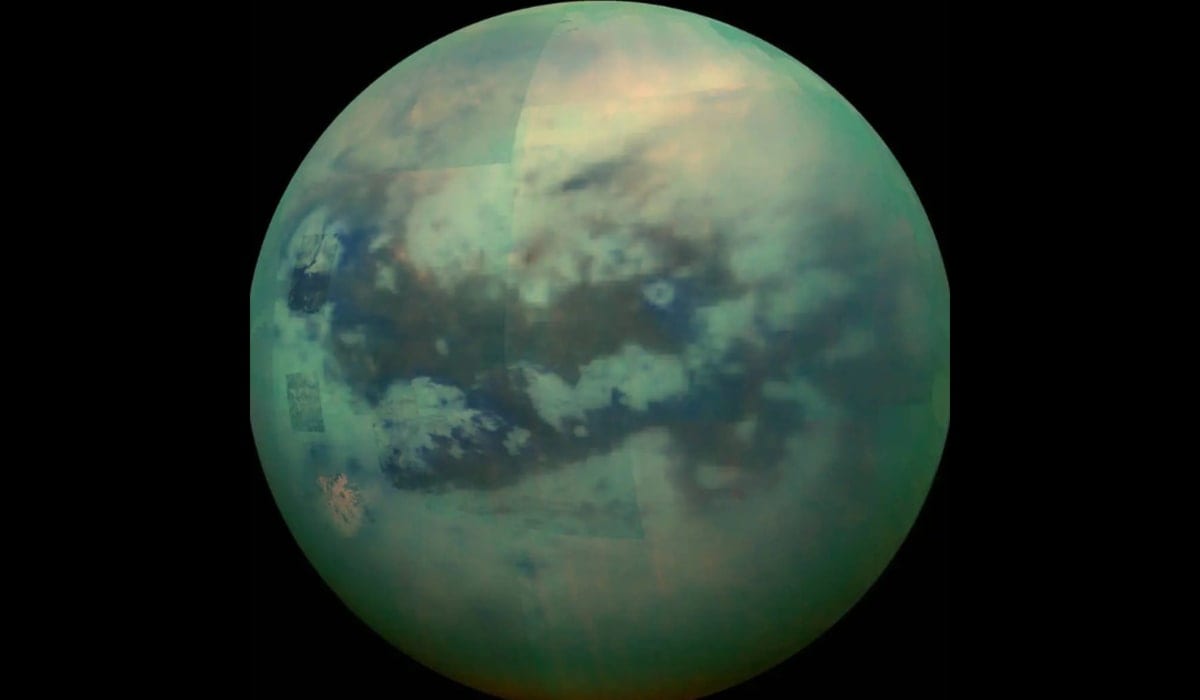
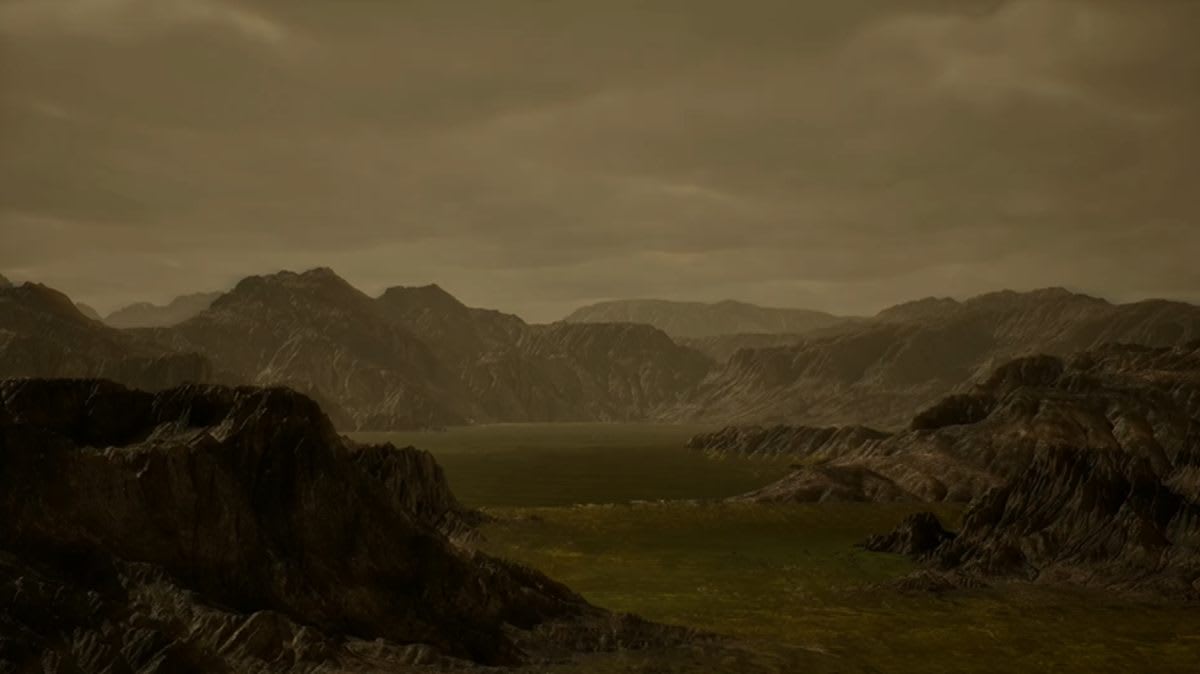
Besides Earth with its rivers, lakes, rain, and seas that we think of as terrestrial phenomena, Titan is the only other place we know that has these landscape-defining features. While it is believed that Mars also once had rivers of water that carved channels on the Red Planet, there is evidence to suggest that not only does the moon of Saturn have them at present, but it also has a thick atmosphere to boot. The dune fields of Ahmakiq Undae are also similar to sand dunes on Earth, except the composition of materials on Titan is much different. On the moon, which is larger than the planet Mercury, hydrocarbons like methane and ethane flow instead of liquid water.
It is because of these conditions that scientists thought of Titan as a prime target under NASA's New Frontiers program, which includes the likes of New Horizons and Juno. Dragonfly science team member Dr. Sarah Hörst (an associate professor of Earth and planetary sciences at Johns Hopkins University, whose Applied Physics Laboratory conceived the mission) says that sending a spacecraft to the dense atmosphere of Titan to sample its surface could provide insights into how the evolution of complex chemistry may have taken place on our own planet, signs of which have been wiped out by the later development of life on Earth. In this light, exploration of Titan could provide a window into processes that may have the potential to evolve into life forms. "Titan may have the most complex organic chemistry happening in the solar system hands down besides Earth," added Dr. Hörst.
Getting wired up for Titan. ⚡🪐
— NASA Solar System (@NASASolarSystem) September 2, 2026
With over 17,000 feet of wire and 374 connectors, Dragonfly's electrical harness from @JHUAPL will carry power and data throughout the rotorcraft as it explores Saturn's moon...including the newly named landing region. https://t.co/0Y5APYCQVD pic.twitter.com/XvtiERzmqh
About Dragonfly: Launch date and objective
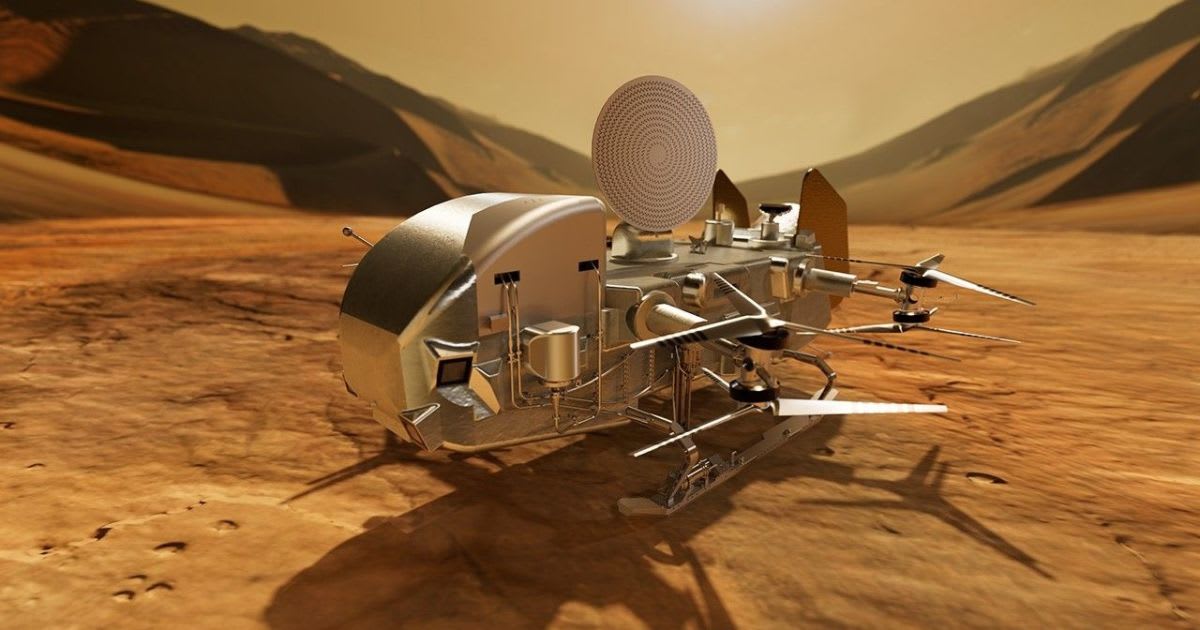
Dragonfly is currently being built inside a clean room at the Johns Hopkins Applied Physics Laboratory (APL) in Maryland. The spacecraft's electrical harness—which is a collection of wires and connectors between its instruments, battery, and other components—has now been laid inside the main structure of the rotorcraft, which was recently delivered and had its heat shield material and antenna tested. Based on these developments, the launch is currently slated for the summer of 2028, with Dragonfly reaching Titan by late 2034. Upon arrival, it will explore the Ahmakiq Undae region, which borders the southern edge of the 50-mile-wide Selk Crater. The thought is that the impact that created the Selk Crater may have left deposits in this dune field, which is something NASA scientists are keen to study during Dragonfly's 3.3-year primary mission.
More on Starlust:
NASA-funded flying robots could soon explore the hidden caves of Saturn's moon Titan
Does Saturn's moon Titan really have an underground ocean? New study raises doubts