Chicxulub impact: How the dino-killing asteroid may have burned everything in an hour or two
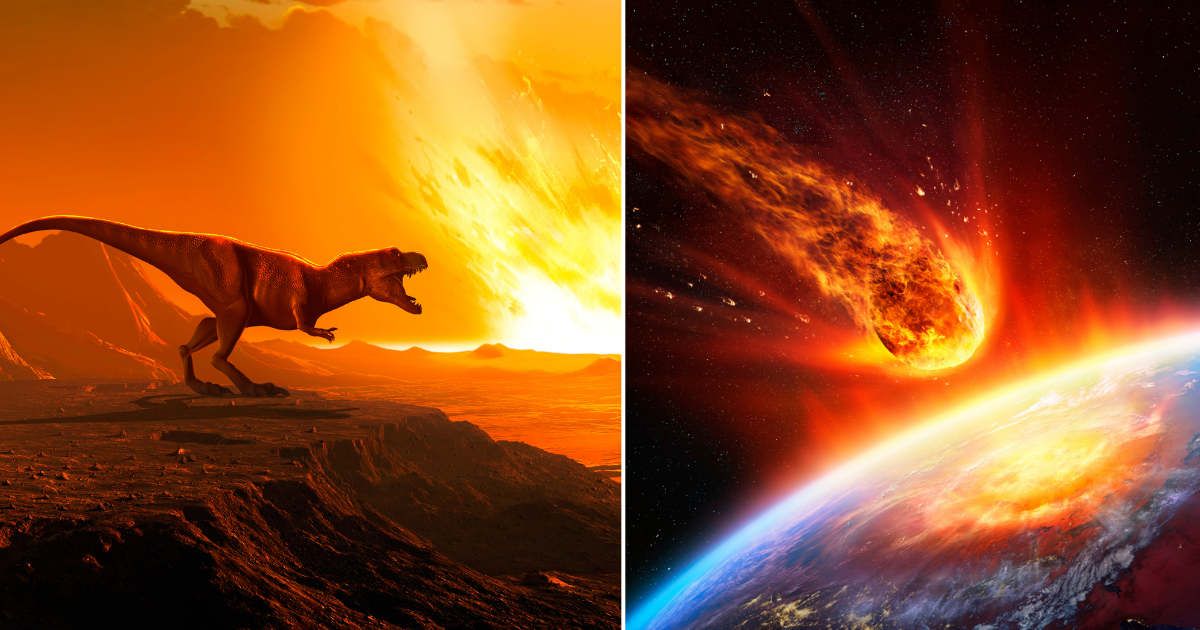
A thick global blanket of dust from the impact insulated Earth's atmosphere, triggering global wildfires and killing off the mighty dinosaurs.
(L) Illustration of a tyrannosaurus as an asteroid strikes the Earth. (R) A fired asteroid collides with Earth. (Representative Cover Image Source: Getty Images| left image by MARK GARLICK and right by RomoloTavani)

A new study, published in the Journal of Geophysical Research: Biogeosciences, indicates that the asteroid impact that created the Chicxulub crater 66 million years ago turned Earth into a giant frying pan. The impact generated a thick layer of fine dust that trapped heat in Earth’s atmosphere, causing temperatures to soar and ignite worldwide wildfires that killed most land animals, including the mighty dinosaurs. 
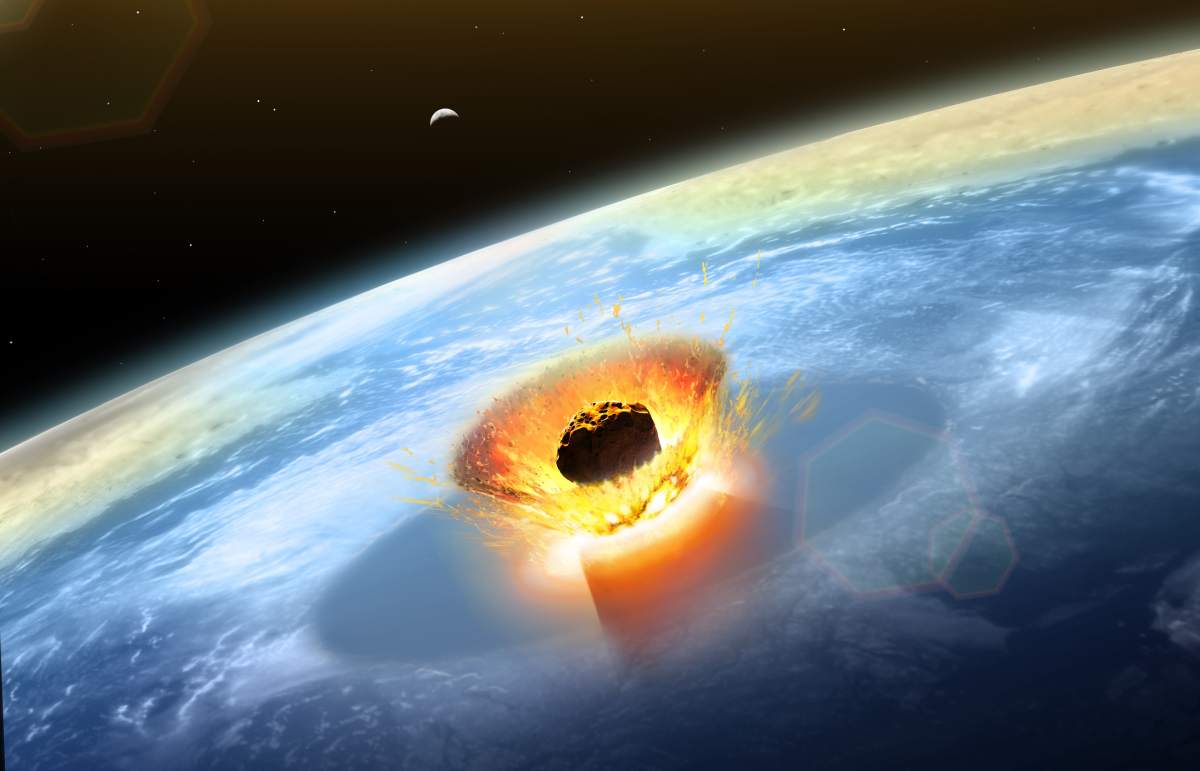
Illustration of a large asteroid colliding with Earth on the Yucatan Peninsula in Mexico (Representative Image Source: Getty | MARK GARLICK/SCIENCE PHOTO LIBRARY)

“We're in the realm where we might be essentially killing off everything within that first hour or two,” said lead author Brandon Johnson, a planetary scientist at Purdue University, in a statement. Simulations show that the impact-generated heat vaporized rock and ejected huge amounts of dust high into the atmosphere. After cooling, some rock vapor morphed into tiny rock droplets known as spherules that were blown away from the impact crater. During their descent toward the ground, the spherules behaved like mini meteorites, and their friction with air created an intense, sudden pulse of heat. Previous research indicated that the spherules turned the world into a heat chamber, hot enough to sizzle thick-skinned large animals but not hot enough to make plants burst into flames.
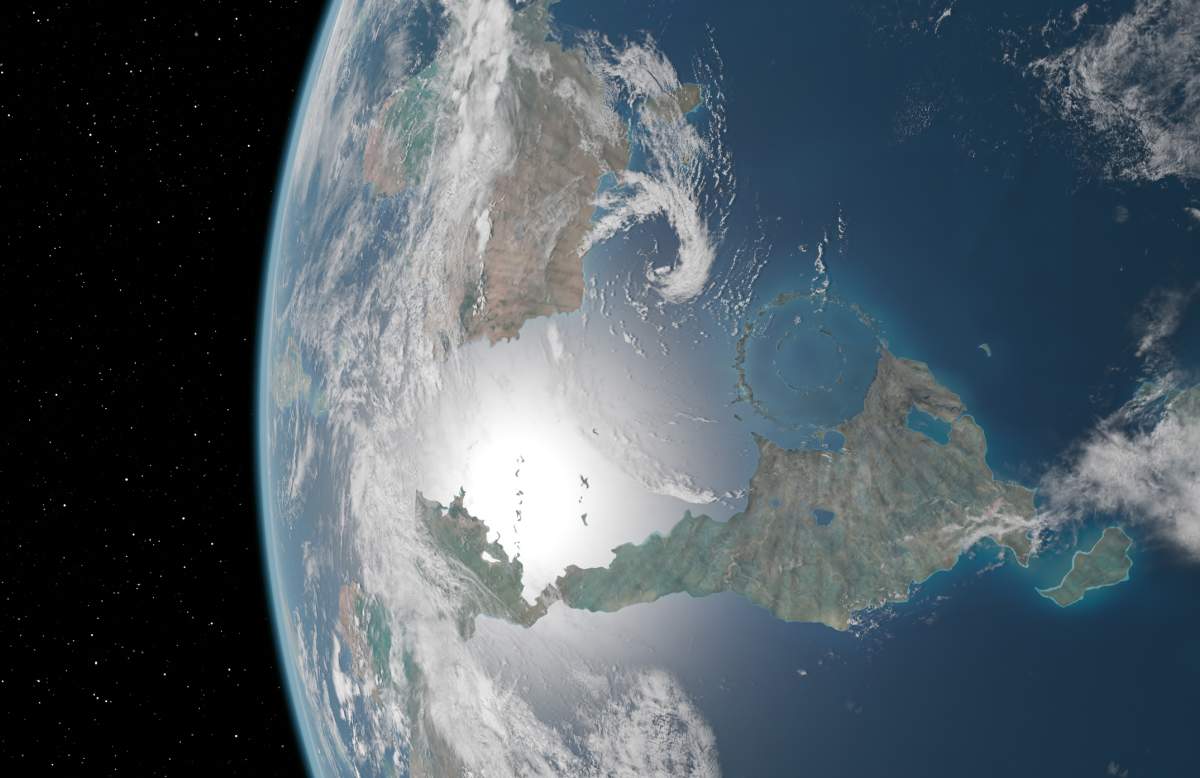
Artwork of the Chicxulub crater, shortly after its formation. This crater was formed 66 million years ago, off the coast of present-day Mexico, following the impact of an asteroid 10-14 kilometres across. The asteroid is widely believed to have provoked the extinction of the dinosaurs and other species at this time. (Image Source: Getty Images)
Artwork of the Chicxulub crater, shortly after its formation 66 million years ago, off the coast of present-day Mexico. (Representative Image Source: Getty Images)

However, this doomsday picture changed in 2023 when scientists stumbled upon new evidence in rock layers that date back to the time of the dinosaurs' extinction. They found a layer of fine post-impact dust that could have formed from rock vapor that didn't condense into spherules. “It reinvigorated my interest in what happened to the leftover vapor—that's where this work started,” said Johnson. For the study, Johnson and his colleagues combined existing simulations of the Chicxulub impact with geological observations from the extinction dust layer.
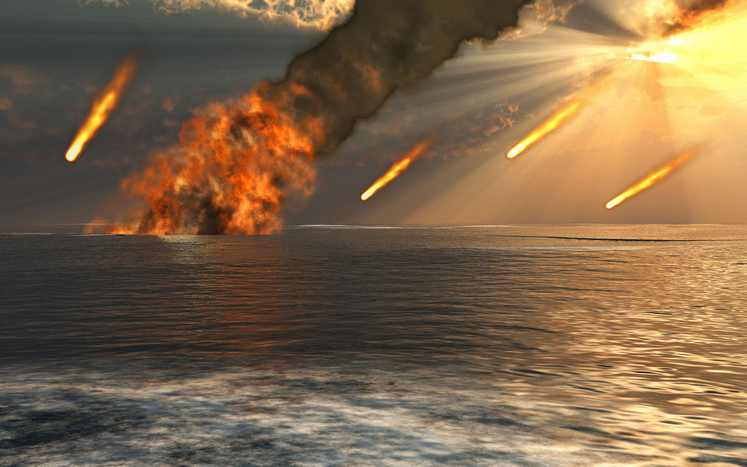
Cretaceous Paleocene Extinction Event
An illustration of the Cretaceous-Paleocene extinction event. (Representative Image Source: Mark Stevenson/Getty Images)

They then calculated the amount of dust that impact could have released into the atmosphere, boosting Earth’s retention and release of heat energy from the falling spherules. They found that the dust blanket-induced heat was three and a half times more intense than that generated by the spherules alone, generating enough heat that killed animals and triggered global forest fires. The instant heat-induced death scenario also supports another popular extinction theory—a prolonged post-impact winter. “It seems counterintuitive,” Johnson said, “but actually it’s the same effect.”
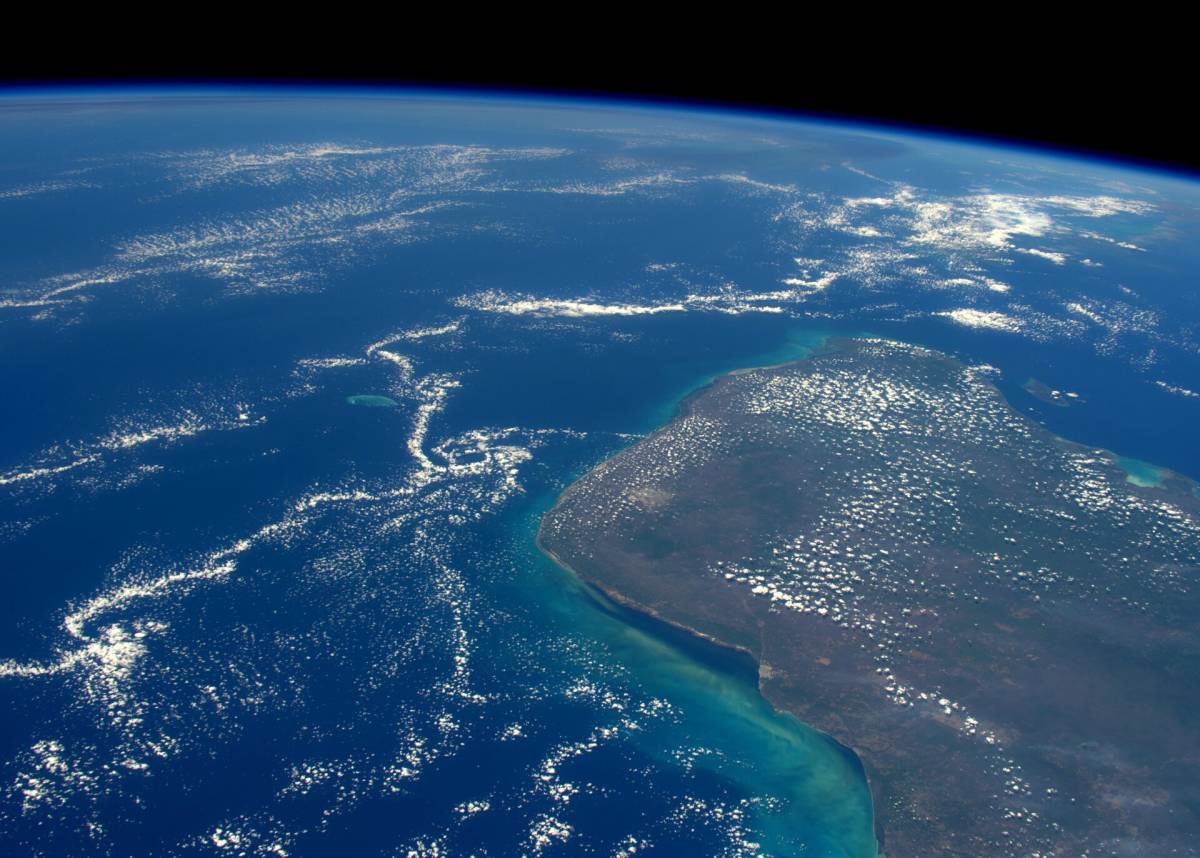
ESA astronaut Tim Peake took this image of Chicxulub crater from the International Space Station. (Cover Image Source: ESA/NASA)
ESA astronaut Tim Peake took this image of the Chicxulub crater from the International Space Station. (Image Source: ESA/NASA)

Think of an insulated mug that can keep soup hot and iced coffee cold. Once spherules disappeared and fires ended, dust clouds blocked the sunlight for years, ushering in a long global winter. The researchers say global fires are mainly responsible for ending the reign of dinosaurs, but a more complete geological record is needed to say that for sure. For the moment North America seems to be the best place offering the incriminating evidence for the wildfires. But further away from the impact site in Mexico, the effects could have become weaker.    

More on Starlust 

Asteroid impacts shaped the early Earth's surface, creating conditions conducive for life 

What would really happen if an asteroid hit Earth today—and is NASA ready? 
MORE STORIES

What if technosignatures and biosignatures are not the only ways intelligent alien life can make itself apparent?
5 hours ago
The simulations indicate that rift valleys on Venus may still be actively forming today.
1 day ago
"The Moon is like a time capsule—it has preserved a record of events that have been erased from Earth by erosion, plate tectonics and other geological processes."
1 day ago
Scientists have long observed localized auroras on the Red Planet, but it wasn’t until now that they fully understood how they’re formed. 
5 days ago
Juno has revealed that there is significant heating underway beneath Io’s surface which is smoother than previously thought.
5 days ago
In 2018, a solar event influenced a Martian dust storm, ending the life of NASA's Opportunity rover.
7 days ago
The size of a planet is a major factor that determines if life can gain a foothold on it, even if it's in the habitable zone of its star.
7 days ago
A new study suggests that a violent collision between the Milky Way and another galaxy called the Gaia Sausage may have reoriented our galaxy into the position it is in today.
7 days ago
"The Sun doesn't gently go to sleep and then gently wake up again."
7 days ago
"The new knowledge about the Sun’s composition is important for the understanding of other stars, planets and cosmic material."
Jul 21, 2026