Jupiter's early growth reshaped the solar system and delayed the birth of Earth's rocky building blocks
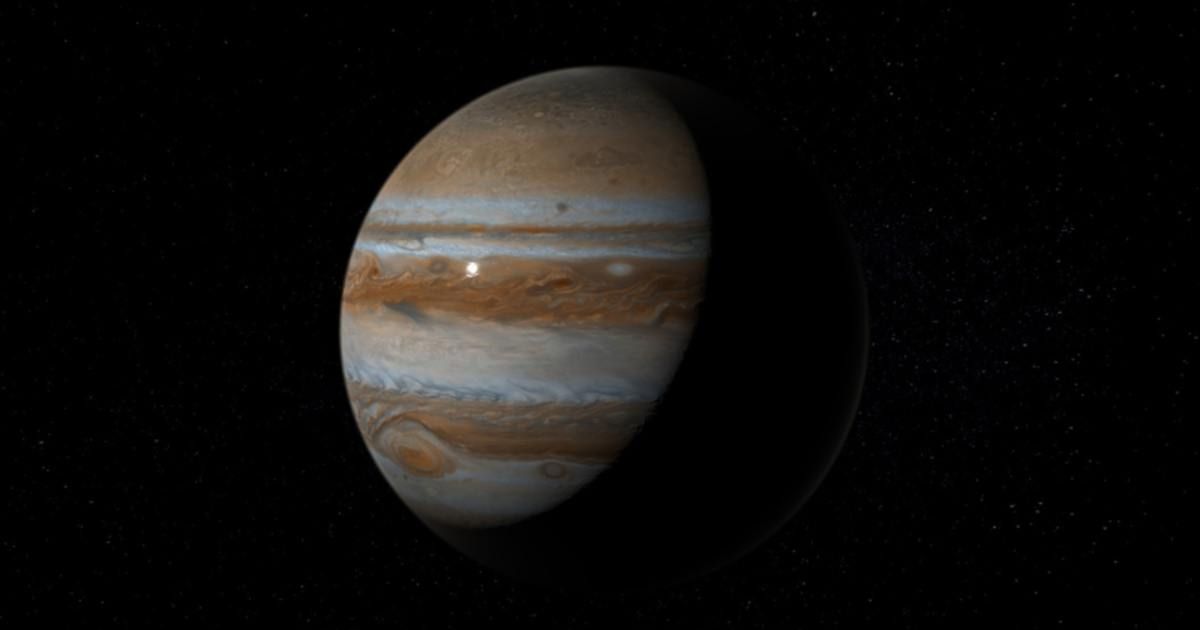
New findings from Rice University planetary scientists offer a dramatic explanation for the formation timeline of some of the solar system’s most primitive rocky materials, asserting that the rapid early growth of the gas giant Jupiter was the key factor. The research, published in Science Advances, uses advanced computer models to show that Jupiter's immense gravitational influence carved rings and gaps into the nascent solar system’s disk of gas and dust, resolving a longstanding paradox in planetary science, according to Rice University.
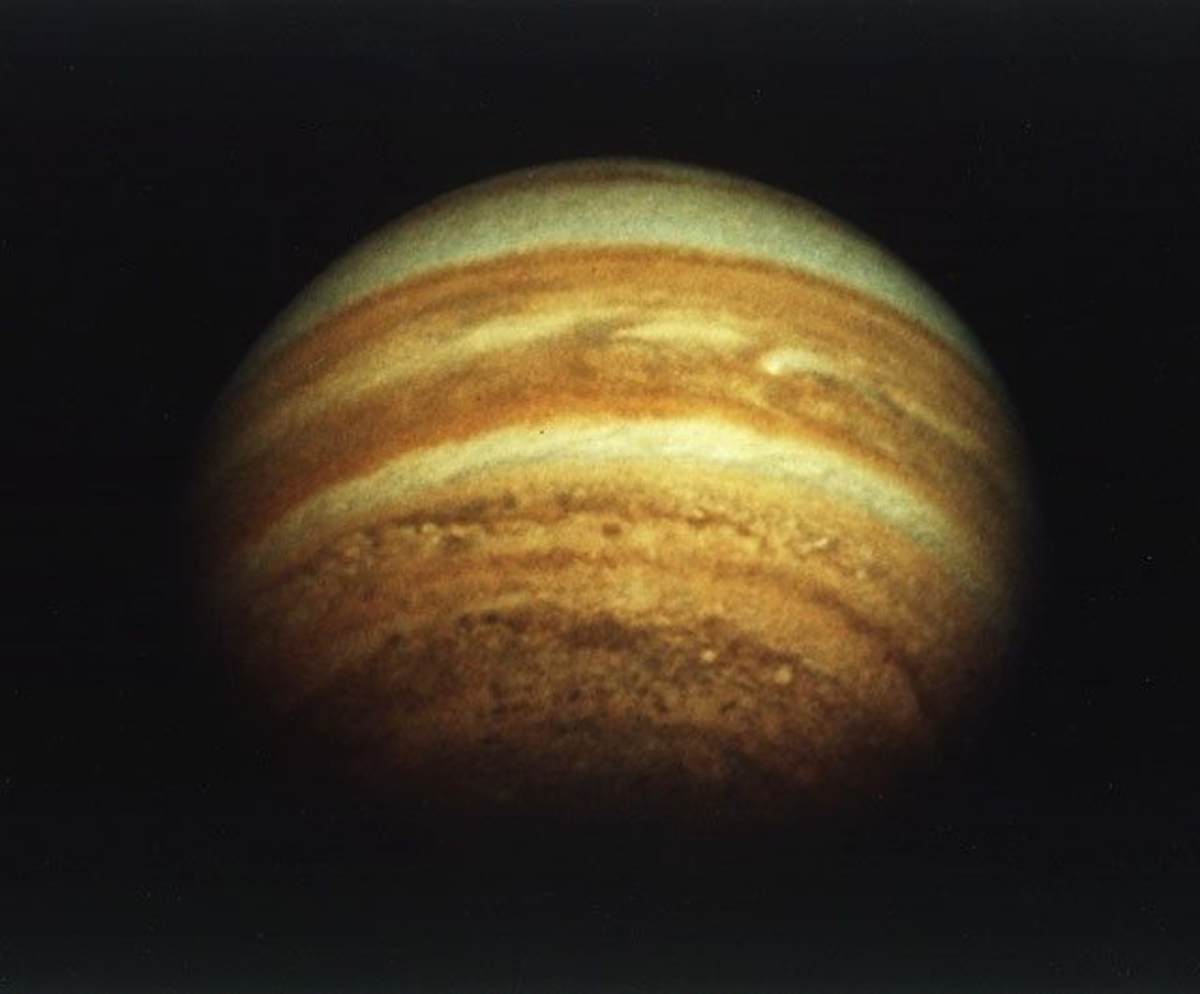
According to the study, led by planetary scientists André Izidoro and Baibhav Srivastava, Jupiter's swift emergence generated powerful ripples throughout the surrounding disk, effectively creating "cosmic traffic jams." This process countered the natural inward spiral of small particles toward the Sun. Instead, these particles clustered into dense bands, regions where they could aggregate into planetesimals, the rocky precursors to planets.

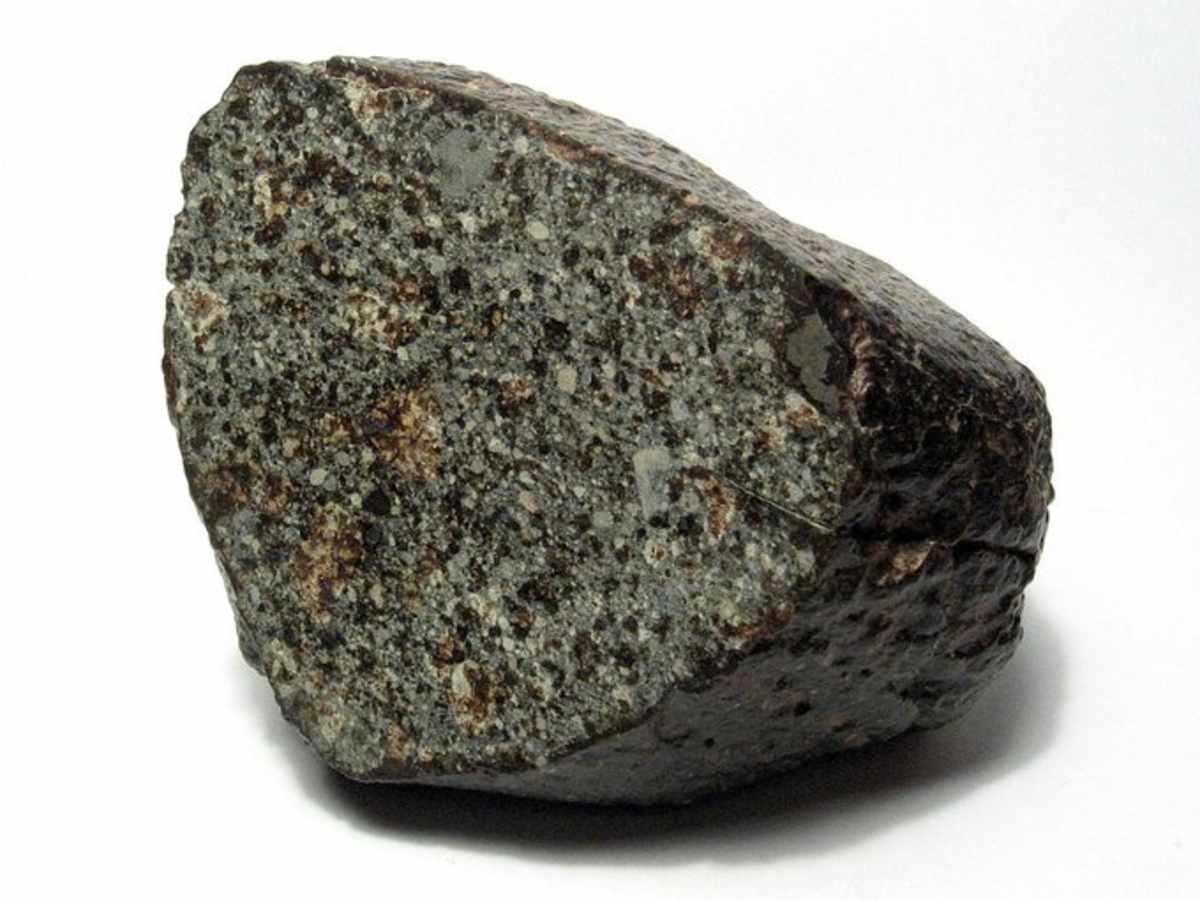
Crucially, the planetesimals formed in these bands were not the solar system's original foundation. Researchers suggest they represent a second generation of solids, born millions of years after the very first solids. This delayed birth is directly linked to the formation of many chondrites, stony meteorites that carry essential chemical and chronological data from the solar system's dawn. “Chondrites are like time capsules from the dawn of the solar system,” explained Izidoro, an assistant professor of Earth, environmental, and planetary sciences at Rice. "The mystery has always been: Why did some of these meteorites form so late, 2 to 3 million years after the first solids? Our results show that Jupiter itself created the conditions for their delayed birth.”
The research also provides a compelling mechanism for the stable location of the inner, terrestrial planets, Earth, Mars, and Venus. The models indicate that Jupiter’s growth effectively restricted the flow of gas and material toward the Sun, preventing the inward migration often observed in exoplanetary systems. This allowed the young worlds to remain in the habitable zone, where Earth and its neighbors eventually settled. “Jupiter didn’t just become the biggest planet — it set the architecture for the whole inner solar system,” Izidoro stated. “Without it, we might not have Earth as we know it.”
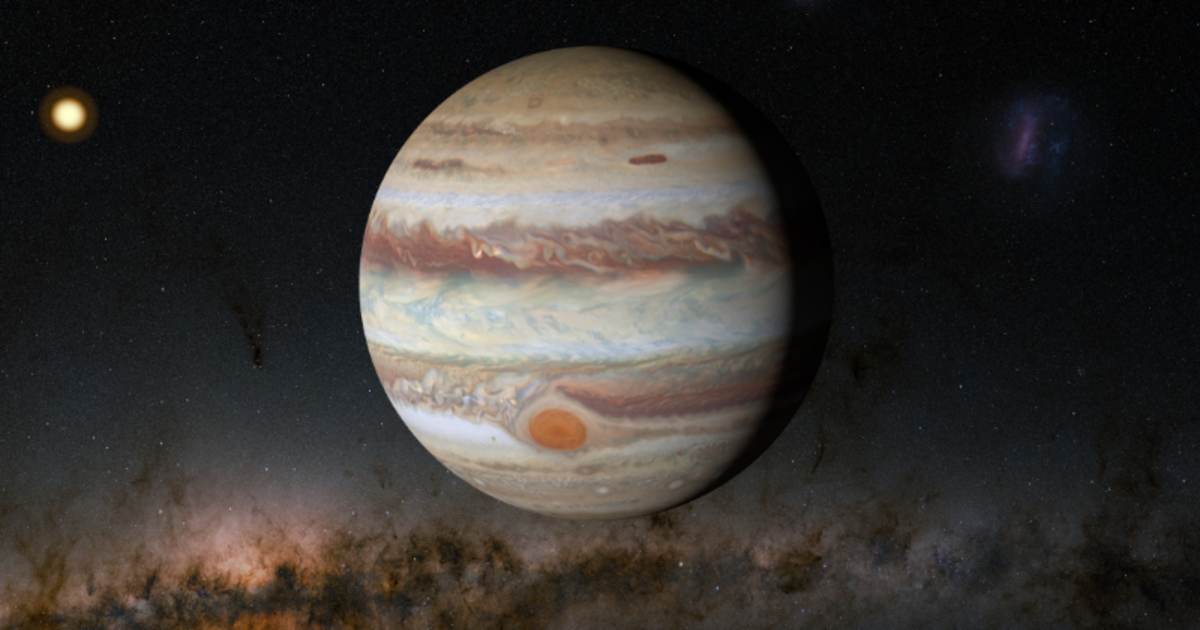
The findings are consistent with the ring-and-gap structures currently observed by the ALMA telescope in young star systems, underscoring that the history of our own solar system was no exception. Srivastava, a graduate student on the team, noted that their model successfully connects previously disparate observations, including the distinct isotopic fingerprints found in meteorites and the dynamic processes of planet formation. The research was partially supported by the National Science Foundation (NSF).

In an intriguing parallel development, astronomers are now leveraging an unusual celestial object to probe the hidden atmospheric chemistry deep within the gas giants Jupiter and Saturn. For years, experts have puzzled over the near-absence of silicon, one of the universe’s most prevalent elements, in the visible atmospheres of these and similar planets. A recent study published in the journal Nature utilized observations from NASA’s James Webb Space Telescope (JWST) to directly address this mystery. The mission received an unexpected assist from a peculiar object, appropriately nicknamed “The Accident,” which was stumbled upon by chance in 2020. This unique object is now helping researchers unlock why silicon remains undetected in the deep, turbulent clouds of our solar system's colossal planets.