NASA's balloon-borne instrument scoured the Antarctic's icy air for high-energy neutrinos
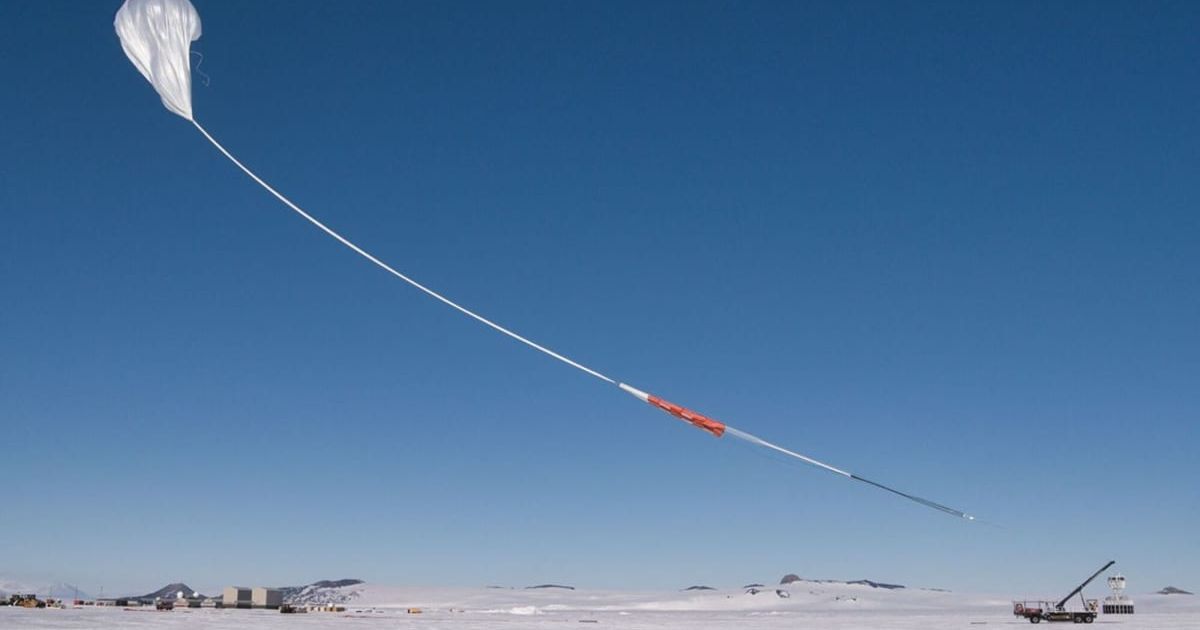
Last year in December, a NASA-designed machine called the Payload for Ultrahigh Energy Observations (PUEO) flew at 120,000 feet above the vast Antarctic ice sheet. Suspended beneath a giant balloon that drifted through the polar air, the machine searched for faint radio signals caused by nearly massless neutrinos interacting with the polar ice. These high-energy neutrinos come from the most extreme places in the cosmos, including supermassive black holes that accrete matter at the centers of galaxies, neutron star mergers, and other powerful cosmic accelerators. While billions of low-energy solar neutrinos pass harmlessly through our bodies each second, the ultra-high-energy variants that were being hunted by the PUEO are very rare.
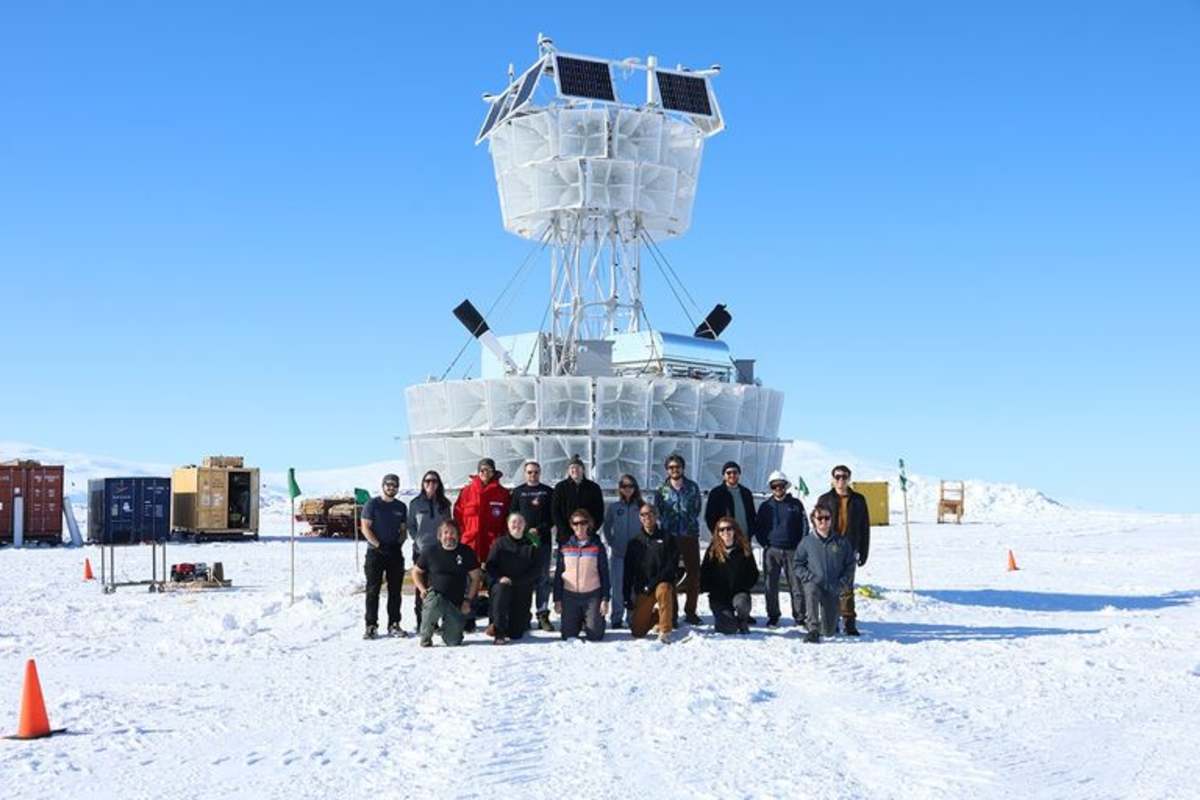
Unlike ordinary matter or light, neutrinos travel almost perfectly unscathed across unimaginable distances and hence, carry pristine information from the farthest reaches of the universe. Besides neutrinos, PUEO was also capable of detecting radio signals originating from high-energy cosmic rays colliding with particles in the Earth’s atmosphere. The instrument was capable of detecting these signals directly or capturing them when reflected back by the ice below. Data collected by PUEO is expected to help scientists gain some insights into the origin and composition of the highest-energy cosmic rays. It will also provide scientists with an opportunity to test fundamental physics at energies far beyond those achievable in human-made particle accelerators on Earth.
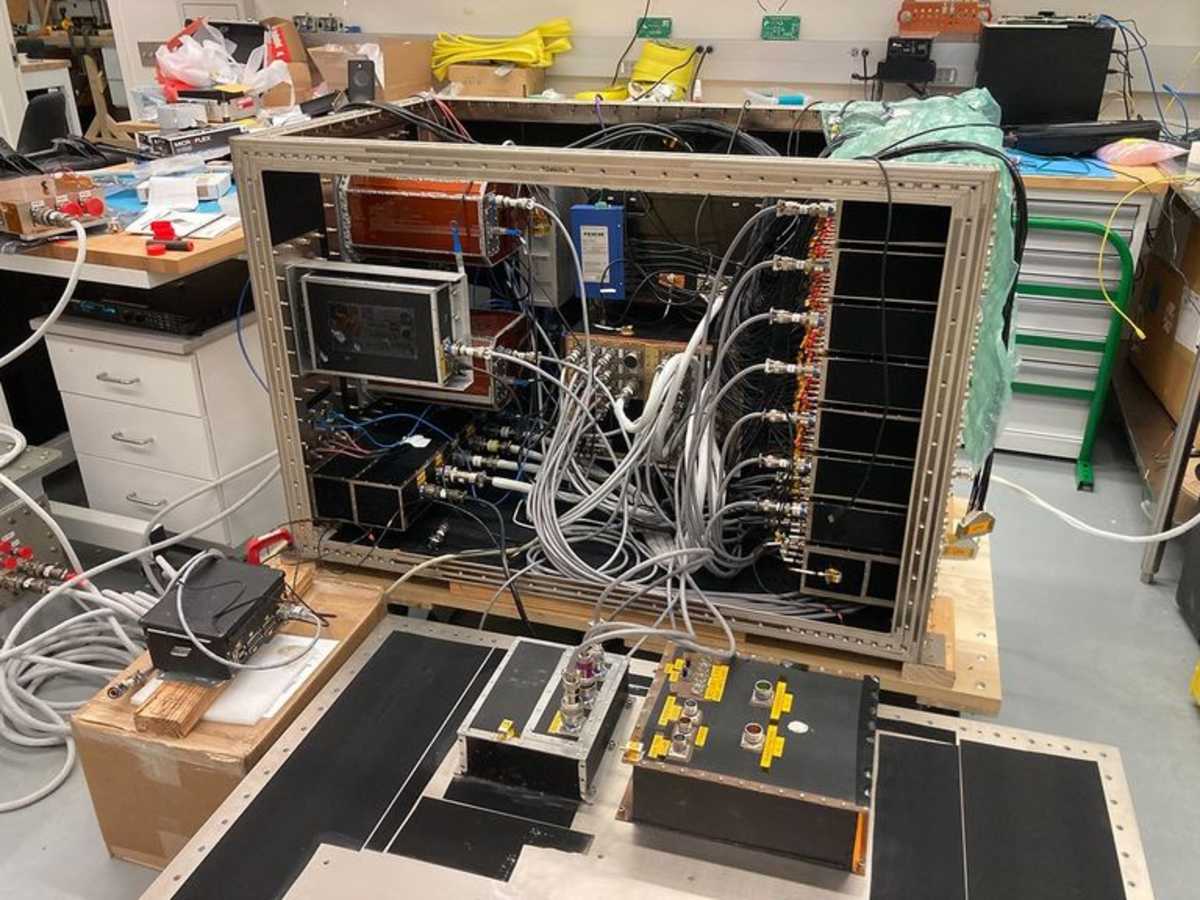
PUEO did not look like a traditional space telescope. There were no mirrors aimed at the stars and no gleaming optical instruments searching the heavens. Instead, the experiment transformed the Antarctic ice sheet itself into a detector the size of a continent. Launched on 20 December, 2025, from NASA's Long Duration Balloon Facility near McMurdo Station, Antarctica, PUEO rose into the stratosphere and drifted above Antarctica for 23 days. The balloon carried an array of radio antennas, onboard computing systems, and ultra-sensitive electronics designed to react instantly to radio flashes caused by neutrinos. It landed at a site that is 120 miles (200 km) from the South Pole to facilitate data retrieval from its instruments. From its stratospheric vantage point, PUEO was able to monitor vast stretches of Antarctic ice at once, surveying an area that is impossible to cover with conventional ground-based observatories.
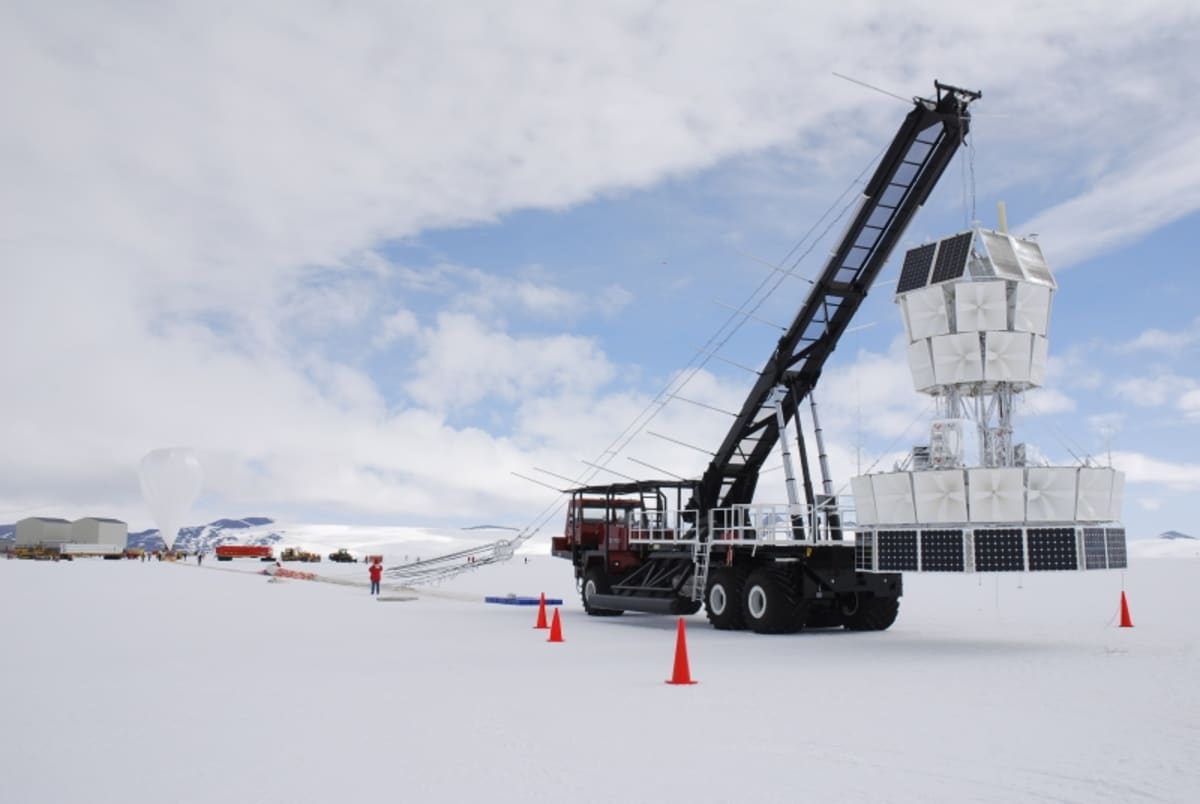
The PUEO team has recovered the full payload, including the data drives. However, the analysis of the collected data may take up to a year, as per NASA. The PUEO mission built upon the legacy of the earlier Antarctic Impulsive Transient Antenna (ANITA), which had four successful flights from 2006 to 2016. Those flights proved that Antarctica could serve as a giant neutrino observatory. PUEO, by using something called interferometric triggering, was able to use multiple antennas and combine their signals in real time, allowing it to capture weak radio pulses that might once have been buried in background noise. By lowering this trigger threshold, PUEO could “dig deeper” into the radio static of the Antarctic environment and identify signals previous experiments may have missed entirely, NASA explained.
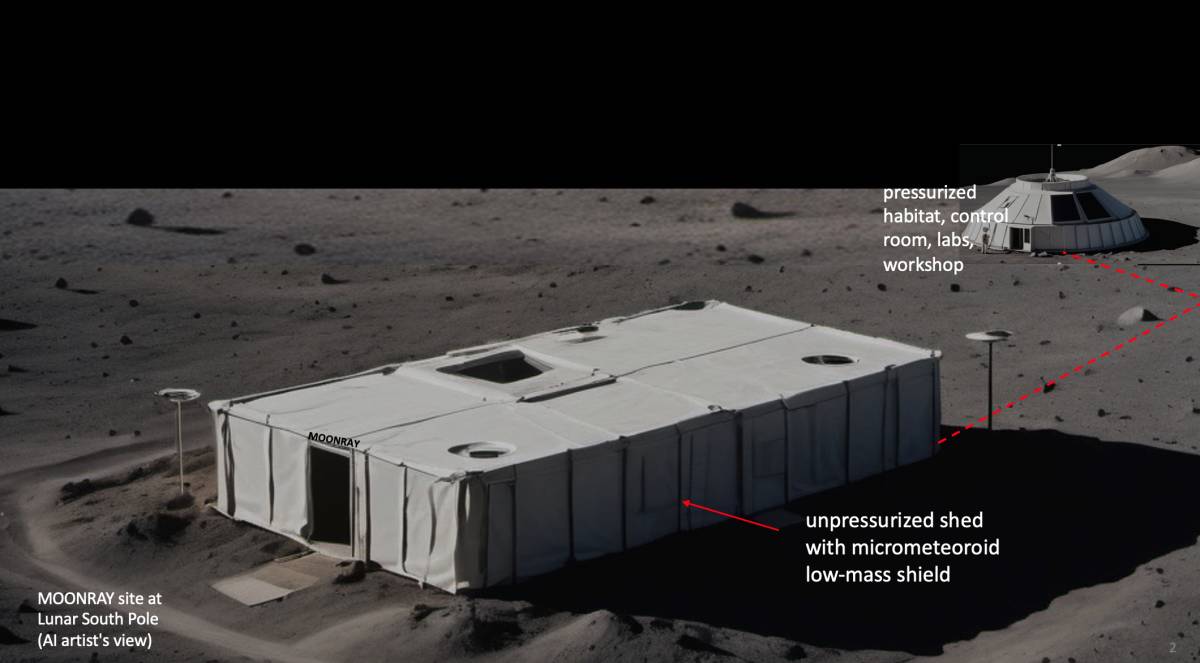
PUEO was also a major upgrade over its predecessor: rather than simply having a "stronger" antenna, the machine boasted double the antenna collecting area of ANITA for frequencies above 300 MHz, which made it far more sensitive to radio emissions from colliding particles. NASA engineers also added a new deployable low-frequency instrument to PUEO, which was sensitive to extensive air showers created by cosmic rays and potentially neutrinos. This instrument’s antennas were sensitive down to 50 MHz. The PUEO mission utilized many technological advancements that could also be employed on the Moon. For instance, the lunar regolith could be used as a detector for ultra-high energy cosmic rays and other future radio missions on the Moon.
More on Starlust
What are some of the highest-energy particles in the universe made of? Scientists have an answer
New model maps the ghost particles that the Milky Way sends towards Earth