Storms on distant hot Jupiters provide first evidence of magnetic fields on exoplanets—why it matters
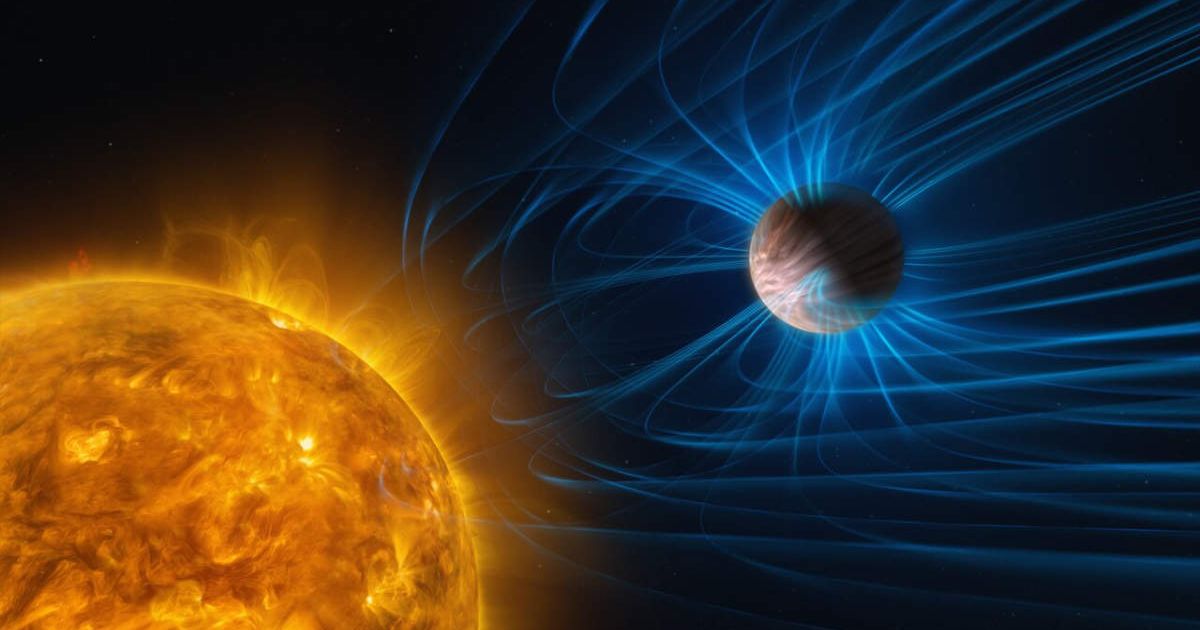
Astronomers have found the first indirect yet robust evidence of magnetic fields on distant planets. In what has been described as a breakthrough, the study allows for a new way of comparing the magnetic fields of exoplanets, which can provide clues as to whether conditions for life to emerge and thrive can exist elsewhere. The study, which was recently published in the journal Nature Astronomy, looked at the atmospheric currents of seven 'ultra-hot Jupiters,' massive gas giants that display characteristics similar to those of Jupiter in our own Solar System, but orbit much closer to their host stars.
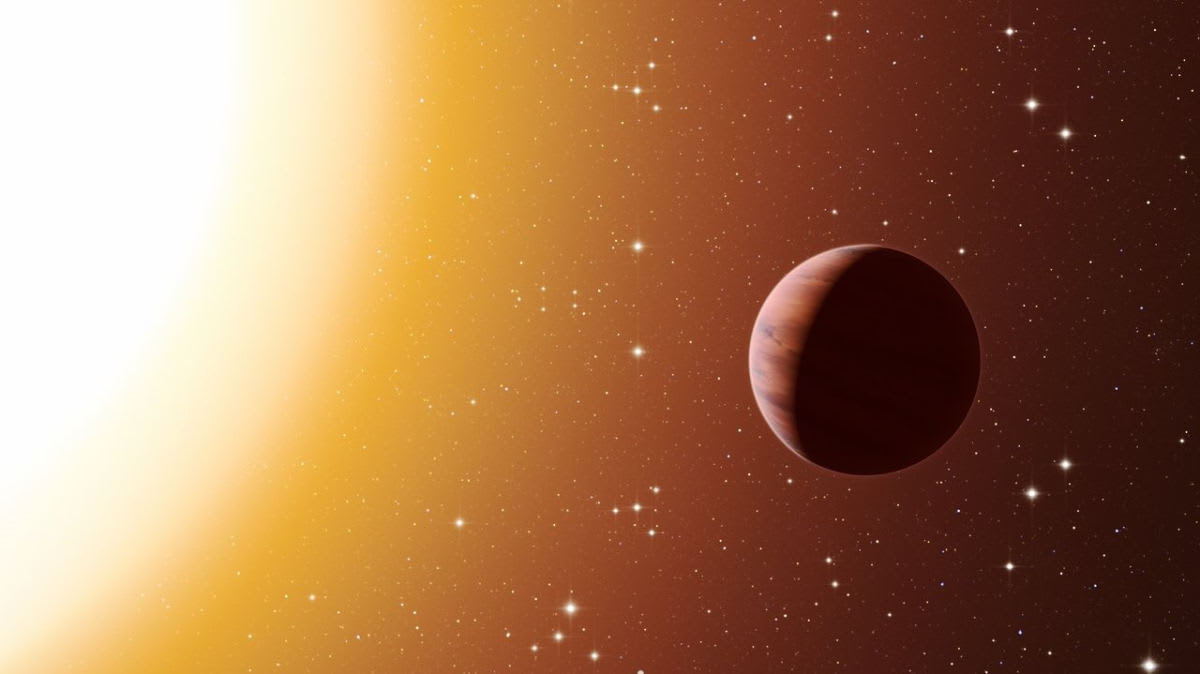
The relevance of the study's findings cannot be overstated in light of humanity’s search for extraterrestrial life, given that we know the importance of a planetary magnetic field for sustaining life. In the absence of one, a planet usually loses its atmospheric gases to space as stellar winds from the host star strip away the air molecules. Without an atmosphere, the chances of life as we know it emerging and thriving on another planet diminish greatly. This was the case for Mars, as established by NASA's MAVEN mission to the Red Planet.
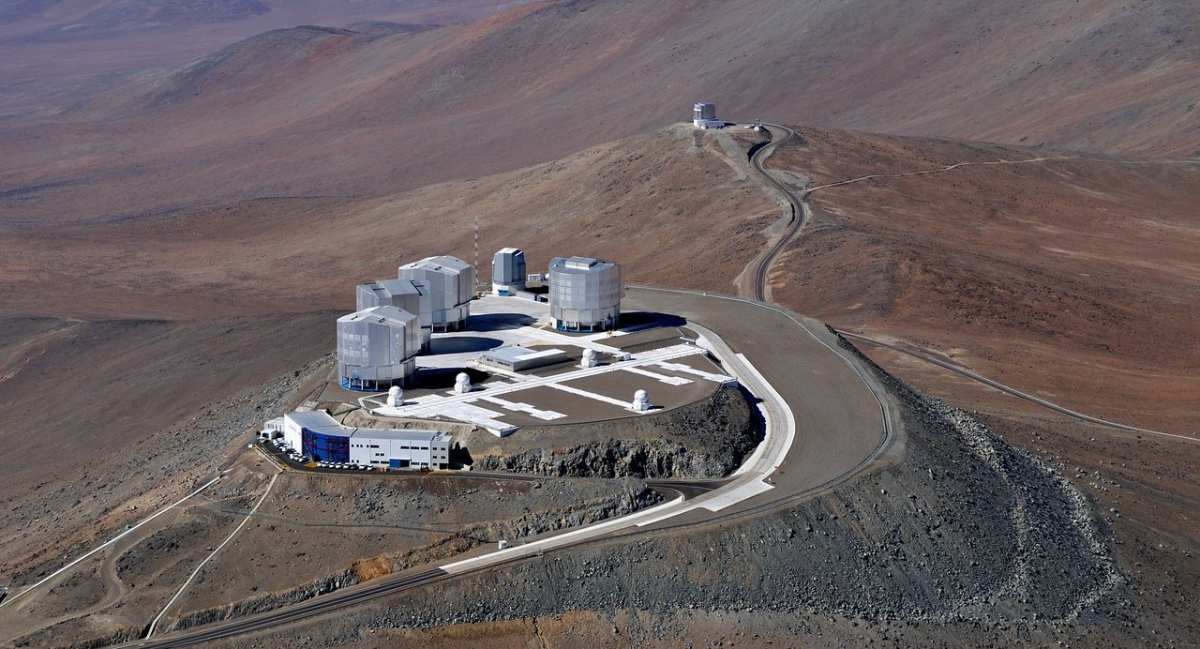
For this research in particular, exoplanets known as ‘ultra-hot Jupiters’ were key, as their high atmospheric ionization provided researchers with evidence that correlates to a gas giant's magnetic field strength. Each of the seven planets in the study is known to have one of its faces perpetually facing its host star in a phenomenon called tidal locking. This contributes to temperature extremes between the day and night sides of the exoplanet, which in turn leads to rapid winds. The data showed that winds on one of the seven ultra-hot Jupiters were speeding at over 15,000 miles per hour. The slowest wind speed was measured at 4,470 miles per hour. These values, collected with the help of the Gemini North Telescope and the ESPRESSO instrument (Echelle SPectrograph for Rocky Exoplanets and Stable Spectroscopic Observations) mounted on the European Southern Observatory’s Very Large Telescope, far exceed those observed on Jupiter, where peak wind speeds are under 1,000 miles per hour.
The way researchers arrived at their findings about magnetism was through the study of these extreme winds. While conventional physics dictates that rising temperatures and consequent increases in kinetic energy should accelerate winds, the astronomers observed the exact opposite: on the hottest planets, wind speeds plummeted. They thus deduced that there had to be some sort of invisible force that was acting as a brake, slowing winds down, and the answer was found in magnetism. Because these ultra-hot Jupiters orbit incredibly close to their stars and have scorching temperatures, their atmospheric gases turn into plasma. When blowing across the planet, this plasma interacts with the planet's magnetic field, creating a sort of drag that slows the winds down. The hotter the planet, the more plasma is generated, resulting in stronger drag and slower winds. In simple terms, the astronomers were able to establish a direct relation between the observed wind speeds and the strength of the planet's magnetic field—a first.
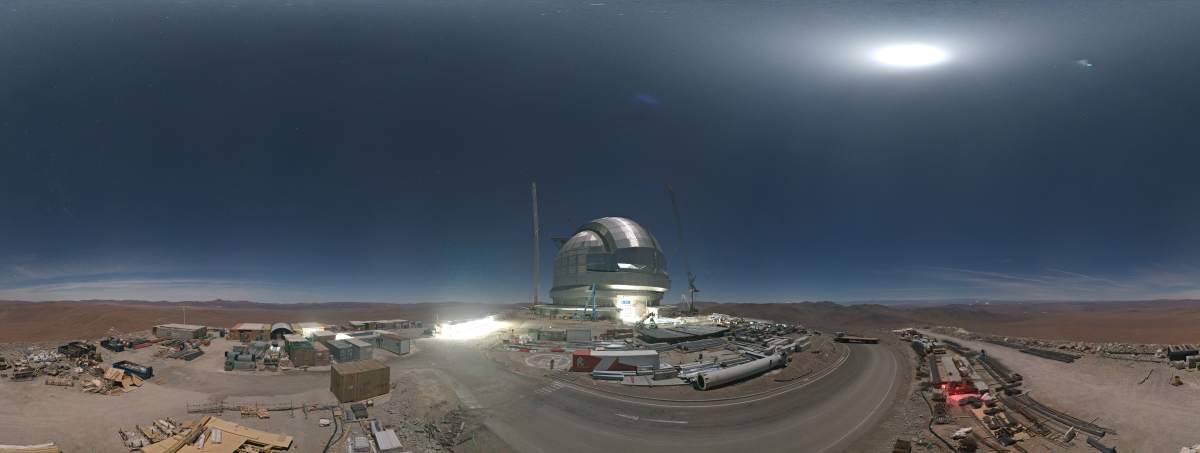
"This breakthrough opens a completely new window on exoplanet research," stated Julia Seidel, the lead author of the study and an astronomer at the Laboratoire Lagrange, Observatoire de la Côte d'Azur, France. Describing the unprecedented nature of the findings, she continued, "It’s the first time we can compare the magnetic environments of other worlds — a key step toward ultimately understanding which planets can stay alive, keep their water, and perhaps even, one day, host life as we know it." Scientists now hope to be able to not only observe the atmospheres and magnetic fields of gas giants in the future, but also smaller, rocky exoplanets that may actually have the potential to harbour life. This should be possible through the ESO’s Extremely Large Telescope (ELT), which is expected to be completed by March 2029 and begin operations by December 2030.
More on Starlust
'A dark, hot rock': Astronomers directly study exoplanet surface for the first time using JWST
James Webb Space Telescope spots a Saturn-mass exoplanet that has Earth-like temperatures