July 2026 skywatching guide: Catch Jupiter, Saturn, Neptune, and more
Every month brings a slightly different view of the night sky as the planets continue their journeys around the Sun. And skywatchers eagerly wait for opportunities to spot worlds or the rare planetary alignments that are usually difficult to find. And this July, several planets are waiting to put on a show for both evening stargazers and early risers. Early in the month, Venus and Jupiter will shine low in the west shortly after sunset, although Jupiter will gradually fade from view as the weeks go by. Saturn, meanwhile, will start rising earlier, with Neptune joining it in Pisces. The standout event for early July is, however, set to unfold on July 4, when Mars and Uranus will come together in a spectacular conjunction.
Spot Jupiter before it heads toward solar conjunction
Jupiter will turn up in the evening sky at magnitude -1.8 right after sunset on the western horizon and will remain visible for a short span for the first 5 days of the month, according to Astronomy.com. The planet's visibility will, however, quickly decline, with its time above the horizon shortening each evening. By July 5, Jupiter will be 5° high 30 minutes after sunset. After that, it will become very difficult to spot it on its way to a solar conjunction, which is set to take place on July 29.
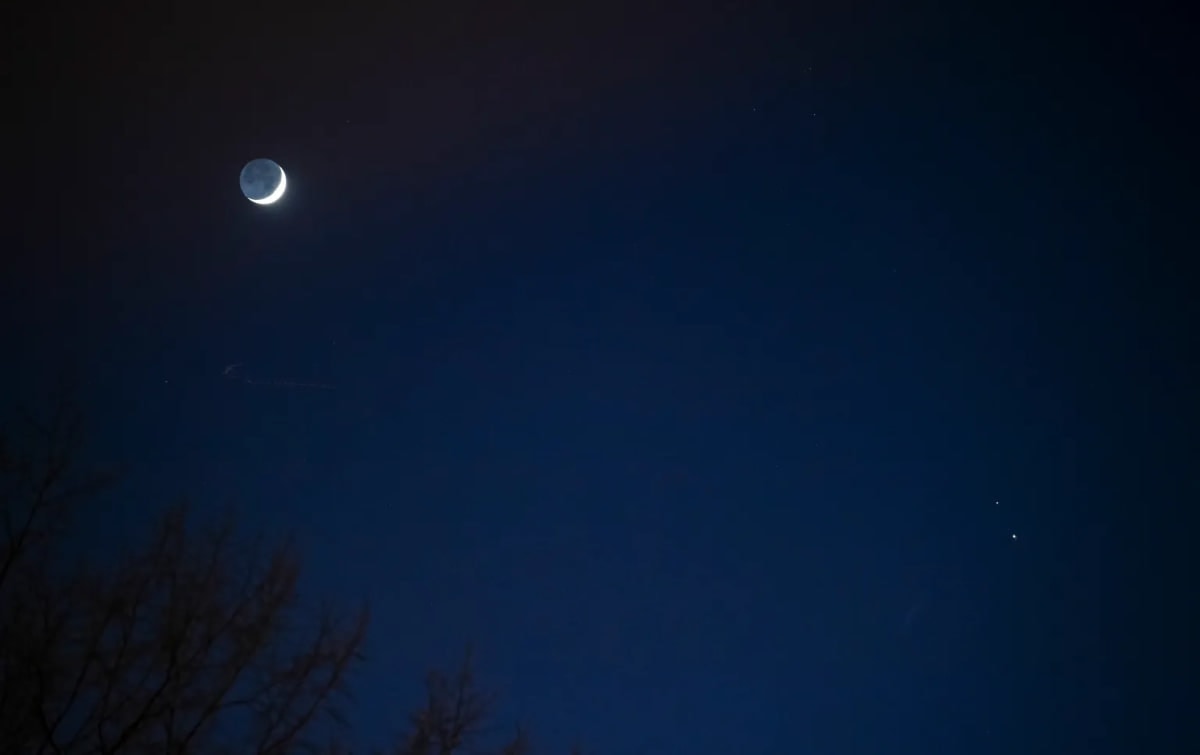
Venus, Regulus and the Moon will get close to each other
Roughly 20° high in the sky half an hour after sunset, Venus will be easy to spot in early July. On July 1, it shines at magnitude - 4.1 and sits about 21° above Jupiter. Venus and Regulus—the brightest star in the constellation Leo — will be less than 9° apart on the day, and by July 8, they will move closer to each other, standing just 1.5° apart. They will stand close for two evenings, following which Venus will gradually move farther east. On July 16, the Moon will come close to Regulus, and Venus will stand about 8° east of the Moon.
How to spot Neptune this July
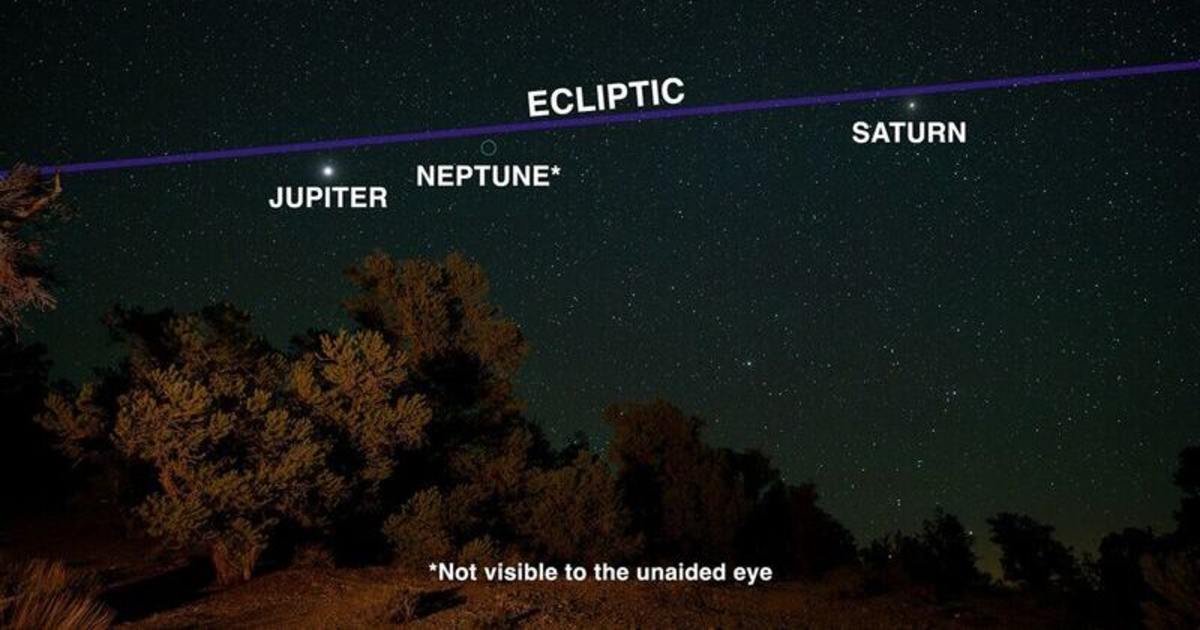
On July 1, Neptune will rise shortly after midnight, about 30 minutes before Saturn. Skywatchers must try to catch a glimpse of the planet in the pre-dawn hours when it is more than 20° high in the eastern sky. A telescope or a pair of binoculars will be required to spot the distant planet, as it will shine below naked-eye visibility at magnitude 7.7. The Great Square of Pegasus can be used to find Neptune, with the latter lying around 15° due south of Algenib.
Catch Saturn next to its largest moon
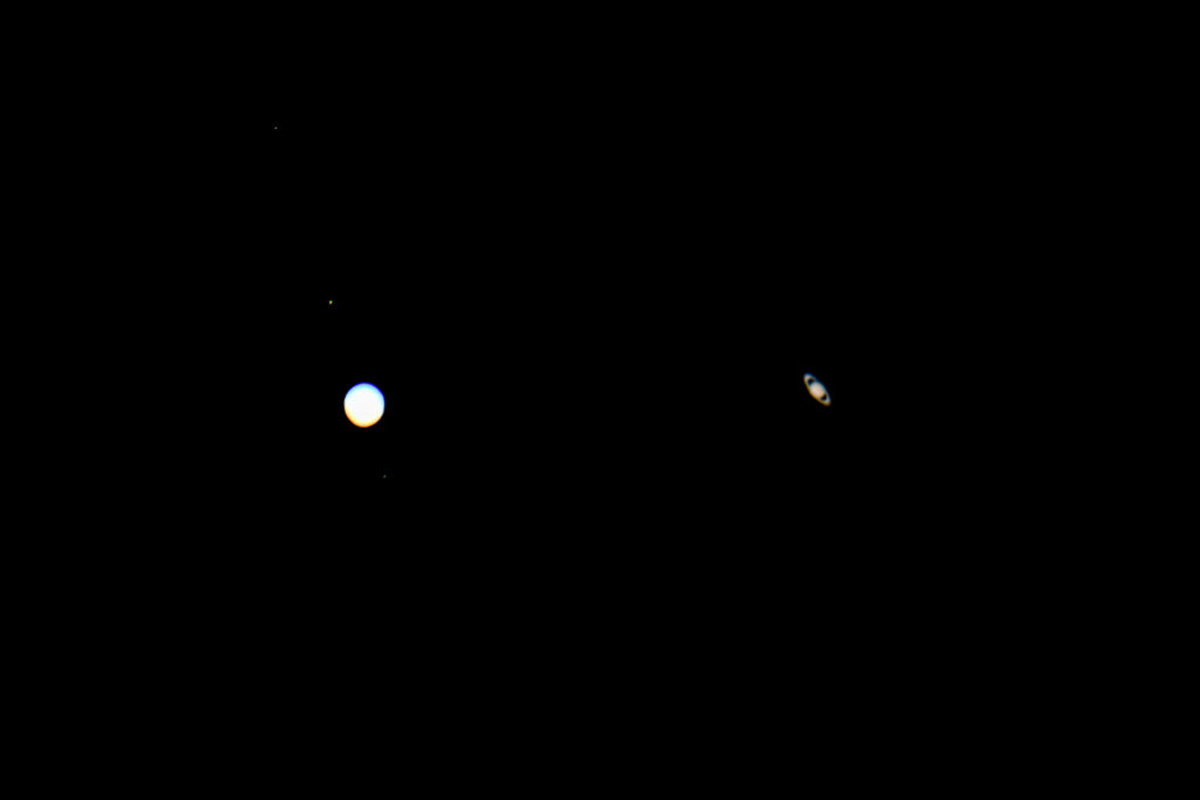
Saturn will shine at magnitude 0.7 and sit among the stars of Pisces. July 1 will see Saturn rising about an hour after midnight, but by the end of the month, it will have started rising about two hours earlier. On July 7, Saturn will lie just 7° southeast of a nearly last quarter Moon. With the planet lying more than 30° above the southeastern horizon after 4 a.m. local daylight time, skywatchers may even get to see its many moons, including Titan, which will lie just northeast and northwest of the planet on the 4th and 5th, respectively.
Mars-Uranus conjunction
Uranus and Mars would make a close conjunction on July 4 about 5° southeast of M45, the Pleiades star cluster. It would be easy to spot Mars as it would shine bright 8° northwest of Taurus’ brightest star, Aldebaran. On July 11, Mars and Uranus will find company as a waning crescent Moon will join them.
More on Starlust
NASA's top skywatching events for 2026: Total lunar eclipse, Perseid meteor shower and more