Moon will pass directly in front of the Pleiades star cluster in constellation Taurus today—when and how to watch
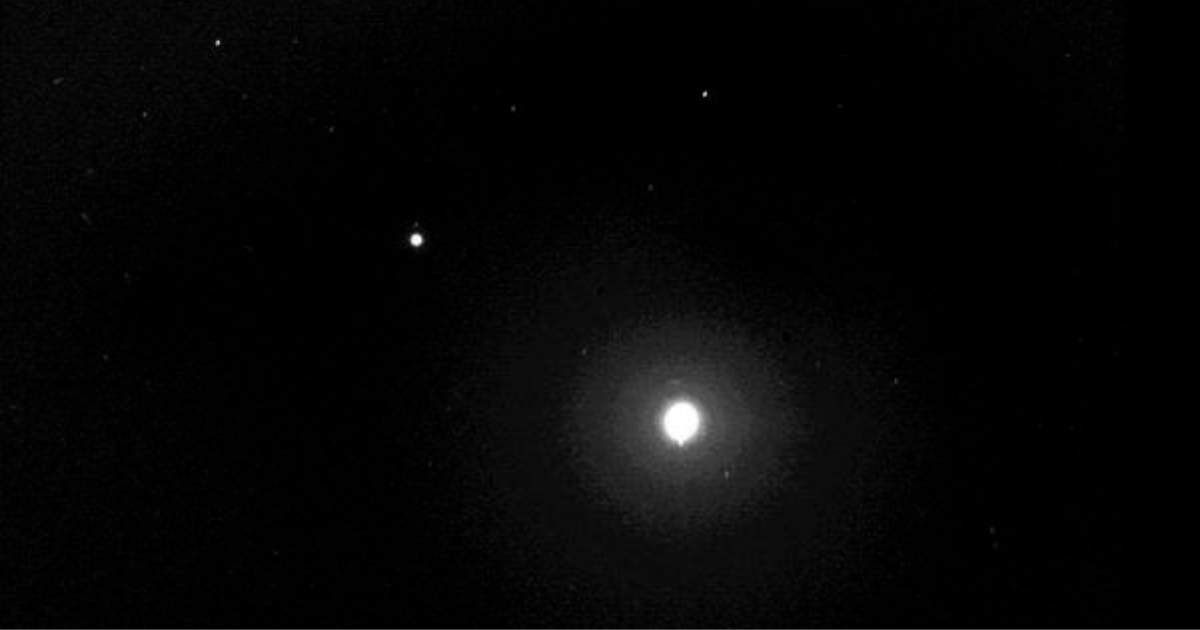
Sky watchers across large parts of North America are gearing up for a celestial event this week as the Moon passes directly in front of the Pleiades star cluster, a phenomenon astronomers call an occultation, as per Earth Sky.

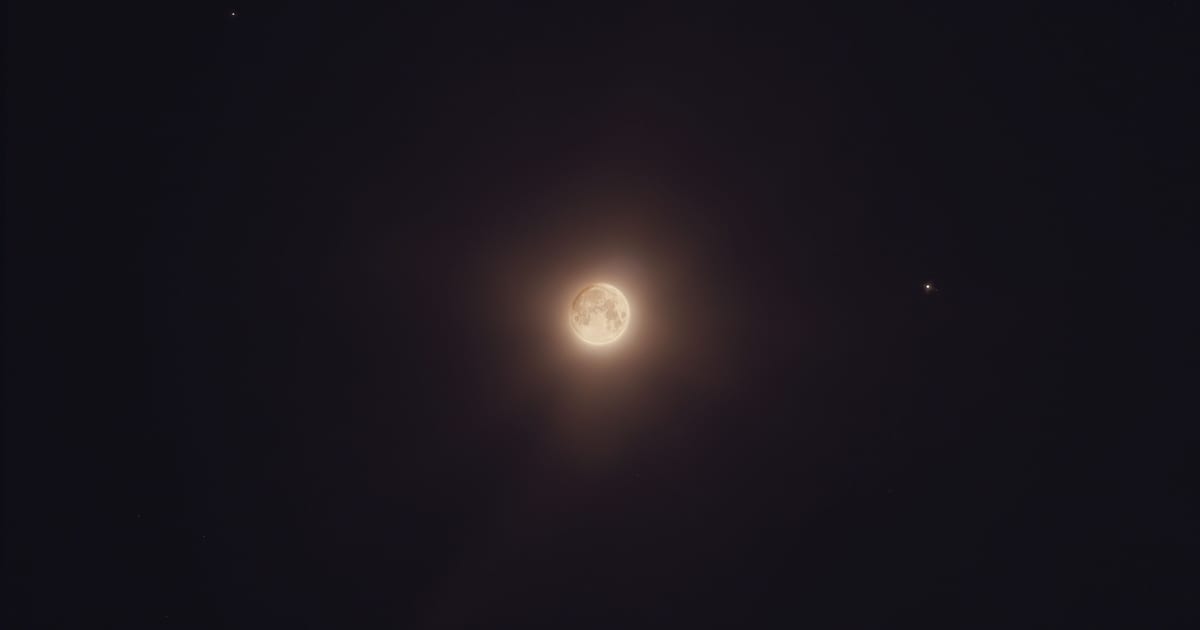
Scheduled for the night of October 9-10, 2025, the event features the Moon, a highly illuminated waning gibbous (86% sunlit), appearing to temporarily swallow the famous star group, also known as the Seven Sisters, as reported on Space.com. Observing this rare alignment will be a tale of two different viewing challenges, requiring specific gear. As the Pleiades stars vanish behind the Moon's intensely bright leading edge, visibility will be difficult. Viewers are strongly advised to use a telescope with at least 50x magnification to track the stars in their final moments before they disappear into the glare. Standard binoculars will likely be insufficient for this phase.
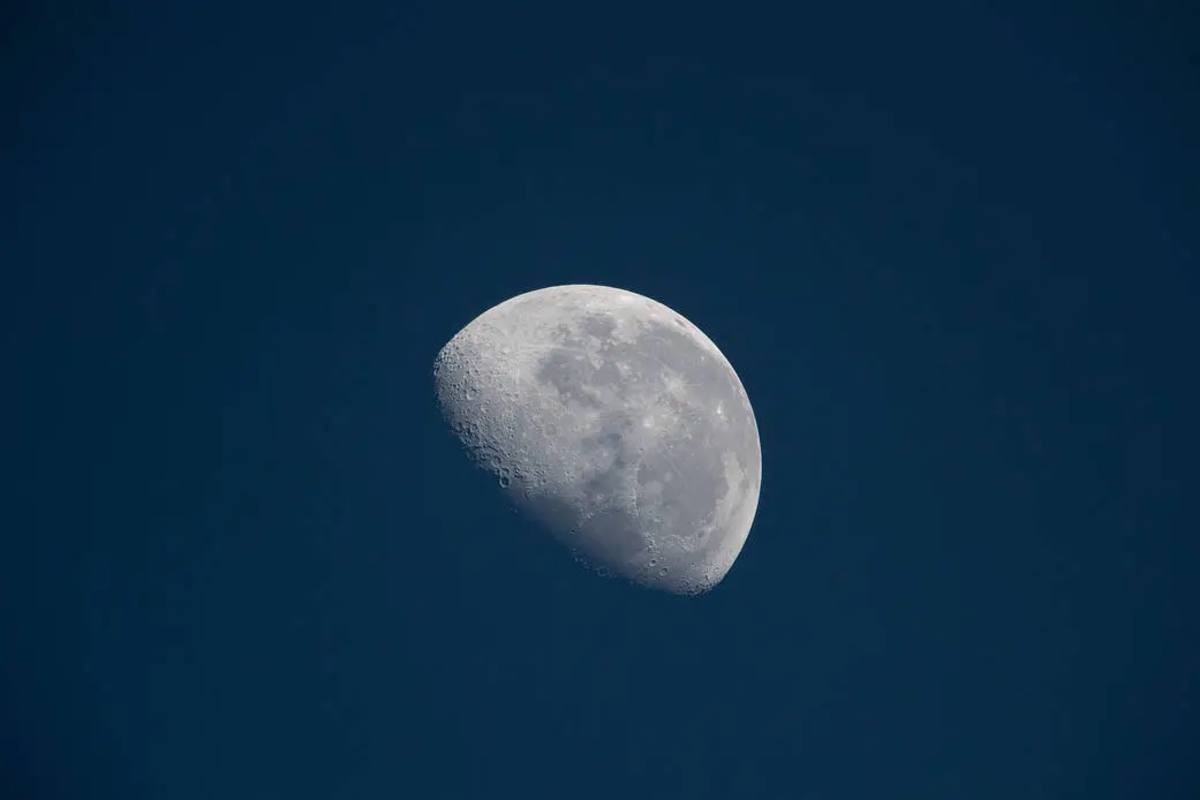
However, the reappearance of the stars from behind the Moon's dark, trailing limb will be an easier spectacle to witness. The sudden "pop" back into view means binoculars, especially if mounted on a tripod for stability, should be adequate for this segment of the show. The precise timing and visibility will depend on the observer's location. For the Western US and Canada, the Moon will begin to cross the star cluster relatively early, during the early-to-mid evening hours. Viewers will catch the action when the Moon is low on the east-northeast horizon (about 10∘ up). On the other hand, for the Eastern U.S. and Atlantic Canada, the spectacle starts closer to local midnight (just before in the Eastern time zone; just after in Atlantic Canada). For these regions, the Moon will be higher, approximately halfway up the eastern sky.
The Moon’s passage through the cluster is expected to take about two hours in most areas. For instance, observers in Chicago can expect the bright lunar edge to occult three of the cluster's main stars, Electra (at roughly 10:27 p.m. CDT), Taygeta (10:53 p.m. CDT), and Maia (10:55 p.m. CDT). Their reappearance from behind the dark limb will follow between 11:20 p.m. and 11:55 p.m. CDT. Notably, the Moon’s path from Chicago will miss the other four brightest members, including Alcyone.
According to NASA, the star group at the center of this week's event is formally classified as M45, an open star cluster. Although it is visually dominated by just a handful of its brightest members, M45 actually contains over a thousand stars that are loosely held together by gravity. This cluster is notable for the streams of dust particles surrounding its stars, creating stunning imagery when captured by telescopes. For instance, the star Merope is known to illuminate these drifting interstellar clouds. Telescopic images reveal nearly straight, blue-white wisps that are actually streams of large dust particles. This unique appearance is caused by a cosmic effect: as the dust cloud moves toward a star like Merope, the star's radiation pressure affects the particles differently.
More on Starlust
Orionid meteor shower to light up the sky at its peak on October 21—when and how to watch