'Humanity’s next window into the deep universe': Meet PRIMA, NASA's new far-infrared telescope
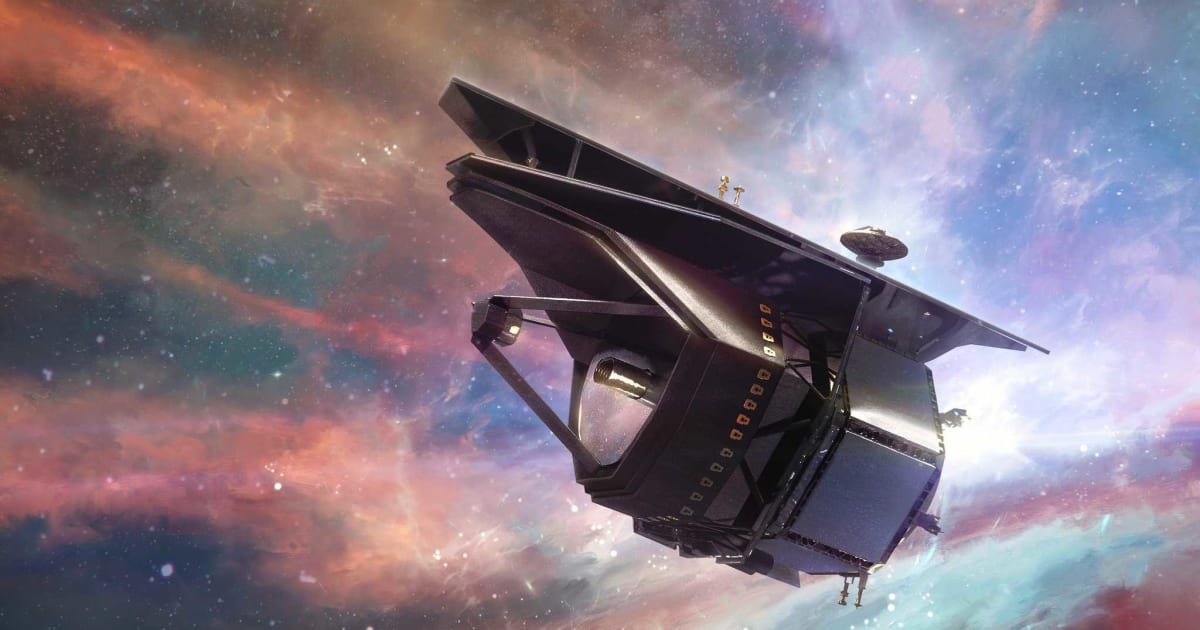
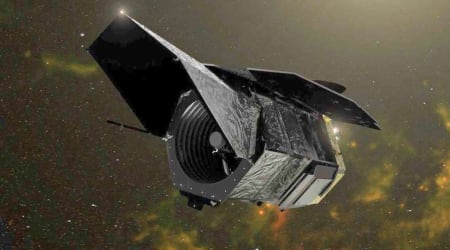
NASA is working on PRIMA—a brand new telescope that will help uncover secrets of the evolution of the universe. Expected to launch in 2033, PRIMA comes under the agency's Explorers Program that has launched more than 100 missions since 1958. "The PRIMA mission is humanity’s next window into the deep universe," said Nicky Fox, the associate administrator of NASA's Science Mission Directorate, in a statement.
Today, NASA announced PRIMA, a new space telescope that will explore long-standing mysteries around the formation of planets, stars, black holes, and even how water on Earth came to be. https://t.co/am7EPkNYof pic.twitter.com/7tul04NZWy
— NASA JPL (@NASAJPL) September 23, 2026
What is PRIMA?
PRIMA stands for PRobe far-Infrared Mission for Astrophysics. As its name suggests, the mission will peer at the far reaches of the cosmos in the far-infrared region of the electromagnetic spectrum with a 5.9-foot telescope, thereby filling an observational gap between existing infrared observatories, like the James Webb Space Telescope, and radio telescopes. "A single mission alone can’t probe all the universe’s mysteries," said Shawn Domagal-Goldman, the director of NASA's Astrophysics Division. "But by extending the survey capabilities of our fleet into far-infrared wavelengths with PRIMA, we’re enabling an incredibly comprehensive look at the cosmos."

What happens next?
PRIMA has been selected to move into Phase B, which will see progress in terms of its preliminary design and technology development. Whether it can move on to the next stage of development, which is Phase C, will be determined by a confirmation review. The review will assess the performance of the preliminary designs and technologies employed by PRIMA while weighing it against the costs. At the moment, a maximum budget of $1.2 billion has been allocated for the project. This excludes the cost of launching the mission as well as other miscellaneous costs.
With a 5.9-foot telescope, PRIMA will conduct deep surveys of the universe in far-infrared light, helping bridge the gap between existing infrared observatories, such as @NASAWebb, and radio telescopes.
— NASA JPL (@NASAJPL) September 23, 2026
JPL is proud to manage the mission, which is targeted to launch in 2033.
What will PRIMA achieve?
PRIMA will embark on a 5-year mission that will provide clues to many of the key unanswered questions we have about the universe. This includes how heavy elements and dust accumulated in cosmic space. It will also help contextualize the evolution of galaxies and the black holes within them. What’s more, it will also allow scientists to probe the origins of exoplanets. Thousands of such planets are expected to be found by the Roman Space Telescope, which launched on August 30 and is currently on its way to the second Sun-Earth Lagrange Point (L2) around 1 million miles from Earth. “With our Webb and Roman space telescopes, we set a cadence of launching premiere-class missions in both halves of the decade. We’re going to keep that up and kick off the next decade with PRIMA, as part of a pipeline that will consistently have missions of this caliber ready to go," Domagal-Goldman said.
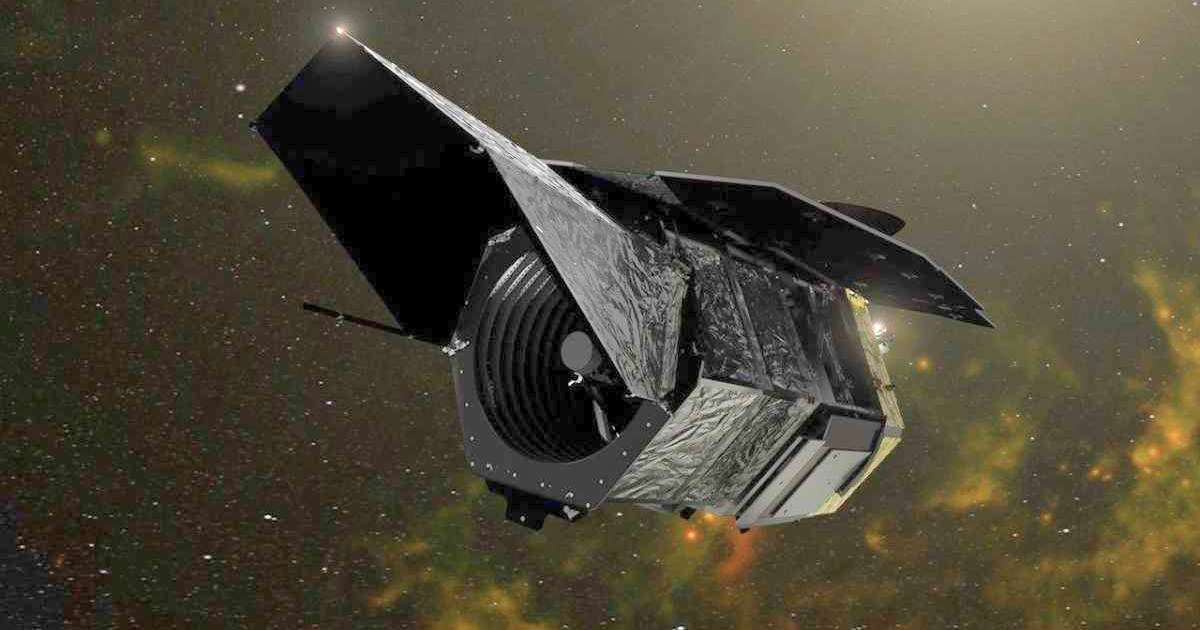
More about PRIMA
PRIMA was one of the two proposals NASA had under consideration to select as the first mission under Probe Explorers—a new class of missions within the Explorers Program. The other was called Advanced X-ray Imaging Satellite, an X-ray imaging observatory with a large field of view and high spatial resolution. PRIMA will be managed by the Jet Propulsion Laboratory in California, while the Goddard Space Flight Center in Maryland and the Marshall Space Flight Center in Alabama will serve as partners. The mission will also be contributed to by several space agencies from European countries, the likes of which include France, Germany, and Italy. Other international collaborators include the UK, Canada, Japan, and South Korea.
More on Starlust
NASA's Nancy Grace Roman Telescope can now easily run for 22 years instead of 10. Here's how
NASA's James Webb gives astronomers a new way to forecast weather on distant alien worlds