How to watch comet C/2025 A6 (Lemmon) this week — while it’s still visible from Earth
As of today, October 24, Comet Lemmon is positioned within the constellation Boötes.
PUBLISHED OCT 24, 2025
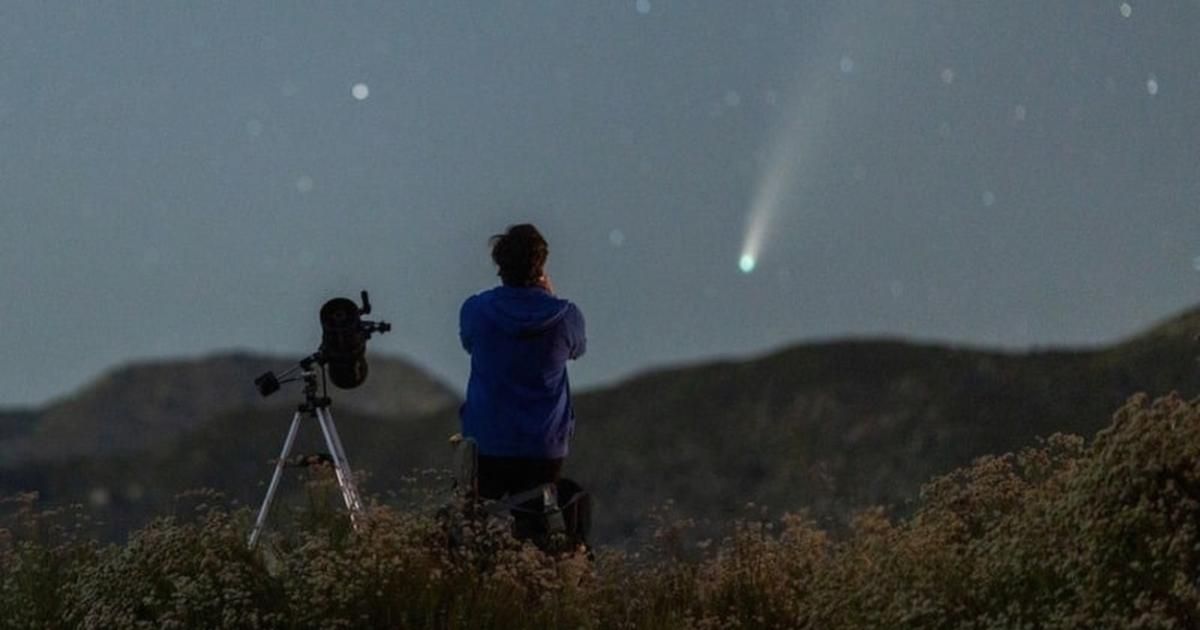
A man with a telescope watches the night sky as Comet NEOWISE appears over the San Gabriel Mountains National Monument (Representative Cover Image Source: Getty | David McNew)

The brief, bright appearance of Comet C/2025 A6 (Lemmon) is rapidly drawing to a close, giving stargazers a final, narrow window to observe the icy object before it retreats. Having made its closest pass to Earth on Tuesday, October 21, at a distance of approximately 89.2 million kilometers, the comet is now fading and racing across the night sky, according to Sky Live.
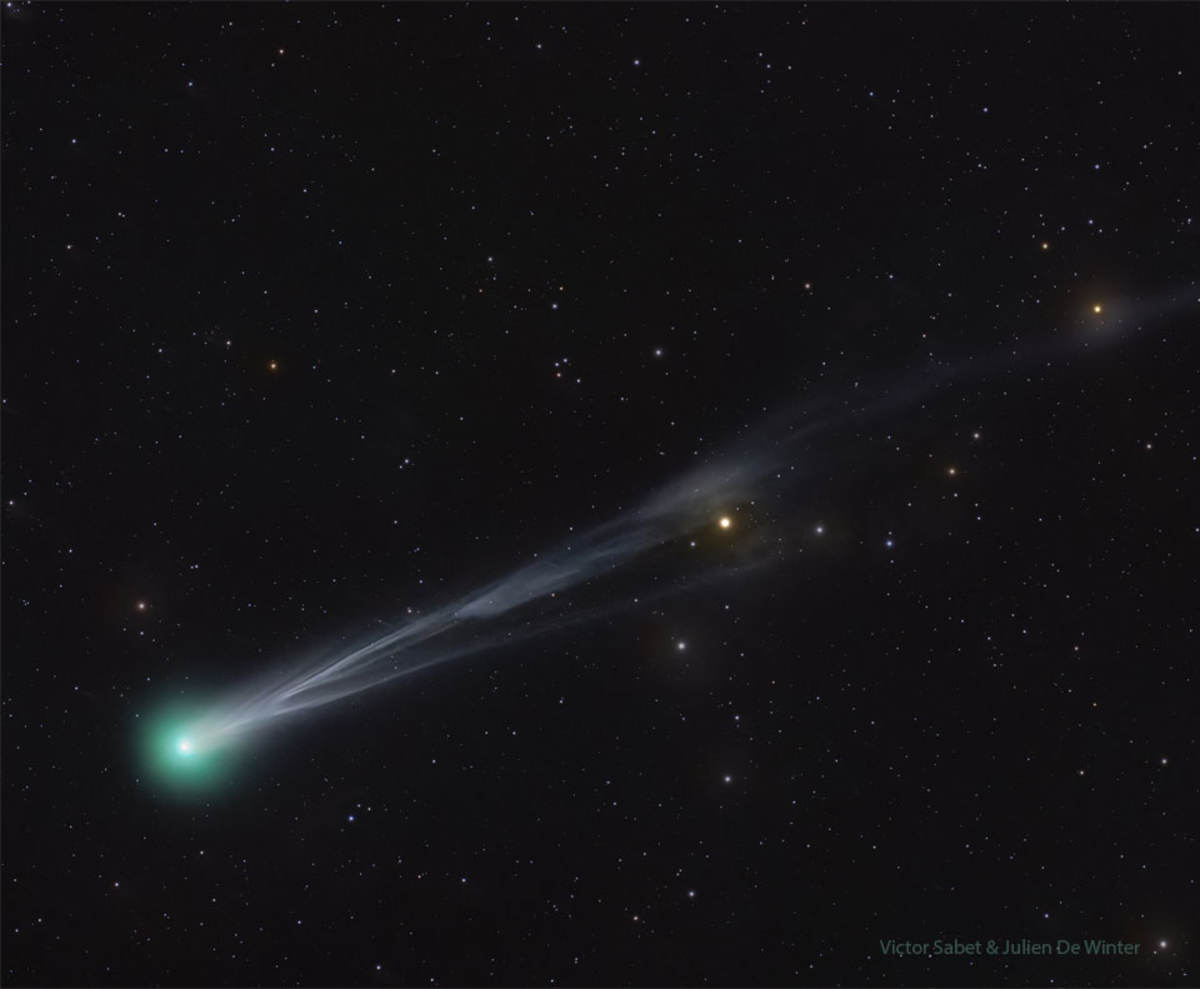
Comet Lemmon is brightening and moving into morning northern skies (Cover Image Source: NASA APOD | Victor Sabet, Julien De Winter)
Comet Lemmon is brightening and moving into morning northern skies (Image Source: NASA APOD | Victor Sabet, Julien De Winter)

As of today, October 24, Comet Lemmon is positioned within the constellation Boötes and stands at an apparent magnitude of 3.6. Over the weekend, the challenge for viewers increases. By the weekend, the comet will have moved into the constellation Serpens, with its expected magnitude dropping to roughly 5.0, making it significantly fainter. On Saturday, October 25, observers should look for the comet in the constellation Serpens at coordinates 15h 18m 56s, +19° 48’ 42” (magnitude 5.04), with the position shifting rapidly to 15h 31m 18s, +17° 06’ 28” (magnitude 4.97) by Sunday, October 26.
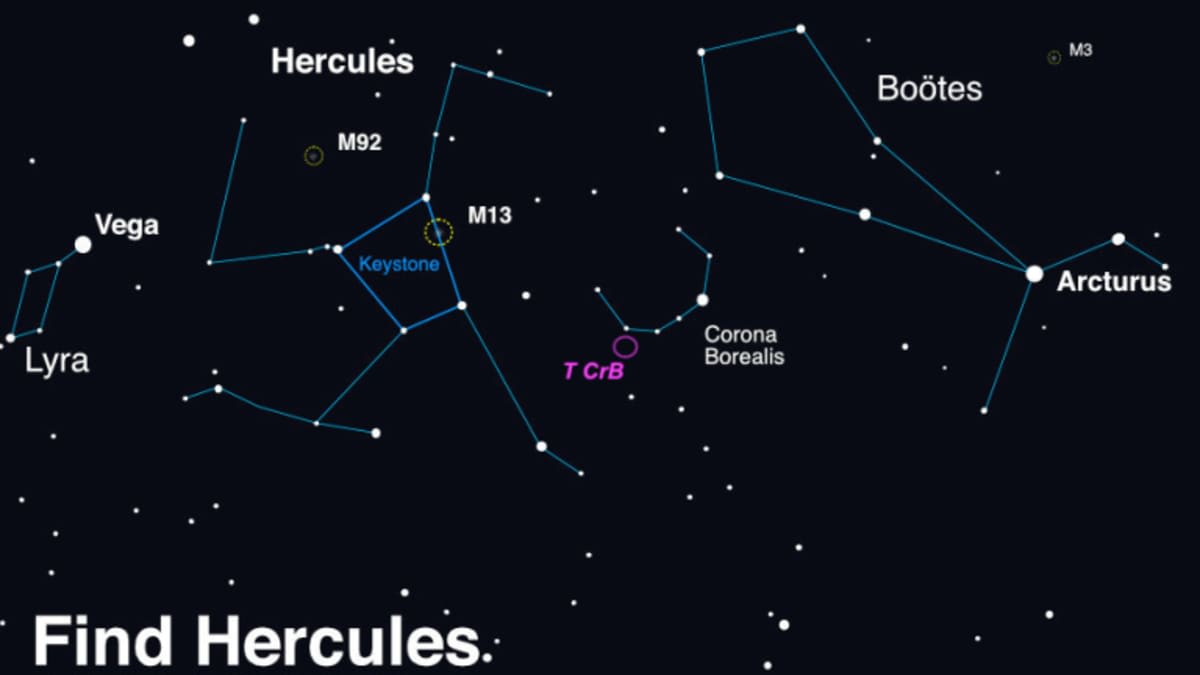
Globular M3 near the constellation Boötes (Representative Image Source: NASA)

Given the comet's decreasing luminosity, viewing it will require more than just the naked eye. An object with a magnitude of 5.0 is typically at the limit of human vision, meaning light-polluted urban and suburban skies will make detection almost impossible. For the best chance of viewing, using binoculars (such as a 7x50 or 10x50 model) is recommended. These will gather enough light to reveal the comet as a faint, diffuse patch of light. A small telescope will offer superior views, potentially allowing observers to discern details within the comet’s head, or coma, and possibly a hint of its tail. 
A girl observing stars, planets, the Moon, and the night sky with an astronomical telescope (Representative Image Source: Getty | m-gucci)

For Northern Hemisphere observers, the window for viewing Comet Lemmon is now centered squarely on the early evening hours, according to BBC Sky. Viewing is optimal between 7:00 PM and 8:00 PM local time this week before the comet descends toward the horizon. Observers should be aware that comets shift position noticeably each night. Comet Lemmon will appear to move consistently eastward across the sky, passing through the constellation Serpens by the end of the month. Given that this icy visitor will not return for another 1,300 years, this current viewing period represents the best, and last, opportunity for a generation to spot C/2025 A6 (Lemmon).
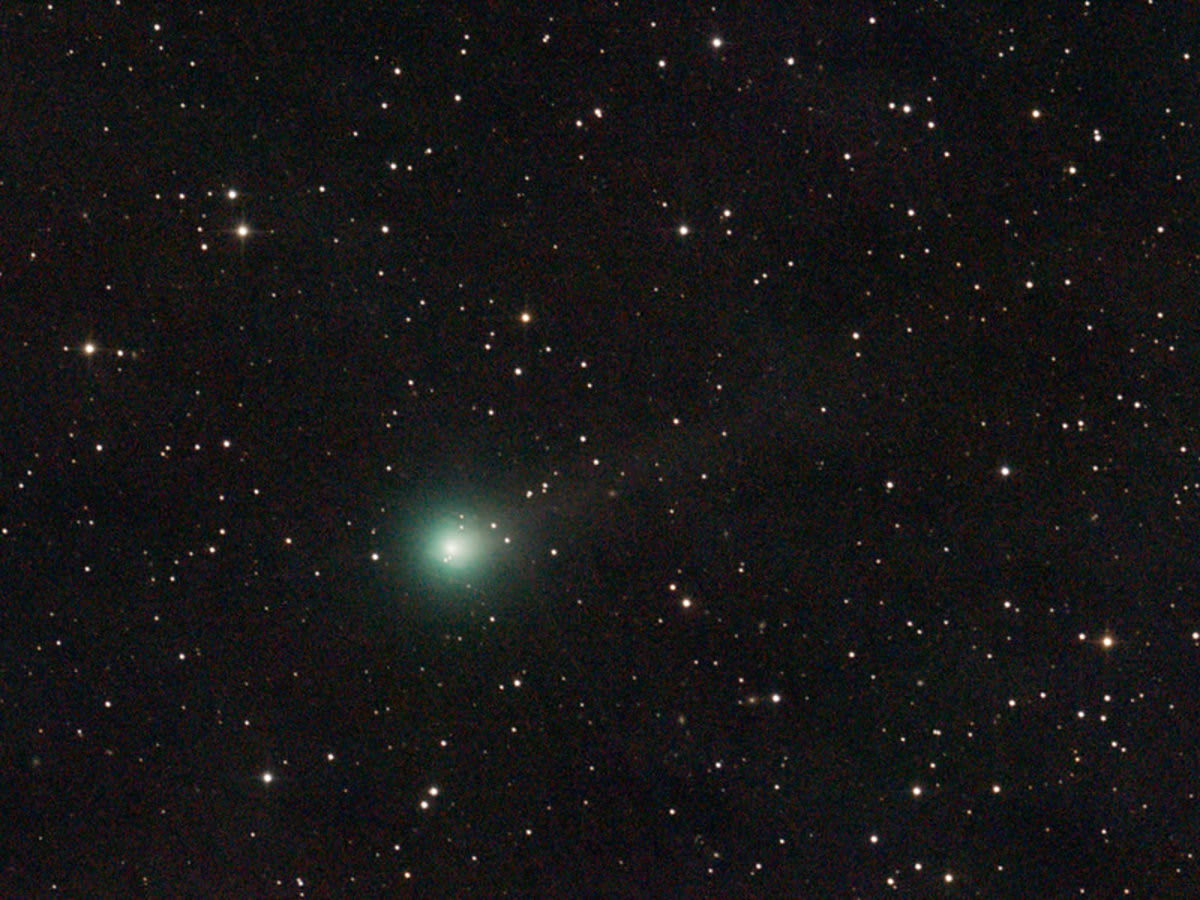
Comet C/2025 A6 (Lemmon) on 17 September 2025 (Image Source: Flickr | dkatevenis)

The comet, officially designated C/2025 A6 (Lemmon), is an extremely distant traveler, having spent the majority of its existence in the remote reaches of the outer Solar System, far beyond the orbit of the ice giant Neptune. As per the UK Space Agency, it was first identified in January of this year by astronomers operating the Mount Lemmon Survey in Arizona.
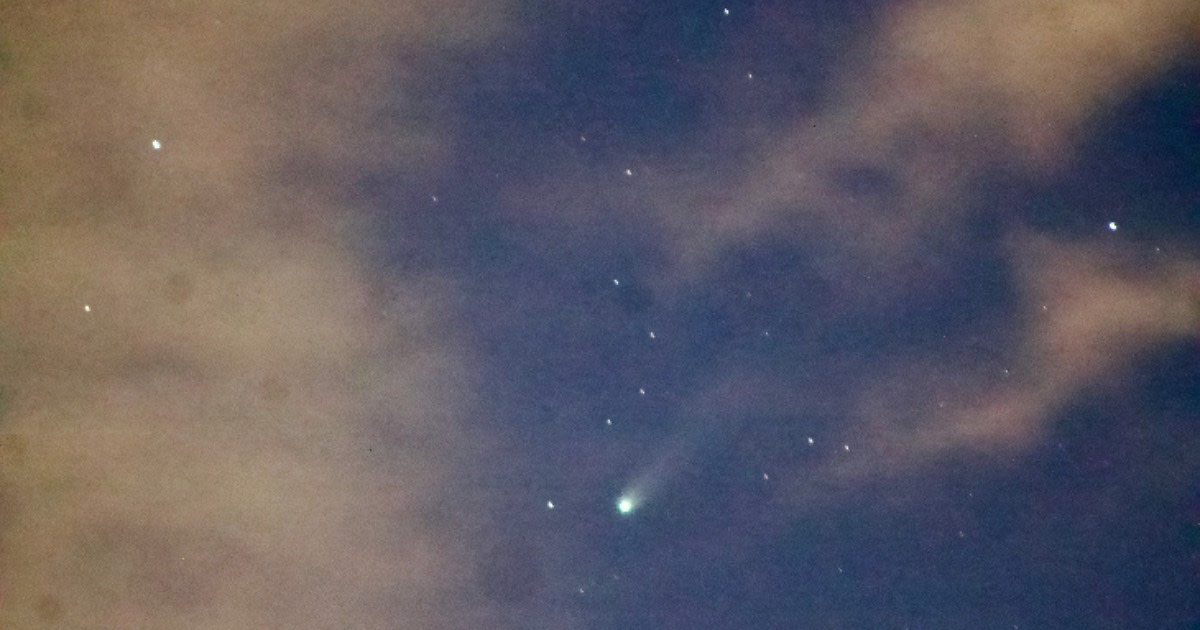
Comet Lemmon taken on October 21, 2025 (Cover Image Source: Space Weather Gallery | Richard Sears)
Comet Lemmon taken on October 21, 2025 (Image Source: Space Weather Gallery | Richard Sears)

The celestial body's recent surge in visibility is a direct result of its approach to the Sun. As the comet, a structure primarily composed of ice and dust, gets nearer to our star, solar heat causes the frozen materials on its surface to vaporize. Catching a view of Comet Lemmon this weekend offers a chance to observe this ancient physical transformation in real time.
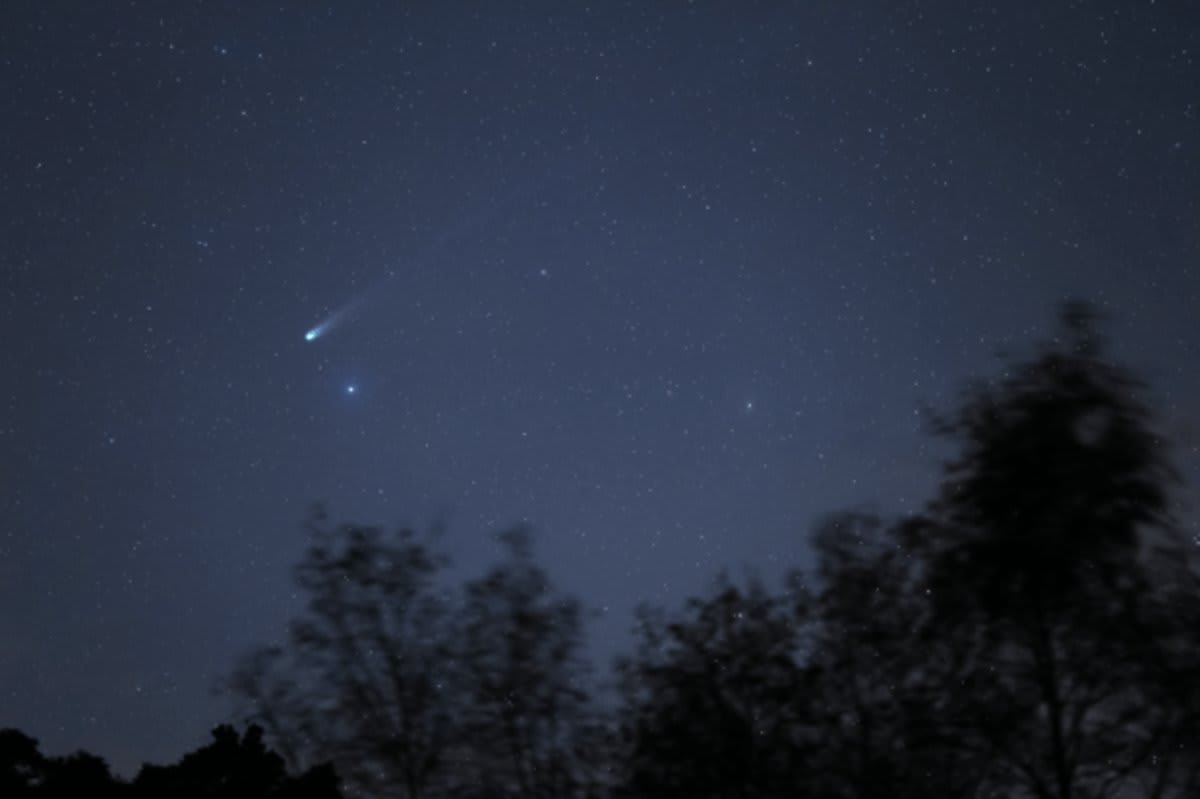
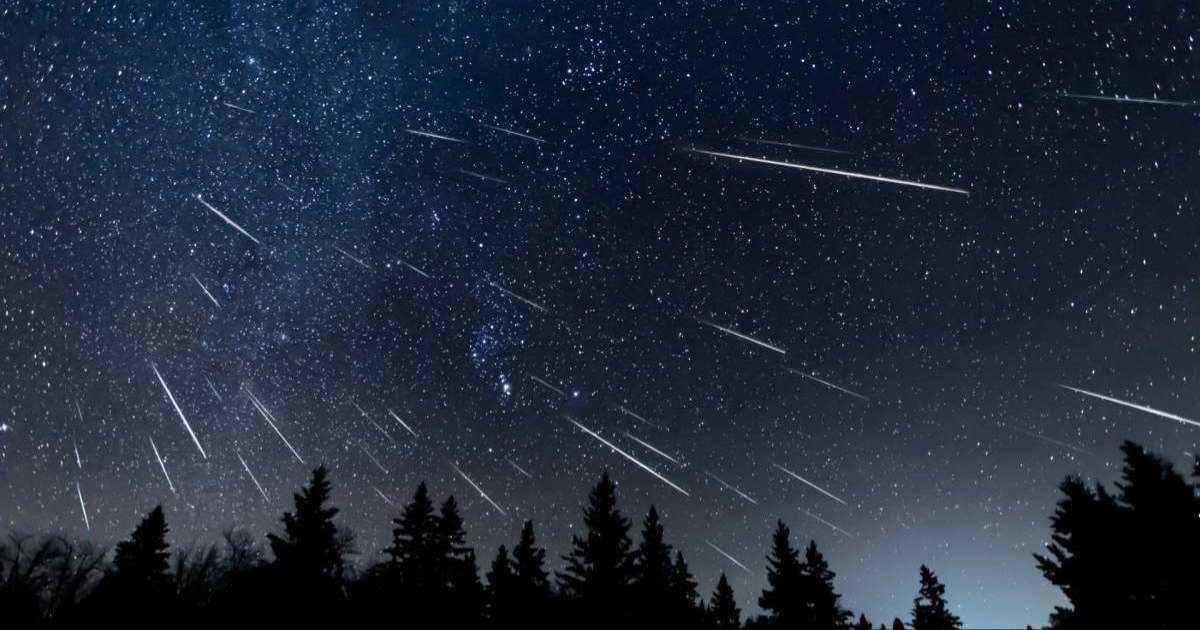
Comet C/2025 A6 (Lemmon) in the sky over Dartmoor National Park, UK (Image Source: UK Space Agency | Will Gater)

More on Starlust

How close is comet C/2025 A6 (Lemmon) to Earth today? Here are viewing tips and its likely coordinates

Comet C/2025 A6 (Lemmon) makes its closest approach to Earth today—won't return for another 1,300 years

MORE STORIES

The X5-class solar flare on Wednesday bombarded energetic protons toward Earth and they are penetrating the atmosphere all the way to the ground.
7 hours ago
The Moon will be approximately 221,965 miles from Earth during the final supermoon appearance of the year.
17 hours ago
The Northern Taurids meteor shower, active from late October to early December, typically generates a low maximum rate of just five meteors per hour.
1 day ago
Situated approximately 202 million miles away, interstellar comet 3I/ATLAS is currently traversing the constellation Virgo.
2 days ago
The comet currently resides in the constellation Ophiuchus (The Serpent-bearer), positioned about 147 million kilometers from our planet.
5 days ago
This significant, Supermoon-proximate lunar event offered breathtaking photographic subjects, spanning from urban skylines to major sporting events.
6 days ago
Earth faces an imminent solar impact, with a Coronal Mass Ejection (CME) predicted to arrive as soon as Thursday evening, November 6 (EST).
6 days ago
For the most dramatic visual effect, experts recommend watching for the Moon just as it ascends above the eastern horizon at sunset.
7 days ago
The closest approach of comet 3I/ATLAS to Earth will happen on Friday, 19 December 2025, at a distance of 1.797478 Astronomical Units.
7 days ago
Observers should plan to observe the spectacle throughout the evenings of Tuesday, November 4, and Wednesday, November 5, 2025.
Nov 4, 2025