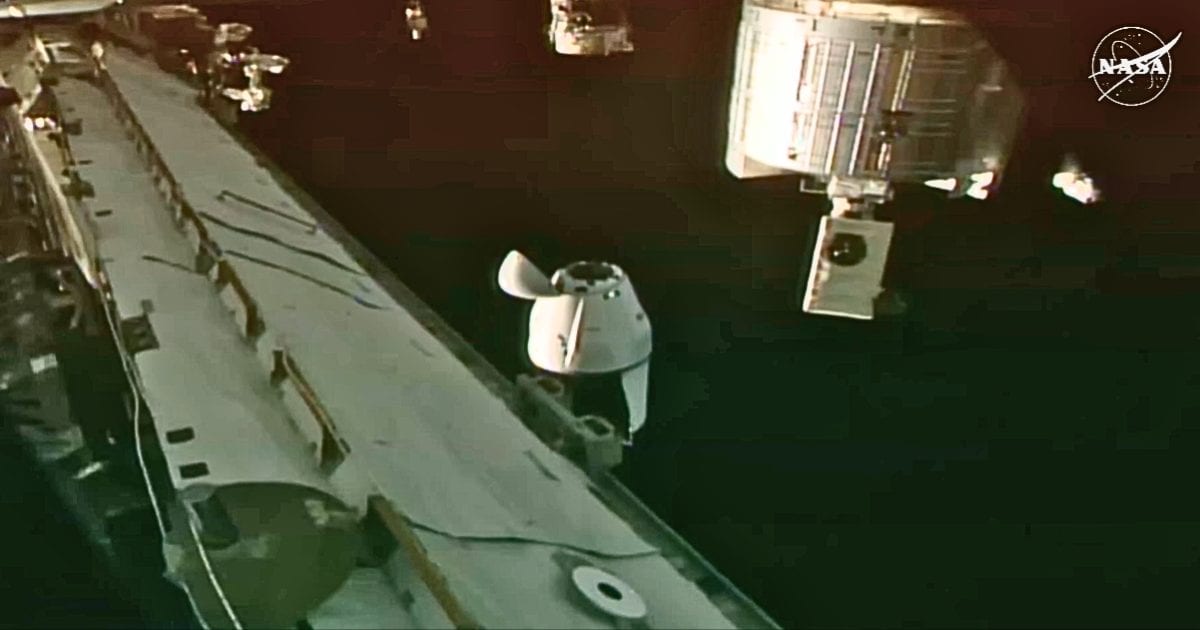
NASA's Swift Boost mission will launch today—here's how it will rescue a 21-year-old space telescope
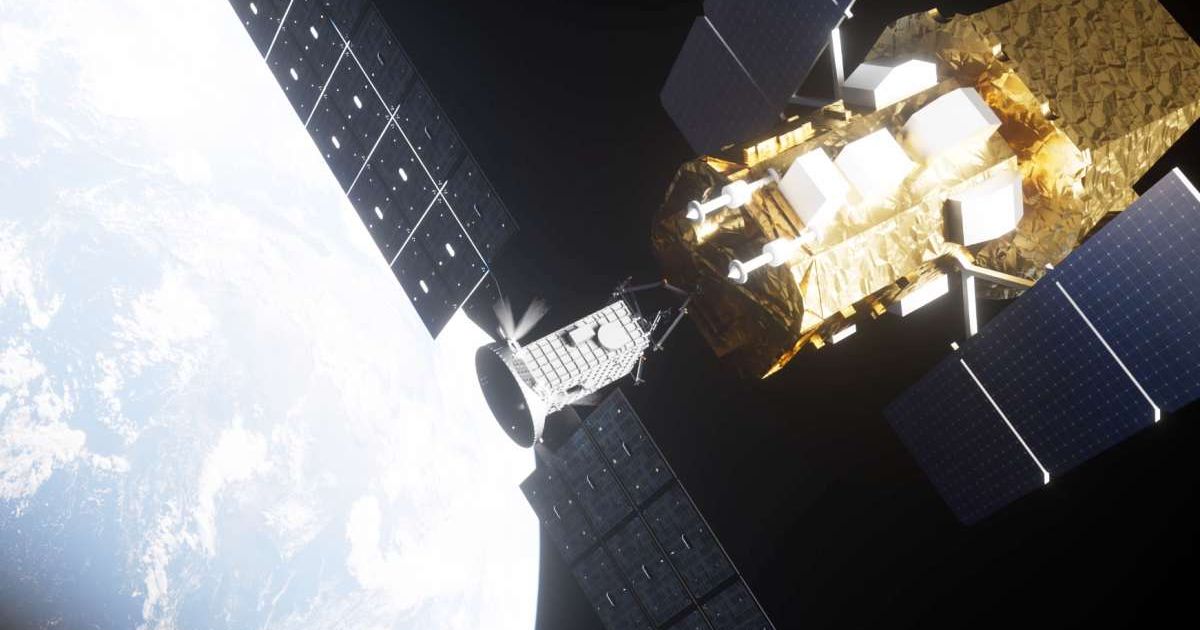
NASA's Swift Boost Mission will be set in motion today at 6:17 a.m. EDT with the launch of Northrop Grumman's Pegasus XL rocket from Kwajalein Atoll in the Marshall Islands. The rocket will launch via an atypical method. A Northrop Grumman L-1011 aircraft, called Stargazer, will carry the rocket to a height of 40,000 feet before dropping it. Within seconds of the rocket starting its freefall, its engines will ignite so as to put Katalyst Space's LINK robotic spacecraft on the path to rendezvous with the Neil Gehrels Swift Observatory, whose orbit it is meant to boost. Here's how things will progress from that point on.
Are you ready for it?
— NASA Universe (@NASAUniverse) June 30, 2026
Tomorrow, June 30, at 6:17 a.m. ET, Katalyst Space's robotic servicing spacecraft, LINK, is scheduled to launch on a Northrop Grumman Pegasus XL rocket from Kwajalein Atoll to begin its journey to meet and boost our Swift observatory. Stay tuned for updates! pic.twitter.com/oOafcLFKua
Commissioning and approach
Once LINK has reached its orbit, Katalyst's team will focus on acquiring a stable signal from the spacecraft to verify that its power systems are active and the solar panels have successfully spread out. The engineering team will then transition LINK into a commissioning phase, which will last a few weeks. During this phase, ground operators will systematically test the various systems onboard the servicing spacecraft to ensure that everything is functioning correctly before committing to complex maneuvers.
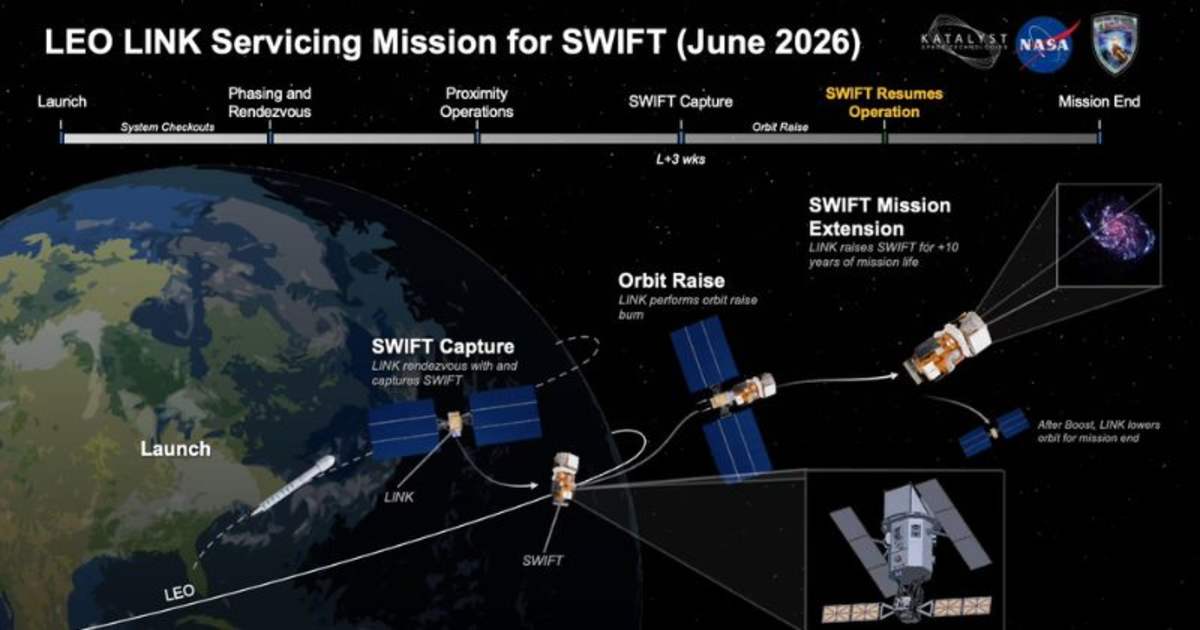
LINK will then continue along a gradual path to the 21-year-old Swift Observatory. As the spacecraft gets close to its target, it will transmit diagnostic imagery of Swift to help teams on the ground at NASA and Katalyst Space to visually assess the planned mechanical grab points for LINK's robotic arm. This rendezvous and capture process could last about a month.
This mission is a bold demonstration of American ingenuity that could change how we maintain, upgrade, and operate spacecraft for years to come.
— NASA Administrator Jared Isaacman (@NASAAdmin) June 23, 2026
Every new capability we prove today expands what’s possible tomorrow. https://t.co/kTvUTvWY4G
Rendezvous and capture
Once LINK has attached itself securely to Swift with its robotic arms, it will begin slowly pushing the observatory upwards. This is to reverse the orbital decay that Swift has been experiencing. This raising maneuver will be executed over a period of several months as the servicing vehicle works to return the telescope close to its original launch height. Once this target altitude is reached, the commercial vehicle will detach from the newly positioned telescope.
After Swift's orbit is boosted
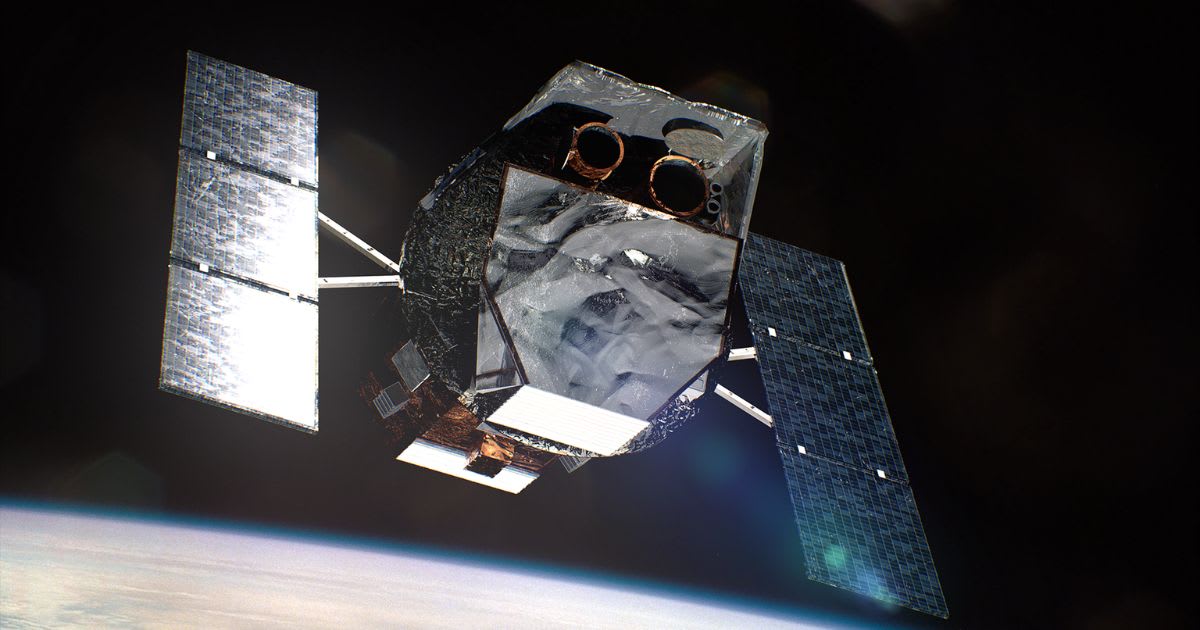
The final phase will involve restarting the observatory's full system and telescope operations. This activation would be much like the sequence that it went through when it launched back in 2004. NASA believes that an additional month will be needed to restore the observatory to its full science capabilities.
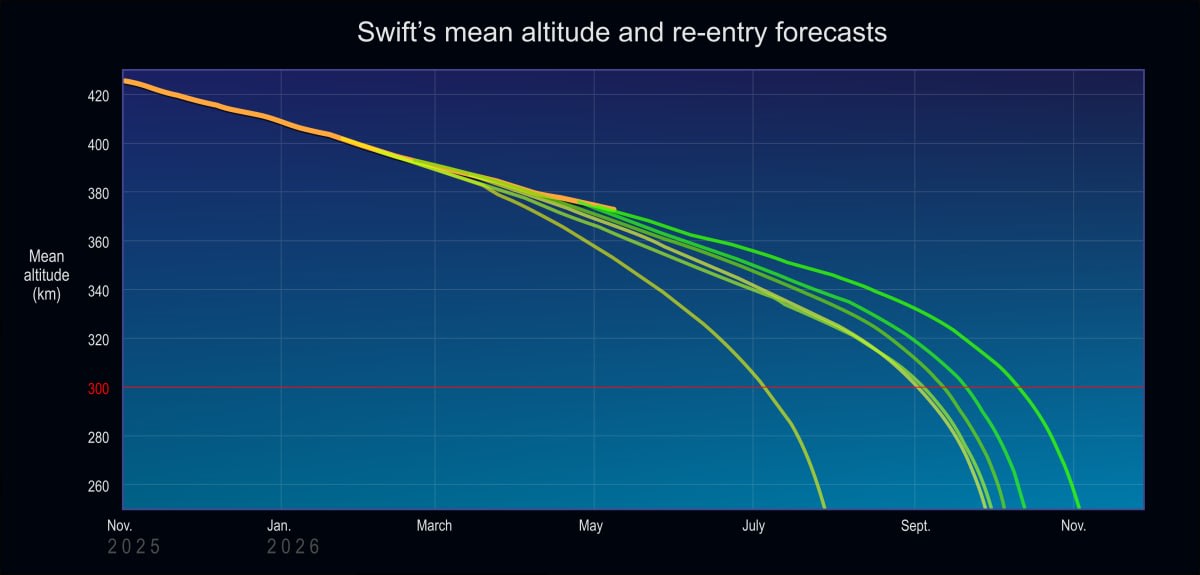
The Swift Boost mission was put together within a 9-month turnaround time after it was discovered that increased solar activity in the wake of Solar Cycle 25's peak resulted in a higher-than-expected atmospheric drag on the observatory. This, in turn, has been causing Swift, which does not have its own boosters, to lose its altitude faster than expected. If nothing is done, it will burn up in the atmosphere by the end of the year. But saving Swift is necessary because—as its name suggests—it has the capability to swiftly turn towards transient cosmic events like gamma-ray bursts, which are extremely powerful yet short-lived. This is something that even the famed Hubble and James Webb cannot pull off.
More on Starlust
Scientists solve a decades-old mystery by finding the hidden source of solar flare gamma rays
A gamma-ray burst raged on for seven hours. A researcher, who was behind its discovery, explains how