✕
Astronomy Constellation Deep Sky Objects Skywatching Instruments Spaceflight Videos
Moon Phases
Home / Galleries

The curious case of the 'WTF Star': Why Tabby's Star still has scientists puzzled

Astronomy Oct 2, 2026
BY SHILADITYA RAY
Star KIC 8462852, also known as Tabby's Star, in infrared (2MASS survey) and ultraviolet (GALEX). [Cover Image Source: IPAC/NASA; STScI (NASA)]
From alien megastructures to a swarm of comets, all you need to know about the theories surrounding the mysterious dips in brightness observed in Tabby's Star.
6 Photos
1 / 6
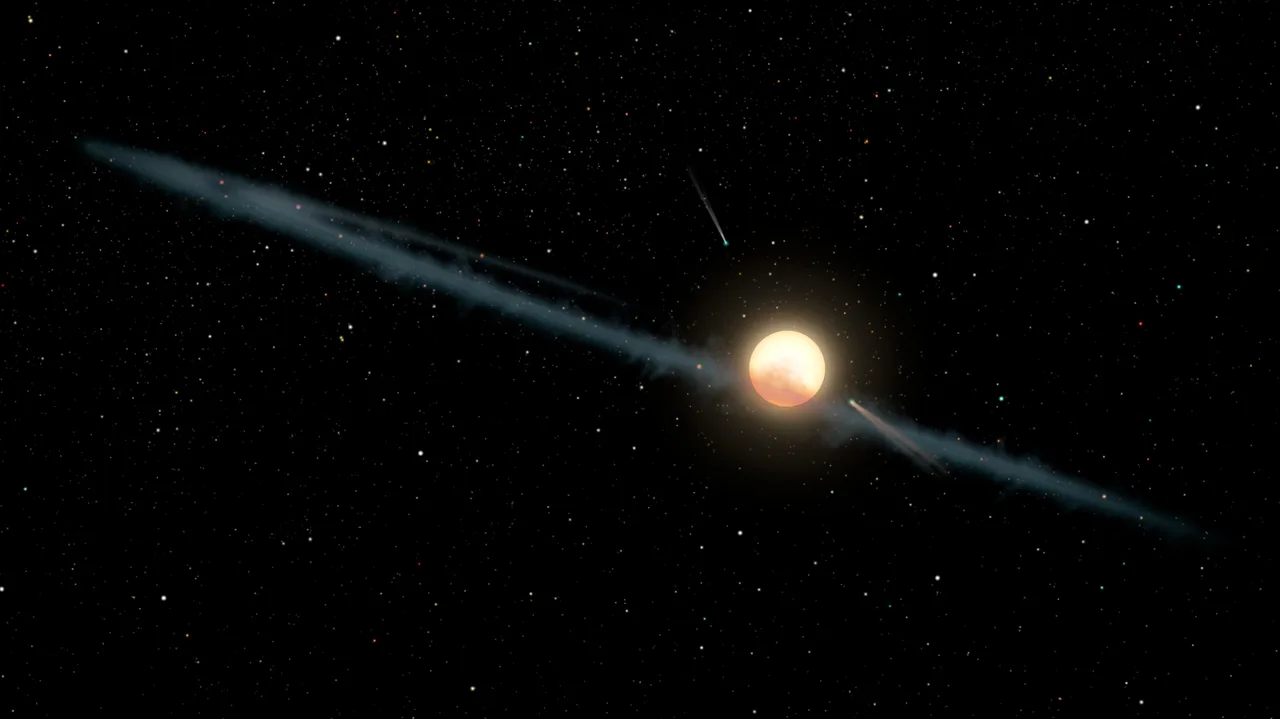
The 'WTF Star' that left scientists baffled
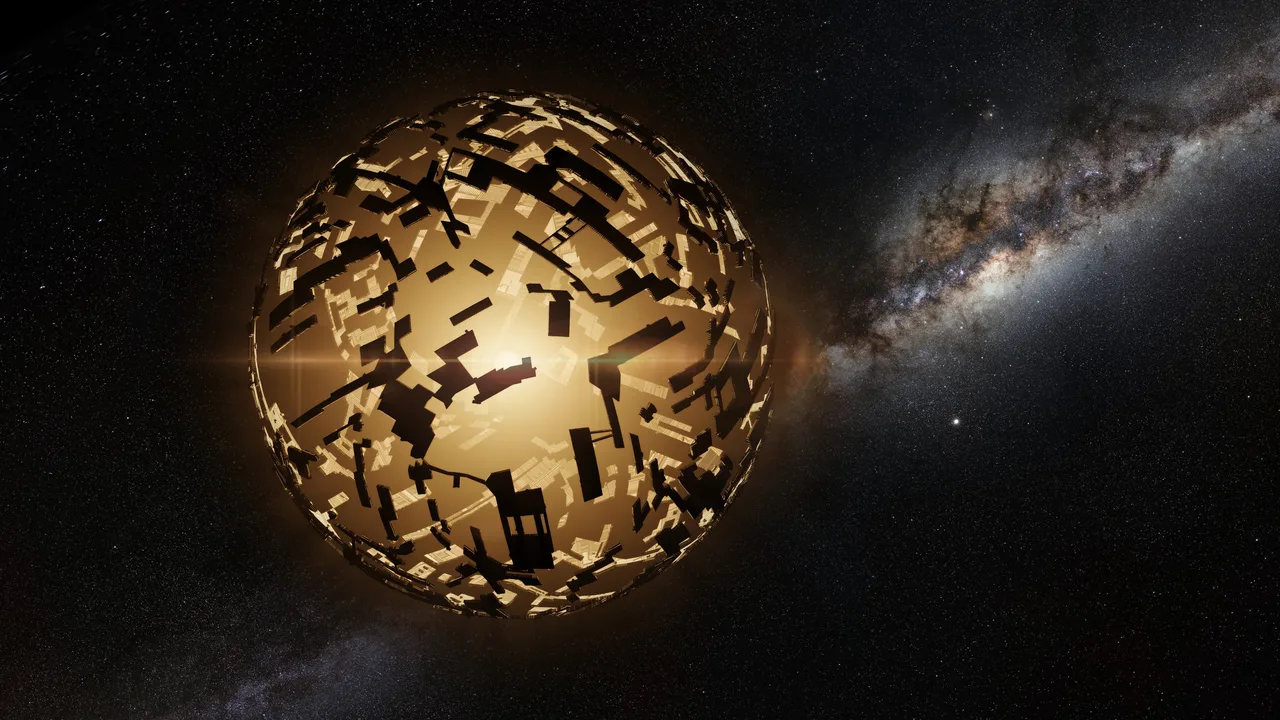
IMAGE SOURCE: NASA/JPL-CALTECH

The 'WTF Star' that left scientists baffled

In 2015, astronomers analyzing data collected by NASA's Kepler Space Telescope chanced upon a star that was so unusual that it would go on to baffle scientists for years. Named KIC 8462852 and also known as Tabby's Star after astrophysicist Dr. Tabetha Boyajian, this seemingly ordinary F-type main-sequence star displayed inexplicable dips in brightness that left the entire scientific community puzzled.

When exoplanets transit in front of their host star at periodic intervals, they typically block less than 1% of a star's light, and such dips in a star's brightness are expected to be observed in systems believed to have planets. But when scientists looked at KIC 8462852, they found drops in the star's brightness of up to 22% at erratic, unpredictable intervals. This, at the time, defied explanation and the star came to be informally known as the 'WTF Star', based on the discovery paper's subtitle—"Where's the Flux?".

2 / 6
An alien megastructure?
IMAGE SOURCE: GETTY IMAGES/DOTTEDHIPPO

An alien megastructure?

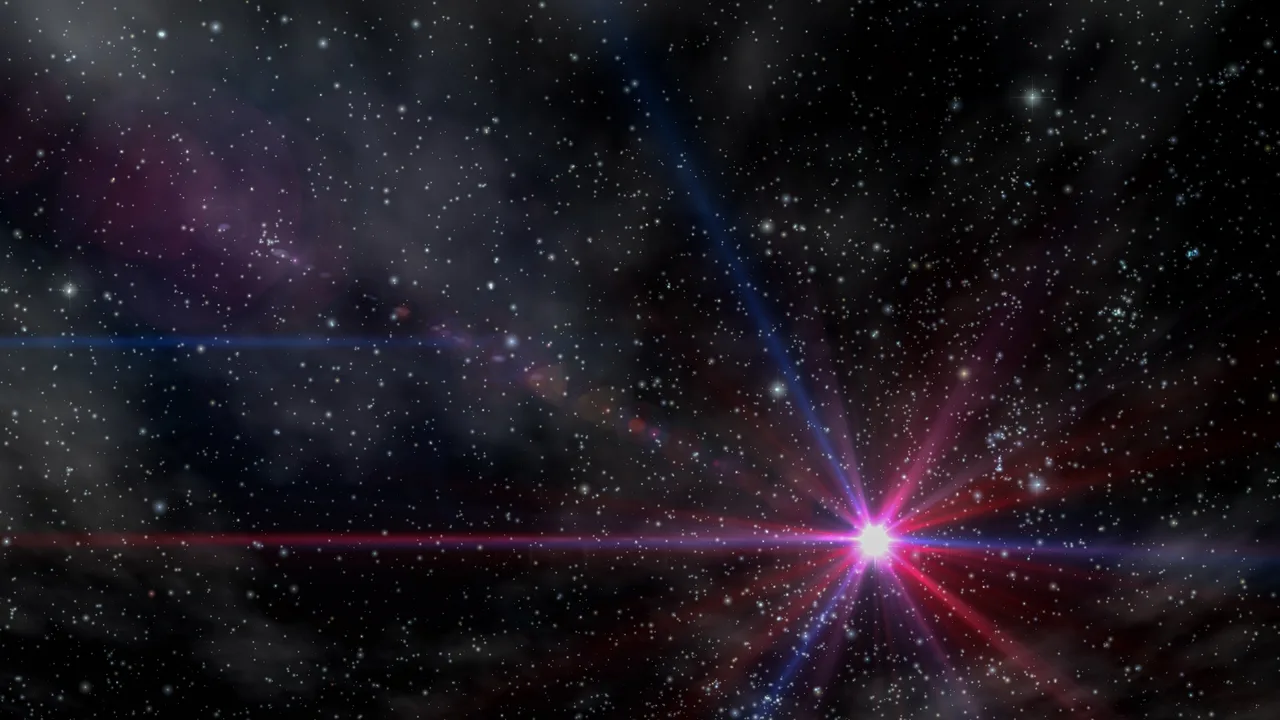
Despite being more than 1,470 light-years away, Tabby's Star generated immense scientific intrigue and shortly after its discovery, astrophysicist Jason Wright proposed a radical theory that could explain what scientists were observing. Since the dips in brightness seemed to lack a natural explanation, Wright suggested that the irregular dips observed were mathematically consistent with that of a partial Dyson sphere, a hypothetical alien megastructure comprising a vast network of solar panels encircling a star. The theory posited that such a structure would be able to block significant portions of a star's light in asymmetrical patterns, as observed in Tabby's Star, and understandably, the hypothesis made waves, capturing public attention and prompting further scientific investigation by organizations such as Breakthrough Listen and the SETI Institute.

3 / 6
Or, something more natural?
IMAGE SOURCE: GETTY IMAGES

Or, something more natural?

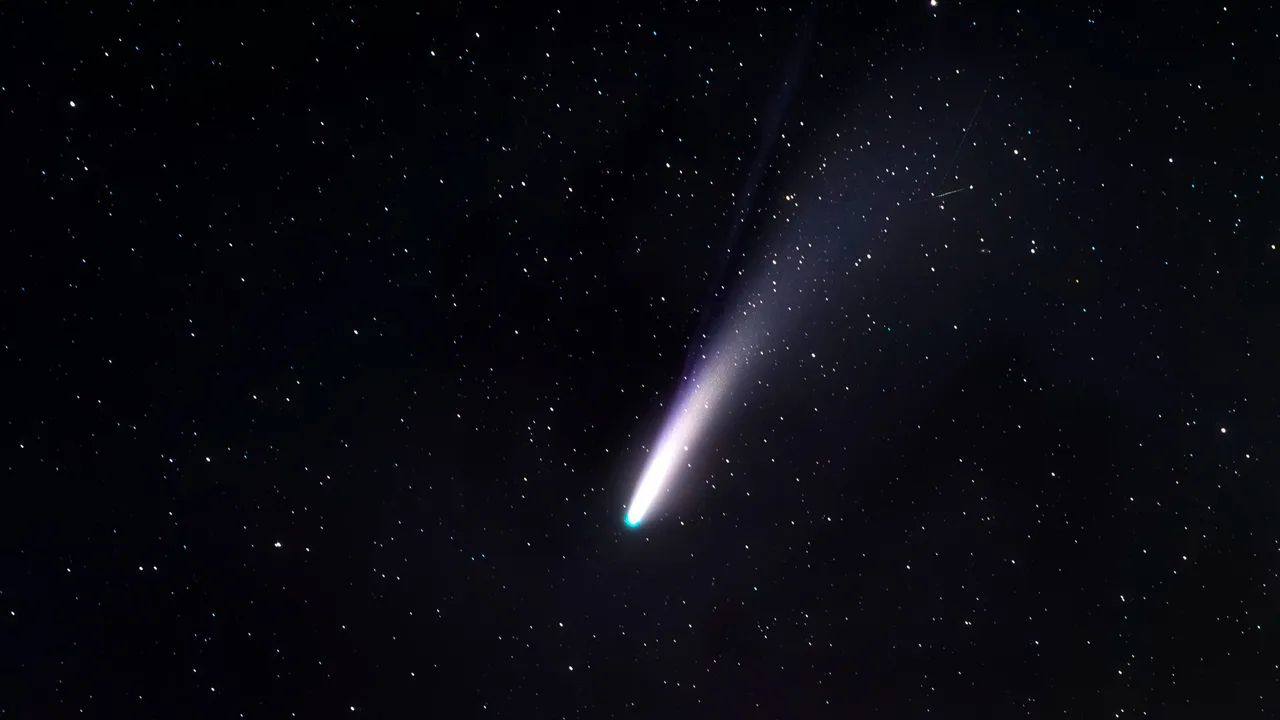
Attempts to find technosignatures around Tabby's Star, however, yielded no evidence, forcing scientists to rule out aliens and investigate natural phenomena that could produce the dips in brightness that were being observed. To that end, Dr. Tabetha Boyajian's team suggested that the dips in brightness could be caused by a massive swarm of icy exocomets. The theory suggested that a swarm of exocomets in proximity to Tabby's Star would fragment due to heat and leave behind a massive trail of debris, which could obscure large portions of starlight in irregular patterns. However, critics pointed out that while this theory explained short-term dips, maintaining a 22% light blockage for longer periods of time would require an improbable number of giant comets breaking apart simultaneously in tight formation, and would require too many variables to fall perfectly in place to be a viable explanation.

4 / 6
A new clue emerges
IMAGE SOURCE: GETTY IMAGES/ISTOCKPHOTO

A new clue emerges

As investigations continued, the mystery deepened, and analysis of Kepler imagery revealed that Tabby's Star was not just dipping in brightness intermittently, but was gradually dimming overall. Over the course of Kepler's four-year run, the overall baseline flux of Tabby's Star dipped by roughly 3%, with historical reviews suggesting that a decline had been going on for years. Debris fields could not explain this persistent drop over the years, and scientists thus turned to internal stellar mechanisms to make sense of what was going on in Tabby's Star.

5 / 6
Alien engineering ruled out
IMAGE SOURCE: GETTY IMAGES/ISTOCKPHOTO

Alien engineering ruled out

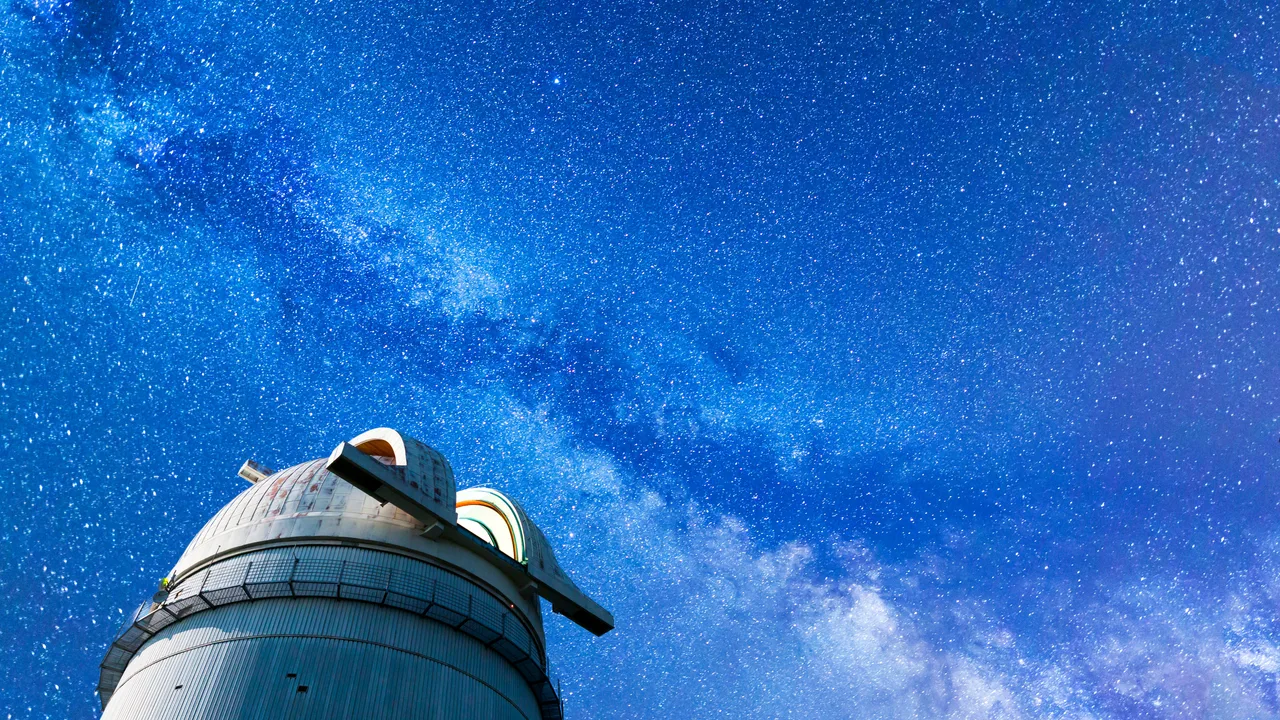
Something of a breakthrough came in 2017, when a network of ground-based observatories coordinated by Dr. Boyajian caught Tabby's Star dimming in real time, which provided considerable clarity. These observations showed that the star lost more light in blue wavelengths than in red or infrared wavelengths, effectively ruling out the alien megastructure theory, as any opaque object passing in front of the star would have blocked all colors of light equally. This selective blockage of light in blue wavelengths, scientists agreed, could be described by microscopic dust particles smaller than one micrometer, which are known to scatter blue light waves while allowing red light waves to pass through. And so, in 2018, a paper was published by over 200 researchers, formally eliminating the alien megastructure theory.

6 / 6
The mystery continues
IMAGE SOURCE: GETTY IMAGES

The mystery continues

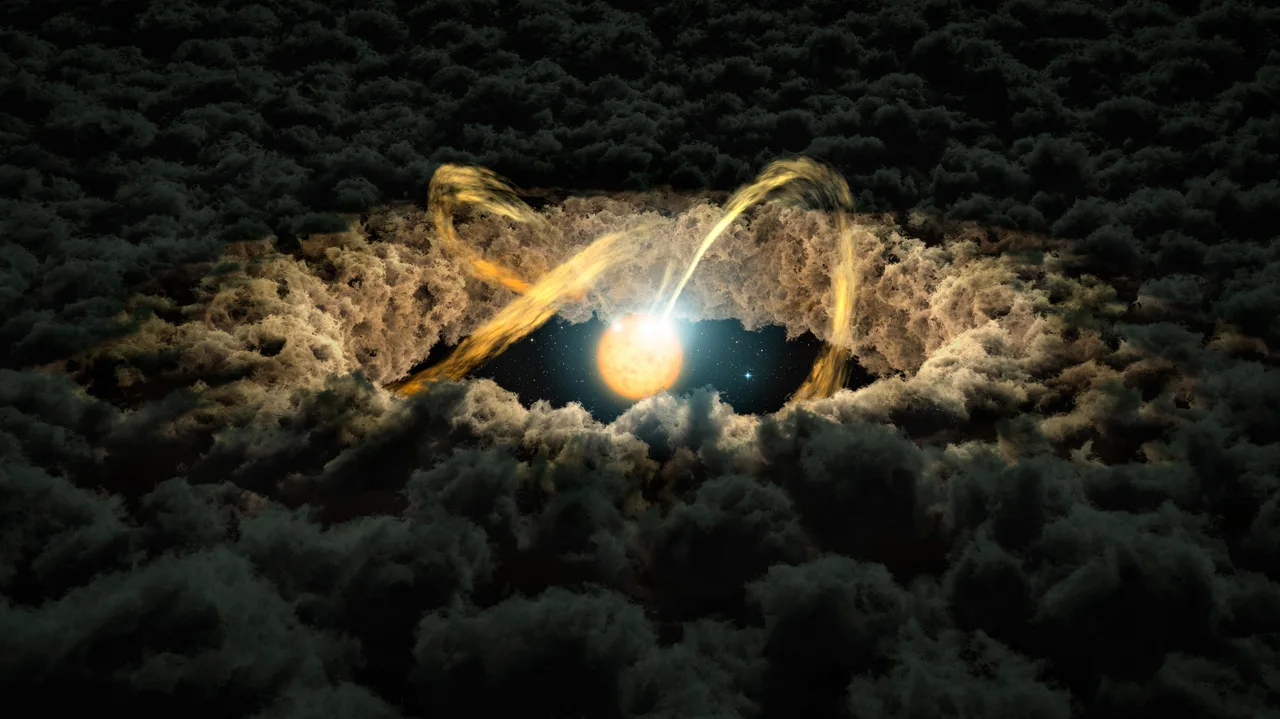
With dust now thought to be the primary culprit behind Tabby's Star's dips in brightness, current research on KIC 8462852 is trying to uncover how such immense dust clouds can form around older stars. In 2021, it was confirmed that Tabby's Star is part of a binary system consisting of a small, red dwarf star, and scientists think that the gravitational influence of this companion could have played a role in disrupting outer planetary bodies in the system, leading to collisions or tidal breakups. Indeed, a leading model suggests that a ringed planet or icy exomoon may have been tidally shredded by the gravity of Tabby's Star, resulting in the continuous shedding of dust sheets. Adding to this, a mid-2026 study uncovered tentative evidence of a giant planet orbiting Tabby's Star, whose gravity might be the exact mechanism pushing these fragmented bodies into the inner system. A definitive solution to the mystery, however, is not yet at hand, and modern observatories continue to monitor the star, which has become the prototype for what astronomers call anomalous dippers.

MORE GALLERIES

Aliens or not? Harvard ccientist Avi Loeb shares his thoughts on latest UFO files release 6

Aliens or not? Harvard ccientist Avi Loeb shares his thoughts on latest UFO files release

Oct 2, 2026
Scientists finally captured an image of a giant black hole at the heart of our galaxy 5

Scientists finally captured an image of a giant black hole at the heart of our galaxy

Oct 1, 2026
SpaceX shares stunning new photos of Flight 14, Starship’s debut orbital mission 6

SpaceX shares stunning new photos of Flight 14, Starship’s debut orbital mission

Oct 1, 2026
Is there a hidden ninth planet beyond Pluto? Here’s what scientists found 6

Is there a hidden ninth planet beyond Pluto? Here’s what scientists found

Sep 30, 2026
Unexplained lights keep appearing in this Norwegian valley. Is it a UFO or something else? 5

Unexplained lights keep appearing in this Norwegian valley. Is it a UFO or something else?

Sep 29, 2026
NASA lost the original Apollo 11 moon landing tapes, and here's how it happened 6

NASA lost the original Apollo 11 moon landing tapes, and here's how it happened

Sep 29, 2026
SpaceX Starship Flight 14: Striking images from the rocket's first orbital mission 7

SpaceX Starship Flight 14: Striking images from the rocket's first orbital mission

Sep 28, 2026
Unsettling theories that could change how we see the universe 6

Unsettling theories that could change how we see the universe

Sep 28, 2026
A former NASA scientist says he's found a way to beat gravity. Here's how 5

A former NASA scientist says he's found a way to beat gravity. Here's how

Sep 26, 2026
Could our ancestors actually be aliens? Scientists are taking the idea seriously 5

Could our ancestors actually be aliens? Scientists are taking the idea seriously

Sep 26, 2026
JWST's mysterious red dot may hide a black hole 100,000 times as massive as the Sun 5

JWST's mysterious red dot may hide a black hole 100,000 times as massive as the Sun

Sep 24, 2026
How Area 51 became America's most famous alien and UFO mystery 6

How Area 51 became America's most famous alien and UFO mystery

Sep 24, 2026
6 times Apollo 11's moon mission nearly went wrong 7

6 times Apollo 11's moon mission nearly went wrong

Sep 23, 2026
Chilling satellite images that show the impact of war from space 10

Chilling satellite images that show the impact of war from space

Sep 22, 2026
Russia launched giant mirrors into space in the 1990s, but things didn’t go as planned 6

Russia launched giant mirrors into space in the 1990s, but things didn’t go as planned

Sep 21, 2026
Weirdest interstellar objects to visit our solar system and the alien theories they fueled 5

Weirdest interstellar objects to visit our solar system and the alien theories they fueled

Sep 21, 2026
Aliens may be more like us than we think, according to Oxford researchers 5

Aliens may be more like us than we think, according to Oxford researchers

Sep 19, 2026
Why do so many people still think the Moon landings were faked? 5

Why do so many people still think the Moon landings were faked?

Sep 19, 2026
Harvard scientist Avi Loeb says aliens are already here. But why haven't we found any? 5

Harvard scientist Avi Loeb says aliens are already here. But why haven't we found any?

Sep 18, 2026
Starlust.org is part of the Scale Content Inc. publishing group.

Google Source

About Us
Editorial Guidelines
Privacy Policy
Cookie Policy
Terms of Use
Contact Us
Link to Facebook
Link to Instagram

© Scale Content Inc. 1178 Broadway, 3rd Floor #3469, New York, NY 10001, United States