✕
Astronomy Constellation Deep Sky Objects Skywatching Instruments Spaceflight Videos
Home / Galleries

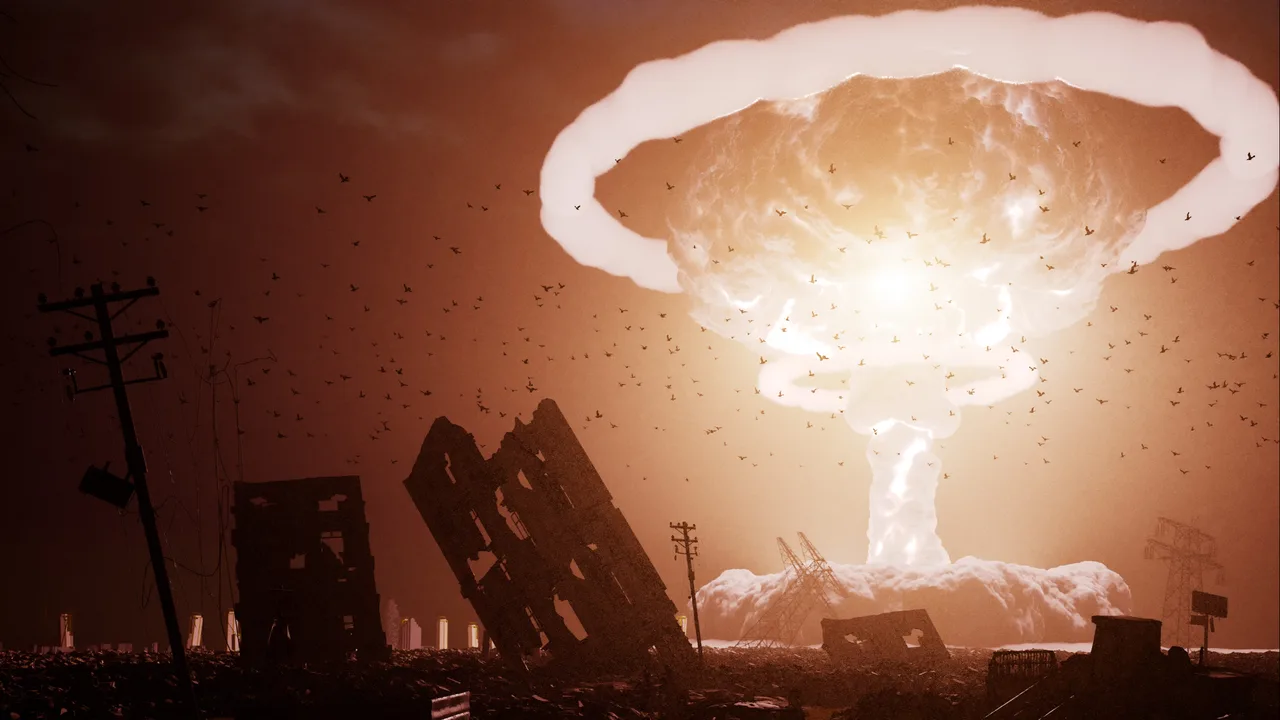
Isaac Newton's 1704 doomsday prophecy predicted the year the world would end

Astronomy Aug 6, 2026
BY ANKITA GARKOTI
Portrait of Sir Isaac Newton (L) and a representation of doomsday (R). (Cover Image Source: Bettmann (L); quantic69 (R)/Getty Images)
One of history's greatest scientists predicted the exact year the world would end. Here's what he shared in his letter.
5 Photos
1 / 5
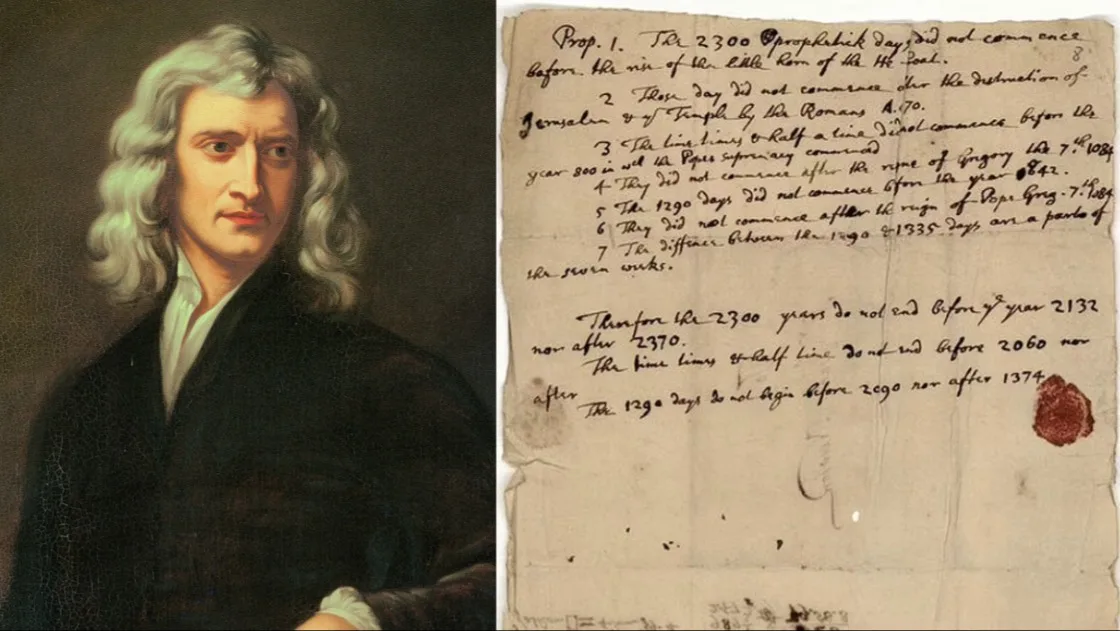
Isaac Newton's doomsday prediction
IMAGE SOURCE: BRANDSTAETTER IMAGES/GETTY IMAGES(L);JERUSALEM HEBREW UNIVERSITY(R)

Isaac Newton's doomsday prediction

We all know Sir Isaac Newton for his most groundbreaking work in the laws of motion and the law of gravity that changed how we understand the universe and life on Earth. But among his influential discoveries, he also made a prediction on when our world would come to an end.

In a 1704 handwritten letter, he shared the year, along with the reasoning he believed would cause the doom. This all happened long before anyone worried about asteroid impacts or the risks of contacting aliens. So, here's what he shared about the end of the world.

2 / 5
When did Newton say the world would end?
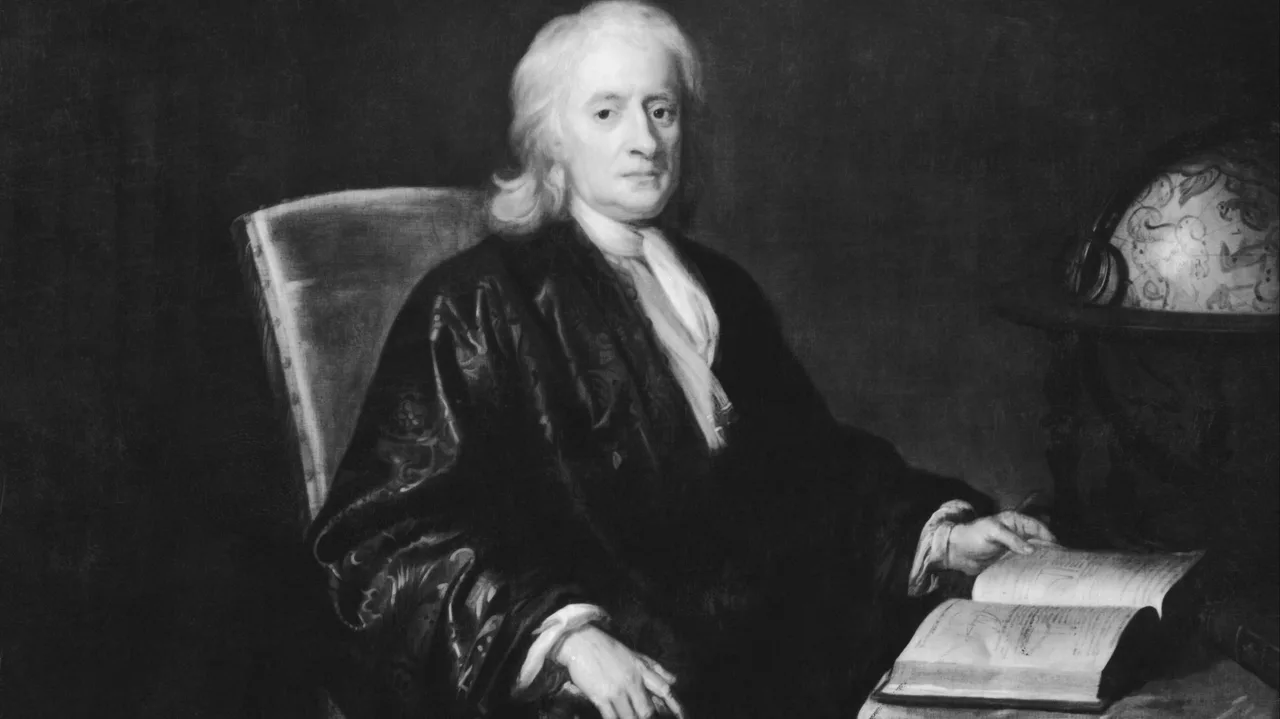
IMAGE SOURCE: VICNT/GETTY IMAGES

When did Newton say the world would end?

According to his own calculations, the world as we know it would come to an end in the year 2060. He wrote this down in 1704, and now, it's only a few decades out. In the archaic English of his era, Newton wrote, "So then the time times and half a time are 42 months or 1260 days or three years and an half, recconing twelve months to a yeare and 30 days to a month as was done in the Calendar of the primitive year.

"And the days of short lived Beasts being put for the years of lived kingdoms, the period of 1260 days, if dated from the complete conquest of the three kings A.C. 800, will end A.C. 2060.” "It may end later," Newton observed, "but I see no reason for its ending sooner".

3 / 5
So how exactly did he land on 2060?
IMAGE SOURCE: BETTMANN/GETTY IMAGES

So how exactly did he land on 2060?

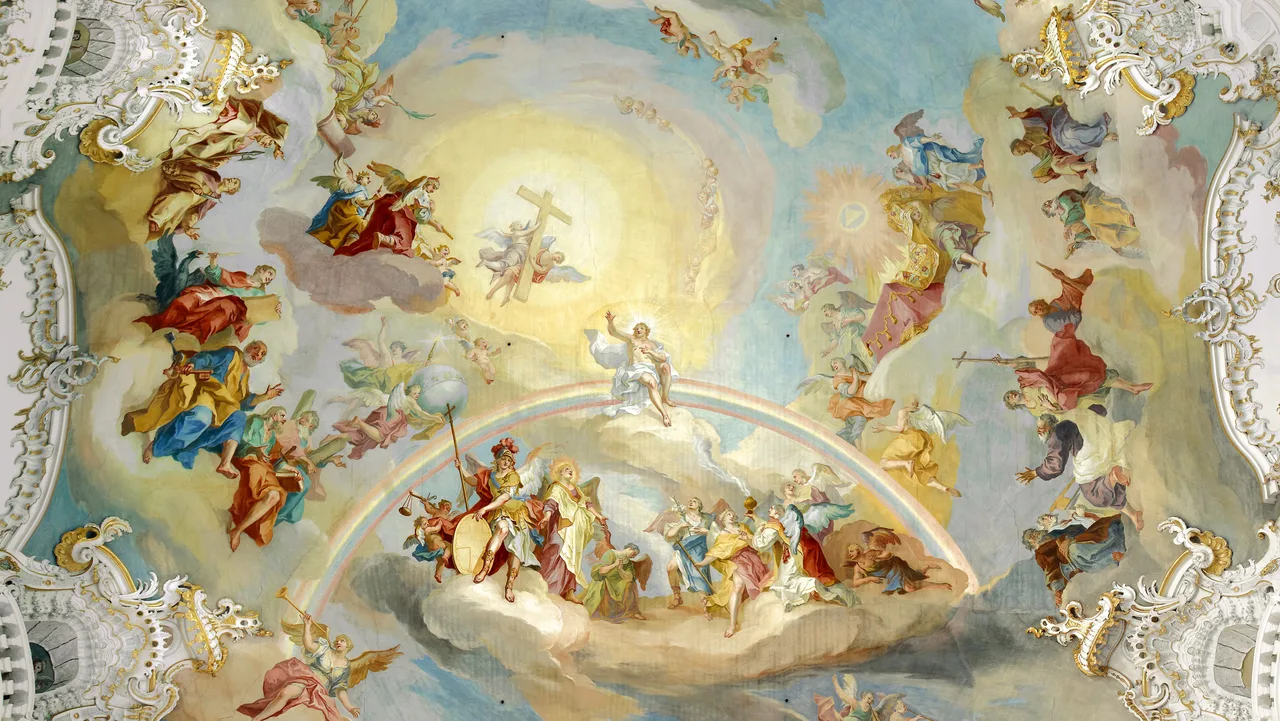
The reason for choosing the year was not tied to physics. For this, Newton turned to the Book of Daniel and the Book of Revelation, both of which mention the numbers 1,260, 1,290, and 2,300 days tied to major turning points in the apocalypse. 

For his calculation, Newton took the 1,260-day figure and read it as 1,260 years instead. Then he anchored that stretch of time to 800 AD, the year the Holy Roman Empire was founded, and counted forward to land on 2060. 

4 / 5
And he wasn't picturing a total destruction
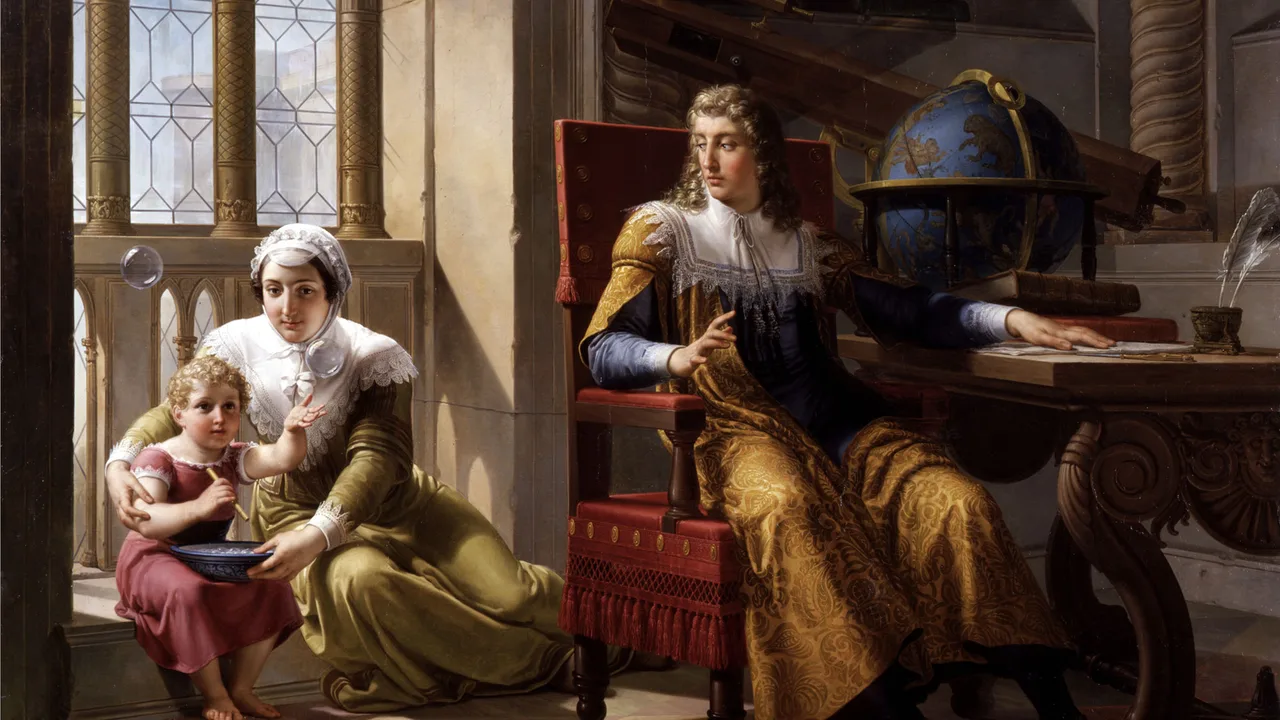
IMAGE SOURCE: 1353099076/GETTY IMAGES

And he wasn't picturing a total destruction

Sir Isaac Newton believed that our world would give way to an actual "Kingdom of Heaven" on Earth, with Christ returning to rule over a thousand-year reign. As part of that vision, he also shared that the Jewish people would go on to build what he called 'a flourishing and everlasting Kingdom' in Israel. This will be done after a stretch of plagues, war, and the ruin of 'wicked nations' had passed.

Even though he made his own prediction, Newton pushed back on anyone else who tried to guess when the world would end. He shared that his goal was "to put a stop to the rash conjectures of fanciful men who are frequently predicting the time of the end, and by doing so bring the sacred prophesies into discredit as often as their predications fail."

5 / 5
But modern scientists do not agree
IMAGE SOURCE: HERITAGE IMAGES/GETTY IMAGES

But modern scientists do not agree

Snobelen, a historian of science at the University of King's College in Halifax, has argued that Newton doesn't fit neatly into how we think of scientists today. In his words, Newton was "not a scientist" in the modern sense, but rather a "natural philosopher." 

As Snobelen put it, "For Newton, there was no impermeable barrier between religion and what we now call science." He added that "throughout his long life, Newton labored to discover God's truth, whether in nature or scripture.” The original letter is still on display today at Jerusalem's Hebrew University.

MORE GALLERIES

Curiosity images mysterious 'pits' on Martian soil: What does NASA have to say about them? 4

Curiosity images mysterious 'pits' on Martian soil: What does NASA have to say about them?

Sep 11, 2026
The Sun's most detailed images yet reveal whirlpools never spotted before 5

The Sun's most detailed images yet reveal whirlpools never spotted before

Sep 10, 2026
Scientists say the universe could tear itself apart. Here's how 6

Scientists say the universe could tear itself apart. Here's how

Sep 10, 2026
The Golden Record: When humanity sent a message specifically for aliens 5

The Golden Record: When humanity sent a message specifically for aliens

Sep 10, 2026
20 unforgettable photos from humanity’s first Moon landing 21

20 unforgettable photos from humanity’s first Moon landing

Sep 9, 2026
Nobel Prize winner now questions the standard model of the universe, says it might be wrong 5

Nobel Prize winner now questions the standard model of the universe, says it might be wrong

Sep 9, 2026
Strange repeating radio signal from deep space case finally cracked; Here's what it is 5

Strange repeating radio signal from deep space case finally cracked; Here's what it is

Sep 8, 2026
Is the 'empty' space in our universe really empty? Here's what a new study found 5

Is the 'empty' space in our universe really empty? Here's what a new study found

Sep 7, 2026
Could we ever reach a parallel universe? Here's what physicists really think 5

Could we ever reach a parallel universe? Here's what physicists really think

Sep 7, 2026
A 'skull' rock on Mars? The eerie formation NASA can't yet explain 5

A 'skull' rock on Mars? The eerie formation NASA can't yet explain

Sep 5, 2026
Did our universe begin inside a quantum multiverse? One physicist thinks so 5

Did our universe begin inside a quantum multiverse? One physicist thinks so

Sep 5, 2026
330 million light-years of darkness: The mystery of The Great Nothing—the Boötes Void 5

330 million light-years of darkness: The mystery of The Great Nothing—the Boötes Void

Sep 5, 2026
What if Earth-like planets existed before the first galaxies? Scientists have an answer 4

What if Earth-like planets existed before the first galaxies? Scientists have an answer

Sep 4, 2026
Strange 'spiderweb' formations spotted on Mars: NASA explains what's really going on 5

Strange 'spiderweb' formations spotted on Mars: NASA explains what's really going on

Sep 3, 2026
What if black holes are actually doorways to another universe? 6

What if black holes are actually doorways to another universe?

Sep 3, 2026
What if the universe is a loop? This study suggests the Big Bang may not have been the beginning 5

What if the universe is a loop? This study suggests the Big Bang may not have been the beginning

Sep 3, 2026
‘Time mirrors’ are actually real: physicists confirmed a 65-year-old theory in a new study 6

‘Time mirrors’ are actually real: physicists confirmed a 65-year-old theory in a new study

Sep 2, 2026
September 2026 skywatching guide: Planetary conjunctions, Full Harvest Moon, and more 7

September 2026 skywatching guide: Planetary conjunctions, Full Harvest Moon, and more

Sep 2, 2026
Is the universe really infinite, or is there an end? Oxford astrophysicist explains 5

Is the universe really infinite, or is there an end? Oxford astrophysicist explains

Sep 1, 2026
Could the universe be a living thing? Here's what scientists think 5

Could the universe be a living thing? Here's what scientists think

Aug 31, 2026
Starlust.org is part of the Scale Content Inc. publishing group.

Google Source

About Us
Editorial Guidelines
Privacy Policy
Cookie Policy
Terms of Use
Contact Us
Link to Facebook
Link to Instagram

© Scale Content Inc. 1178 Broadway, 3rd Floor #3469, New York, NY 10001, United States