✕
Astronomy Constellation Deep Sky Objects Skywatching Instruments Spaceflight Videos
Home / Galleries

Could Mars be our next home? Five strange facts about the Red Planet that will make you rethink

Astronomy Aug 18, 2026
BY SHILADITYA RAY
An image showing a full view of Mars.
Humanity is eyeing Mars for colonization, but there are realities about the Red Planet that might make you question these lofty ambitions.
6 Photos
1 / 6
A new home for humanity?
IMAGE SOURCE: EVGENIYSHKOLENKO/GETTY IMAGES

A new home for humanity?

As our closest planetary neighbor, Mars has long captured humanity's imagination, with space agencies and private players like SpaceX all eyeing a Mars colony sometime in the near future. While Mars's location at the edge of the Goldilocks Zone and its hypothesized history of having liquid water make it an attractive target for colonization, there are some lesser known facts about the Red Planet that might make you think twice.

2 / 6
Storms that engulf the entire planet
IMAGE SOURCE: NASA/JPL-CALTECH/CORNELL

Storms that engulf the entire planet

Mars's dust storms have often been referred to in pop culture and works of fiction, but what is generally not known is that these storms can grow to enormous proportions, sometimes circling the planet itself. These planetary-scale storms, which occur every 5.5 Earth years (roughly three Martian years) according to NASA, can kick up unimaginably massive plumes of dust, blocking 99% of the sunlight hitting the Red Planet and making surface temperatures plummet.

Interestingly, humankind has already had one fateful encounter with such a storm. After over 14 years of service, NASA's Opportunity rover saw its life snuffed out by one of these planetary Martian storms in 2018, which blocked out sunlight and prevented the solar-powered robot from recharging its batteries or keeping its critical electronics warm. Opportunity's fate serves as a reminder that these storms are not to be trifled with: a single global Martian storm could trigger a fatal power-grid collapse in future solar-reliant human colonies.

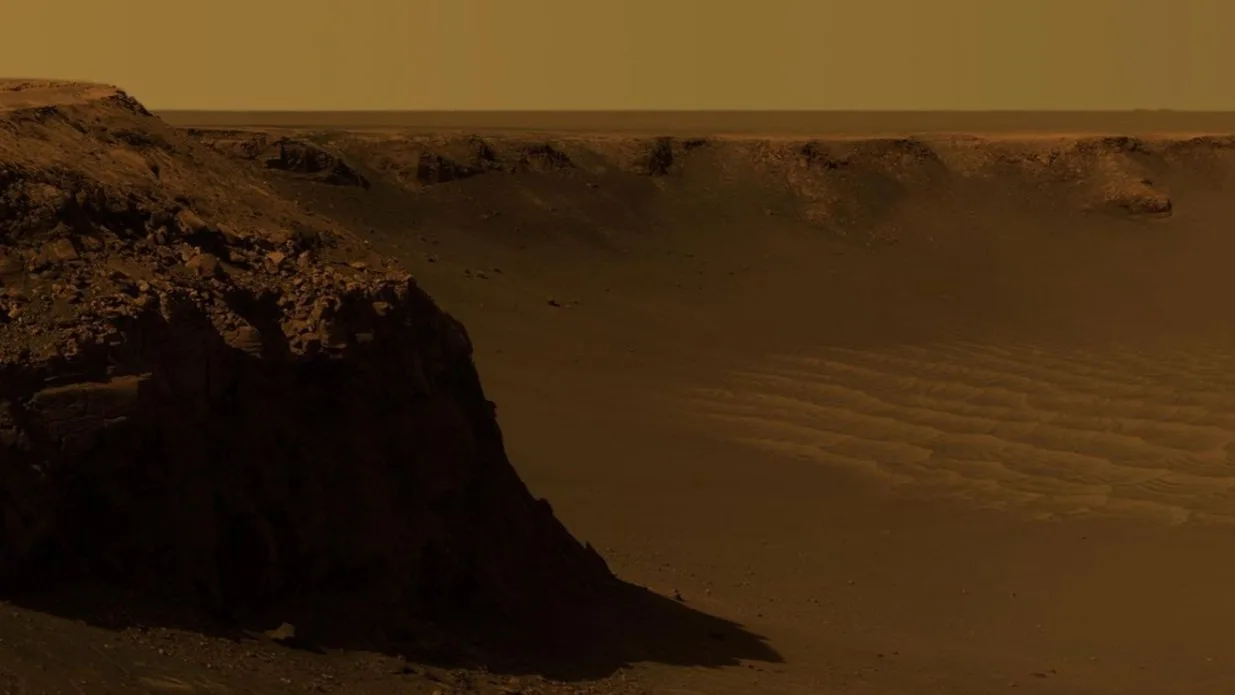
The image shows a vista of Victoria Crater taken by NASA's Opportunity rover.

3 / 6
The threat of radiation remains ever present
IMAGE SOURCE: NASA/JPL/TEXAS A&M/CORNELL

The threat of radiation remains ever present

While the unforgiving Martian terrain and weather pose their own threats to colonization, an even bigger threat is perhaps the Sun itself. Mars, unlike Earth, does not have a protective magnetosphere, which makes humans on the planet particularly susceptible to space-based radiation. While cosmic rays pose a steady long-term risk for human settlers, solar particle events such as solar flares and coronal mass ejections pose an even bigger threat. Measurements taken by NASA's Curiosity rover have already shown that a single high-energy solar storm can cause surface radiation levels to spike sharply on the Red Planet, suggesting that human settlers will have to take ample precautions if they are to one day establish a presence on Mars.

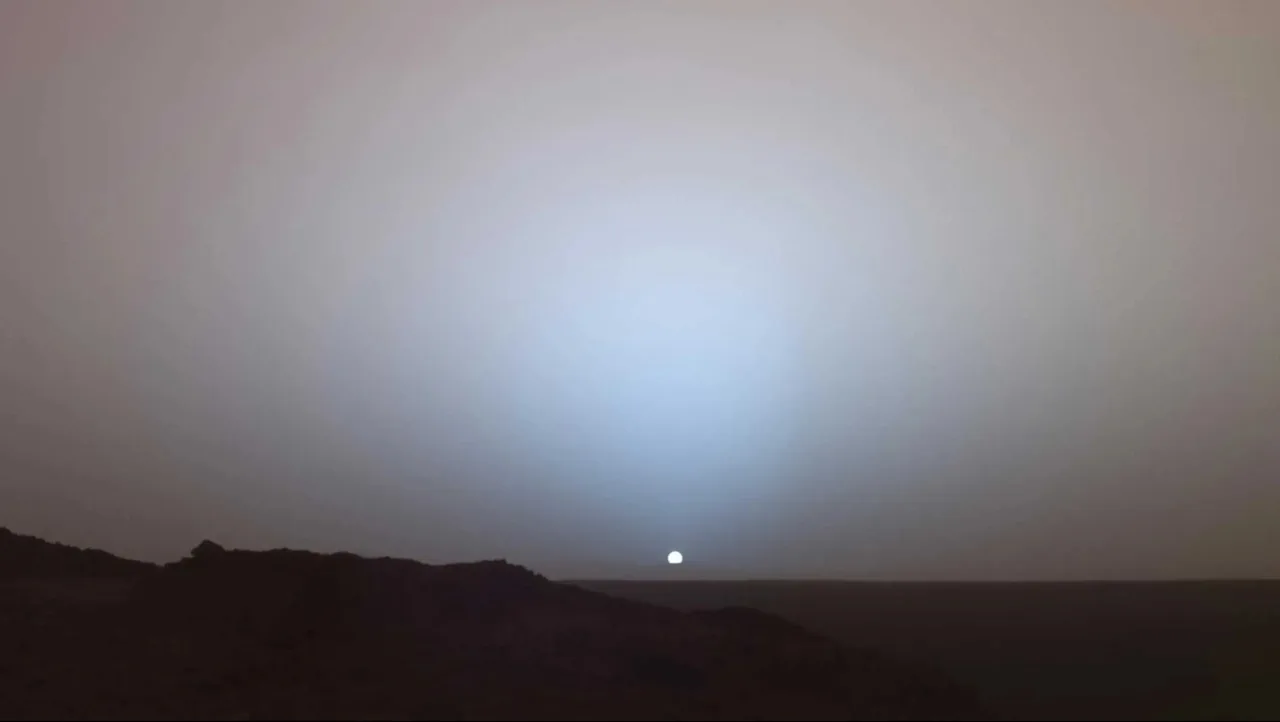
This image, taken by NASA's Spirit rover in 2005, shows a sunset on Mars.

4 / 6
Dust that could kill
IMAGE SOURCE: NASA

Dust that could kill

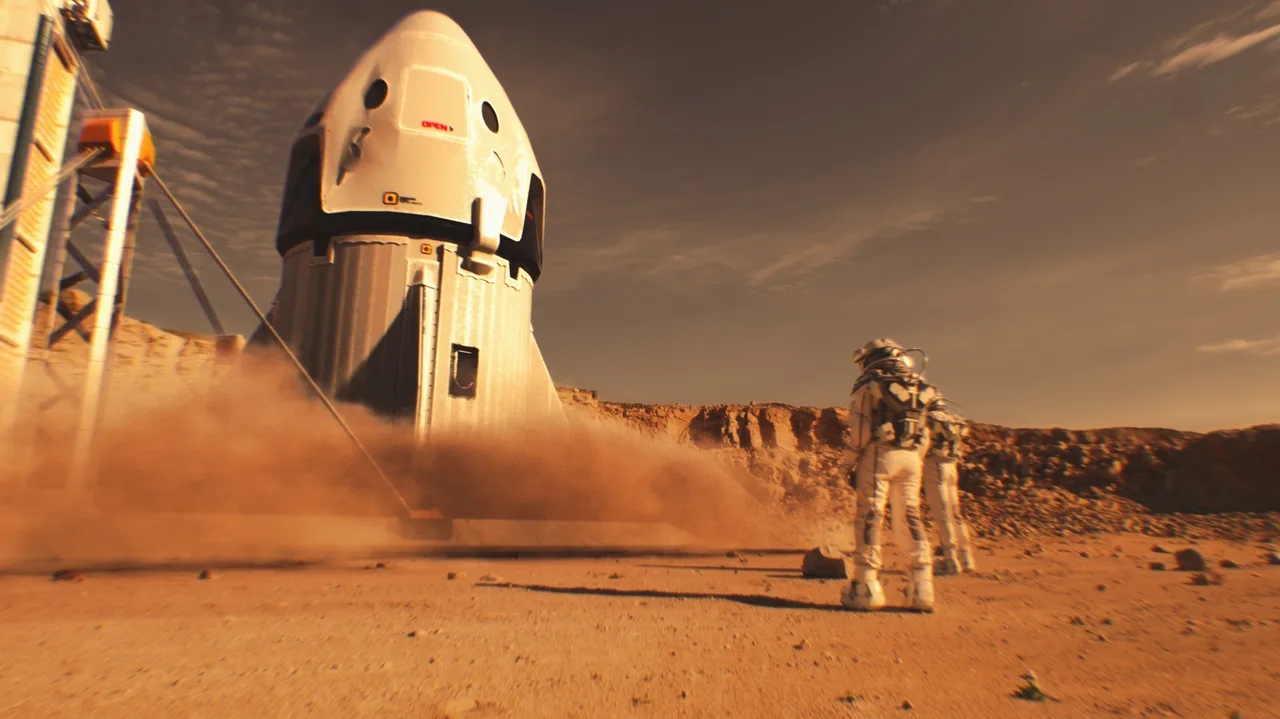
On Earth, dust is largely considered harmless, but on Mars, it can prove deadly. Even when storms aren't engulfing the entirety of the planet, the dust itself is inherently dangerous. While Martian wind provides some tumbling, without water to extensively weather the grains of minerals, the dust remains highly abrasive. The particles also carry strong electrostatic charges, making them stick to surfaces such as spacesuit fabric and human-made infrastructure. Beyond making everything dusty, these fine particles pose a much more sinister risk: they act as a harsh abrasive, mechanically chewing through spacesuit seals, air filtration systems, and critical equipment. Furthermore, Martian dust is laced with toxic chemicals like perchlorates. Not only is this risk external, but studies also suggest that inhaling these fine, toxic particles inside habitats can result in severe degradation of human respiratory systems. Consequently, learning to manage Martian dust is a critical issue that needs to be solved before humankind can think of establishing any sort of long-term presence on the Red Planet.

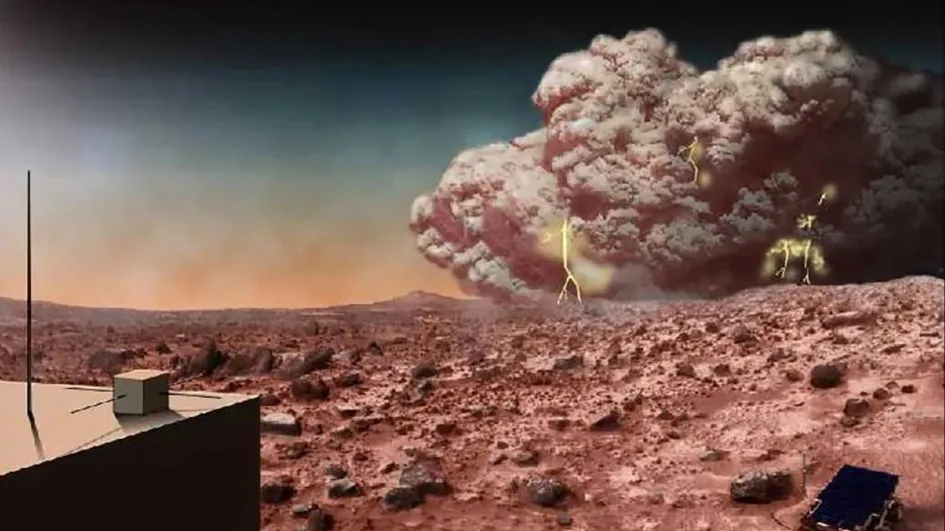
The image is an artist's concept illustrating a Martian dust storm, which might also crackle with electricity.

5 / 6
Gravity (or lack of it) can be a silent killer
IMAGE SOURCE: VICTOR HABBICK VISIONS/SCIENCE PHOTO LIBRARY/GETTY IMAGES

Gravity (or lack of it) can be a silent killer

Whereas gravity on Earth helps us develop strong musculoskeletal structures, the gravitational environment on Mars can be punishing. Martian gravity is roughly 38 percent of Earth's, and long-term exposure to this 0.38 g environment has the potential to lead to long-term health risks. A recently published study exploring this very topic found that muscles atrophy at levels lower than 0.67 g, making the Martian environment far from conducive for a human stay. Not only does this highlight risks to adult humans traveling to Mars, it also raises serious questions about the plausibility of long-term presence and colonization, with very little research available on the effects of low gravity on fetal development and birth.

6 / 6
Wild temperature fluctuations
IMAGE SOURCE: NASA/JPL-CALTECH/MSSS

Wild temperature fluctuations

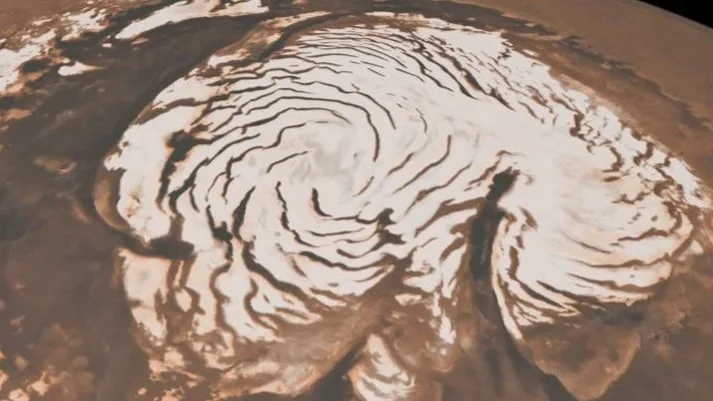
While surface temperatures on Mars can reach a comfortable 20 degrees Celsius in peak summer, the Red Planet is far from a temperate paradise. Due to its extremely thin atmosphere—roughly 100 times thinner than Earth's—Mars cannot trap daytime heat, and as a result, sees wild temperature swings. Temperatures on the Red Planet can change by as much as 100 degrees Celsius between day and night, something that human infrastructure needs to account for. Such temperature swings on a daily basis can create extreme expansion and contraction stress on habitat structures and infrastructure, putting human colonies at severe risk. Additionally, such temperature extremes also drastically reduce the margin for error: even a small power grid failure during Martian night could potentially cause rapid freezing of water sources, crack structural materials, and cause fatal hypothermia, leading to the rapid collapse of colonies.

This image, combining data from two instruments aboard NASA's Mars Global Surveyor, depicts an orbital view of the north polar region of Mars.

MORE GALLERIES

The Sun's most detailed images yet reveal whirlpools never spotted before 5

The Sun's most detailed images yet reveal whirlpools never spotted before

Sep 10, 2026
Scientists say the universe could tear itself apart. Here's how 6

Scientists say the universe could tear itself apart. Here's how

Sep 10, 2026
The Golden Record: When humanity sent a message specifically for aliens 5

The Golden Record: When humanity sent a message specifically for aliens

Sep 10, 2026
20 unforgettable photos from humanity’s first Moon landing 21

20 unforgettable photos from humanity’s first Moon landing

Sep 9, 2026
Nobel Prize winner now questions the standard model of the universe, says it might be wrong 5

Nobel Prize winner now questions the standard model of the universe, says it might be wrong

Sep 9, 2026
Strange repeating radio signal from deep space case finally cracked; Here's what it is 5

Strange repeating radio signal from deep space case finally cracked; Here's what it is

Sep 8, 2026
Is the 'empty' space in our universe really empty? Here's what a new study found 5

Is the 'empty' space in our universe really empty? Here's what a new study found

Sep 7, 2026
Could we ever reach a parallel universe? Here's what physicists really think 5

Could we ever reach a parallel universe? Here's what physicists really think

Sep 7, 2026
A 'skull' rock on Mars? The eerie formation NASA can't yet explain 5

A 'skull' rock on Mars? The eerie formation NASA can't yet explain

Sep 5, 2026
Did our universe begin inside a quantum multiverse? One physicist thinks so 5

Did our universe begin inside a quantum multiverse? One physicist thinks so

Sep 5, 2026
330 million light-years of darkness: The mystery of The Great Nothing—the Boötes Void 5

330 million light-years of darkness: The mystery of The Great Nothing—the Boötes Void

Sep 5, 2026
What if Earth-like planets existed before the first galaxies? Scientists have an answer 4

What if Earth-like planets existed before the first galaxies? Scientists have an answer

Sep 4, 2026
Strange 'spiderweb' formations spotted on Mars: NASA explains what's really going on 5

Strange 'spiderweb' formations spotted on Mars: NASA explains what's really going on

Sep 3, 2026
What if black holes are actually doorways to another universe? 6

What if black holes are actually doorways to another universe?

Sep 3, 2026
What if the universe is a loop? This study suggests the Big Bang may not have been the beginning 5

What if the universe is a loop? This study suggests the Big Bang may not have been the beginning

Sep 3, 2026
‘Time mirrors’ are actually real: physicists confirmed a 65-year-old theory in a new study 6

‘Time mirrors’ are actually real: physicists confirmed a 65-year-old theory in a new study

Sep 2, 2026
September 2026 skywatching guide: Planetary conjunctions, Full Harvest Moon, and more 7

September 2026 skywatching guide: Planetary conjunctions, Full Harvest Moon, and more

Sep 2, 2026
Is the universe really infinite, or is there an end? Oxford astrophysicist explains 5

Is the universe really infinite, or is there an end? Oxford astrophysicist explains

Sep 1, 2026
Could the universe be a living thing? Here's what scientists think 5

Could the universe be a living thing? Here's what scientists think

Aug 31, 2026
Why is the night sky dark if the universe is full of stars? Neil deGrasse Tyson explains 6

Why is the night sky dark if the universe is full of stars? Neil deGrasse Tyson explains

Aug 31, 2026
Starlust.org is part of the Scale Content Inc. publishing group.

Google Source

About Us
Editorial Guidelines
Privacy Policy
Cookie Policy
Terms of Use
Contact Us
Link to Facebook
Link to Instagram

© Scale Content Inc. 1178 Broadway, 3rd Floor #3469, New York, NY 10001, United States