Fastest star in the Milky Way: Record-breaking star orbits supermassive black hole at 15,500 miles per second
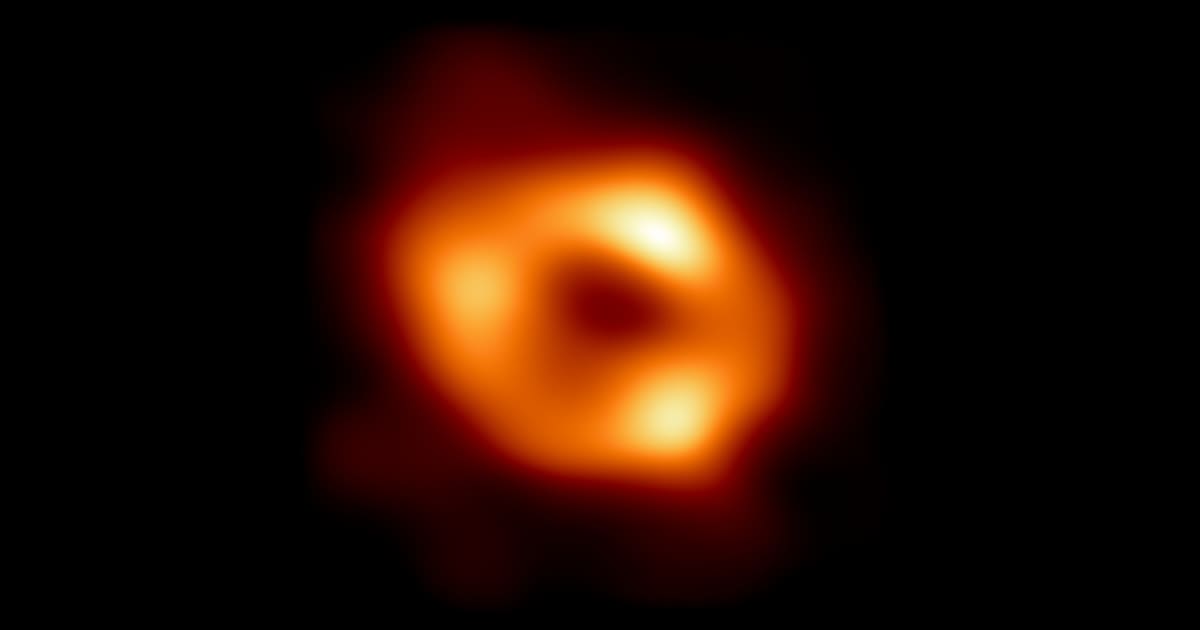
A team of astronomers has discovered the fastest-orbiting star in the Milky Way, which is currently racing around the supermassive black hole Sagittarius A* at the very center of our galaxy. Designated S301, this star comes closer to the galactic center's black hole than any other known object. The discovery is crucial as this extreme proximity could help scientists directly measure a black hole's rotation for the very first time. In a study published in the journal Nature, researchers noted that the star travels at over 15,500 miles per second (25,000 km/s) around the black hole, passing roughly 1.8 billion kilometers from it at its closest approach—a gap equating to just 12 times the distance between Earth and the Sun.
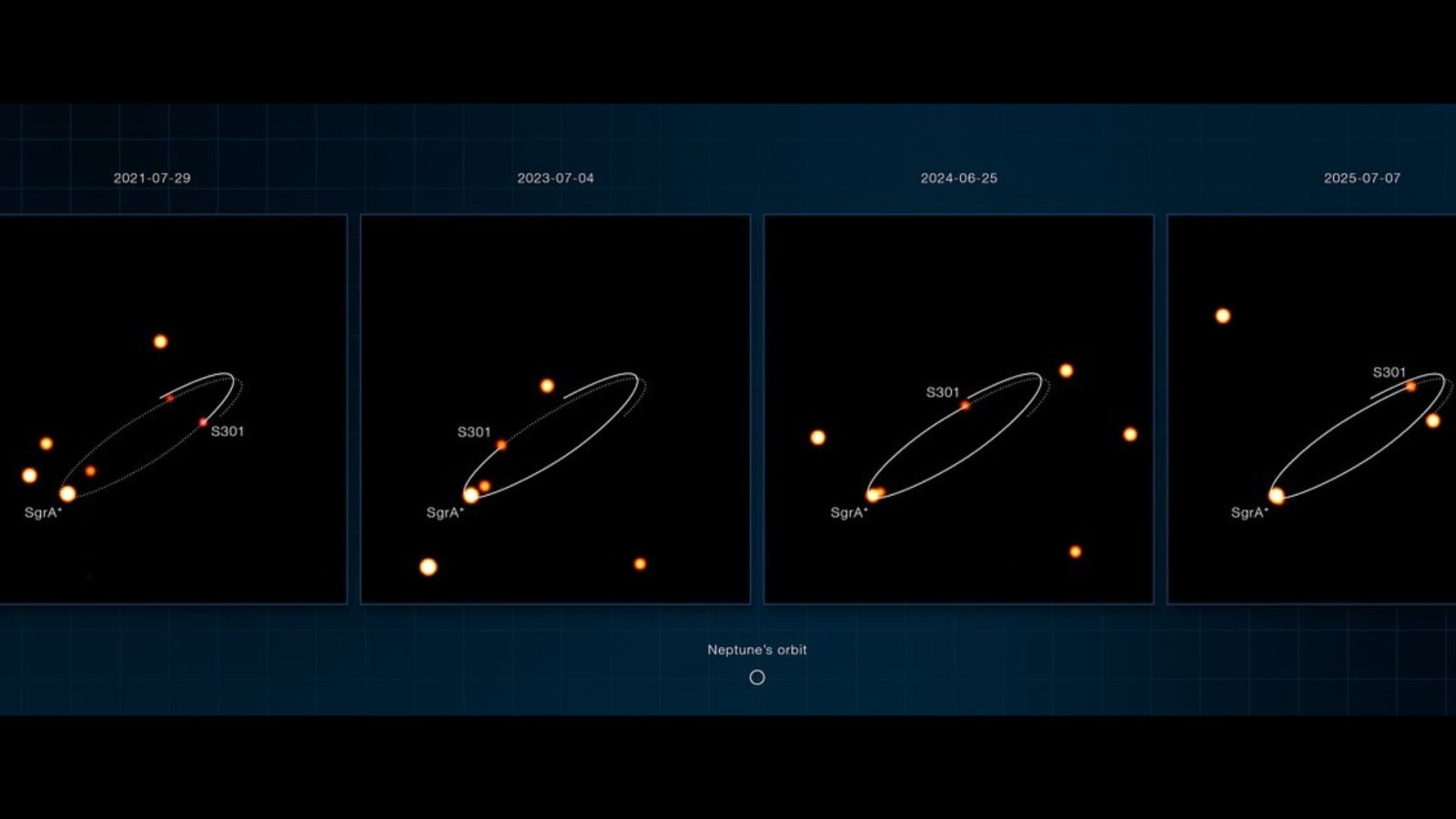
“What is special about this star is that it’s orbiting Sagittarius A* on a very tight orbit, taking just 8.7 years to complete it, and is approaching the black hole at a mere 12 times the distance of Earth to the Sun. That is unprecedented,” study author Felix Mang, a PhD student at Germany’s Max Planck Institute for Extraterrestrial Physics (MPE), said in a statement.
Nobel Prize winner Reinhard Genzel, the MPE Director and a founding member of the collaboration that made the observations, says that “S301 opens a new window to the fundamental properties of spacetime in this extreme black-hole environment.” Astronomers hope this discovery will also help test Einstein’s General Theory of Relativity. According to the theory, a spinning black hole actually drags the fabric of spacetime along with it as it rotates—a phenomenon known as frame-dragging, or the Lense-Thirring effect. This stretching and twisting of spacetime should leave a measurable impact on the orbit of any star venturing close enough to feel it.
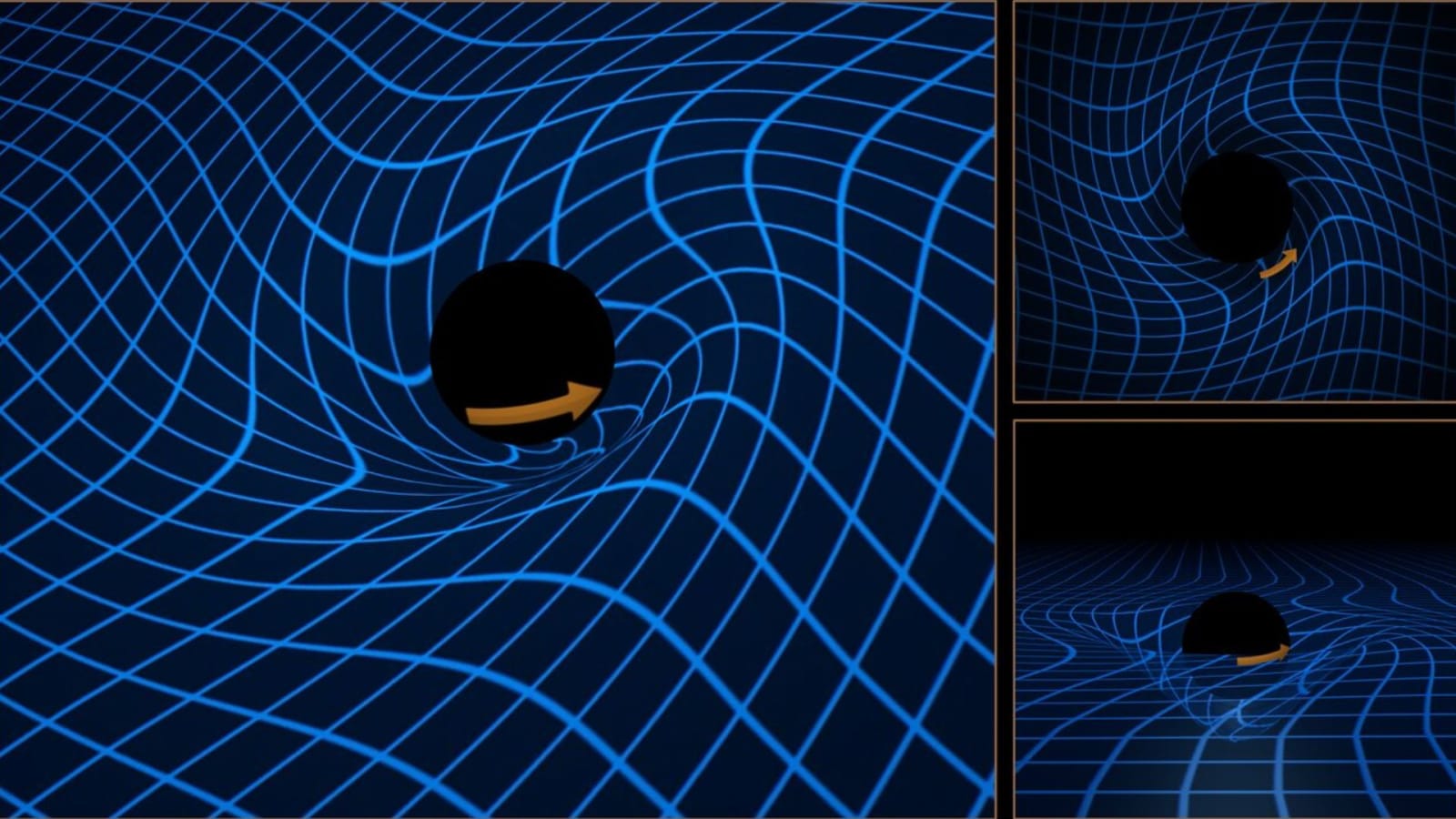
“With this star we hope to measure, within the next 10 years, the spin of the black hole," Mang noted. “For the first time, we would actually be able to measure very directly the spin of a massive black hole, which would be a key test of Einstein’s theory,” added MPE researcher and study co-author Stefan Gillessen.
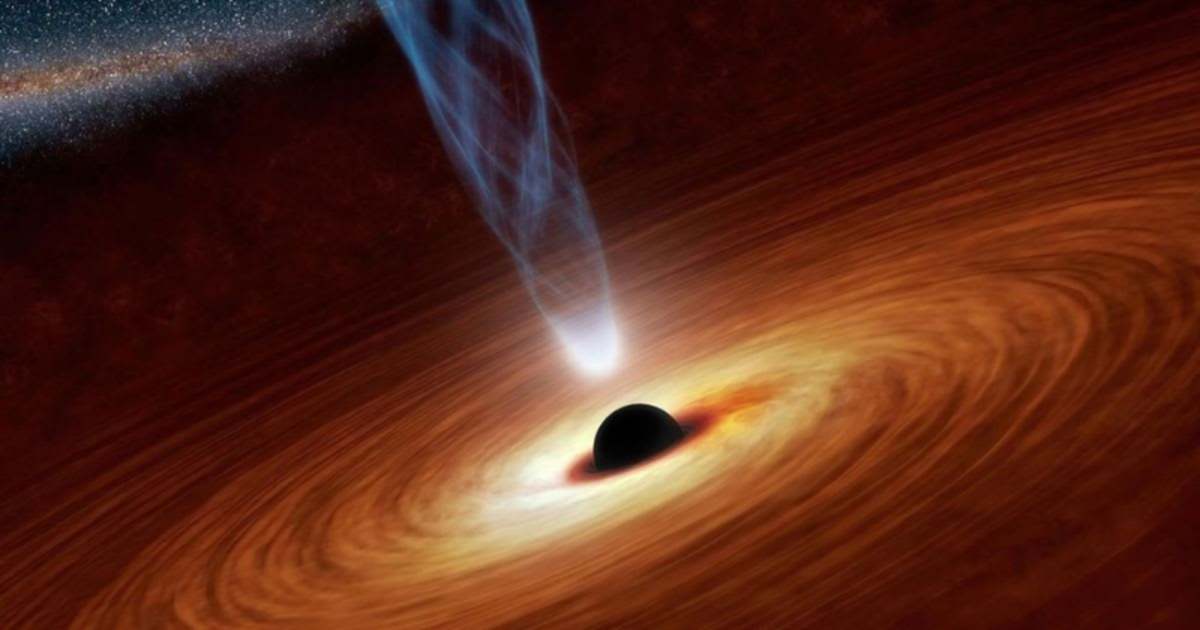
The star was discovered using the European Southern Observatory’s Very Large Telescope Interferometer and the GRAVITY+ instrument, helping confirm that S301 made its most recent close approach to Sagittarius A* in 2023. The star itself is incredibly dim—two billion times fainter than the red supergiant Betelgeuse—and scientists believe it was once part of a binary pair. The immense tidal forces of Sagittarius A*, which is four million times more massive than the Sun, likely tore that pair apart. The violent separation captured S301 while kicking its companion completely out of the galaxy. S301 is predicted to make its next close passage to the black hole in late 2031. Astronomers plan to conduct follow-up observations using ESO’s upcoming Extremely Large Telescope—which is currently under construction and slated to reach first light before the end of this decade—hoping that tracing the star's path across two full orbits will finally allow them to determine the spin of the monster at the heart of our galaxy.
More on Starlust:
NASA's James Webb makes first discovery of three supermassive black holes in a single galaxy