First US private spacecraft to reach lunar orbit completes mission. Here's why it matters for Artemis
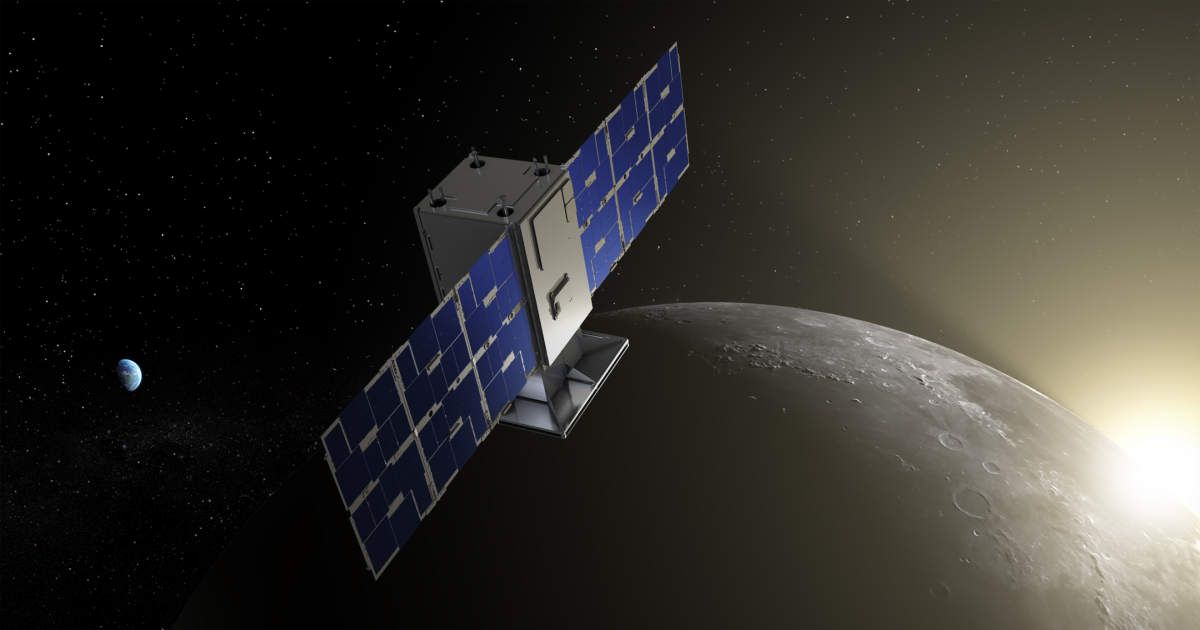
CAPSTONE, the first-ever spacecraft operated by a private company to enter lunar orbit, completed an extended mission in June 2026, NASA announced in a July 6 statement. Advanced Space, a Colorado-based company, owns the CubeSat and operates it on behalf of NASA. The aim of extending the mission was to test out advanced communications, networking, autonomous navigation, and software-defined satellite technologies. This extension followed a six-month primary mission that successfully characterized a near-rectilinear halo orbit (NRHO)—a highly stable, unique lunar orbit that had never been flown before.
NASA's CAPSTONE completes its mission testing new technologies around the Moon.
— NASA Ames (@NASAAmes) July 6, 2026
From being the first spacecraft to verify a unique lunar orbit for science and exploration missions to serving as a testbed for cutting edge communication and autonomous navigation tools, CAPSTONE… pic.twitter.com/V32k89hjjp
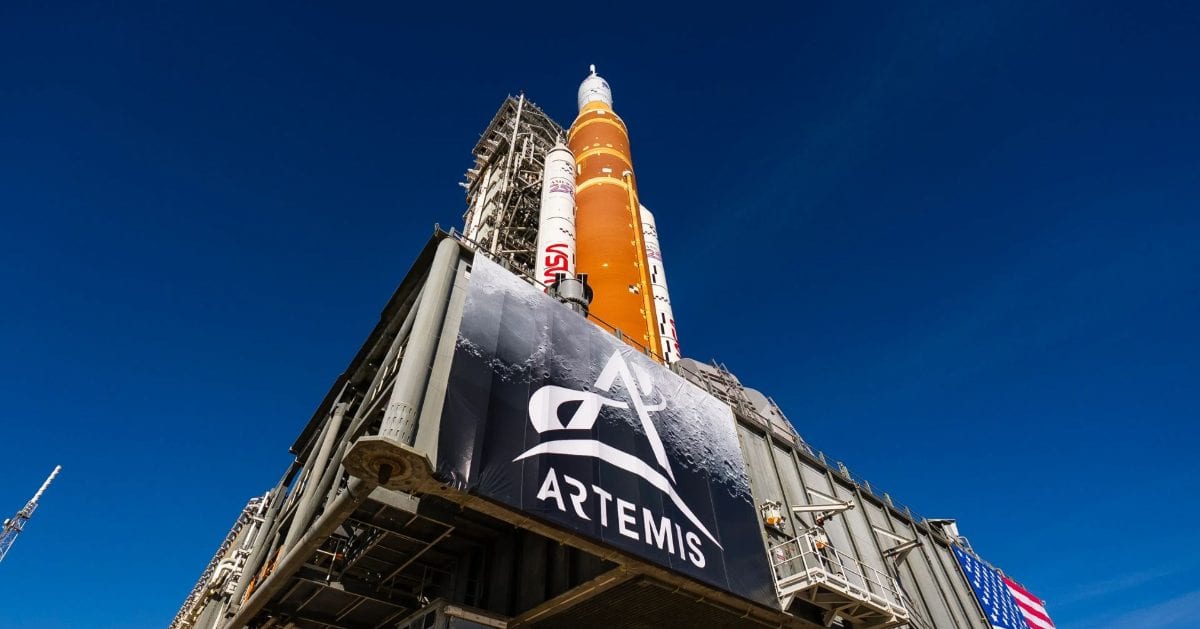
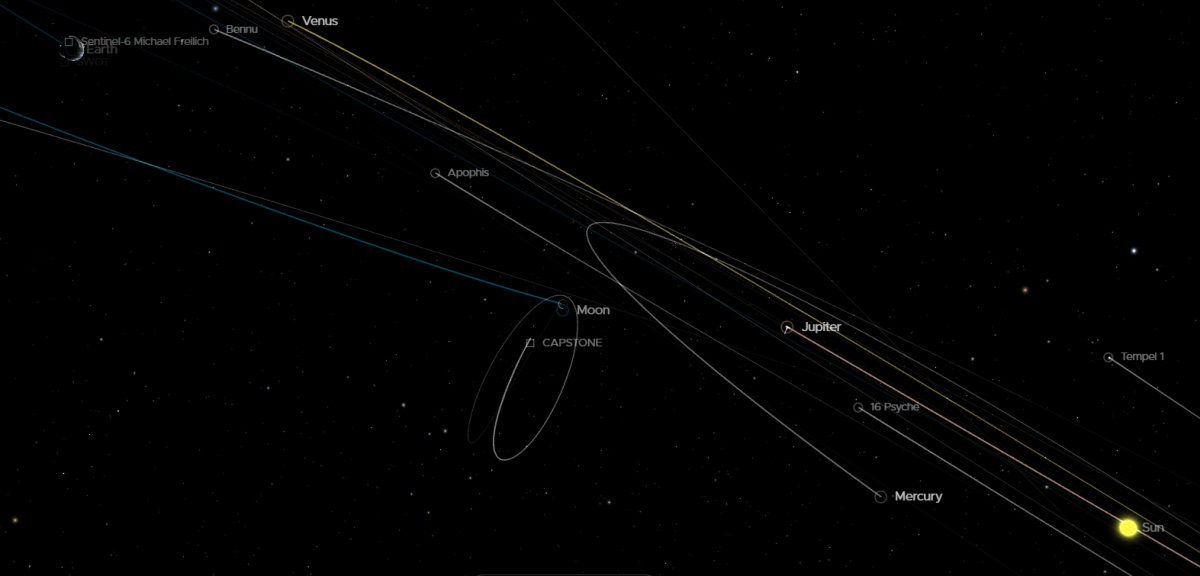
Launched in June 2022 on top of Rocket Lab’s Electron rocket from New Zealand, CAPSTONE's name is an acronym that stands for Cislunar Autonomous Positioning System Technology Operations and Navigation Experiment. During its extended run, CAPSTONE tested autonomous navigation and its ability to communicate through intermittent signal loss. According to NASA, this 15-month extension proved that existing hardware can host entirely new applications long after a spacecraft reaches its intended orbit. The spacecraft had reached NRHO in November 2022 after a four-month voyage that kept use of thruster fuel to a minimum, taking advantage of the gravity of Earth, the Moon, and the Sun. After a brief orbital insertion burn, CAPSTONE entered NRHO, which is prized for being a very fuel-efficient orbit for long-term operations. This precise path was originally chosen by NASA for the now-cancelled Lunar Gateway outpost. While Gateway is no longer part of the current mission plan, CAPSTONE still serves as a crucial pathfinder preceding the revised Artemis plans.
MISSION UPDATE: #CAPSTONE is now in the operational phase of its pathfinding mission around the Moon!
— NASA Ames (@NASAAmes) November 21, 2022
As the first spacecraft to fly this ellongated orbit around the Moon known as NRHO, learn how CAPSTONE is forging a path for future #Artemis missions: https://t.co/NlijGL2gbd pic.twitter.com/FQDXTW3CeV
Whenever spacecraft enter low lunar orbits, they typically face a communication blackout while passing over the Moon's far side. A major advantage of an NRHO is that it maintains a constant line of sight with Earth, allowing for near-continuous communication. During the recent Artemis II mission in April 2026, NASA's Deep Space Network antennas were heavily occupied in maintaining communications with the crew and the Orion spacecraft, Integrity. This lack of bandwidth gave CAPSTONE the perfect opportunity to test the first of the two extended-mission experiments. With communications throttled down to just a few passes per week, the CubeSat relied on an onboard program called the autonomous Navigation, Guidance, and Control software (autoNGC). To determine its trajectory without Earth's help, CAPSTONE used a star tracker camera to map the positions of the Moon, Earth, and other celestial bodies. Incredibly, this onboard optical system often performed better than traditional ground-based navigation.
The second demonstration tested a delay/disruption tolerant networking (DTN) protocol, an architecture designed to guarantee data transmission despite severed connections. During this experiment, engineers intentionally cut the connection before a data transfer was complete. Instead of dropping the file, the CubeSat stored the unsent data until the next communication window opened and automatically resumed the transfer. Every byte made it home. This marks the first time a DTN protocol has been used beyond Earth orbit, and the first time it has run natively in NASA’s core Flight System (cFS)—a versatile, open-source software framework used across multiple missions.
Speaking on what these technology demonstrations could mean for astronauts when they land on the Moon with Artemis IV and V, Ben Anderson, a systems engineer for the Near Space Network at NASA’s Goddard Space Flight Center in Greenbelt, Maryland, stated, "You can imagine an astronaut walking behind a lunar hill or descending into a crater and temporarily losing connectivity. This technology allows that data to be automatically re-transmitted once communications are restored." CAPSTONE will now continue to function as a platform to test new technologies for Advanced Space. NASA's cost-effective approach of repurposing existing hardware for software demonstrations and upgrades has also been successful on Mars—recently, engineers gave the Perseverance rover the ability to autonomously pinpoint its location by running new software through its Helicopter Base Station, the dormant, high-speed onboard processor originally used to communicate with the retired Ingenuity helicopter.
More on Starlust:
NASA's Lunar Gateway controversy grows as module manufacturer downplays Isaacman's corrosion claims
NASA resets Artemis roadmap, shifts Artemis III from crewed lunar landing to Earth-orbit test