ESA's asteroid surveyor Hera completes second braking maneuver just days before closest approach
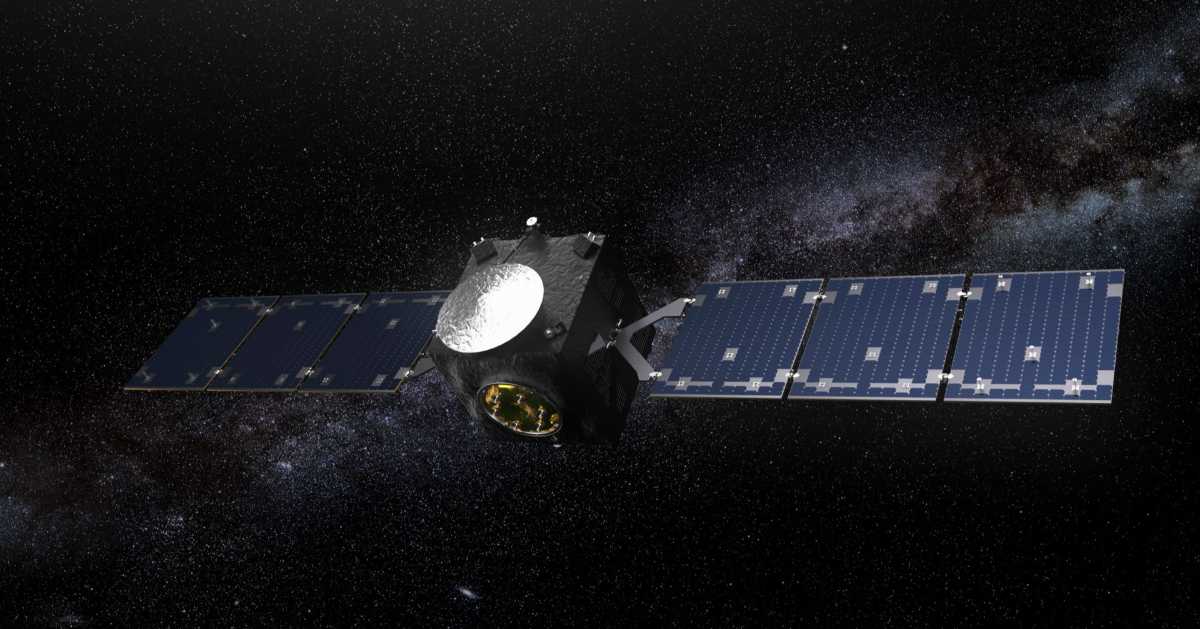
The Hera spacecraft has successfully completed its second braking maneuver, the European Space Agency (ESA) announced on October 23, as it prepares to arrive at a binary asteroid system. The agency shared that with the 31-minute thruster firing, Hera reduced its relative velocity by 70 meters per second and is now cruising at 20 meters per second. The spacecraft is on its way to Dimorphos, a space rock (160-170 meters) which orbits a bigger asteroid named Didymos. Its mission is to survey Dimorphos which was struck by NASA’s Double Asteroid Redirection Test (DART) spacecraft in 2022.
Hera’s second braking manoeuvre yesterday proved successful, reducing the spacecraft’s velocity relative to the Didymos and Dimorphos system by 70 m/s from a distance of 2300 km away. Some 90% of the 31-minute thruster firing took place in the early morning, followed by a cross-check of performance, with the remaining 10% occurring that afternoon. Hera is now moving at 20 m/s relative to the asteroids; a trio of smaller ‘transition’ manoeuvres this coming week will reduce Hera’s relative velocity down to near zero. https://t.co/c86qqtZszi
— ESA's Hera mission (@ESA_Hera) October 23, 2026
“Hera’s second braking manoeuvre yesterday proved successful, reducing the spacecraft’s velocity relative to the Didymos and Dimorphos system by 70 m/s from a distance of 2300 km away,” ESA said in an update shared on X. “Some 90% of the 31-minute thruster firing took place in the early morning, followed by a cross-check of performance, with the remaining 10% occurring that afternoon.” It further said that a trio of smaller ‘transition’ maneuver are planned this coming week that will reduce Hera’s relative velocity down to near zero. The latest braking maneuver marked the second one this month. The last one was conducted on October 15 for a total of 93 minutes continuously. Braking of a spacecraft is necessary because they travel at high speeds when approaching the target and slowing it down ensures that a probe matches the target’s velocity and allows a smooth rendezvous.
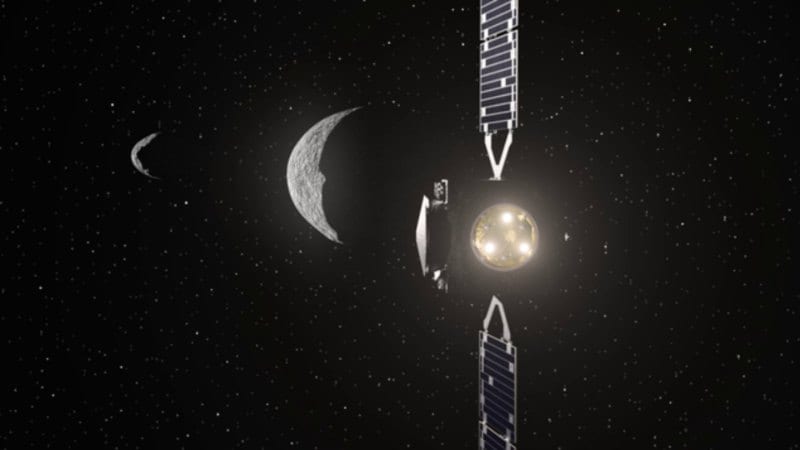
Hera is expected to arrive at Dimorphos in November and begin the ‘early characterization phase’ to gather data on the asteroids’ size, shape, and other aspects from a distance of 15.5-18.5 miles. This will be followed by a ‘detailed characterization phase’ and the release of two CubeSats ‘Juventas’ and ‘Milani’ that will carry out complementary investigation of the asteroids. ESA says that both will land on Dimorphos once their scientific goals are achieved whereas the mission team is still deciding on whether Hera should make a touchdown. None of these three are specifically designed for landing.
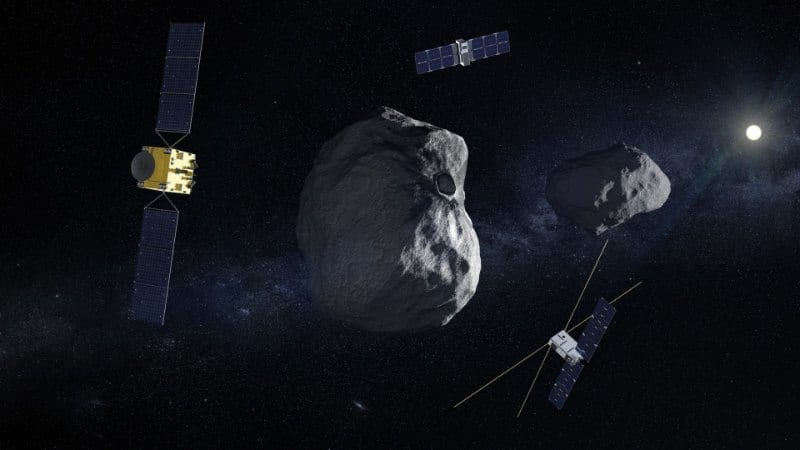
In the ‘close observation phase,’ Hera will move to less than 3 miles from Dimorphos and eventually fly less than a mile away in the ‘experimental phase.’ The spacecraft consists of a total of 12 instruments including the ones on the CubeSats. Together they will carry out tasks such as taking high-resolution images and measuring temperature on Dimorphos's surface, measure its gravity and study its mineralogy among other things. It will also demonstrate multiple new technologies in deep space. DART was launched with the objective to test whether an impactor can change the path of an asteroid—a major planetary defense technique that could be used if a planet-killing space rock heads towards Earth. Hera will not only shed more light on the aftermath of DART’s impact but also make major contributions to asteroid science by characterizing the smallest asteroid ever visited.
More on Starlust
ESA’s Hera spacecraft gets first glimpse of target asteroid Didymos that was hit by NASA