ESA mission to study Didymos: Hera approaches DART target, prepares for 93-minute deceleration burn
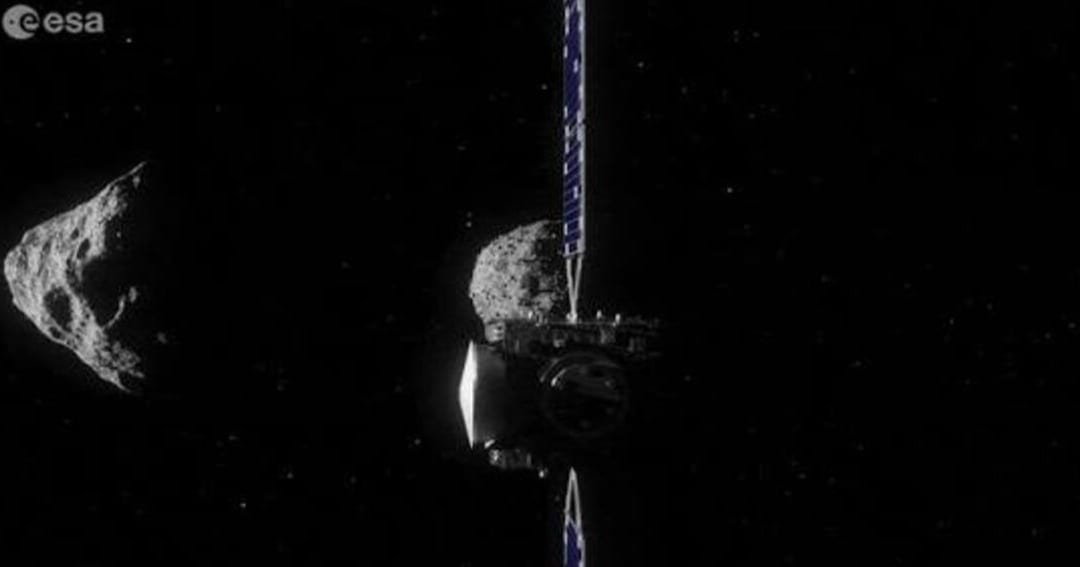
When approaching their target, spacecraft often need to apply the "brakes"—and and the European Space Agency (ESA) planetary defense mission Hera is about to do exactly that. On October 15, Hera's thrusters will fire for 93 minutes, or about 1.5 hours, to slow the spacecraft down and help it match the pace of the Didymos asteroid system, where NASA's DART spacecraft made its historic impact.
Why does Hera need to slow down?
Hera is moving at more than 12 km/s relative to Earth, but as the spacecraft approaches the Didymos binary asteroid system, it needs to gradually reduce its speed. The mission's goal is not just to reach the system, but for Hera to come close to the orbital velocity of the Didymos system, so that it can make important scientific observations of Didymos and its moonlet, Dimorphos.
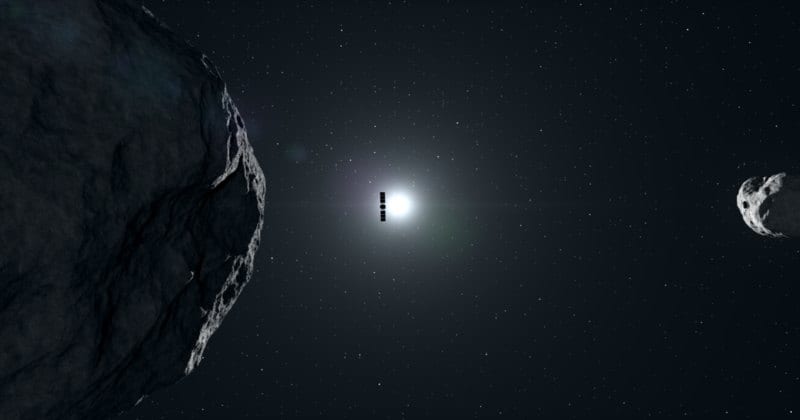
During this burn, Hera will point its Orbit Control Thrusters toward the asteroid system and fire them continuously for 93 minutes. This will significantly reduce the probe's relative speed, allowing it to safely rendezvous with the Didymos system. A week later, a shorter burn will take place to fine-tune Hera's adjusted orbit.
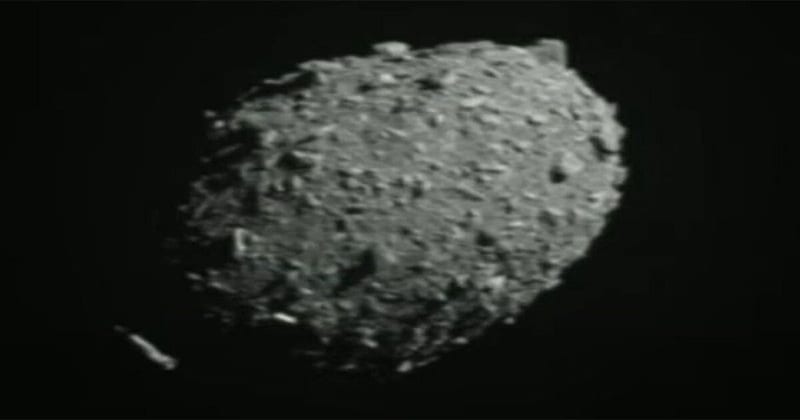
However, the difficulty is not just calculating Hera's speed or position. As Hera gets closer to the asteroid system, ESA's Flight Dynamics team also has to estimate the state of the asteroid system, including the rotation and orbit of the asteroids and their respective masses.
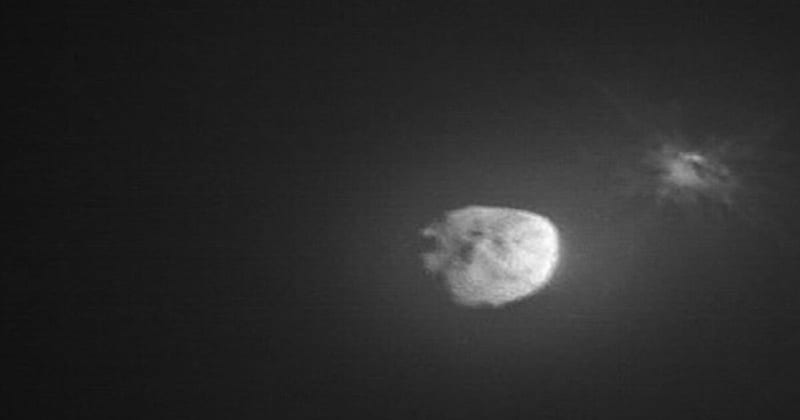
"Over the course of Hera's approach, in addition to estimating Hera's orbit, the state of the asteroid system will also be estimated: this includes the orbit of the system within the Solar System, the relative orbit of the main asteroid Didymos and its moon Dimorphos, the rotational state of these asteroids as well as related parameters such as the masses of the asteroids," ESA Flight Dynamics engineer Michael Muller said.
How will ESA track Hera and the asteroids?
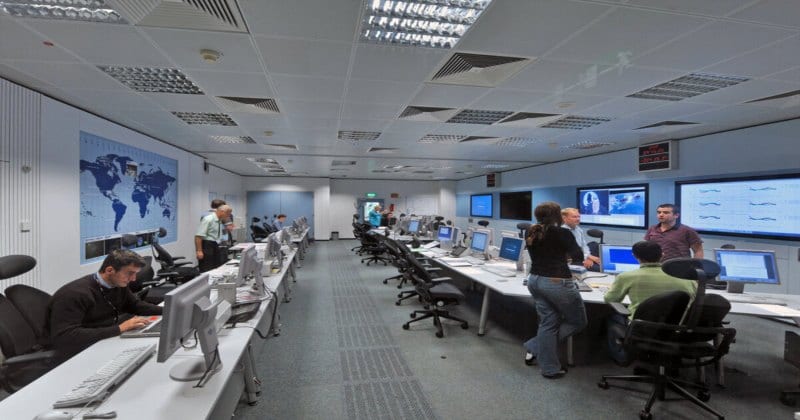
To estimate the state of Hera and the asteroid system, ESA's Flight Dynamics team will use different datasets gathered from the spacecraft. They will analyze the radio signals exchanged between Hera and ground stations, along with the images received from the spacecraft's onboard camera.
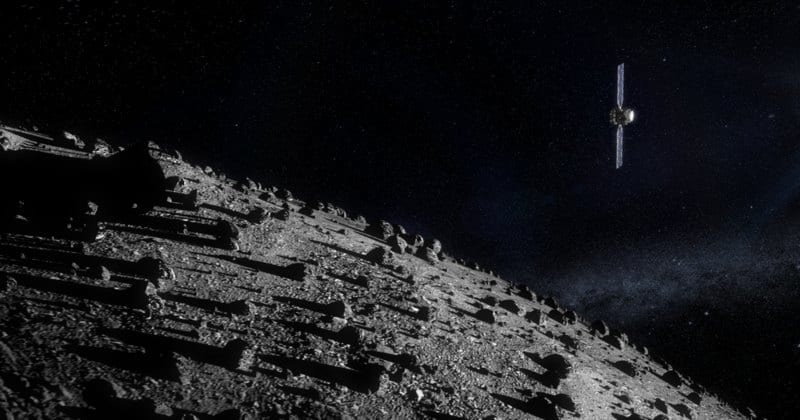
With these radio signals, the team will get information about Hera's movement and distance from Earth. As Hera comes closer to the asteroids, the images from its camera will become increasingly important because they will contain surface features that can be used as reference points to study the asteroids.
What surprises could Hera encounter at Dimorphos?
Dimorphos's exact condition is not completely clear yet. In 2022, NASA's DART spacecraft impacted the asteroid, changing its motion and physical state. Now, as Hera prepares for its close approach, ESA's team will have to find out how much Dimorphos is still tumbling because of the collision and whether any impact debris remains around it. This makes Hera's approach more difficult, as the team cannot know every possible condition it may encounter beforehand.
ESA Flight Dynamics engineer Michael Muller said, "There’s a lot of uncertainty, especially in terms of the asteroid’s degree of tumbling due to the collision. We cannot simulate all probabilities but have to restrict ourselves to the more likely outcomes. The prospect of some impact debris remaining in Dimorphos’s vicinity has not been entirely ruled out. So potentially there might be surprises ahead, but this is an adventure we’re looking forward to!" Anticipating these post-impact conditions will help the team prepare for what Hera may encounter as it gets closer to Dimorphos.
More on Starlust
NASA's DART created history by altering orbit of asteroid Didymos around the Sun
ESA’s Hera probe to catch up with Didymos, home to the only asteroid ever deflected by humans