NASA's SpaceX Crew-13 mission: How and when to watch astronauts launch towards International Space Station
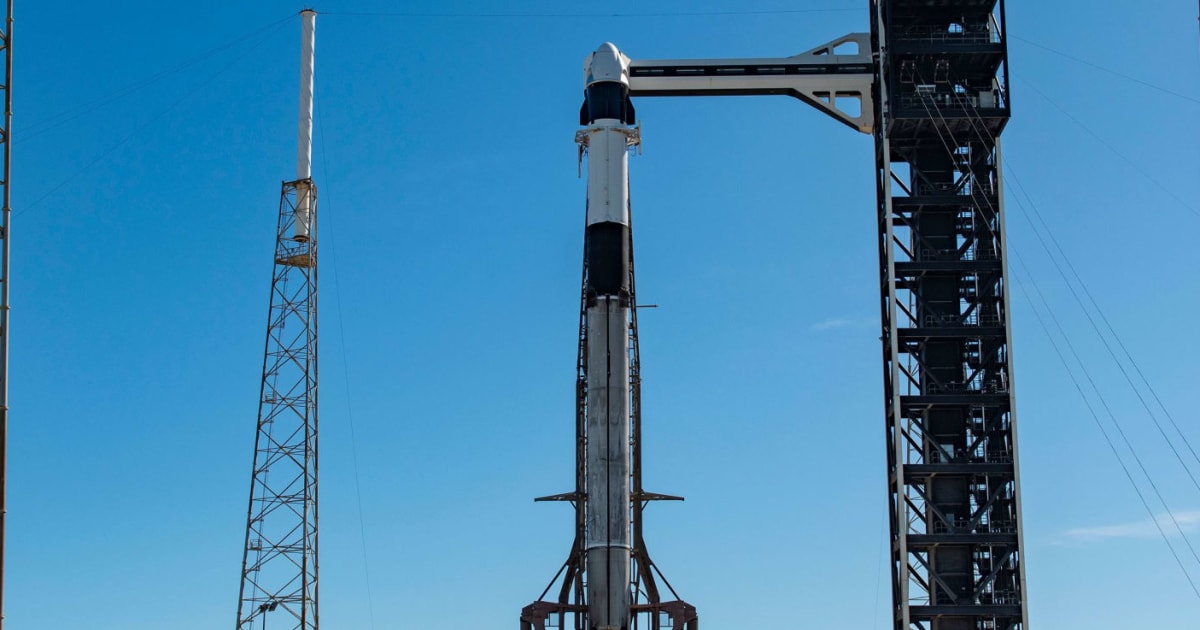
NASA's SpaceX Crew-13 is poised to launch to the International Space Station on October 1. The mission will bring the crew of four to the orbital outpost within nine hours after they launch at 11:10 am EDT on Thursday from Space Launch Complex 40 (SLC-40) at Cape Canaveral Space Force Station in Florida. The members of Crew-13 will be transported inside a Dragon capsule that will launch atop SpaceX's workhorse Falcon 9 rocket. SpaceX has already completed a static fire test of the rocket, which is waiting at the pad. So with liftoff inching closer, let's take a look at how you can catch the action live from the comfort of your homes.
Ahead of @NASA's Crew-13 mission to the @Space_Station, @SpaceX's Falcon 9 and Dragon are standing ready at pad 40 in Florida. Liftoff is scheduled for 11:10 a.m. EDT on October 1; Dragon docks at the ISS around 8 p.m. EDT the same day.
— Starlust (@starlustorg) September 28, 2026
Images by NASA/SpaceX pic.twitter.com/8N3zRNaZYR
How to watch
SpaceX will begin live coverage of the event around an hour prior to the targeted launch time. The company will stream the event through a live webcast, which will be available on SpaceX's website. There is a backup launch opportunity at 10:47 am EDT on Friday, October 2, should the launch be scrubbed on Thursday due to the weather in Florida or any other reason. At the moment, forecasts suggest cloudy and humid weather with a chance of a couple of showers and a thunderstorm. If the launch does take place on Thursday, Dragon's docking with the forward-facing port of the Harmony module is expected around 8 pm EDT.
Global launch and docking timings
The following are the local liftoff and potential docking timings for ten cities around the world. As is with the case with all rocket launches, these timings are dependent upon several factors and could change.
Los Angeles, USA
Launch: October 1, 8:10 am PDT; Possible docking: October 1, 5 pm PDT
Chicago, USA
Launch: October 1, 10:10 am CDT; Possible docking: October 1, 7 pm CDT
London, UK
Launch: October 1, 4:10 pm BST; Possible docking: October 2, 1 am BST
Paris, France
Launch: October 1, 5:10 pm CEST; Possible docking: October 2, 2 am CEST
Cape Town, South Africa
Launch: October 1, 5:10 pm SAST; Possible docking: October 2, 2 am SAST
Dubai, UAE
Launch: October 1, 7:10 pm GST; Possible docking: October 2, 4 am GST
New Delhi, India
Launch: October 1, 8:40 pm IST; Possible docking: October 2, 5:30 am IST
Tokyo, Japan
Launch: October 2, 12:10 am JST; Possible docking: October 2, 9 am JST
Sydney, Australia
Launch: October 2, 1:10 am AEST; Possible docking: October 2, 10 am AEST
Auckland, New Zealand
Launch: October 2, 4:10 am NZDT; Possible docking: October 2, 1 pm NZDT
Welcome to Kennedy, Crew-13! 🚀https://t.co/vMAzBVMBOT pic.twitter.com/TV0pRfPVNb
— NASA's Kennedy Space Center (@NASAKennedy) September 26, 2026
Goal of Crew-13
The four members of Crew-13, who are Roscosmos Sergey Teteryatnikov, NASA astronauts Luke Delaney and Jessica Watkins, and CSA astronaut Joshua Kutryk, will bring the head count on board the space station to eleven. They will become part of Expedition 75. The number will be reduced to seven again after the departure of Crew-12 next month. Crew-13 will help in the advancement of astronaut health studies when operating in the microgravity of space, which in turn will help future crews to the Moon and Mars. NASA is planning to put humans on the Moon, beginning with Artemis IV in 2028.
More on Starlust
Spacesuit checked: NASA’s Crew-12 astronauts wrap up 8-month stay ahead of departure from ISS
Will Starliner get more missions to ISS after 2024 mishap? NASA will answer at live event tomorrow