Earth's protective magnetic field has weakened over South Atlantic, reveals satellite data

New data from the European Space Agency’s Swarm satellite constellation reveal a concerning acceleration in the weakening of Earth's protective magnetic field. Over the past 11 years, a vast region of decreased magnetic intensity over the South Atlantic, known as the South Atlantic Anomaly (SAA), has expanded by an area equivalent to nearly half of continental Europe since 2014, according to the European Space Agency.
🧲 Magnetic Monday 🧲
— ESA's Swarm mission (@esa_swarm) October 13, 2025
Swarm's record-breaking 11 year continuous spaceborne record of Earth's magnetic field shows the South Atlantic Anomaly has increased by an area half the size of continental Europe since 2014.
🔗https://t.co/2SXRutii90 pic.twitter.com/L0xSdfgDNG
The expansion of this vulnerability is critical, as the magnetic field acts as a vital shield against cosmic radiation and charged solar particles. The SAA is already known to pose a significant risk to orbiting technology, exposing satellites that pass through it to higher radiation doses that can trigger hardware malfunctions, damage, and even system blackouts.
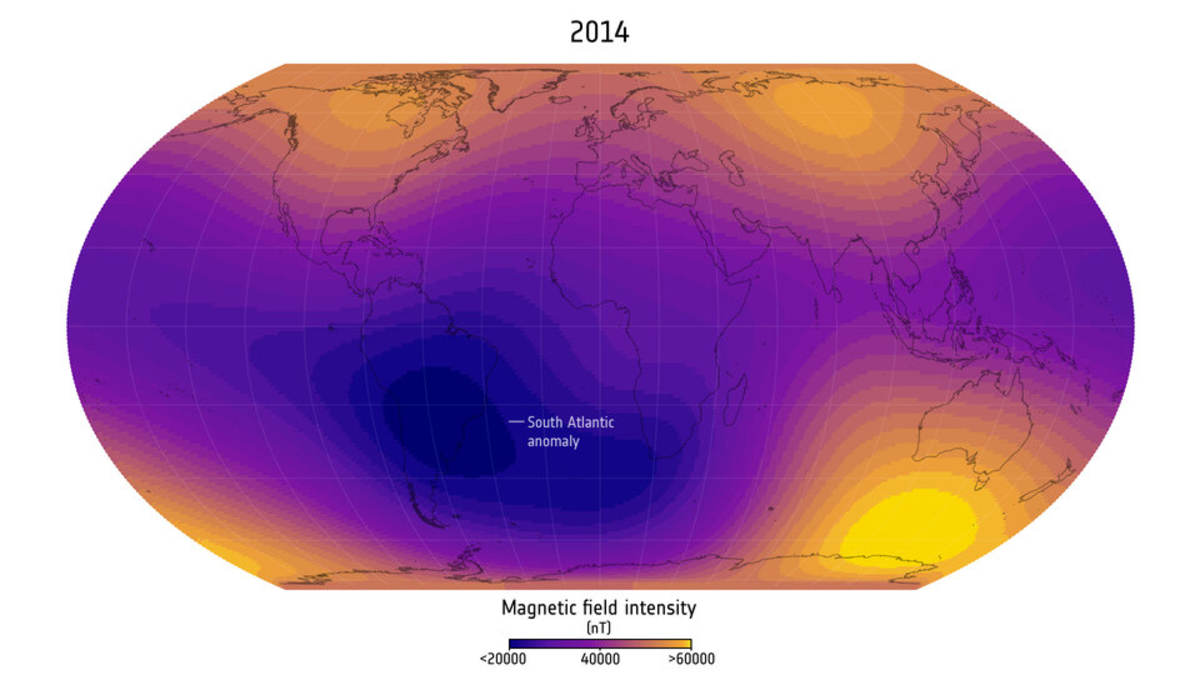
The latest findings, published this month in Physics of the Earth and Planetary Interiors, highlight a troubling new dynamic within the anomaly. While the SAA expanded consistently between 2014 and 2025, scientists have identified a zone southwest of Africa that has experienced a more intense and rapid decay of its magnetic field since 2020.
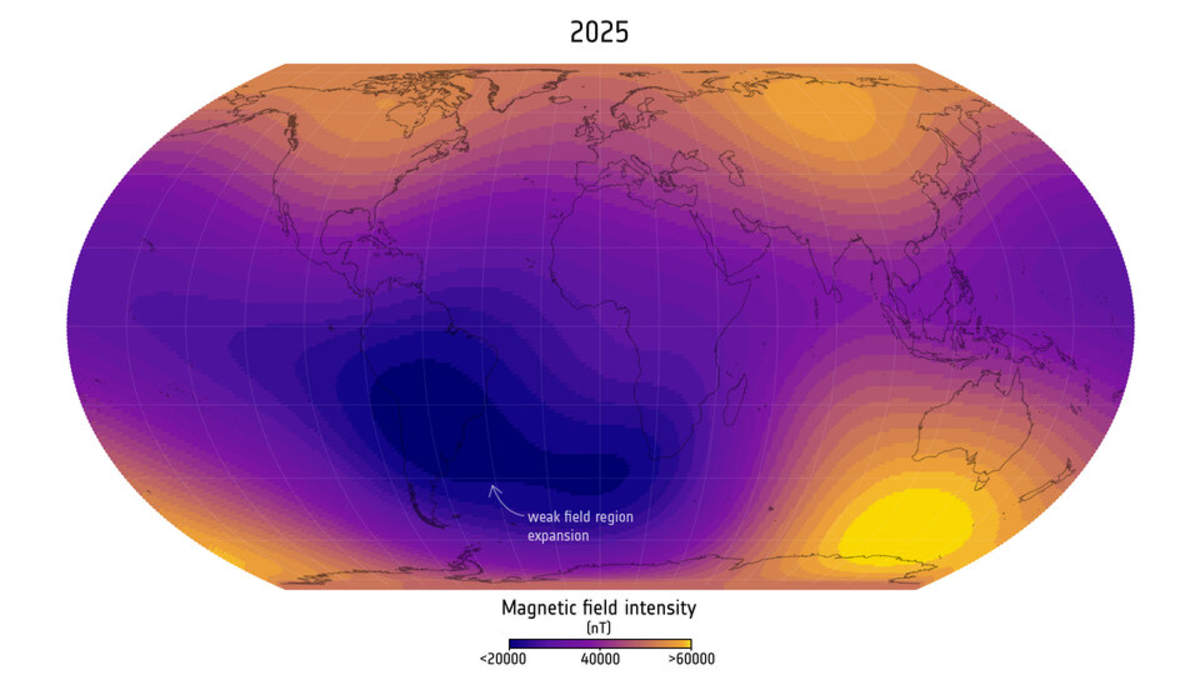
“The South Atlantic Anomaly is not just a single block,” noted lead author Professor Chris Finlay of the Technical University of Denmark. "It’s changing differently towards Africa than it is near South America. There’s something special happening in this region that is causing the field to weaken in a more intense way.” This behavior is linked to "reverse flux patches," anomalous magnetic field patterns at the boundary between the planet's molten outer core and the solid mantle. Professor Finlay explained that in these patches, magnetic field lines, instead of emerging from the core as expected in the Southern Hemisphere, are observed diving back into it. Swarm data show one of these crucial patches is moving westward over Africa, driving the local intensification of the SAA's decay.
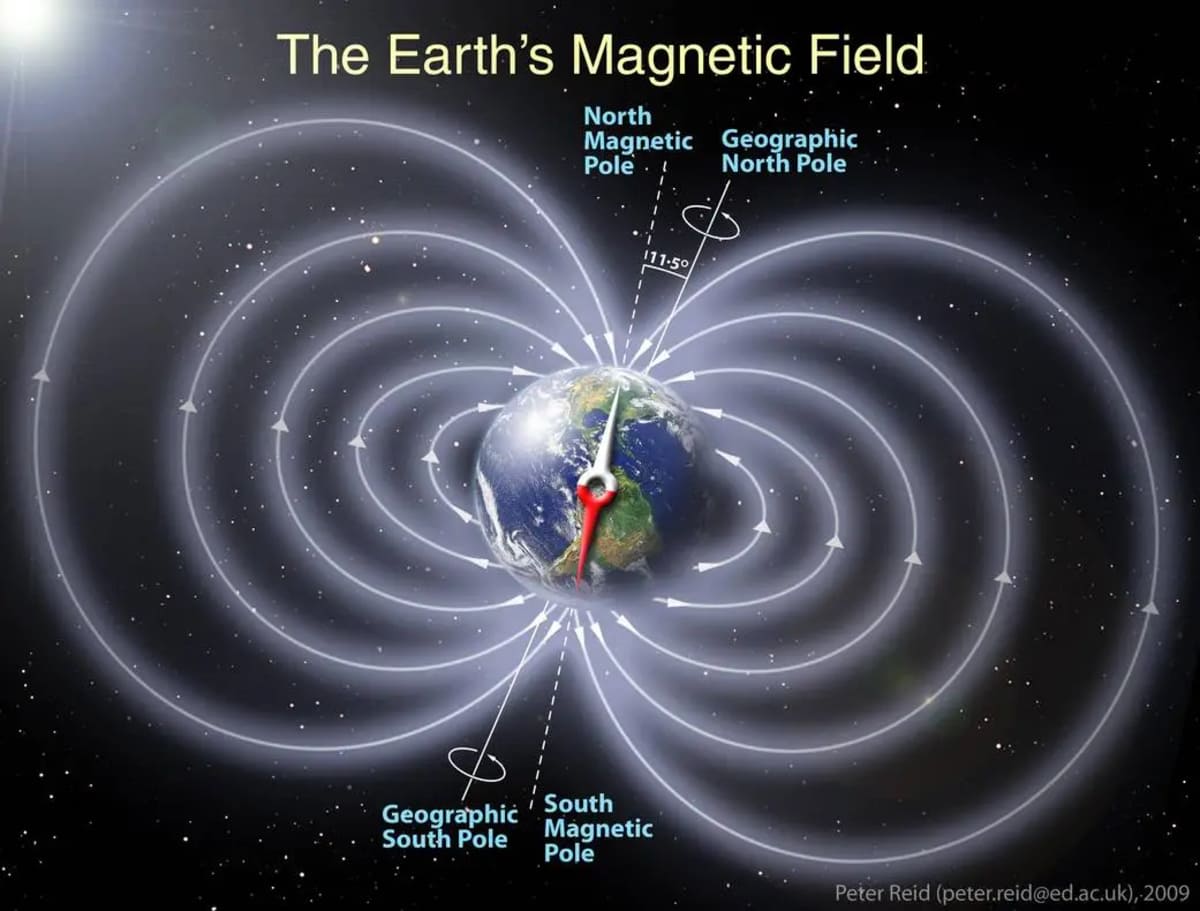
The magnetic field is generated deep beneath the surface by the churning "ocean" of molten iron in the outer core. The 11-year dataset from Swarm, which marks the longest continuous record of magnetic measurements from space, is providing unprecedented insight into these complex core dynamics.
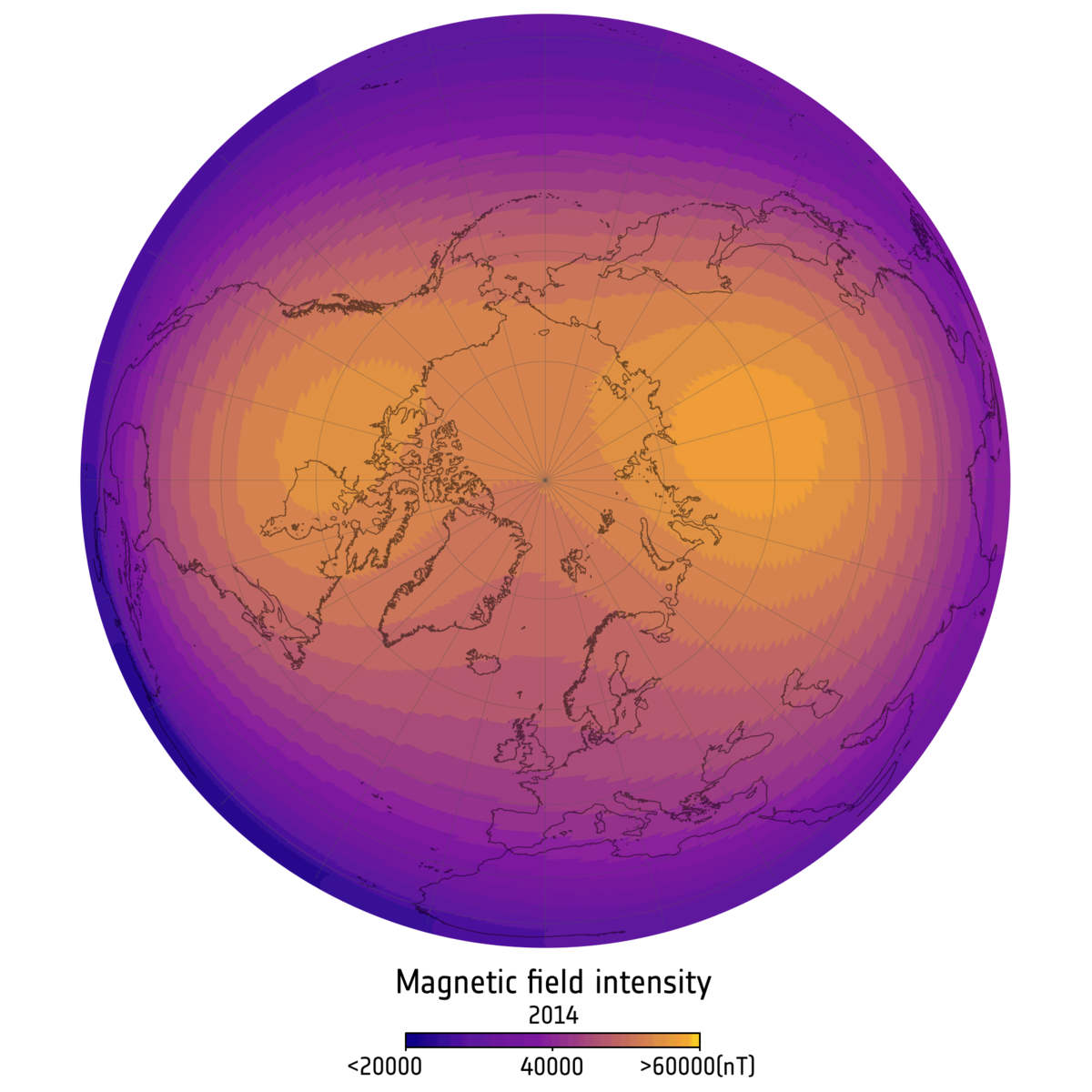
The same forces causing the SAA's growth are also driving major global shifts. For instance, Swarm data show the magnetic strong spot over Siberia has grown while the one over Canada has shrunk, a phenomenon linked to the northern magnetic pole's continued shift toward Siberia, a factor that affects global navigation. The Siberian strong field zone grew by an area comparable to Greenland, while the Canadian zone shrank by a size nearly equal to India.
ESA's Swarm Mission Manager, Anja Stromme, stressed the importance of the extended mission, stating, “It’s really wonderful to see the big picture of our dynamic Earth thanks to Swarm’s extended timeseries." The satellites are expected to continue collecting critical data well into the next solar minimum, providing further opportunity to understand the planet's evolving magnetic shield.
More on Starlust
Scientists finally uncover the mysterious solar feature controlling the Sun's magnetic power