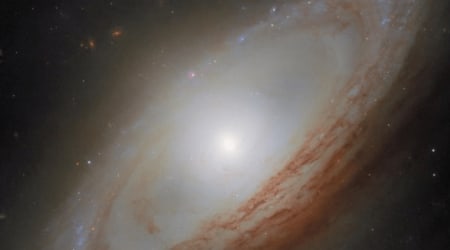
Can stars form near supermassive black holes?
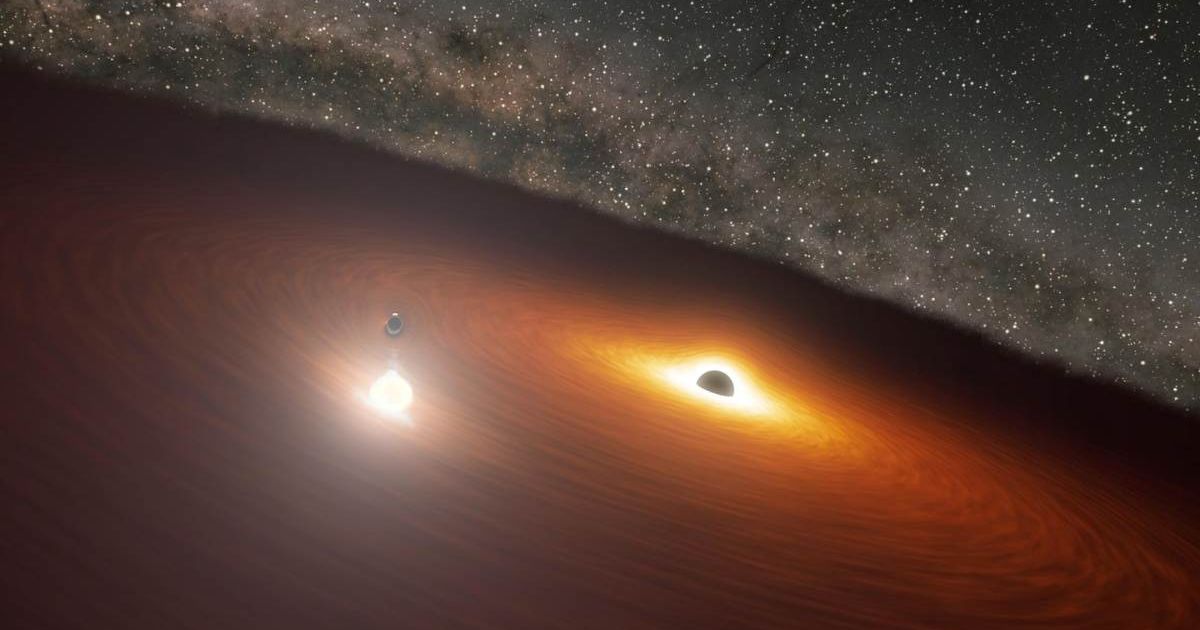
The region around black holes was not thought to be conducive to star formation, yet research proved otherwise.
This animation shows two massive black holes in the OJ 287 galaxy (Representative Image Source: NASA/JPL-Caltech)

It is worth asking if the conditions around supermassive black holes can foster an environment for stars to form and thrive. The search for this answer may quite possibly lie at the center of our Milky Way Galaxy, which harbors the monstrous black hole known as Sagittarius A* (Sgr A*). This region exerts extreme tidal forces and is full of powerful ultraviolet light and X-ray radiation—conditions that theoretically prevent star formation. However, a study published in The Astrophysical Journal Letters found stars dangerously close to Sgr A*.
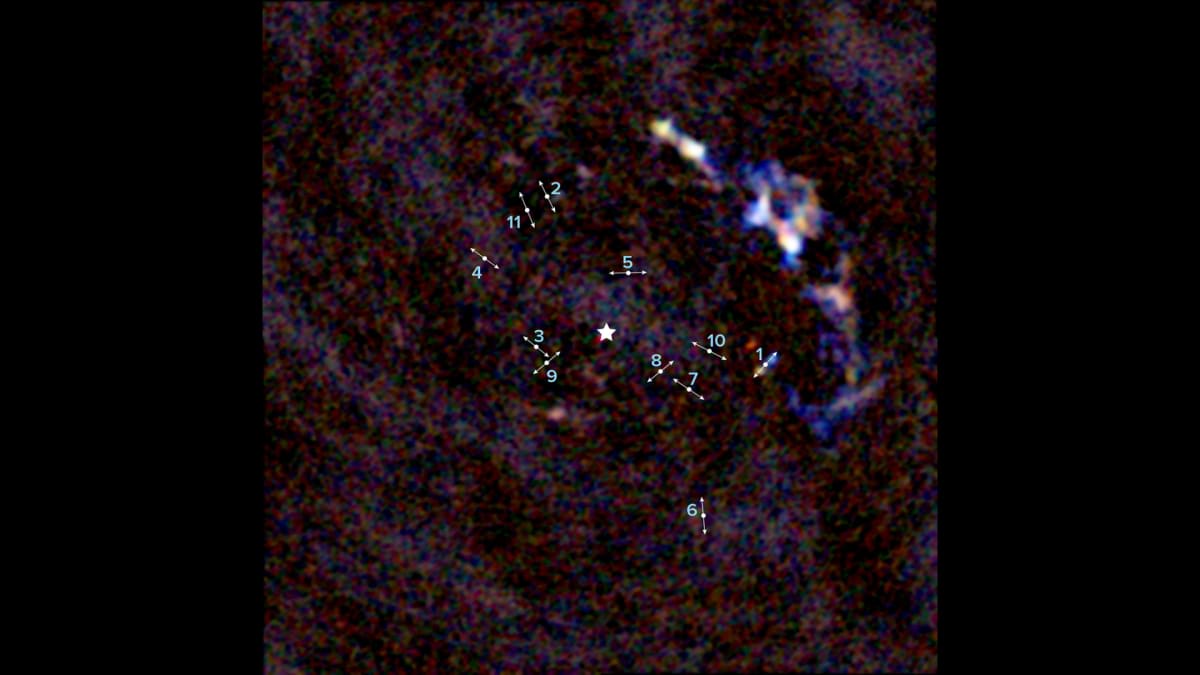
An ALMA image of the center of the Milky Way galaxy revealing 11 young protostars within about 3 light-years of our galaxy's supermassive black hole. (Image Source: ALMA | Photo by ALMA (ESO/NAOJ/NRAO), Yusef-Zadeh et al.; B. Saxton (NRAO/AUI/NSF))
An ALMA image of the center of the Milky Way galaxy revealing 11 young protostars within about 3 light-years of our galaxy's supermassive black hole. (Image Source: ALMA | Photo by ALMA (ESO/NAOJ/NRAO), Yusef-Zadeh et al.; B. Saxton (NRAO/AUI/NSF)) 

The Atacama Large Millimeter/submillimeter Array (ALMA) found signs of eleven low-mass protostars within three light-years of the black hole, as per the ALMA Observatory. At this distance, the tidal forces of the massive black hole should be energetic enough to rip apart the star-forming clouds of dust and gas.
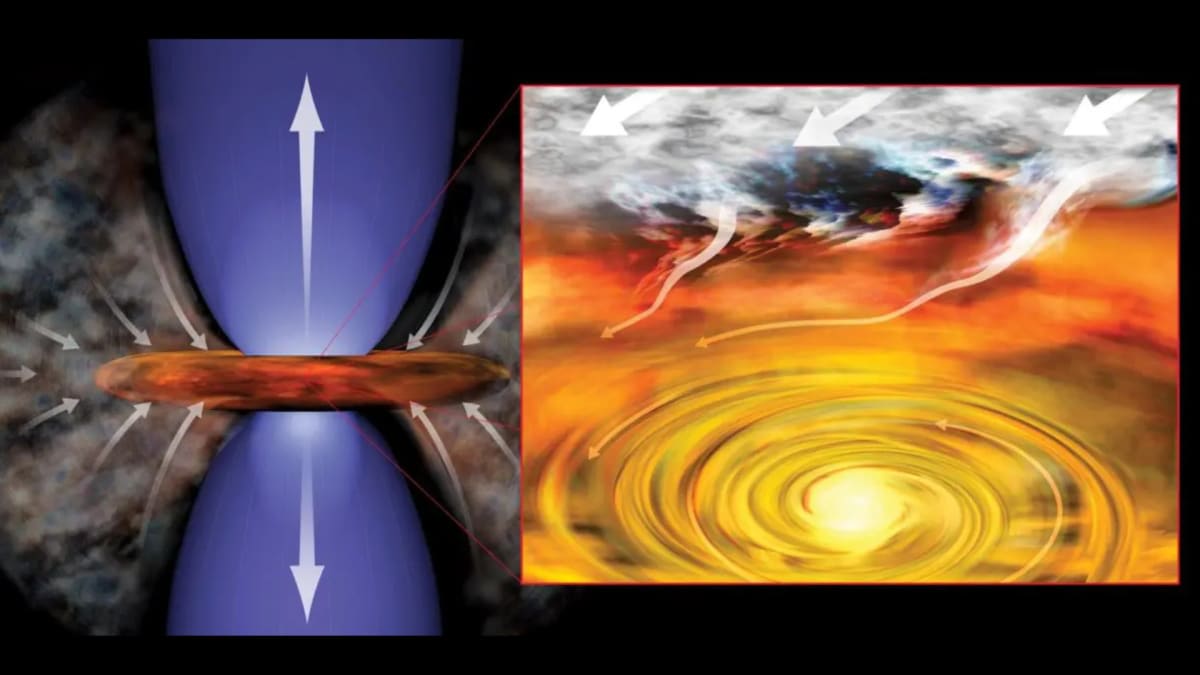
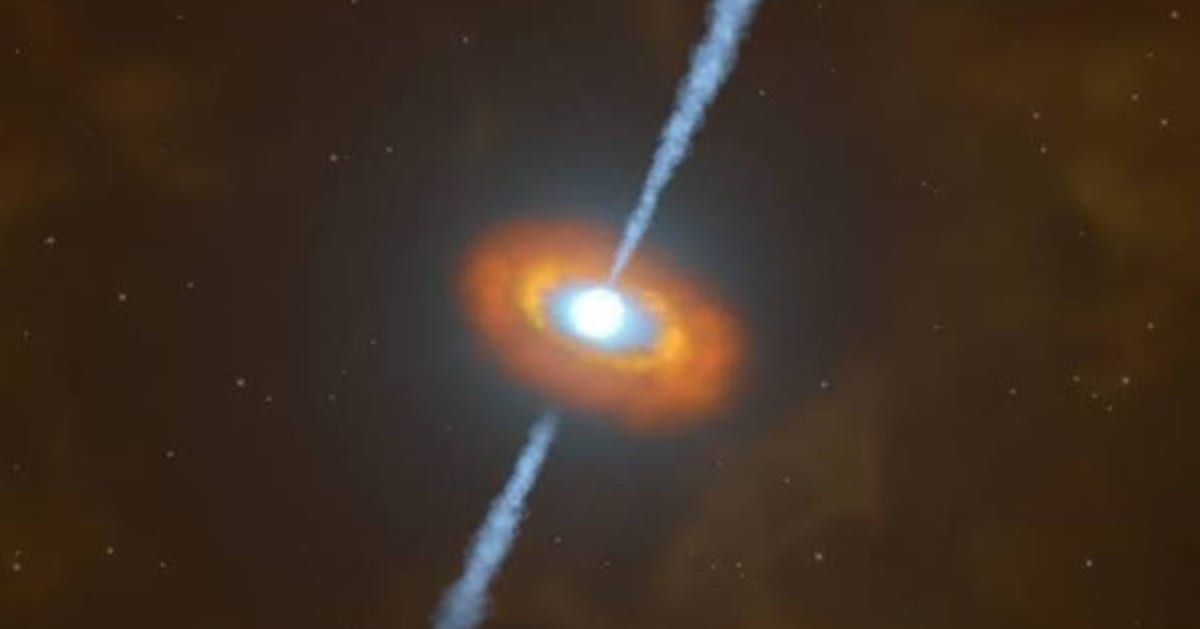
In this artist's conception of an infant solar system, the young star pulls material from its surroundings into a rotating disk (right) and generates outflowing jets of material (left). (Image Source: ALMA | Photo by Bill Saxton (NRAO/AUI/NSF))
In this artist's conception of an infant solar system, the young star pulls material from its surroundings into a rotating disk (right) and generates outflowing jets of material (left). (Image Source: ALMA | Photo by Bill Saxton (NRAO/AUI/NSF)) (Resized and background added by Starlust staff)

What led to the discovery of these protostars was the "double lobes" of material that arrange themselves in the classic hourglass-like shape around each of them. Molecules like those of carbon monoxide present in these lobes appear bright in millimeter-wavelength light, to which ALMA is quite sensitive. This evidence, as surprising as it is, showed how stars can form even in the most unlikely of places, where the conditions are not conducive to their development.
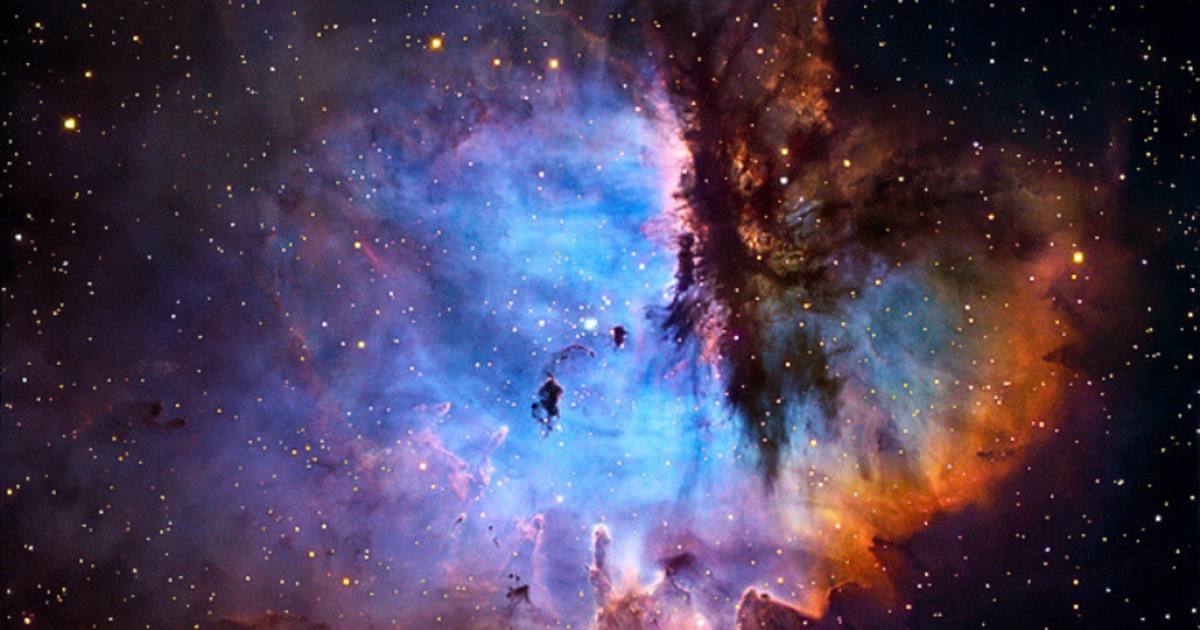
This is a region of active star formation 9,200 light-years from Earth in the constellation Cassiopeia. (Representative Image Source: Getty Images | Photo by Robert Gendler/Science Photo Library)
This is a region of active star formation 9,200 light-years from Earth in the constellation Cassiopeia. (Representative Image Source: Getty Images | Photo by Robert Gendler)

For the stars to form, outside forces have to compress the gas clouds near the galaxy’s center to conquer the violent nature of the region, to make it possible for gravity to take over to form stars. It is speculated that high-velocity gas clouds in the region could help star formation by compressing gas clouds as they make their way through. Another possibility is that jets from the black hole tear through the surrounding gas clouds, compressing material and triggering the star formation bursts.
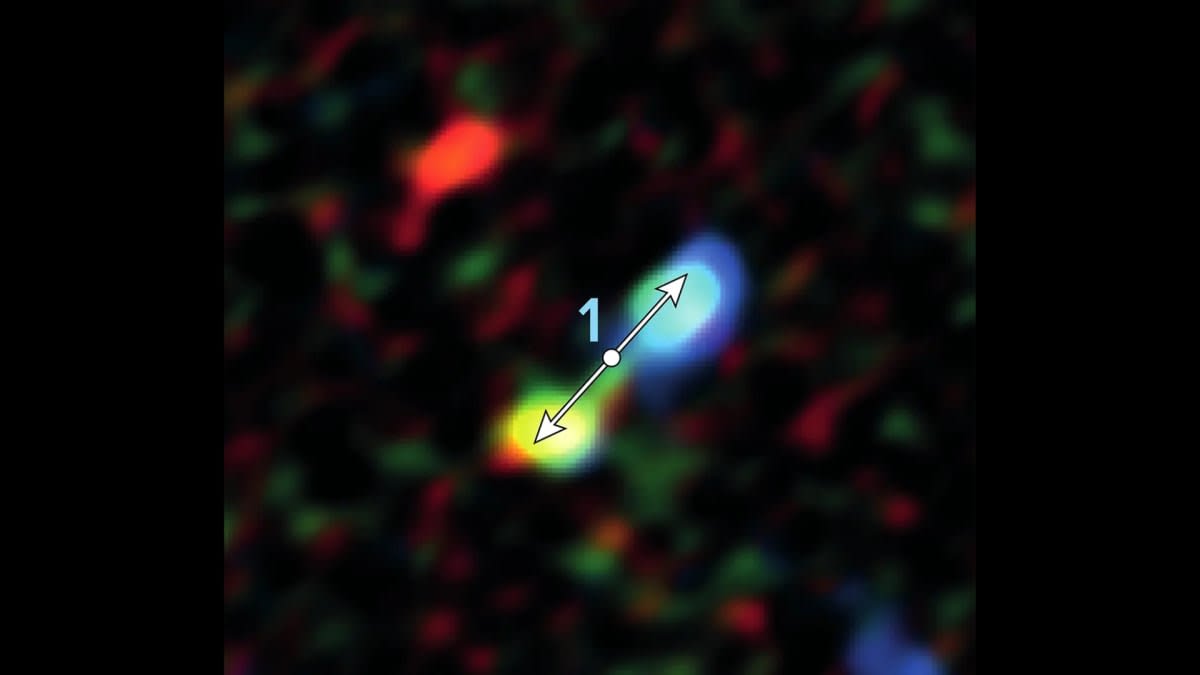
Double-lobe feature produced by jets from a newly forming star near the galactic center. (Image Source: ALMA | Photo by ALMA (ESO/NAOJ/NRAO), Yusef-Zadeh et al.; B. Saxton (NRAO/AUI/NSF))
Double-lobe feature produced by jets from a newly forming star near the galactic center. [Image Source: ALMA | Photo by ALMA (ESO/NAOJ/NRAO), Yusef-Zadeh et al.; B. Saxton (NRAO/AUI/NSF)) (Resized and background added by Starlust staff]

"The presence of so many dense clumps suggests that star formation could take place in the immediate vicinity of supermassive black holes at the centers of other galaxies," said Yusef-Zadeh, astronomer and lead author of the study. “Future observations will shine more light on this process and help us better understand how this happens and where else we could look for new, young stars."
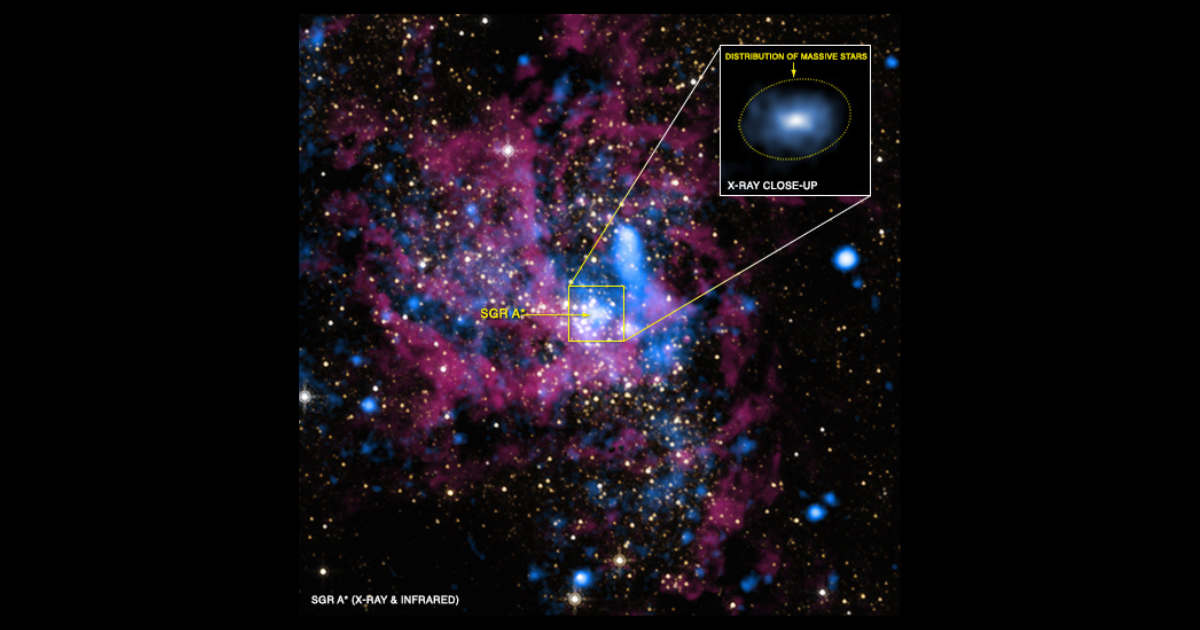
Image of the Milky Way and a close-up of  Sagittarius A*. It was made by combining X-ray images from Chandra and infrared images from Hubble. (Resized and set against a black background by Starlust Staff) (Image Credits: X-ray: NASA/UMass/D.Wang et al., IR: NASA/STScI)
Image of the Milky Way and a close-up of Sagittarius A*. It was made by combining X-ray images from Chandra and infrared images from Hubble. (Resized and set against a black background by Starlust Staff) (Image Credits: X-ray: NASA/UMass/D.Wang et al., IR: NASA/STScI)

Interestingly, a more recent study, published in the journal Astronomy & Astrophysics, has only reinforced the idea that Sagittarius A* may not be as destructive as it was previously made out to be. The new observation instrument ERIS (Enhanced Resolution Imager and Spectrograph) at the Very Large Telescope (VLT) facility in Chile found that various "dusty objects" maintain stable orbits around the supermassive black hole Sgr A*. Moreover, the binary star system D9, which was discovered by the research lead Dr. Florian Peissker and team last year, is also defying the immensely powerful tidal forces in the region to remain stable. It now stands as the first known binary system observed so close to a supermassive black hole. "The supermassive black hole at the center of the Milky Way has not only the capability to destroy stars but it can also stimulate their formation or the formation of pretty exotic dusty objects, most likely via mergers of stellar binaries,"  explained Michal Zajaček from Masaryk University in Brno (Czech Republic).
More on Starlust

Groundbreaking finding: Objects near black hole Sagittarius A* are orbiting safely, not falling in after all

Astronomers discover massive molecular cloud igniting star formation in our galaxy: 'No one had any idea it existed'

MORE STORIES

The study found that the lifetime of black holes is far longer than initially thought.
5 hours ago
A study published in The Astrophysical Journal Letters says that many planets in the universe may be shrouded in soot, thanks to their high pressures and temperatures.
1 day ago
"It’s not often you get to play a role in discoveries of this magnitude."
1 day ago
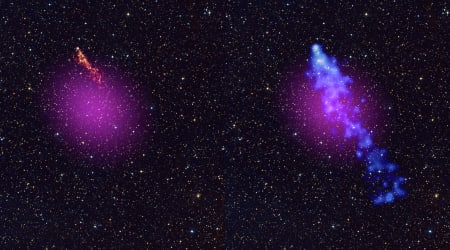
As M88 heads towards M87 through the intracluster medium, it is being stripped of star-forming gas.
1 day ago
Standard theories don't fully explain how fast this black hole changed states.
1 day ago
Scientists found proof that a giant early planet existed in the solar system 4.5 billion years ago.
2 days ago
Astronomers initially thought the explosion was a Type II supernova, but some things just didn't add up.
2 days ago
The bright rings that newborn planets create around their young stars can be studied to figure out their masses.
3 days ago
A stellar bar has been discovered in the galaxy GN20, which dates back to just 1.5 billion years after the Big Bang.
3 days ago
To find answers, scientists looked into two very different populations—Dusty Star-Forming Galaxies and Massive Quiescent Galaxies.
6 days ago