Astronomers confirm a halley-type comet's water is a near-perfect match for Earth's oceans
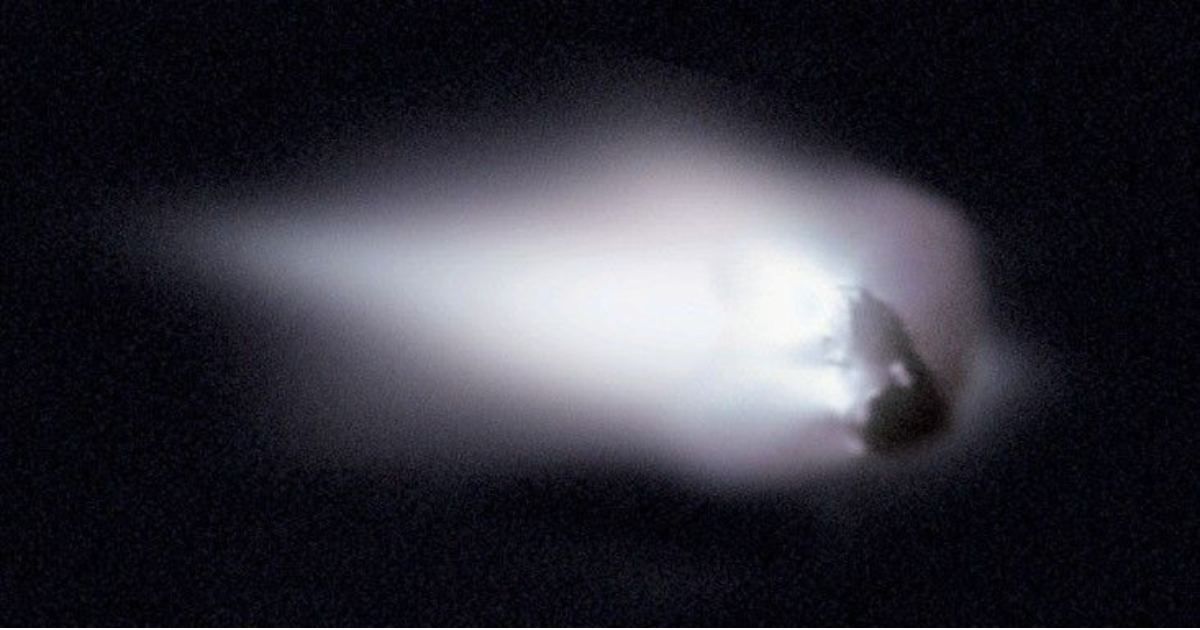
New astronomical observations have revealed a striking chemical similarity between a passing comet and Earth's oceans, lending new credence to the theory that comets may have seeded our planet with the water and molecular building blocks essential for life, as per The National Radio Astronomy Observatory.
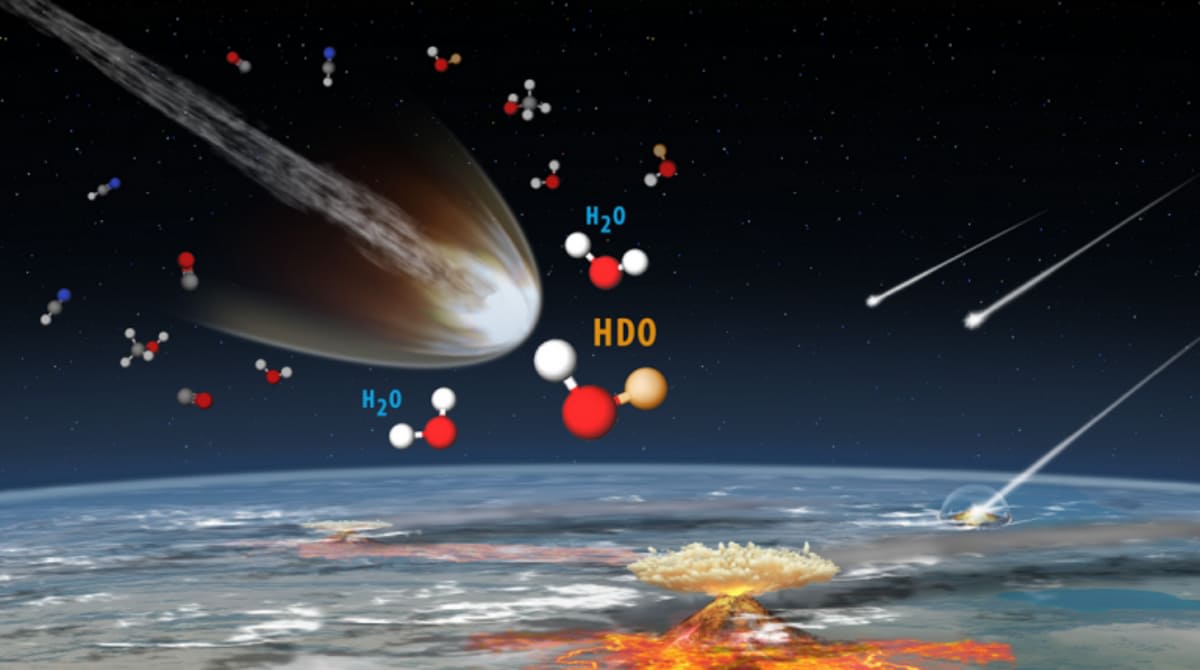
A team of international scientists, led by Dr. Martin Cordiner of NASA’s Goddard Space Flight Center, utilized the powerful Atacama Large Millimeter/submillimeter Array (ALMA) to map the distribution of two types of water, ordinary water (H2O) and a heavier variant containing the isotope deuterium (HDO), within the coma, or gaseous envelope, of comet 12P/Pons-Brooks. This marks a scientific first, as no previous study had successfully mapped the spatial distribution of these water forms in a comet's atmosphere.
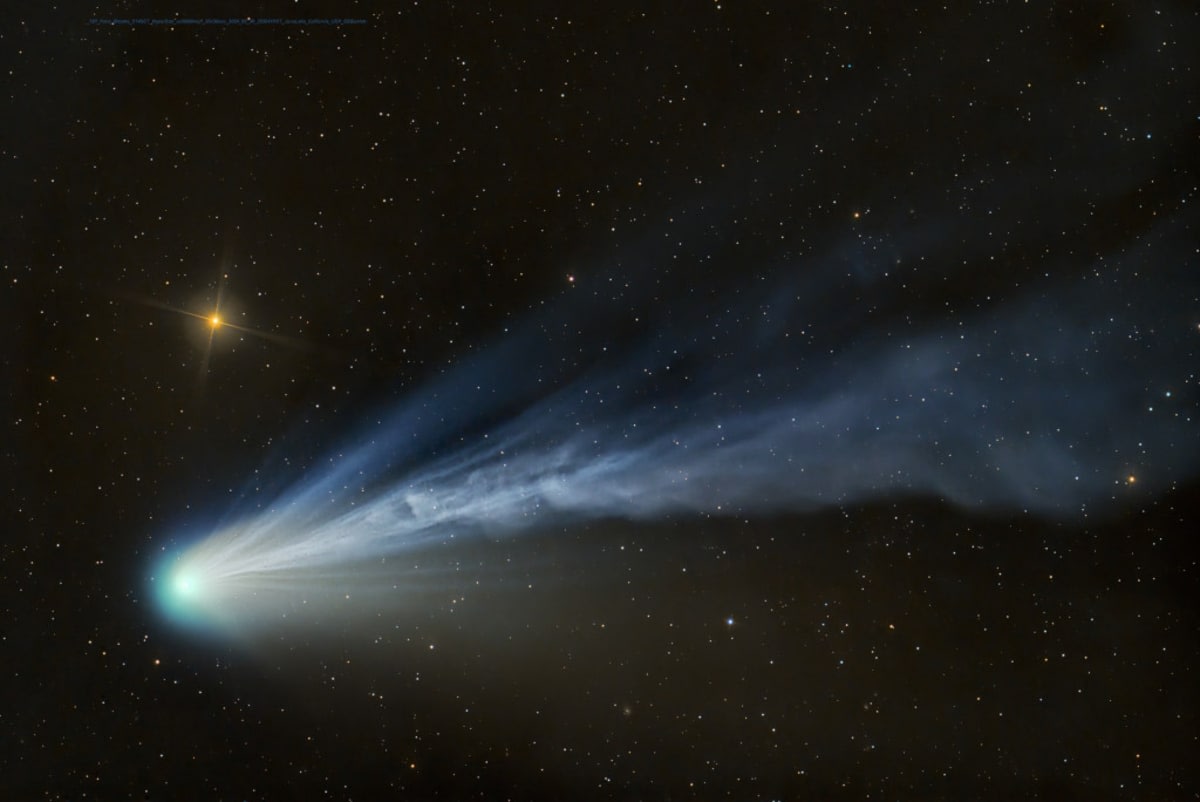
The findings, published recently in Nature Astronomy, showed that the ratio of deuterium to hydrogen (D/H) in the comet's water is nearly identical to the ratio found in Earth's oceans. This specific isotopic signature, which scientists use as a chemical fingerprint to trace the origin of water in the solar system, was measured at (1.71±0.44)×10−4, the lowest ever recorded for a Halley-type comet.
“Comets like this are frozen relics left over from the birth of our Solar System 4.5 billion years ago,” stated Cordiner. “Since Earth is believed to have formed from materials lacking water, comet impacts have long been suggested as a source of Earth’s water. Our new results provide the strongest evidence yet that at least some Halley-type comets carried water with the same isotopic signature as that found on Earth, supporting the idea that comets could have helped make our planet habitable.”

Previous studies on other comets often showed a different D/H ratio, casting doubt on whether comets were a primary source of Earth's water. However, the new measurement from 12P/Pons-Brooks suggests that this class of comet, which rarely passes through the inner solar system, could have been a key contributor. The research team also confirmed that the gases they observed originated from the comet's frozen interior, eliminating the possibility of them being formed by other chemical reactions in its coma.
“By mapping both H2O and HDO in the comet’s coma, we can tell if these gases are coming from the frozen ices within the solid body of the nucleus, rather than forming from chemistry or other processes in the gas coma,” said Stefanie Milam, a co-author of the study. The breakthrough was only possible due to ALMA’s advanced capabilities, which allowed the team to detect the faint signature of heavy water in the inner regions of the comet’s atmosphere, a feat previously unachievable.
In a new development that counters recent findings, scientists have found that the water from Comet 67P/Churyumov-Gerasimenko also possesses a molecular signature similar to Earth’s oceans, as per NASA. This discovery reopens the long-standing debate over whether Jupiter-family comets, such as 67P, were instrumental in delivering water to our planet. The presence of water was fundamental for life to emerge and thrive on Earth. While some water was likely present in the primordial cloud of gas and dust from which our planet formed approximately 4.6 billion years ago, the intense heat from the young Sun would have caused much of it to evaporate.