An asteroid could hit Earth with the energy of 22 atomic bombs—and NASA has a date for it
Bennu: One of the solar system's most hazardous known asteroids
The near-Earth asteroid (101955) Bennu could impact our planet 156 years from now, on September 24, 2182, says a study conducted by NASA researchers.
Although the probability of an actual impact is very low at 0.037%, Bennu is one of the two most hazardous known asteroids in our solar system alongside another called 1950 DA.
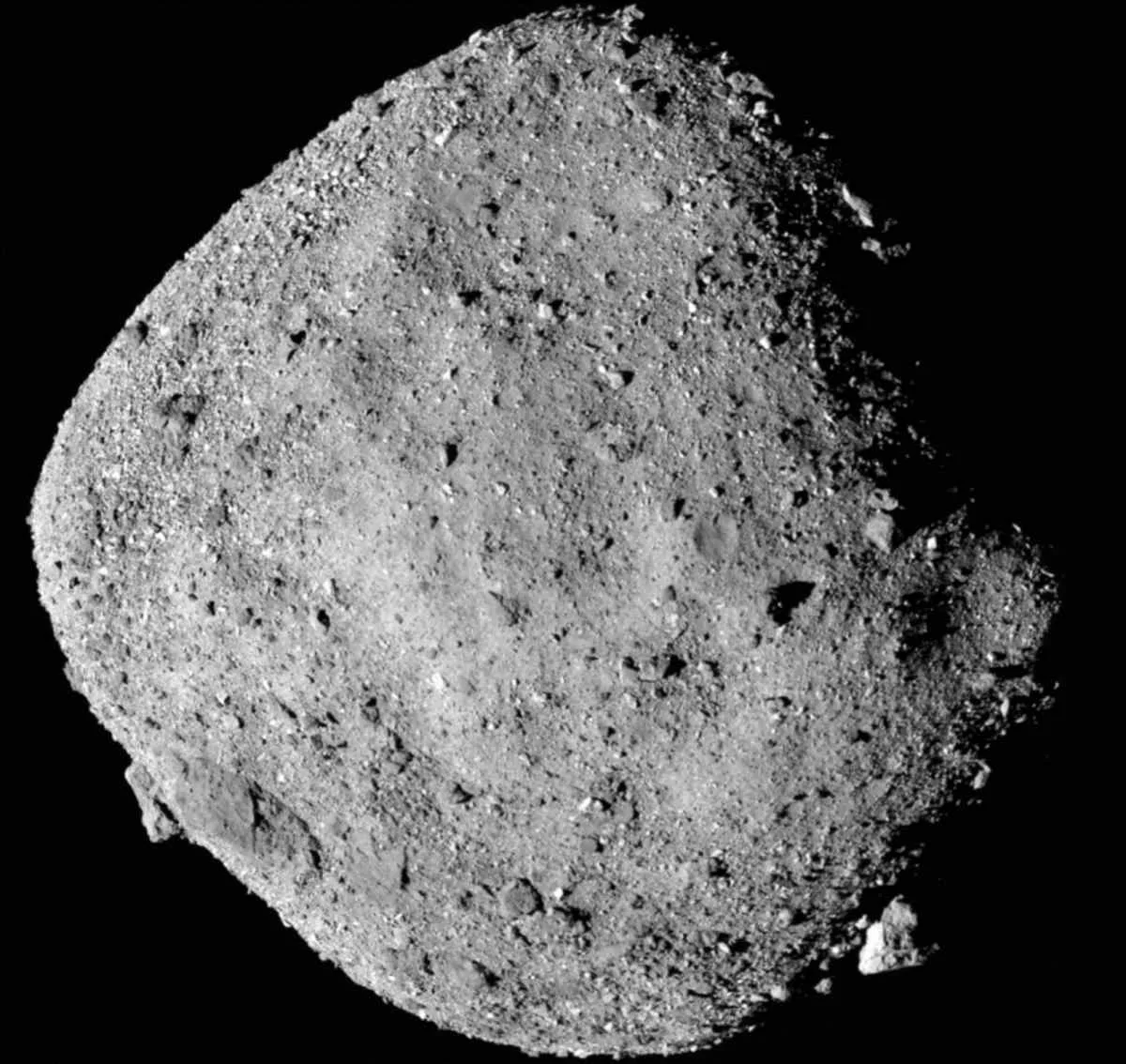
This mosaic image of asteroid Bennu is composed of 12 PolyCam images collected on Dec. 2, 2018, by the OSIRIS-REx spacecraft from a range of 15 miles (24 km).
Bennu's Earth impact odds hinge on a 'gravitational keyhole'
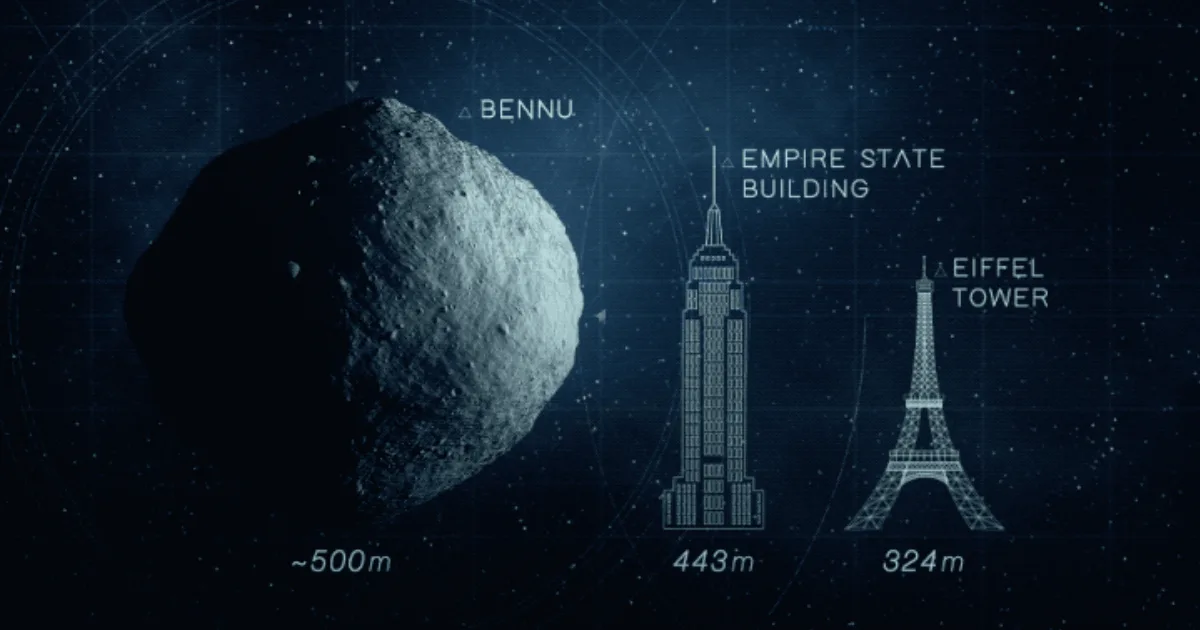
About one-third of a mile wide at its equator, Bennu makes a close approach to Earth once every six years, coming within around 186,000 miles of our planet.
It will make one such close approach in the year 2135, during which it might pass through a "gravitational keyhole." If the asteroid passes through one such region during the close approach, Earth's gravity will alter its trajectory in such a way that it will collide with the planet on a subsequent orbit late in the 22nd century. September 24, 2184, is the date that has been identified as the most significant in terms of potential impact.
However, a number of forces, including the heating and gravity of the Sun, can cause the asteroid to miss a keyhole completely.
This image is an artist’s concept comparing Bennu’s size with the Empire State Building and the Eiffel Tower.
OSIRIS-REx: The NASA mission that brought Bennu samples to Earth
It was NASA's OSIRIS-REx mission that helped scientists significantly reduce uncertainties related to Bennu's future orbits and rule out a number of keyholes for the 2135 flyby. Short for Origins, Spectral Interpretation, Resource Identification, Security-Regolith Explorer, the mission was launched in 2016, with the spacecraft reaching Bennu in 2018 and returning samples of the asteroid to Earth in 2023.
Analyzing the samples collected by OSIRIS, scientists led by Yoshihiro Furukawa of Tohoku University in Japan found traces of sugars, which are essential for biology on Earth. The samples have also been found to contain amino acids, nucleobases, and carboxylic acids. Although none of these is evidence of life, their detection suggests the building blocks of biological molecules were spread out across the solar system.
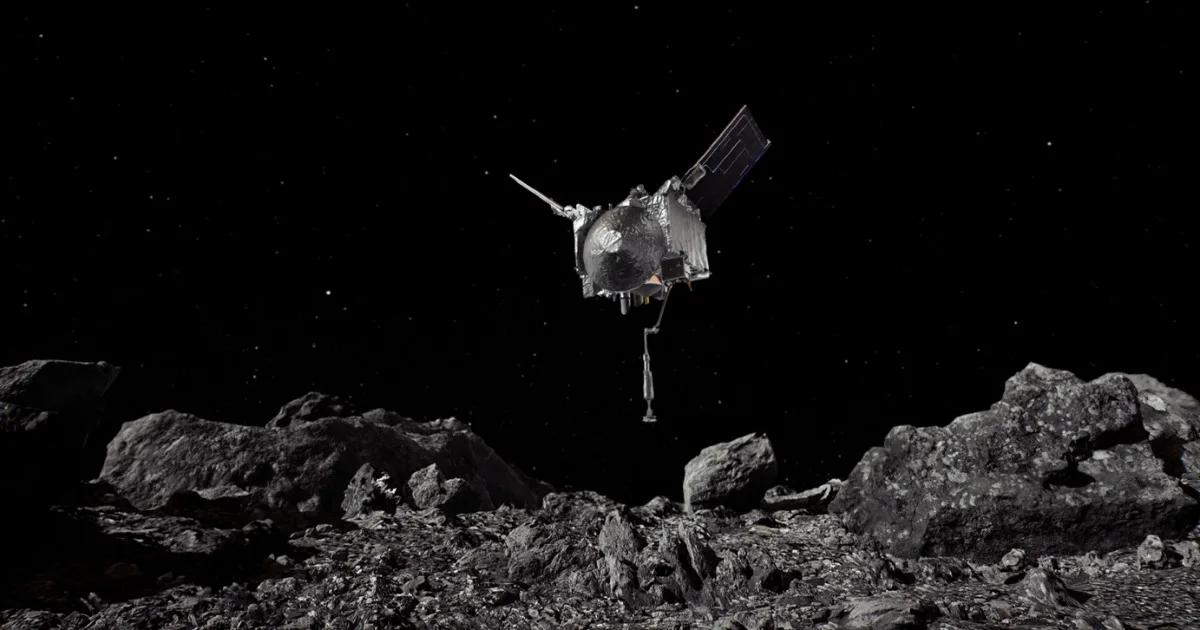
This image is an artistic visualisation of the OSIRIS-REx spacecraft descending on asteroid Bennu.
Bennu was part of a larger asteroid the size of Connecticut
Scientists believe that Bennu formed approximately 700 million to 2 billion years ago after a cataclysmic collision broke a carbon-rich asteroid of about 60 to 130 miles in diameter into several small pieces like Bennu. Bennu probably formed in the Main Asteroid Belt between Mars and Jupiter, following which it slowly moved closer to Earth.
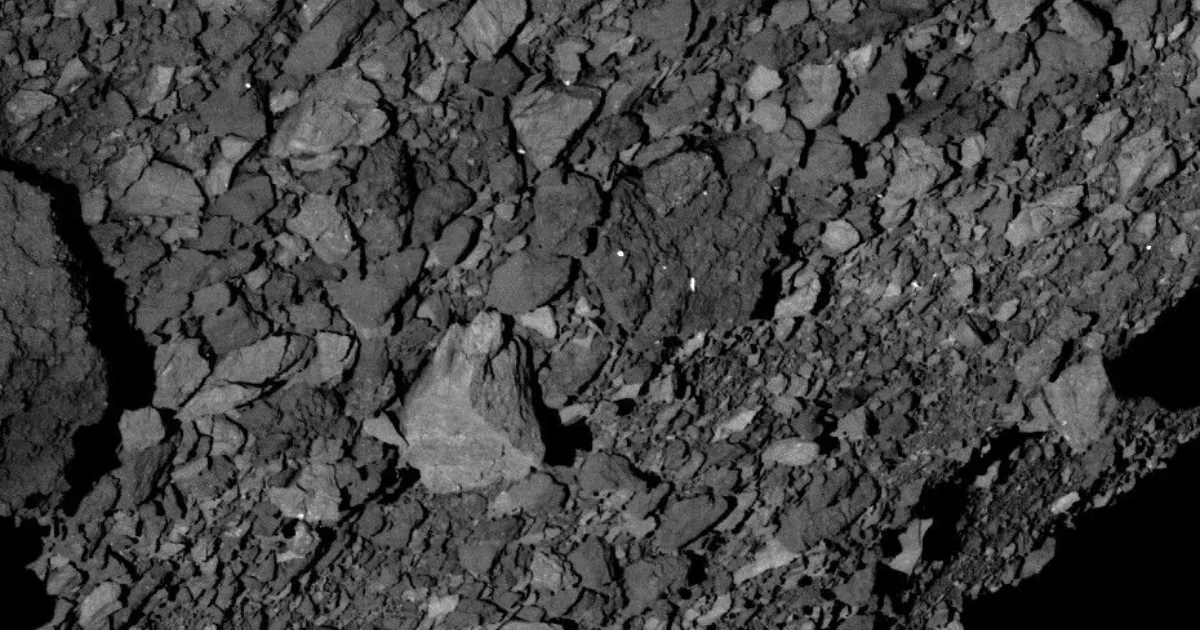
The image shows a view across Bennu’s southern hemisphere and into space. This picture was taken by the PolyCam camera on NASA’s OSIRIS-REx on March 7, 2019.
What would be Earth's fate if Bennu smashed into it?
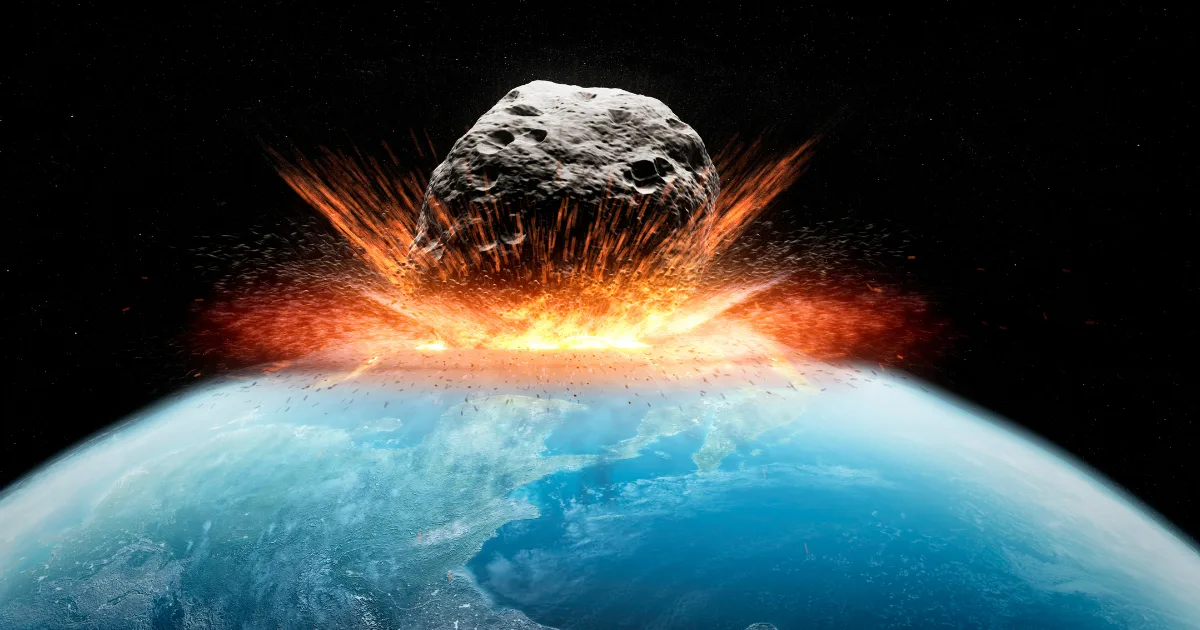
If Bennu struck Earth, it would likely do so with the explosive energy of 22 atomic bombs, according to Earth.com. A study based on computer simulations predicts that, besides causing immediate devastation, the impact would inject 100-400 million tons of dust into the atmosphere, which would trigger a disruption in the climate, atmospheric chemistry, and global photosynthesis that would last three to four years.
This image is a computer illustration depicting the potential impact of an asteroid on Earth.