Artemis III update: NASA begins assembling its SLS rocket at Kennedy Space Center
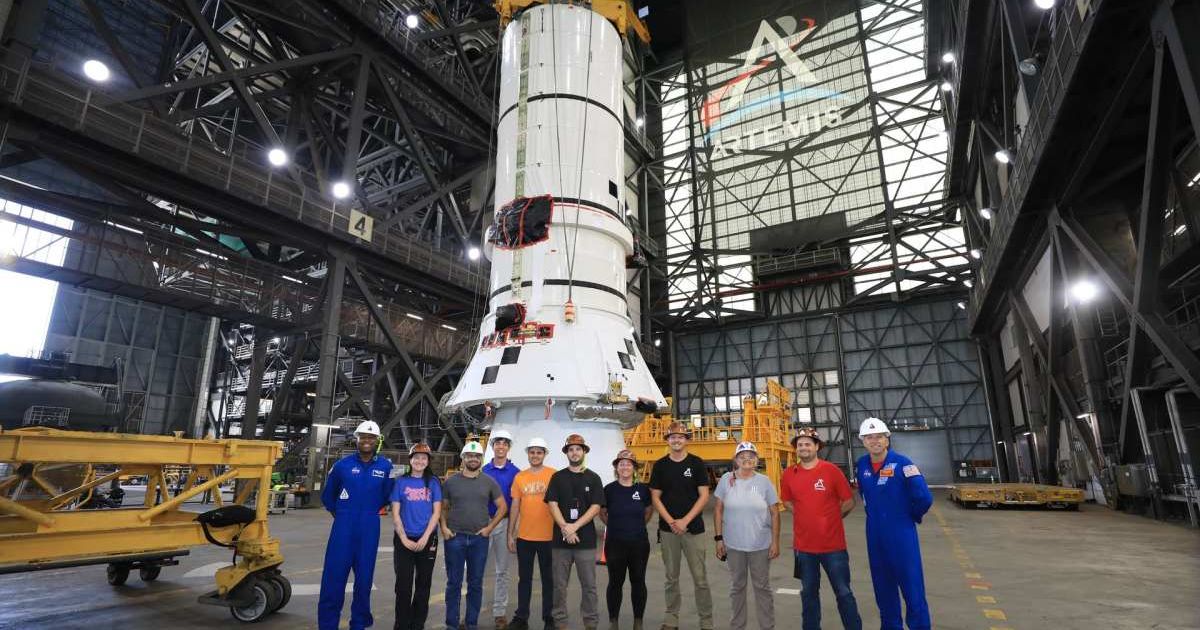
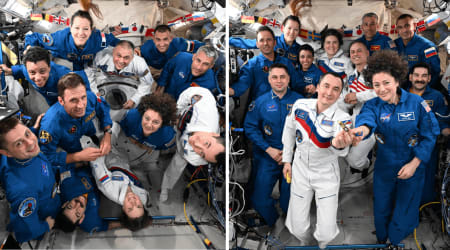
NASA has begun stacking the Space Launch System (SLS) rocket that will put four astronauts in Earth's orbit and the agency closer to a Moon landing later this decade. According to a statement from July 13, 2026, the assembly of the left-hand side booster started first, beginning with the aft sections. Artemis III crew members Randy Bresnik and Andre Douglas were also in attendance inside the Vehicle Assembly Building at Kennedy Space Center in Florida, where the entire rocket will come together. Elsewhere at Kennedy, the Orion capsule that will house the crew also saw its heat shield fitted in last week, with other subsystems of the SLS rocket being prepared for spaceflight at the same time.
Big move for @NASAArtemis III!
— NASA's Kennedy Space Center (@NASAKennedy) July 8, 2026
The left-hand aft assembly solid rocket booster segment for NASA’s Space Launch System arrived at the Vehicle Assembly Building at Kennedy Space Center. This segment is part of one of two boosters that will provide more than 75% of the rocket’s… pic.twitter.com/L7k4Qh3Jn9
With the aft assembly complete for the solid rocket boosters (SRBs), the remaining booster segments that arrived at KSC last month will now be stacked on top of them. This will happen once they go through the Rotation, Processing, and Surge Facility, where they will be inspected and coated prior to stacking. Once this processing is complete, they will be placed on lift stands for stacking on top of the aft segments. The aft segments were also attached to the same mobile launcher inside the VAB that supported the SLS rocket launched during Artemis II. The mobile launcher is the tower to which the rocket remains connected via a series of umbilical cables until the moment of lift-off, and is also used to support the rocket in its journey to the launchpad. Since it sustained some damage during the launch of Artemis II, it has also undergone repairs and refurbishment.
Artemis III hardware is stacking up - literally.
— NASA Marshall (@NASA_Marshall) July 13, 2026
The first segments of the twin SLS (Space Launch System) solid rocket boosters have been stacked on top of the mobile launcher inside the Vehicle Assembly Building at @NASAKennedy.
Read more >> https://t.co/mjdjPGjsGh pic.twitter.com/a0a24uvOLX
These solid rocket boosters are the source of the most amount of thrust out of the total 8.8 million pounds of thrust generated by SLS to lift itself off the ground, and serve their purpose within just over a couple of minutes into the flight. The remaining thrust and the rocket's structural support is provided by the core stage, which forms the central and largest part of the massive rocket, also housing SLS' flight computers. After the arrival of this massive 212-foot stage at KSC back in April, its engine section has been attached at its bottom. While two of the four RS-25 engines have arrived at Kennedy so far, they have not yet been installed. Once all of the engines are in place under the core stage, it will also be attached to the mobile launcher between the two SRBs.
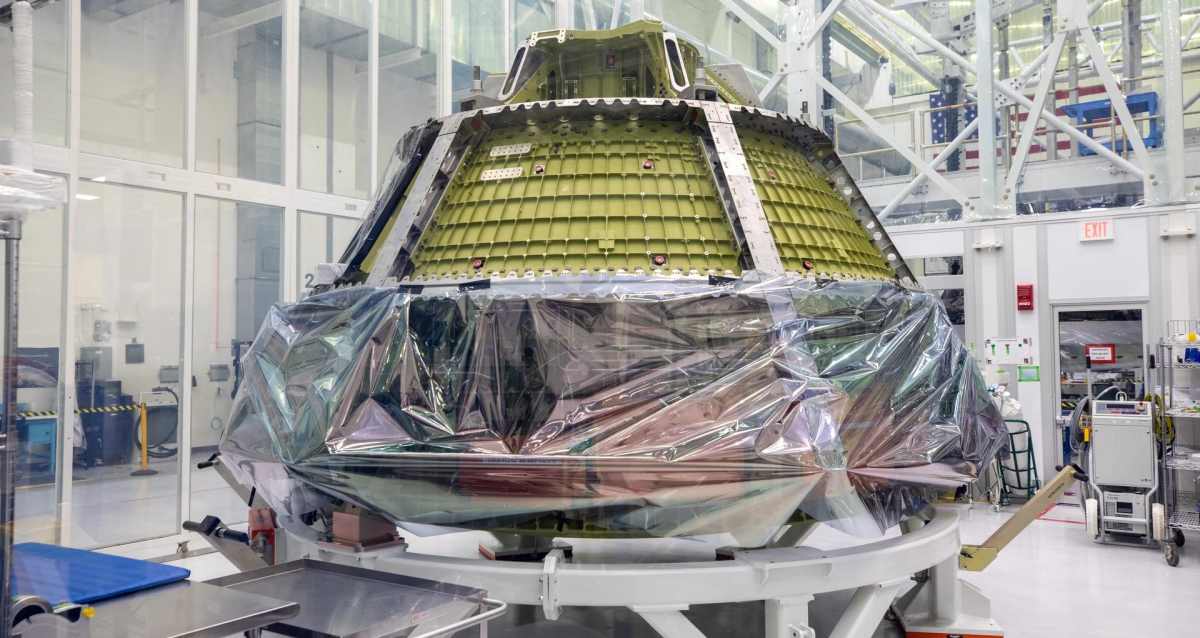
The Orion spacecraft which will sit on top of SLS is also progressing towards completion at the Neil A. Armstrong Operations and Checkout Building at KSC. Its newly-installed upgraded heat shield features 186 blocks of an ablative material called Avcoat, which is designed to safely burn away to protect the capsule during reentry. The European Service Module that provides power and propulsion to the Orion capsule also has had its capacity to withstand the vibrations during launch tested at the Operations and Checkout Building at Kennedy earlier. Per NASA's statement, now that Orion's heat shield is in place, the integration of the Orion crew module with the European Space Agency-built ESM can begin.
The pieces for Artemis III are coming together at @NASAKennedy.
— NASA Artemis (@NASAArtemis) July 13, 2026
The twin solid rocket boosters? They’re getting stacked.
The launch team? They’re simulating the countdown.
The heat shield? It’s now attached to the Orion spacecraft.
Full steam ahead for Artemis III. pic.twitter.com/2f92kv6HEi
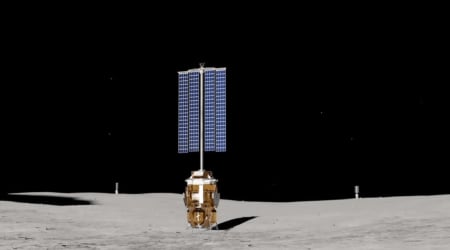
Besides the hardware being prepared, NASA also revealed that simulations are being conducted on a monthly basis since May to practice the launch countdown procedures. Teams at the Rocco Petrone Launch Control Center at KSC are rehearsing the procedures required when fueling up the rocket and during the last ten minutes prior to lift-off, known as terminal countdown. These efforts show that NASA is pressing forward with what will be a complex orbital demonstration mission before it can eventually land humans on the Moon by 2028 with Artemis IV and V. It remains to be seen if its industry partners in this pursuit, SpaceX and Blue Origin, can also uphold their end of the bargain.
More on Starlust:
Moon landers for Artemis III: SpaceX, Blue Origin provide progress updates at NASA event
Artemis III: Blue Origin's test lander can launch on another rocket if New Glenn isn't ready on time