Artemis III astronauts meet Trump, present Moon rock: ‘A little reminder of where we’re going’
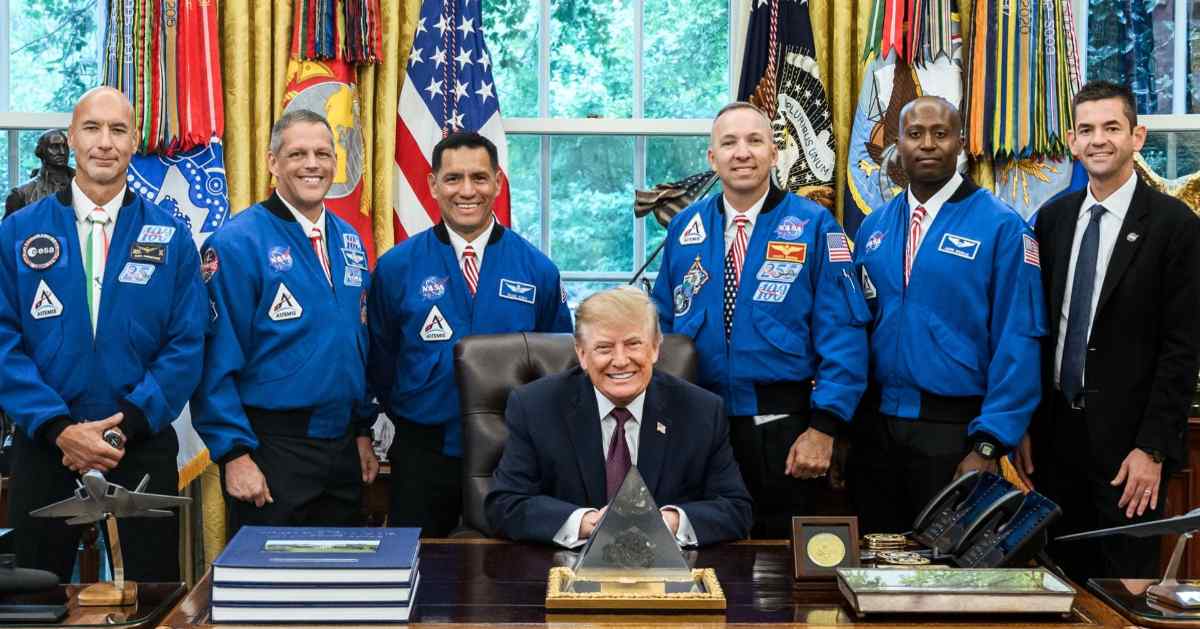
With NASA's Artemis III fast approaching its 2027 launch, the five astronauts selected for the mission met U.S. President Donald Trump at the White House on Wednesday, October 28. The crew, accompanied by NASA Administrator Jared Isaacman, interacted with the president in the Oval Office and even presented him with a Moon rock brought home by the Apollo-era astronauts.
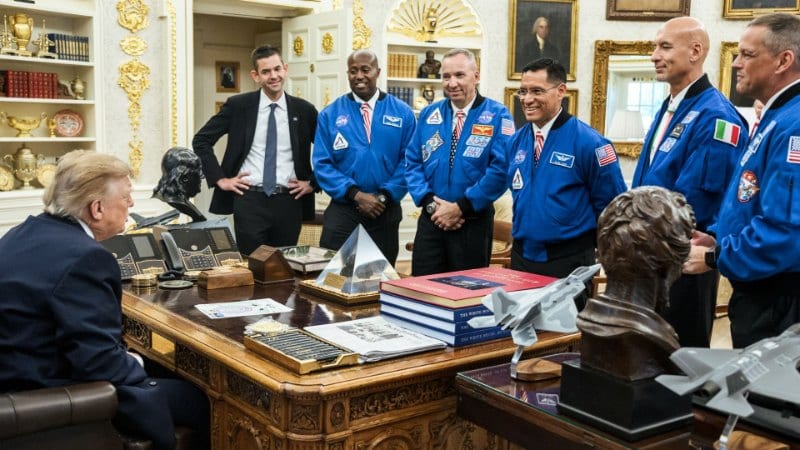
“Not only did the President want to meet the Artemis III group, we had an opportunity to present to him the largest moon rock we ever brought back from the Apollo era,” Isaacman told reporters. The rock presented to Trump, the NASA Administrator said, was picked up by Apollo 14 commander Alan Shepard, who also was the first person to play golf on the lunar surface. “We presented that to the President. It’s a little reminder for him everyday of where we’re going,” Isaacman said. While the gift is likely to delight Trump, it should nonetheless be noted that the rock picked up by Shepard is not the largest moon rock to be brought back to Earth during the Apollo era—that honour rests with Big Muley, a 26 lb (11.7 kg) rock recovered by Charlie Duke during the Apollo 16 mission, and Isaacman's declaration was likely a rare slip-up.
.@NASAAdmin Jared Isaacman on Artemis III crew visit to the White House: "Not only did the president wanna meet the Artemis III group, we had an opportunity to present to him the largest moon rock we ever brought back from the Apollo era." https://t.co/1MdJvUWSCS
— CSPAN (@cspan) October 28, 2026
Artemis III is scheduled to launch in the summer of 2027, and the crew consists of NASA astronauts Randy Bresnik (commander), Andre Douglas (mission specialist), and Frank Rubio (mission specialist), and the European Space Agency’s Luca Parmitano (mission pilot), with NASA’s Bob Hines as the backup. The White House’s official X handle posted a picture of Isaacman and the crew interacting with the president and posing for a photo.
It was a great day at the White House with President Trump and the talented crew of Artemis III 🇺🇸 The Artemis III crew is led by Commander Randy Bresnik, Pilot Luca Parmitano, and Mission Specialists Andre Douglas and Frank Rubio with Bob Hines backing them up. It is clear @POTUS is the force behind a new era of American leadership in space. His policies include the Artemis program, the Artemis Accords, now signed by 78 nations, and the United States Space Force. Of course, the United States Space Academy is coming soon. With the resources provided to @NASA in the WFTCA, we were able to approach our return to the Moon the right way. We added the Artemis III mission and will now be able to establish humankind’s first outpost on another world, the Moon Base, with its first robotic mission just weeks away. We are rebuilding the workforce and core capabilities at NASA Centers, taking control of our destiny--we are building again. With SR-1 Freedom, we will finally get America underway on nuclear power in space, what should be the dawn of a Nuclear NASA. I am grateful every day to serve as NASA Administrator and to see the talent across our workforce, industry, and international partners changing the world. Together, we are leading the way on the greatest adventure in human history.
— NASA Administrator Jared Isaacman (@NASAAdmin) October 28, 2026
“It was a great day at the White House with President Trump and the talented crew of Artemis III,” Isaacman shared on X. He also credited Trump for the Working Families Tax Cuts Act (WFTCA), which provided necessary funding and support for the Artemis III mission. “With the resources provided to NASA in the WFTCA, we were able to approach our return to the Moon the right way,” Isaacman said. “We added the Artemis III mission and will now be able to establish humankind’s first outpost on another world, the Moon Base, with its first robotic mission just weeks away.”
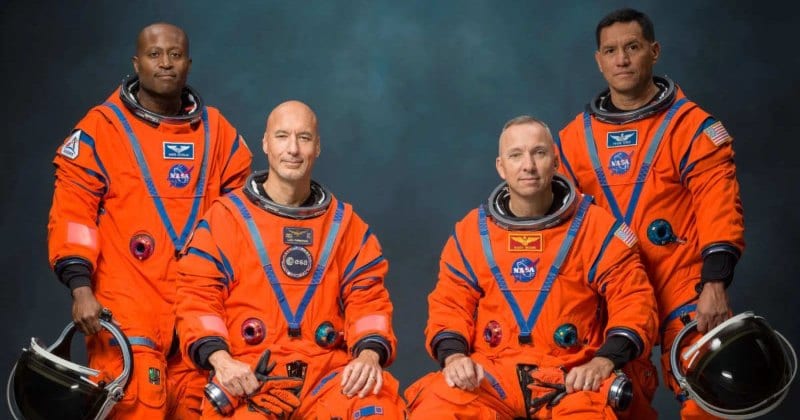
Artemis III seems to be on track to launch next year, and it will be the most complex mission attempted by NASA to date. It involves three of the world’s most powerful rockets—SpaceX’s Starship, NASA’s Space Launch System (SLS), and Blue Origin’s New Glenn–that will launch one spacecraft each for docking operations in low Earth orbit. The technologies validated during this mission will enable a crewed Moon landing during Artemis IV, which involves the docking of NASA’s Orion spacecraft with a private lander in lunar orbit. Both SpaceX and Blue Origin are building human-rated landers that they will launch on their own rockets.
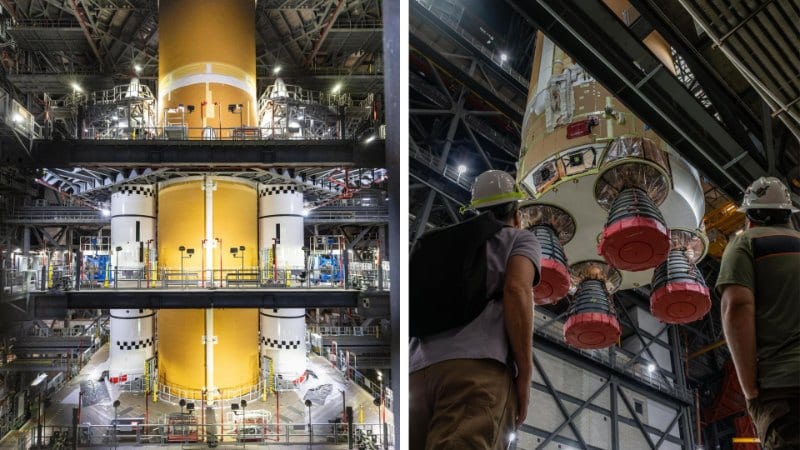
Last week, NASA completed the booster stacking of the SLS rocket for Artemis III, and it announced yesterday that the core stage of the launch vehicle has also been stacked. This core stage will be topped with a ‘spacer’ that will replace the Interim Cryogenic Propulsion Stage (ICPS). The ICPS, or the upper stage, is not needed for Artemis III because the crew is not going to the Moon. In the coming months, the rocket will be rolled out of the Vehicle Assembly Building at the Kennedy Space Center onto the launch pad for crucial prelaunch tests and operations.
More on Starlust
Starship vs Blue Moon: NASA's plan for two landers flying on Artemis IV has some major changes
NASA safety panel asks agency to re-examine Artemis IV Moon landing plan