NASA reveals major details on SpaceX and Blue Origin lander plans ahead of Artemis III and IV

NASA has shared the latest updates on Artemis III, a low Earth orbit mission planned for 2027, and Artemis IV, which aims to return astronauts to the Moon in 2028. During a live event held on October 23, 2026, NASA Administrator Jared Isaacman provided details on landers, which are currently being developed by SpaceX and Blue Origin, as well as information about the Artemis III timeline and efforts made by the space agency to ensure the success of the mission.
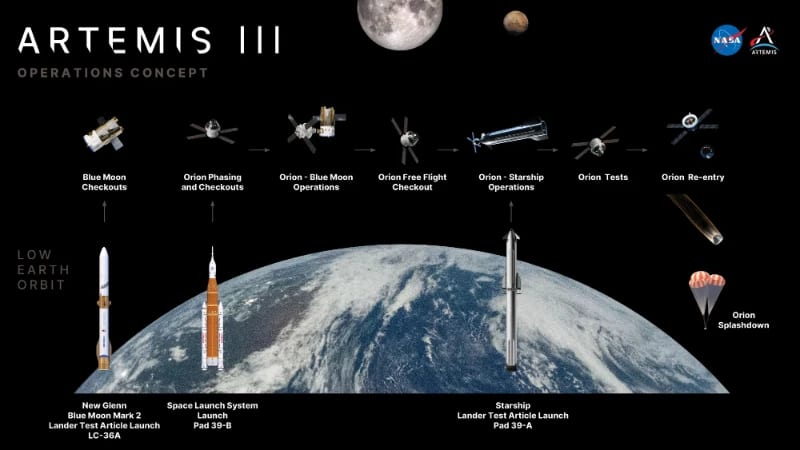
The space agency has outlined a 14-day plan for Artemis III. But there’s a chance that the mission could stretch to 17 days due to potential launch delays caused by weather or other issues. Artemis III is expected to send four astronauts into low Earth orbit to practice docking their Orion spacecraft with two commercial lunar landers developed by SpaceX and Blue Origin.
Commenting on the mission, Jared Isaacman said during the event, “What we are undertaking is ambitious. It's extraordinarily difficult, and years of decisions both within and beyond the walls of this agency have cost us time and resources that we never had to spare. But we are reinvigorating, and the extraordinary vehicles our industry partners are building, are worth every bit of that effort.”
NASA just shared some major updates on the road ahead for Artemis 🚀 2027: Artemis III tests Orion and two lunar landers in low Earth orbit. 2028: Artemis IV returns Americans to the Moon. Catch up on today's announcements in this special edition NASA Minute! https://t.co/0e3jbWaJK5
— NASA Spox (@NASASpox) October 23, 2026
NASA outlines Artemis III’s flight plan
Blue Origin will kick off the launch sequence by sending its Blue Moon test lander into orbit. The vehicle is expected to remain there as the company will check its condition and prepare for rendezvous and docking with Orion. This test lander will give astronauts an opportunity to enter its cabin and assess systems similar to those intended for future lunar missions.
We are not slowing down. 🚀 Our Artemis III mission will send four astronauts to low Earth orbit next year to test critical systems needed for future lunar landings https://t.co/G5CkHbQhFR and we’re accelerating efforts to ensure the success of Artemis IV, the first Artemis mission on the lunar surface https://t.co/zEDKEcLpXY.
— NASA (@NASA) October 23, 2026
Additionally, NASA will use this exercise to evaluate how the lander performs and how its systems work alongside Orion. After docking, the crew will check Orion’s systems for two days and prepare for close-range spacecraft maneuvers. Orion will then move into a 237-nautical-mile rendezvous orbit. It will set up a planned meeting with Blue Origin’s lander on the third day of the mission. The docking will be one of the flight’s main tests. Over the following two days, astronauts will enter Blue Moon and work through operational procedures with mission control.
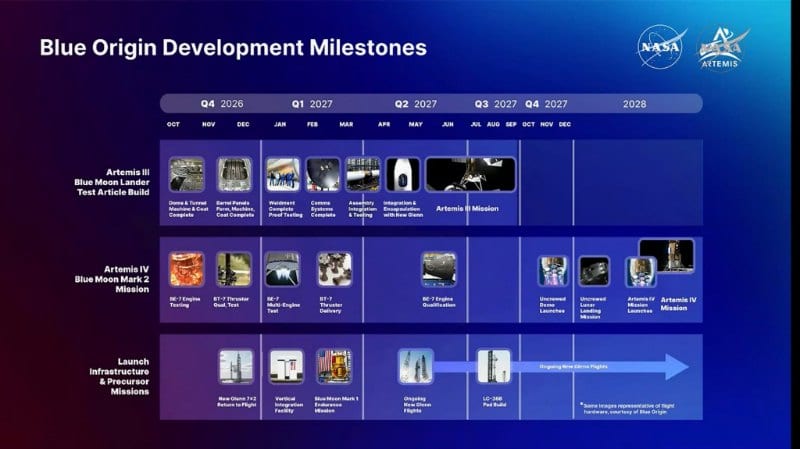
After Blue Moon, Orion will meet SpaceX’s Starship
After completing its work with Blue Moon, Orion will head toward its next planned meeting. SpaceX’s Starship is scheduled to launch from Florida. This will give Orion time to separate from Blue Moon and adjust its orbit before the two spacecraft rendezvous on day eight.
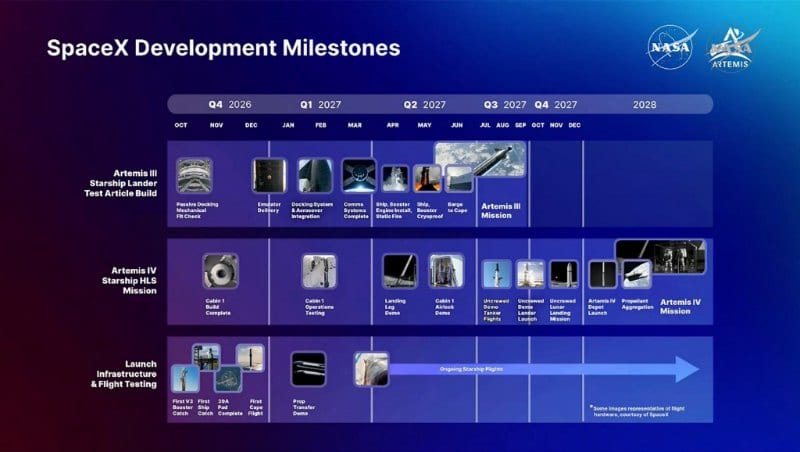
Unlike the Blue Moon exercise, the Starship test will last about two hours. During this, the astronauts will remain inside Orion rather than entering the vehicle. After this, the astronauts will spend the final days of the mission completing additional tests before making their way home.
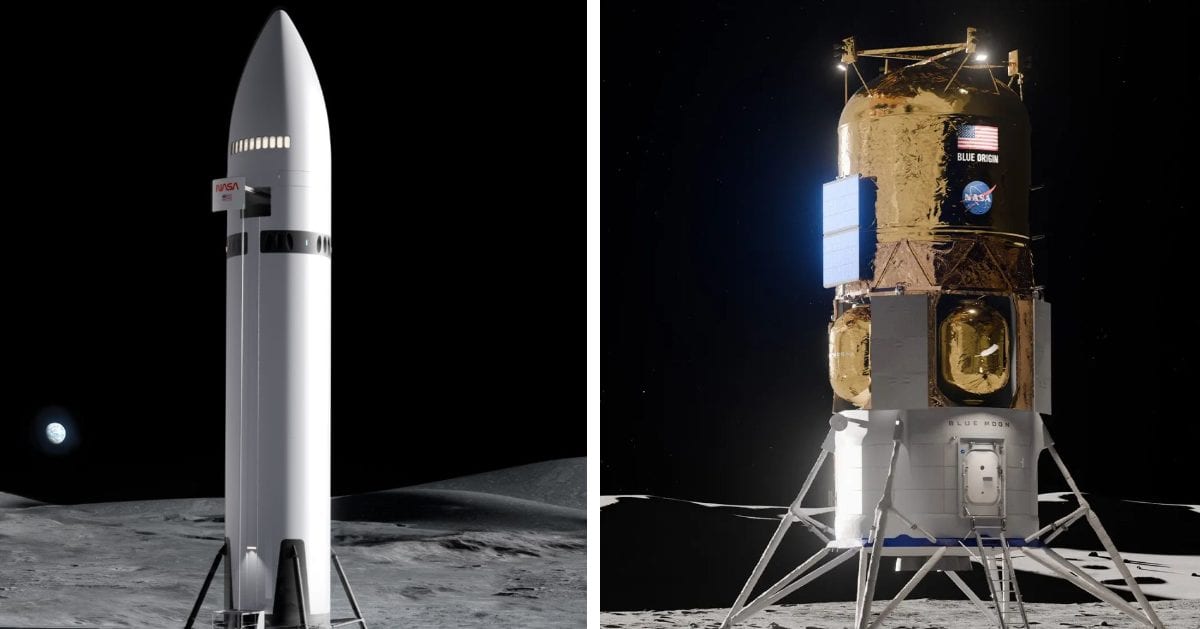
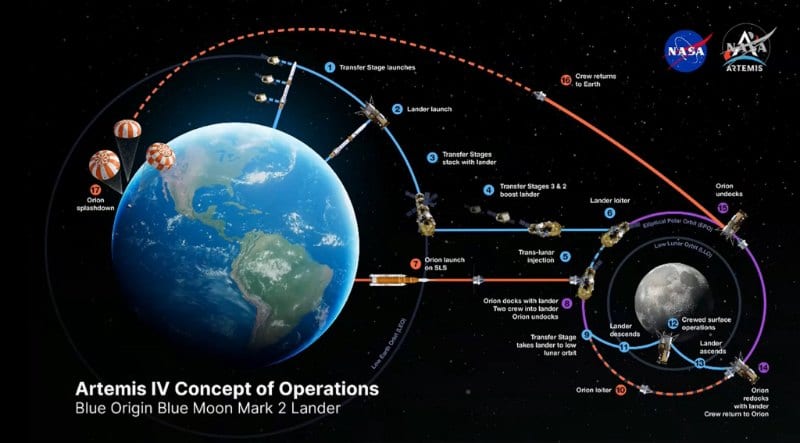
To prepare for NASA’s Artemis IV mission to land astronauts on the lunar surface, SpaceX and Blue Origin have updated their concepts of operations for its landers. These landers — Starship and Blue Moon — have concepts of operations different from one another. More below ⬇️ https://t.co/Aa2zQxXXjx
— NASA Artemis (@NASAArtemis) October 23, 2026
NASA weighs two landers for Artemis IV
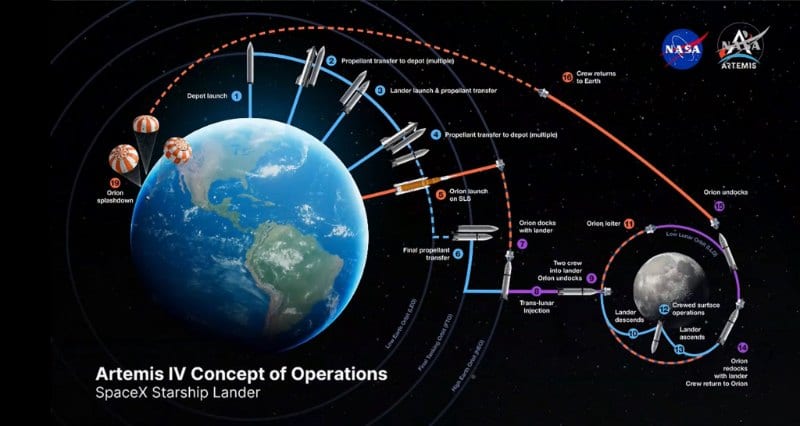
For Artemis IV, NASA has laid out two different options. One uses SpaceX's Starship launcher and its human landing system, known as HLS. The other pairs New Glenn with Blue Origin's Mark 2 lander. NASA has yet to decide which lander to go with. The good news is that either one, or even both, could be ready by the end of 2028. SpaceX's Starship is expected to dock with Orion in Earth orbit and use its own engines to physically push the crew capsule to the Moon. In contrast, Blue Origin's Blue Moon lander will use independent transfer stages to fly to lunar orbit on its own, where Orion will meet and dock with it.
Neither company has had an easy year. New Glenn has not flown since it exploded on the launch pad in May, and Starship only completed its first uncrewed orbital flight in September. Commenting on this, Artemis Program Manager Jeremy Parsons said, “You will have multiple launches of Starship before we go conduct Artemis III, and you will have multiple launches of the Blue Origin New Glenn vehicle from the rebuilt pad before we go launch Artemis III, and so that's going to give us a lot of confidence.”
NASA and China are in a new race to the Moon
During an earlier statement this year, Jared Isaacman, NASA's administrator, suggested that China may send a crewed mission around the Moon in 2027. He also noted that NASA may have avoided a close call after China’s uncrewed Chang’e-6 lander fell behind schedule this year. The lander was originally planned to head to the Moon’s south pole. That region sits near resources both countries want.
"Here we are today, very much in a new space race, and despite decades of accumulated knowledge and extraordinary advancements in technology, this race will be much closer than it ever needed to be," Isaacman said. He added that NASA will not launch until it is ready, but the space agency will also not “sit idly by and watch one of the most consequential moments of this new century pass [to] our overseas competitors.”

Artemis III is behind schedule, but NASA is trying to catch up
According to Isaacman, Artemis III is currently running about 90 days behind its planned schedule on paper. He clarified, though, that this is not because of a lack of effort. NASA officials described speeding up supply chains, upgrading a Vulcan rocket to make a more powerful "stretch" version for Artemis III, and trimming requirements on the Axiom spacesuit so it can be ready for Artemis IV.
SpaceX targets early 2027 for first Starship orbital fuel transfer demonstration. NASA confirmed the update while outlining progress on Artemis III and IV on Oct. 23. One Starship will launch from Starbase, Texas and the other from Kennedy Space Center. Video credit: SpaceX/NASA https://t.co/FjnTPVIwhg
— Starlust (@starlustorg) October 23, 2026
"Every time we run into a supplier issue, a priority issue across the industry, Administrator Isaacman [and Associate Administrator] Amit [Kshatriya] are immediately on the phone. They're immediately putting pressure. We're immediately going out and helping to make things happen," Parsons said. The next major step is planned for early 2027, when SpaceX aims to show that it can transfer fuel between spacecraft while they are in orbit. The company's lunar lander will need this capability to reach the Moon.
More on Starlust: