Will the helium leak in Orion affect Artemis II's re-entry? Here's what NASA says
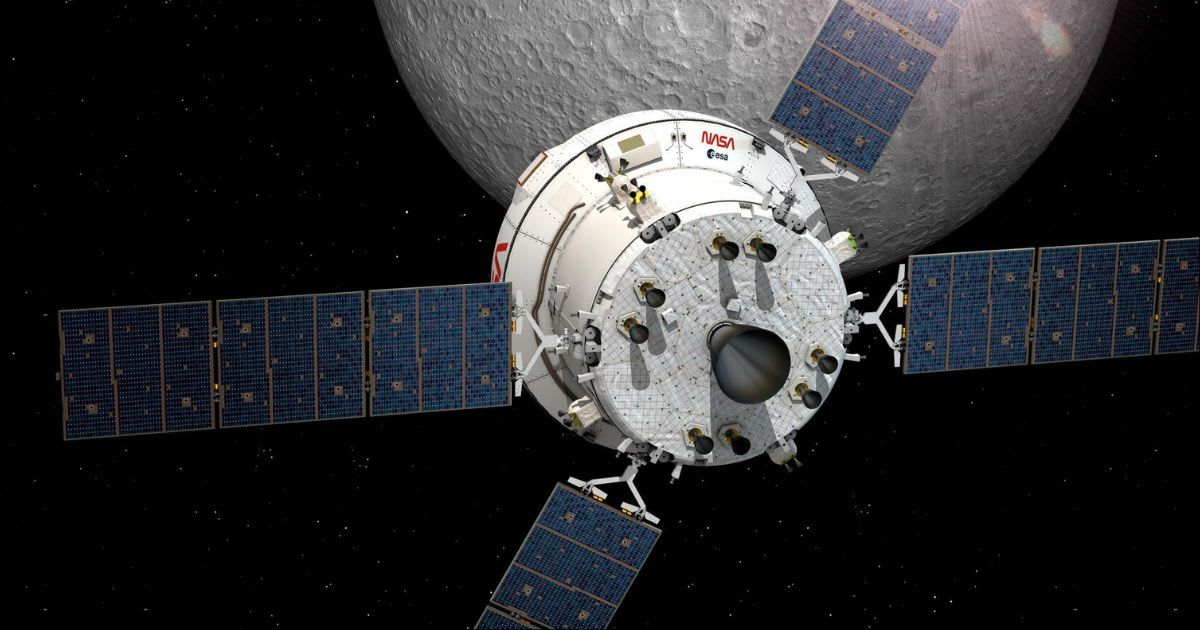
As the historic Artemis II mission nears its end with a scheduled splashdown tonight (April 10) at 8:07 p.m. EDT, NASA is monitoring a helium leak in Orion’s European Service Module propulsion system. It was this leak that led mission managers to cancel a manual piloting demo and a docking camera test on Wednesday so that they could study the issue instead. Naturally, it raised some questions about the safety of the crew during their re-entry, which is perhaps the riskiest part of the mission. However, NASA officials clarified the situation during the mission’s final status briefing held at Johnson Space Center.

Will the helium leak impact re-entry?
Artemis II Lead Flight Director Jeff Radigan addressed this issue at the press conference and said, “We don't see any impact to entry at this time, and, of course, we jettison (discard) the Service Module, and, of course, the crew module jets that we'll use actually on reentry are unaffected at this time.” The European Service Module has four propellant tanks, two of which hold mixed oxides of nitrogen as oxidizer, while the other two contain monomethyl hydrazine as fuel. One helium tank each on the oxidizer side and the fuel side is responsible for pushing the propellants into the spacecraft's engine to help it travel through space. The helium pressure leak that is being monitored is on the oxidizer side.
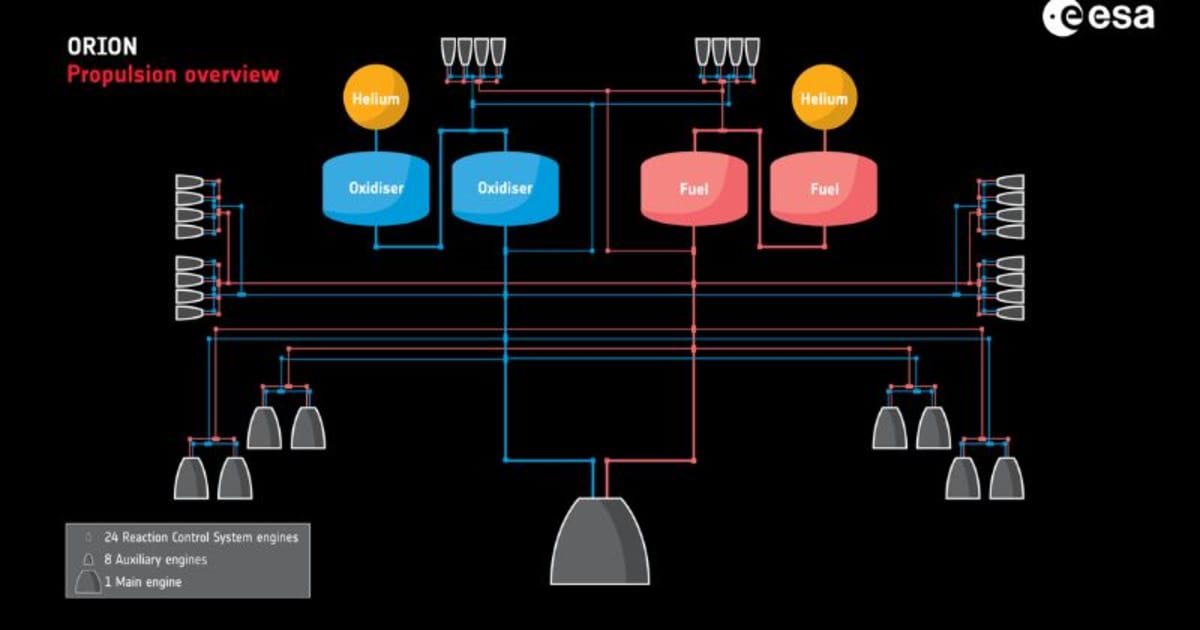
"We still have capability in the spacecraft and are operating in a case where all of our burns have performed nominally. They've done exactly what we've expected them to," Radigan reminded the media. So far, the Artemis II crew has completed two return trajectory correction burns, with the third one scheduled for 1:53 p.m. EDT today. "All of those are done actually without the pressurization system that we're characterizing," Radigan added. "We're operating in a case where we're in blowdown, which means that we already have full pressure in the prop tanks to be able to perform these burns." That being said, it was important nonetheless that a characterization of the issue was done before the Service Module was jettisoned, keeping in mind future missions.
The Orion spacecraft’s thrusters ignited for the second return trajectory correction burn to fine‑tune the spacecraft’s path toward Earth.
— NASA Artemis (@NASAArtemis) April 10, 2026
Splashdown of Artemis II is expected around 8:07pm ET on Friday, April 10 (0007 UTC on Saturday, April 11), off the coast of San Diego. pic.twitter.com/VuRw7IVqpP
NASA knew of the leak before launch
At the briefing, NASA confirmed being aware of a low leak rate before launch, which is now at an order of magnitude higher than what was seen on the ground. Then why was it still given the green light? “We accepted it because we didn't need the performance for the pressure system,” explained NASA associate administrator Amit Kshatriya. "At least after TLI (translunar injection), we could have done the whole mission without helium pressurant.” While the current leak rate is still within acceptable limits, the valve system would have to be redesigned extensively with future missions like Artemis IV, which aims to land humans on the Moon.
Going by the word of the NASA officials, the helium leak seems to have no impact on the Artemis II crew’s safe return to Earth. Moreover, the spacecraft doesn’t demand a full propulsion performance since it’s on a free-return trajectory. But this won’t be the case with future missions. Moreover, helium system issues crop up quite often in spaceflight, as seen in past examples like the Boeing Starliner and even NASA’s SLS rocket, which led to delays in both Artemis I and II missions. Addressing such issues will be key to the agency’s goal of increasing launch cadence, among other things.
More on Starlust
‘Things have to go right’: As Artemis II crew heads for re-entry, NASA can leave no room for error
‘There's nothing this nation cannot do’: Artemis II astronauts speak with U.S. Congress from space