Aurora alert: Northern lights to become prominent over several U.S. states on September 9. Check list here
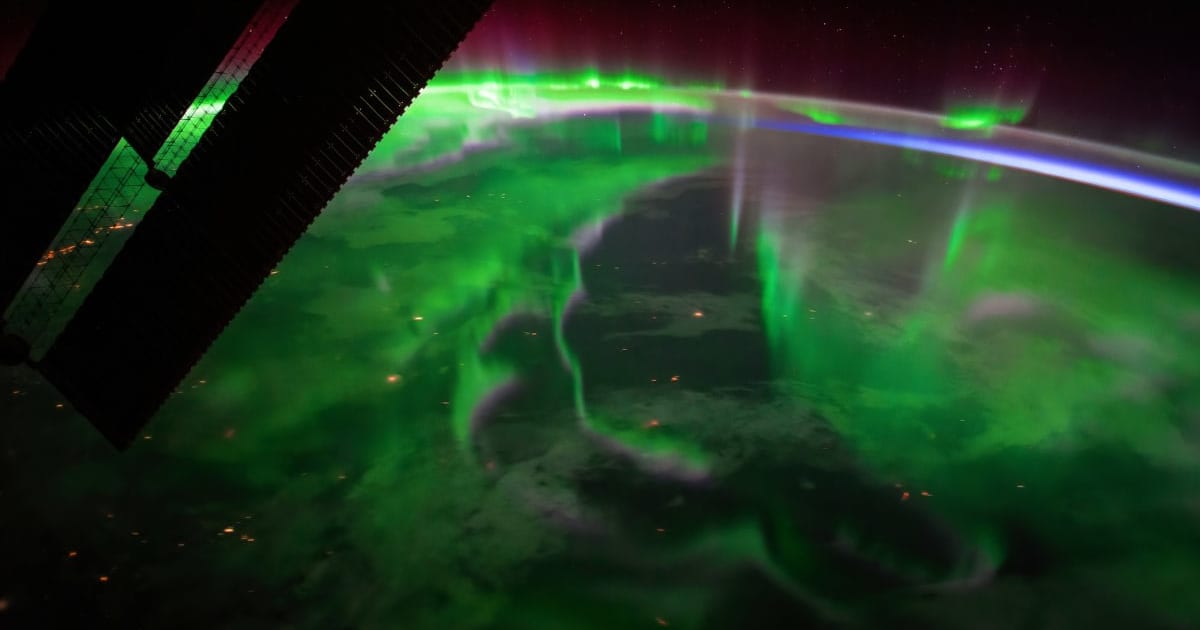
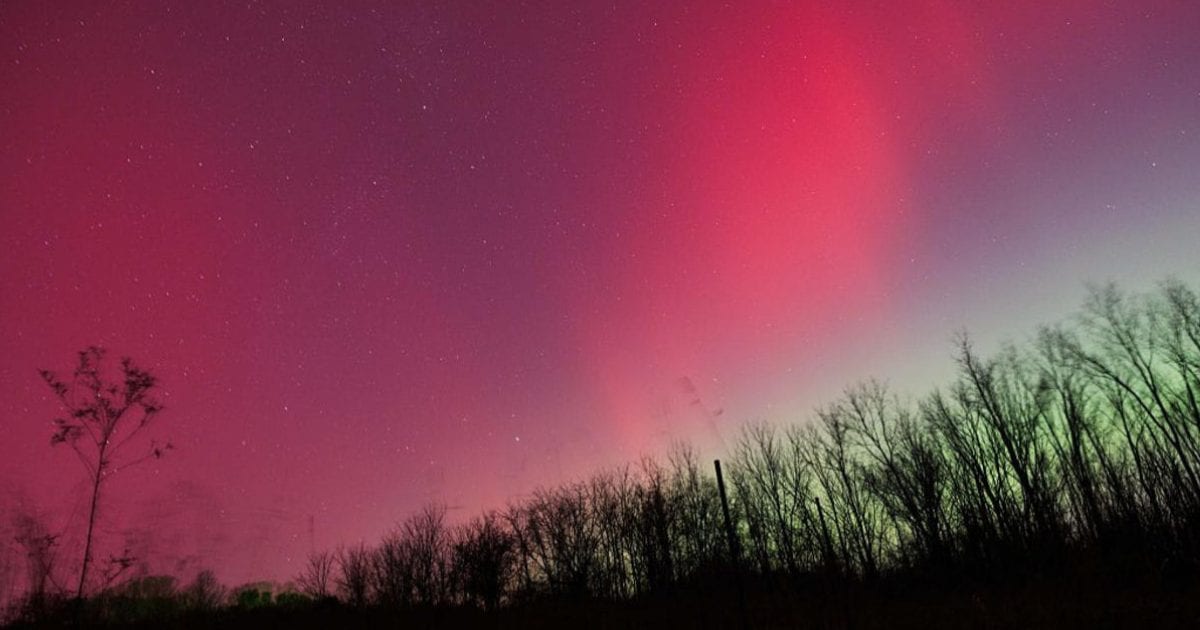
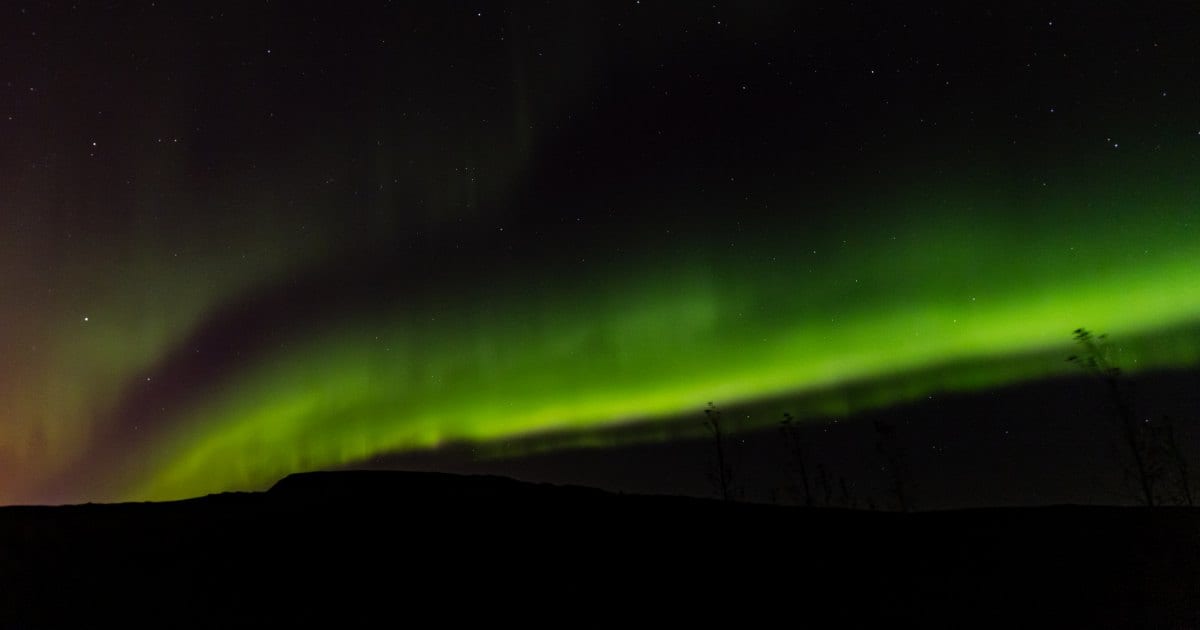
Stunning auroras are likely to cover the skies above several northern U.S. states in the early hours of September 9, 2026. As per the forecast by NOAA's Space Weather Prediction Center (SWPC), residents of Alaska, Washington, Idaho, Montana, North Dakota, South Dakota, Minnesota, Wisconsin, Michigan, and Maine should get a glimpse of the northern lights to varying degrees. The SWPC predicts that the hours between 2:00 am EDT and 5:00 am EDT will see the highest amount of activity based on NOAA scales.
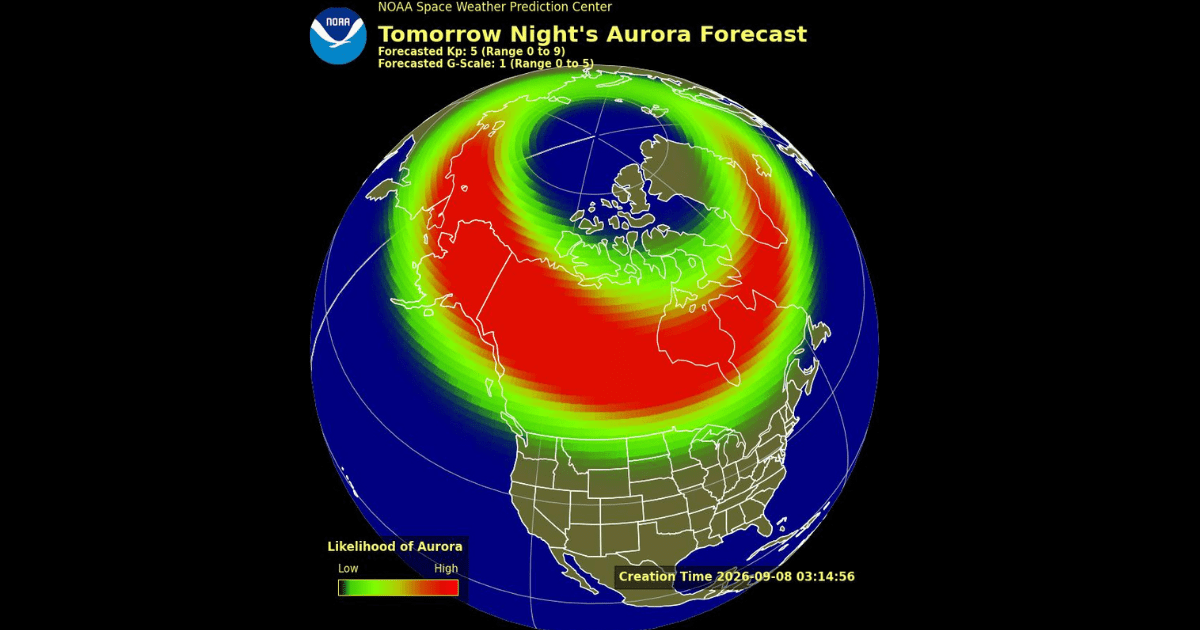
This forecast should be the cue for stargazers and photographers to make use of this window of opportunity, especially with the aurora predicted to extend further south than usual. Moreover, the forecast of geomagnetic activity caused by coronal mass ejections (CMEs) is also predicted to subside by September 10 (UTC). This could be because the latest NOAA models of solar winds show a couple of CMEs exploding off the Sun on September 5 and September 6, respectively, which will pass Earth by the latter part of Wednesday. The CMEs appear to be the reason for the rise in geomagnetic activity in the early hours of September 8 and 9.
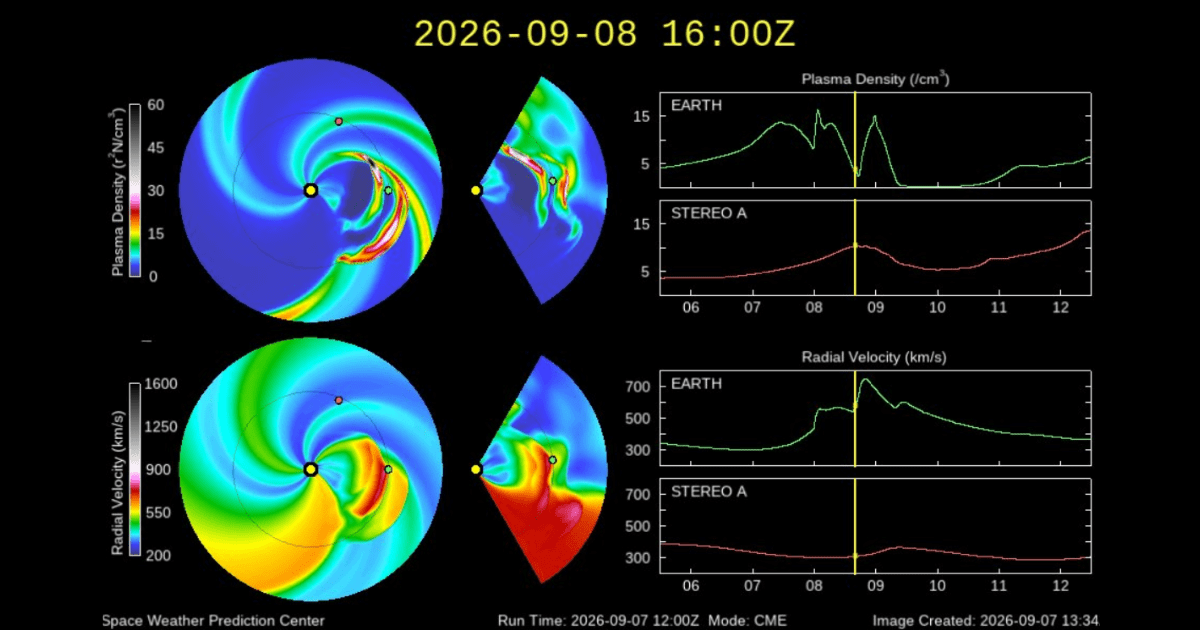
Wednesday's peak of storm-like conditions within the magnetosphere comes after a few days of a gradual rise in geomagnetic activity, caused by an increased frequency of explosive events on the Sun in recent days, including a few solar flares and a type II radio emission last week. Alerts about a type IV radio emission, as well as solar radiation storms, have also been issued by SWPC in recent days. NOAA’s latest alert states that aside from auroras visible before sunrise, weak fluctuations in power grids and minor operational disturbances in satellite operations could persist until 2:00 pm EDT on Tuesday.
We are now in a S1 radiation storm from a 1.0 m-flare (right side, watch for the shockwave), and immediately afterwards another solar flare launched a significant burst of plasma outwards (left side). The Sun has been very active for the last 3-4 days... pic.twitter.com/LktlELyXQY
— Stefan Burns (@StefanBurnsGeo) September 5, 2026
The planetary index, which is the primary metric for predicting and keeping track of auroras, will be highest before dawn on September 9. The planetary index is denoted by 'Kp' and ranges from 0 to 9, and is directly related to the NOAA Geomagnetic Storm scale. Anytime the Kp reaches 5 (a G1 storm), the scale dictates that a storm alert be issued due to potential minor impacts on technology. The planetary index is also linked to varying geomagnetic storm intensities, which range from G1 (minor) to G5 (extreme), corresponding to Kp values of 5 to 9.
EXTENDED WARNING: Geomagnetic K-index of 5 expected
— NOAA Space Weather Prediction Center (@NWSSWPC) September 8, 2026
Extension to Serial Number: 2262
Valid From: 2026 Sep 07 2000 UTC
Now Valid Until: 2026 Sep 08 1800 UTC
Warning Condition: Persistence
Issue Time: 2026 Sep 08 0546 UTChttps://t.co/Sq7yuY89ZB
At the time of writing, NOAA's forecast had a Kp value of 5 for the intervening night of September 8-9, between 6:00 am and 9:00 am UTC (2:00 am and 5:00 am EDT), and a geomagnetic storm alert was issued for today with an aurora watch accompanying it. Stargazers, however, should note that because Kp is presented as a three-hour average, values in particular places and times can have peaks and troughs, affecting the strength of auroras. One would also be well advised to journal their observations with corresponding forecasts by NOAA to build experience and knowledge of chronicling auroras.
More on Starlust
Saturn's auroras are the reason why the planet appears to change its spin, new study finds
Highest-resolution images of solar flare and coronal loops captured by Inouye Solar Telescope