European Space Agency's Proba-3 mission delivers first images of artificial solar eclipses

The exact rarity of total solar eclipses is being re-evaluated following the European Space Agency's (ESA) release on June 16 of initial images from its innovative "eclipse machine." This pioneering mission, called Proba-3, consists of two satellites working in tandem. Historically, total solar eclipses occur globally about 16 months (14 times every 18 years and 11 days). However, for any single location on Earth, NASA estimates they happen only once every 366 years, as reported on Space.com.
🚀 Our Proba-3 mission is ready for lift off!
— European Space Agency (@esa) December 4, 2024
The double-satellite is the most ambitious member yet of our Proba family of experimental missions and will help uncover the mysteries of the Sun's corona.
⏰ Liftoff targeted TODAY at 10:38 GMT/11:38 CET.
📍 Satish Dhawan Space… pic.twitter.com/7y6OQrWbmu
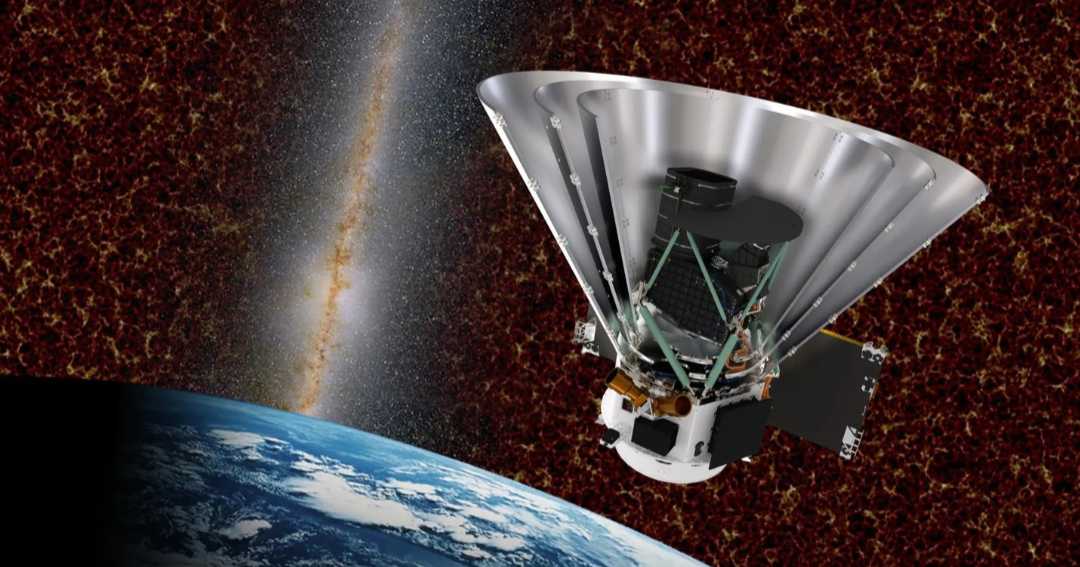
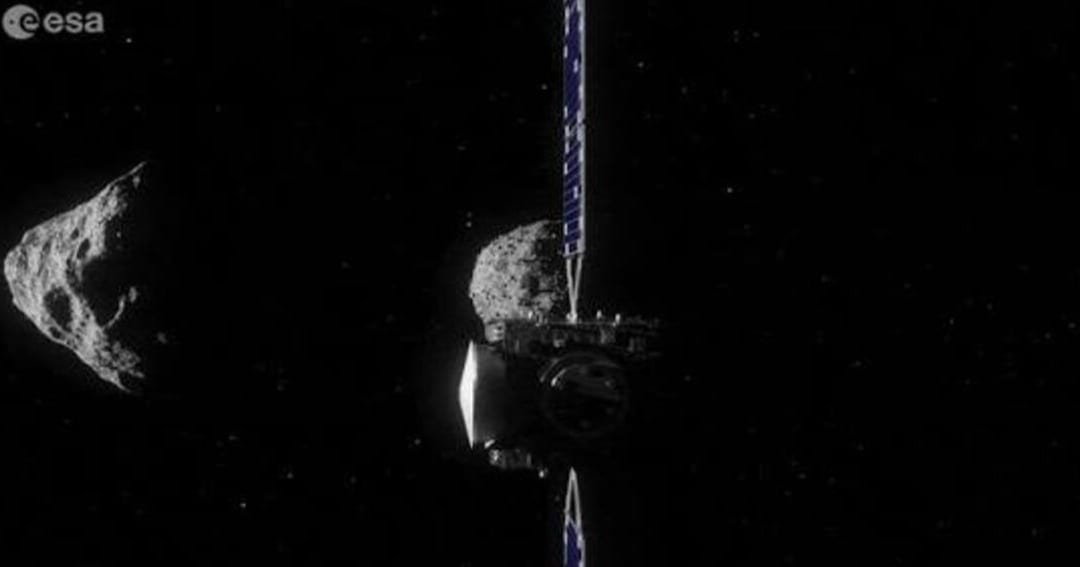
The ESA's Proba-3 mission, which launched on December 5, 2024, from India's Satish Dhawan Space Center aboard a PSLV-XL rocket, eliminates the need for both geographical luck and long waits. It's the first mission to feature two satellites orbiting in a precise formation, with one satellite effectively creating an eclipse, acting as the moon, by blocking the Sun from the other, which is equipped with a telescope to capture images of the Sun's elusive corona. These initial images, a decade in the making and stemming from the mission's first successful formation flying demonstration on May 23, are just a glimpse of the scientific insights to come.
Breaking space news: We have made our own solar eclipse in space! 🌘
— European Space Agency (@esa) June 16, 2025
Today, we release the first images from our Proba-3 mission, which flies two spacecraft in precise formation to create artificial solar eclipses in orbit.
Using a powerful instrument called a coronagraph,… pic.twitter.com/mwOiwY2doS
These unprecedented views of the Sun's corona, its mysterious outer atmosphere, are crucial for understanding a perplexing solar phenomenon. While the Sun's surface, the photosphere, is approximately 10,000 degrees Fahrenheit (5,500 degrees Celsius), the corona remarkably reaches two million degrees Fahrenheit (over 1.1 million degrees Celsius) - about 200 times hotter. Scientists are eager to unravel the reasons behind this extreme temperature difference and how it leads to the generation of the solar wind.
🛰️ 🛰️ ☀️ Our Proba 3 mission is now officially the world’s first precision formation flying mission!
— European Space Agency (@esa) May 8, 2025
The mission team has achieved the desired precision – with the two spacecraft maintaining their relative position down to less than a millimetre while flying 150 metres apart! pic.twitter.com/HTX1SM5kPs
"As well as being an amazing thing to see, the corona is also a laboratory for plasma physics and the main source of space weather," explained Andrei Zhukov, Principal Investigator for the Association of Spacecraft for Polarimetric and Imaging Investigation of the Corona of the Sun (ASPIICS) at the Royal Observatory of Belgium, speaking at the Solar Eclipse Conference in Leuven, Belgium. Observations of the corona are vital for comprehending phenomena like solar wind and coronal mass ejections, which have the potential to disrupt Earth's power and communication systems while also producing spectacular northern lights displays.
Andrei Zhukov of the @ORB_KSB is the Principal Investigator of ASPIICS. Our big ASPIICS team is looking forward to working on the future data! 🤩 #PROBA3 #SolarEclipse pic.twitter.com/81jX31clNe
— Observatory.be (@ORB_KSB) April 4, 2024
Beyond these critical space weather insights, Proba-3's images will also enable solar physicists to observe features within the corona that are occasionally visible during total solar eclipses. Zhukov noted, "Sometimes, clouds of relatively cold plasma are observed near the sun, creating what we call a prominence." These prominences, though still around 10,000 degrees Celsius, are significantly colder than the surrounding million-degree hot plasma of the corona. Zhukov expressed his satisfaction, stating, "We are very happy to have been able to capture one such structure in one of the first ASPIICS images," as mentioned by the outlet.
In April 1975, preparations for the upcoming joint American-Soviet Apollo-Soyuz Test Project continued, with 3 months remaining until the historic handshake in space. The American and Soviet crews trained together in Russia, then met again in orbit. https://t.co/kfcCMr1OSS pic.twitter.com/7Qtq6ARfED
— NASA's Johnson Space Center (@NASA_Johnson) April 15, 2020
While Proba-3 represents a significant leap, the concept of using formation flying for coronal observations isn't entirely new. The 1975 Apollo-Soyuz Test Project, a joint mission between the US and the Soviet Union, saw the Apollo spacecraft serve as an improvised coronograph, allowing the Soyuz crew to photograph the solar corona. However, as Zhukov recalled, "It was all done by hand — the image was taken through a window of a Soyuz spacecraft," and the results were largely disappointing due to scattered light from thruster gases around the spacecraft. With Proba-3, this pioneering concept has finally become a reality. Artificial solar eclipses are now achievable, providing views of the inner solar corona without the need to wait for a natural total solar eclipse.