A "quirky" peanut-shaped asteroid is wobbling through space: What NASA's Lucy just discovered
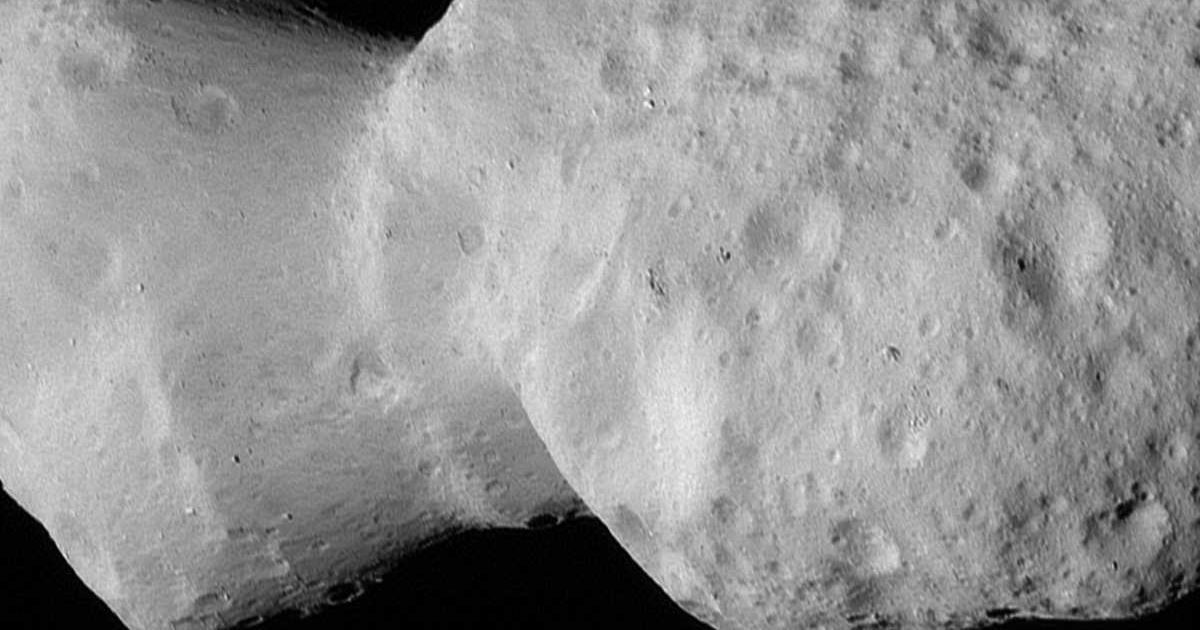
An asteroid named Donaldjohanson, which was observed by NASA’s Lucy probe last year, has a few odd characteristics that set it apart from most other asteroids. The study detailing the findings of the spacecraft has revealed that the asteroid is peanut-shaped and rotates like a wobbly top on two axes instead of one. The study has also found that the asteroid held liquid water in the distant past. Lucy's flyby not only provided the opportunity to contrast the asteroid with other interesting ones like Bennu and Ryugu, but it also served as a dress rehearsal for the spacecraft's primary mission of studying Jupiter’s Trojan asteroids.
This asteroid is a little… quirky.
— NASA Solar System (@NASASolarSystem) June 18, 2026
Shaped like a five-mile-long peanut 🥜
Wobbles like a top 🌪️
Encountered water, but lost it 💦
Published today, NASA’s Lucy mission reveals close-up imagery and data from its flyby of oddball asteroid Donaldjohanson.
More:… pic.twitter.com/dVyektHnNb
Donaldjohanson is understood to have originated in a larger, carbon-and water-rich asteroid that had a collision with another object in the main asteroid belt roughly 155 million years ago. The two lobes on either end of the asteroid's peanut-shaped structure are likely two fragments from an asteroid collision that were drawn to each other by their mutual gravity.
Lucy's in the sky with… Donaldjohanson?! 💎
— NASA Goddard (@NASAGoddard) April 23, 2025
Our #LucyMission flew by asteroid DonaldJohanson on April 20.
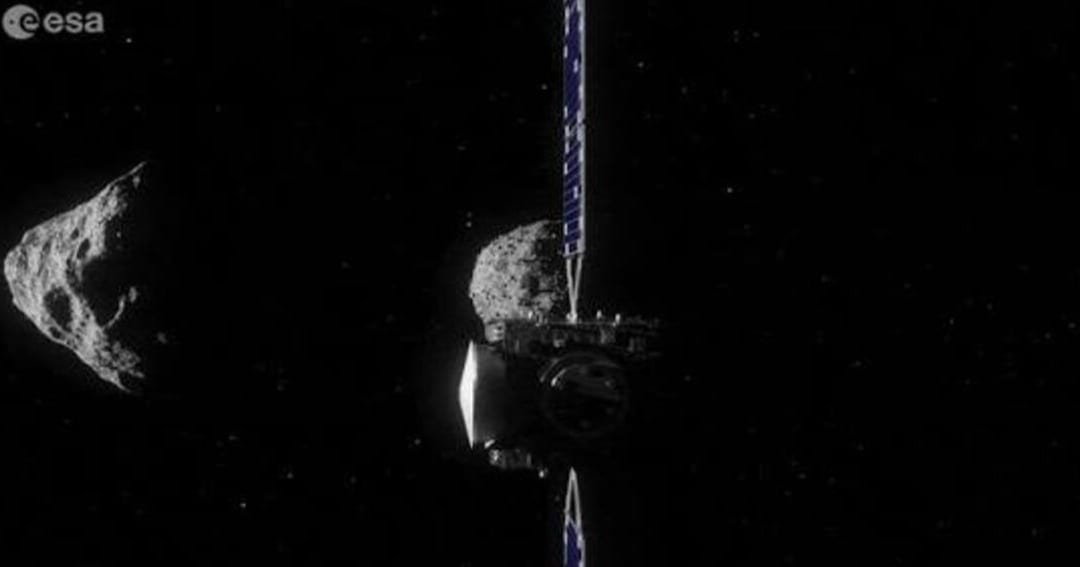
Images from the flyby show the asteroid's elongated contact binary shape, with a narrow neck between the two lobes. We can't wait to learn more!https://t.co/pxRhJwJMXl pic.twitter.com/apKZjsfgz1
The 5-mile-wide asteroid completes one rotation every 10.5 Earth days. Meanwhile, its back-and-forth wobbles around its long axis happen over every 26.5 days. The object actually rotated at least 10 times faster when it had formed and has slowed down over the past 20 to 60 million years due to the YORP (Yarkovsky–O'Keefe–Radzievskii–Paddack) effect. The Sun-warmed surface of the peanut-shaped asteroid releases heat, which results in a tiny recoil force on the surface that slows down the object's rotation. This slowing caused an imbalance between the centrifugal force pushing things apart and gravity holding things together. As a consequence, the loose rocky material slid down slopes and created the appearance of craters, which was imaged by Lucy as it flew by the asteroid at a distance of 650 miles.
Lucy also found signatures of iron-rich clay minerals on the surface of Donaldjohanson. While the presence of these minerals hints at the presence of liquid water in the distant past, they also indicate only a brief exposure. That is because iron in clays is usually replaced by other elements such as magnesium upon prolonged exposure to water. Scientists, in fact, have found magnesium-rich clays on both Bennu and Ryugu, which likely had liquid water for millions of years when they were part of bigger asteroids. "It’s helpful for scientists to compare Donaldjohanson with asteroids like Bennu and Ryugu, which are seemingly similar asteroids, because every subtle difference is another clue to our origin story," said Simone Marchi, Lucy's deputy principal investigator and lead author of the study at the Boulder, Colorado, office of the Southwest Research Institute, in a statement.
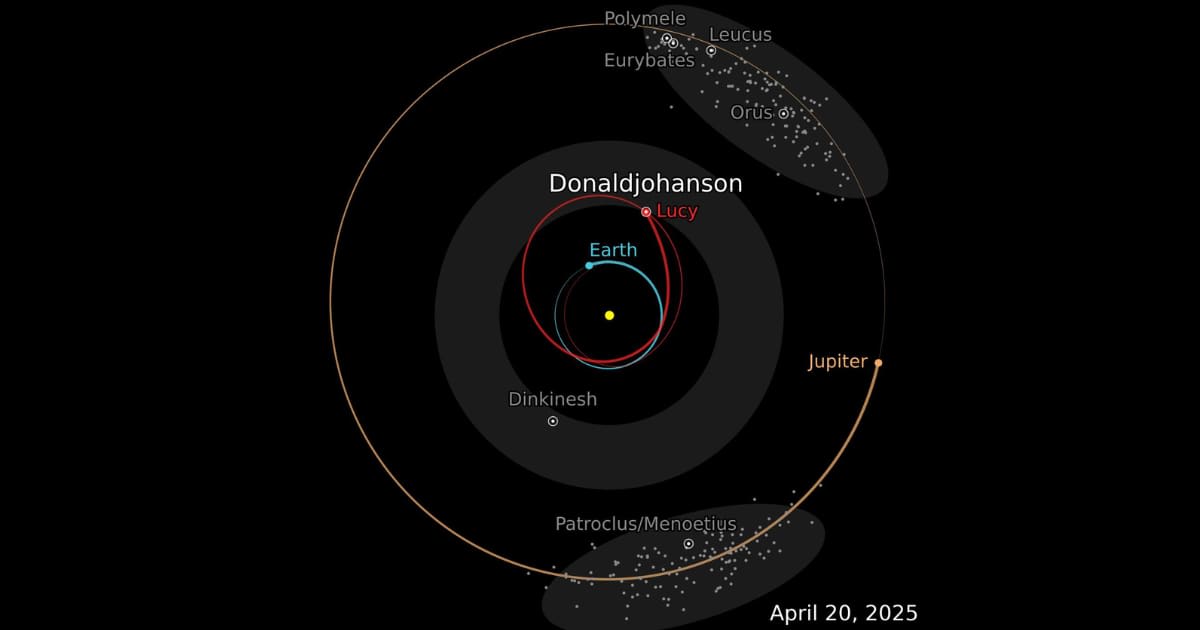
The #LucyMission will perform its 2nd Earth-gravity assist on Dec. 12, putting it on a new course toward its first Trojan asteroid encounter in 2027. On the way, Lucy will pass through the main asteroid belt, flying past asteroid “Donaldjohanson” in 2025. pic.twitter.com/hyYazOsGJW
— NASA Goddard (@NASAGoddard) December 10, 2024
Lucy will next encounter the Trojan asteroid Eurybates on August 12, 2027, before flying by other targets within the group. Speaking on this, Marchi stated, “Once we start learning more about the Trojans, a completely different population of space rocks with very different histories, our understanding of solar system formation is destined to be challenged.”
More on Starlust
After Bennu, scientists find all DNA and RNA building blocks in asteroid Ryugu samples